HOTEL GUIDE
Where to Stay in Bangkok: 10 Neighbourhoods Compared
Clear, practical neighbourhood guide to help you choose where to stay in Bangkok depending on travel style, transport needs and itinerary. Includes sample 3- and 7-day plans.
If you’re deciding where to stay in Bangkok, choose a neighbourhood that matches your itinerary and transport needs. Bangkok is organised around a modern rail spine (BTS/MRT) plus the river and older temple districts. Pick a base near a BTS/MRT/ARL station or a reliable river pier and you’ll save hours in traffic.
Key Takeaways
- Prioritise proximity to BTS/MRT/river piers—short extra cost saves time in Bangkok traffic.
- Match your base to your priorities: temples (Old City), malls/family attractions (Siam), nightlife/expat life (Sukhumvit/Thonglor).
- Split nights if your trip mixes temple sightseeing with nightlife or river views for a smoother experience.
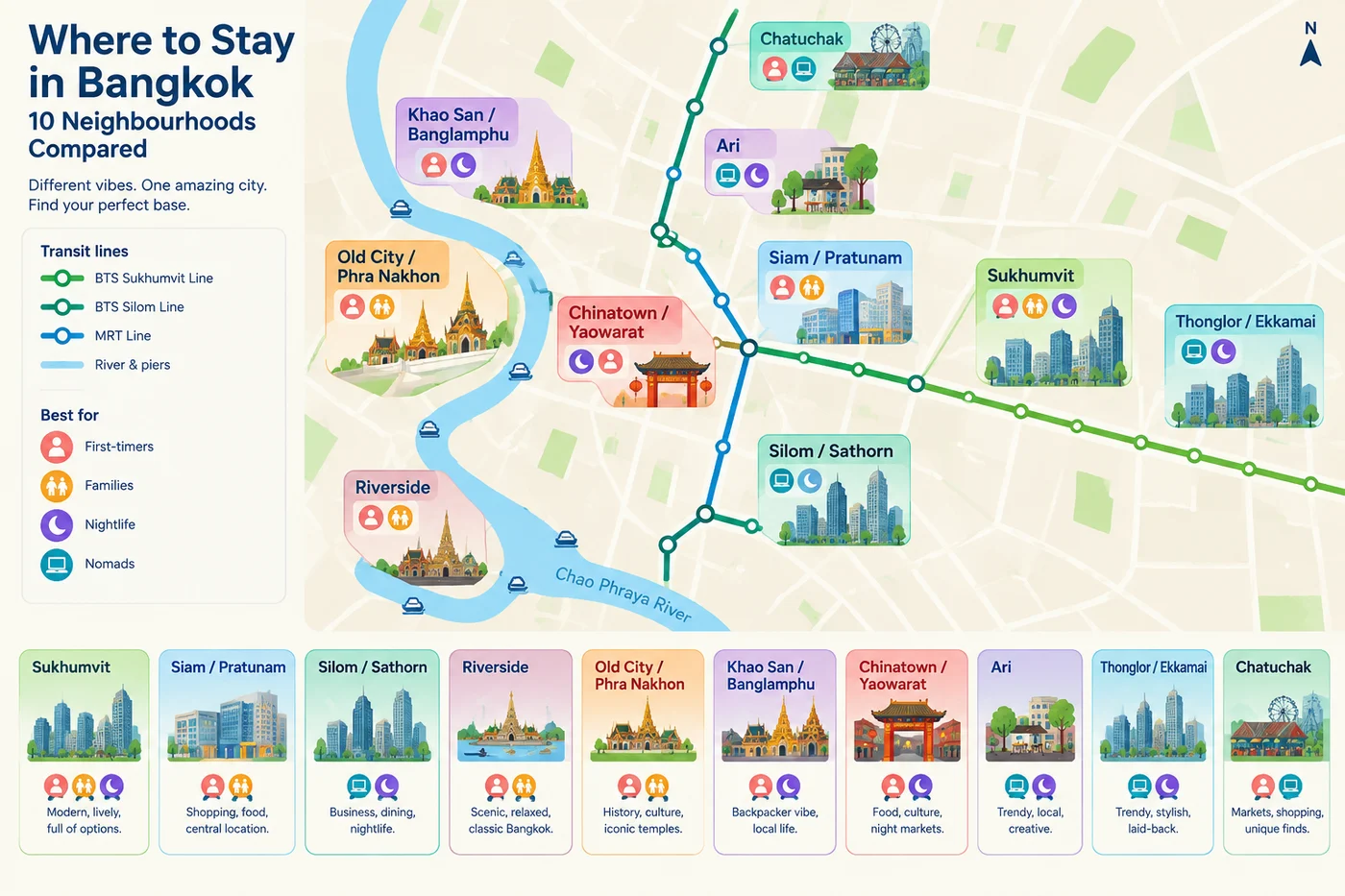
Where to stay in Bangkok — Quick decision flow
Start by asking: are you here for temples and heritage, shopping and family attractions, nightlife, or remote work? Temple‑first visitors do best in the Old City (Rattanakosin) or Khao San; shoppers and families prefer Siam/Pratunam; nightlife and expat life centre on Sukhumvit and Thonglor/Ekkamai; digital nomads often choose Ari or parts of Sukhumvit for coworking and cafés. Wherever you land, check proximity to BTS, MRT, the Airport Rail Link or river piers—these are the city’s most reliable time-savers (see BTS Group for official routes).
Neighbourhood snapshots
Sukhumvit (Asok, Phrom Phong) — Who it suits: first-timers, expats, shoppers, digital nomads. Transport: BTS Sukhumvit line, MRT at Asok. Pros: malls, restaurants, nightlife, coworking. Cons: can be noisy, busy. Accommodation: hostels to international hotels and serviced apartments.
Thonglor / Ekkamai — Who it suits: nightlife seekers, foodies, mid-to-long stay nomads. Transport: BTS Thong Lo / Ekkamai (short taxi/ride from station). Pros: trendy bars, cafés, boutique hotels. Cons: pricier evenings, noise late.
Ari — Who it suits: digital nomads, creatives, quieter stays. Transport: BTS Ari. Pros: village feel, cafés, coworking. Cons: fewer tourist sights nearby; best for medium-term stays.
Siam / Pratunam — Who it suits: families, shoppers, first‑timers who want centrality. Transport: BTS interchange at Siam, MRT nearby. Pros: malls, indoor attractions (SEA LIFE). Cons: busy, less nightlife atmosphere at night.
Silom / Sathorn — Who it suits: business travellers, rooftop-bar visitors, mixed nightlife. Transport: BTS Sala Daeng, MRT Silom. Pros: central offices, parks (Lumphini). Cons: Patpong area can be touristy at night.
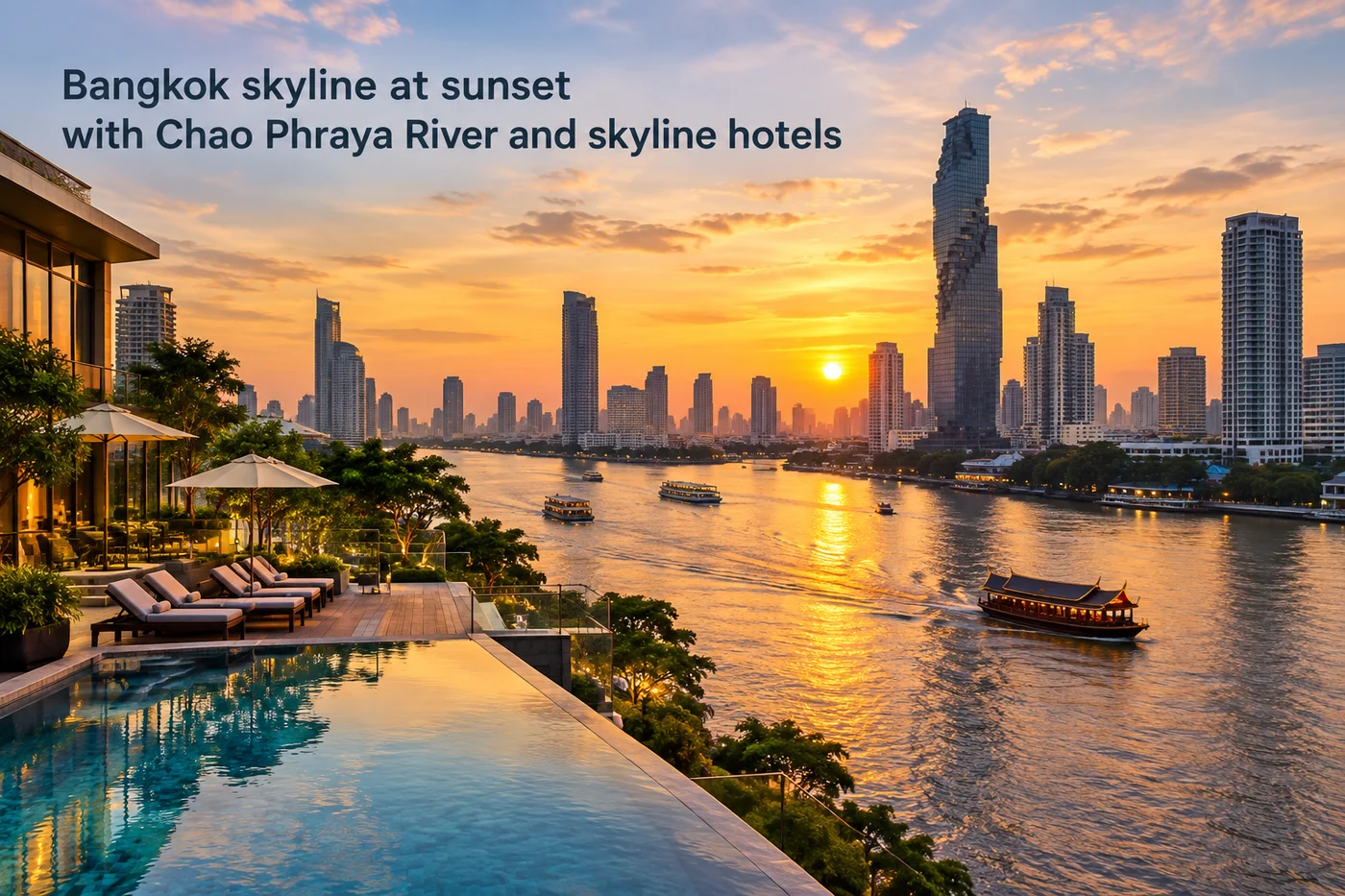
Riverside — Who it suits: couples, luxury travellers, sightseers wanting quieter evenings. Transport: riverboat piers and some hotels offer shuttle boats. Pros: scenic hotels, easy river access to Grand Palace area. Cons: farther from BTS in places; check pier connections.
Old City / Phra Nakhon — Who it suits: temple-focused travellers and families. Transport: riverboat + taxis; some MRT/bus links. Pros: Grand Palace, Wat Pho, cultural atmosphere. Cons: fewer modern malls, can be hot and crowded.
Khao San / Banglamphu — Who it suits: backpackers, budget travellers, nightlife on a shoestring. Transport: short taxi/boat to major sights. Pros: cheap guesthouses, social scene. Cons: noisy at night and less transit convenience.
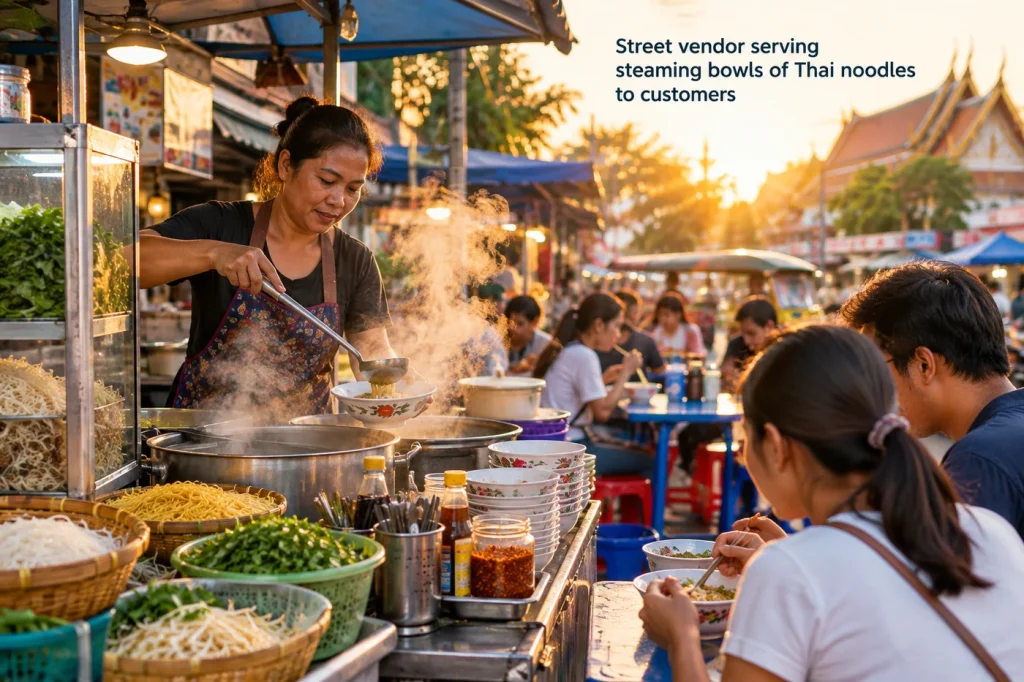
Chinatown / Yaowarat — Who it suits: foodies and evening explorers. Transport: MRT Hua Lamphong, riverboat nearby. Pros: street food, markets, vibrant evenings. Cons: narrow streets, chaotic at peak times.
Chatuchak — Who it suits: weekend-market shoppers, budget visitors, long‑stay nomads. Transport: BTS Mo Chit, MRT Chatuchak Park. Pros: huge weekend market, parks. Cons: quieter at night; farther from central nightlife.
Sample 3- and 7-day itineraries
3-day (first-time base: Sukhumvit): Day 1 — Explore central malls and a rooftop bar in Sukhumvit; Day 2 — BTS to Siam for museums/malls then river evening cruise from Saphan Taksin; Day 3 — Morning at Grand Palace and Wat Pho (taxi or river), afternoon shopping before airport transfer.
3-day (family base: Siam): Day 1 — SEA LIFE and KidZania or mall play spaces; Day 2 — Grand Palace and boat trip; Day 3 — Lumpini Park morning, afternoon shopping and easy BTS transfer to airport rail link (if using ARL at Phaya Thai).
7-day (split base: 3 nights Old City + 4 nights Sukhumvit/Riverside): Nights 1–3 Old City for temples, museums and Khao San walks. Move to riverside for a night for a scenic hotel experience, then finish 3 nights in Sukhumvit for markets, nightlife and departure. Splitting bases reduces long cross-city transfers and lets you experience differing atmospheres.
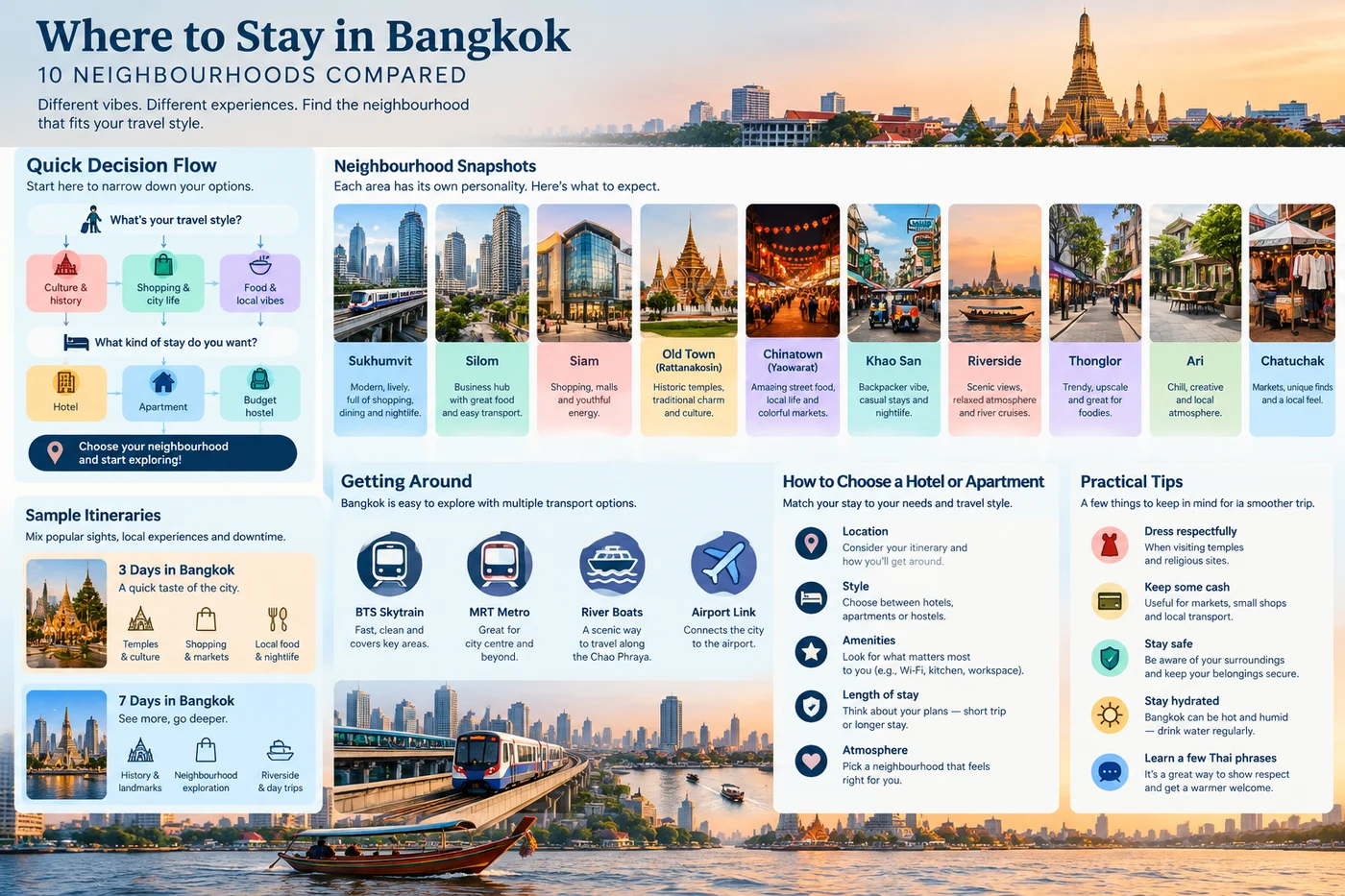
Getting around: BTS, MRT, river & airport
The BTS Skytrain (Sukhumvit and Silom corridors) and MRT metro are the practical backbone of central Bangkok—choose a hotel near a station to cut travel time. River taxis and tourist boats are fast between riverside sights. Check which airport you use—Suvarnabhumi (BKK) or Don Mueang (DMK)—before booking transfers. For official route maps and operator details see BTS Group (official).
How to choose a hotel or apartment
Prioritise: 1) proximity to BTS/MRT/river pier; 2) room size and family facilities if travelling with children; 3) reliable Wi‑Fi and workspace for remote work; 4) ground-floor convenience (shops, clinics) for longer stays. If you want river views, expect trade-offs: quieter evenings but longer commutes to BTS. Consider splitting nights when combining temple sightseeing and nightlife. For neighbourhood-specific options, see our Sukhumvit hotel guide and neighbourhood pages on HotelForU.net.
Practical tips & important considerations
Practical tips:
– Book near a transit station rather than the flashiest block; time saved is worth more than slightly cheaper rooms.
– Avoid peak traffic hours for taxi transfers (mornings and late afternoons). Use BTS/MRT where possible.
– Check which airport your flights use and the latest transfer options before booking.
Important considerations:
– Transport routes and new lines can change—verify BTS/MRT maps on official operator sites before publishing or travelling.
– Don’t assume walking times: Bangkok’s heat and pavements vary. Use transit or short taxis when in doubt.
– Visa and long‑stay rules change; check Thai immigration or official government sources for up‑to‑date guidance.
Practical Tips
When booking, filter hotels by nearest station and read recent guest reviews about noise and Wi‑Fi. For short stays, favour central BTS/MRT access; for a scenic, relaxed stay choose the riverside. Split your trip if you want both temples and nightlife without long daily commutes.
Important Considerations
Transport maps, airport assignments (BKK vs DMK) and visa rules are time-sensitive—verify them with official operator or government sites before finalising bookings.
Planning more of your trip? Browse our
Thailand Travel Guides
for more practical Thailand travel information.
Final Thoughts
Choosing where to stay in Bangkok comes down to priorities: temples, family attractions, nightlife or work. Pick a neighbourhood that matches your main plans, book near reliable transit, and don’t be afraid to split your nights for the best experience.
Sources & Further Reading
- BTS Group (official) — BTS Skytrain
- Lonely Planet — Best neighbourhoods in Bangkok
- SEA LIFE Bangkok at Siam Paragon (family attraction reference)
Transport schedules, fares and operating rules can change. Always verify time-sensitive details with the official operator before travel.