
HOTEL GUIDE
The Traveler’s Guide to Thai Noodles: Types, Regional Varieties and How to Order
Clear, practical guide to Thai noodles—what they are, signature dishes, how to order and quick tips for finding safe, authentic noodle stalls in Bangkok, Chiang Mai, Phuket and the northeast.
Thai noodles are one of the best ways to taste Thailand’s regional diversity. From thin rice vermicelli to chewy egg noodles and fermented khanom jeen, knowing the main types and how dishes are served helps you order confidently at street stalls and restaurants. This guide explains the noodle varieties, signature dishes, ordering phrases and practical safety tips for travelers.
Key Takeaways
- Thai noodles come in rice, wheat/egg, glass and fermented forms—each has typical uses and signature dishes.
- Ordering is simple: choose a noodle, a protein/topping and say 'nam' (soup) or 'hang' (dry); always state allergies and vegetarian needs clearly.
- Regional specialties to try: khao soi in the north, boat noodles in central Bangkok, and numerous khanom jeen styles across the south and northeast.
Why Thai noodles matter
Noodles arrived in Thailand with Chinese traders and immigrants, but local techniques and ingredients turned them into uniquely Thai dishes. The result is a noodle culture that spans everyday street bowls to regional specialties made with local curries and sauces. For travelers, trying noodle dishes is a quick, affordable way to sample different Thai provinces and flavour traditions.
Thai noodles: main types and how they look
A handful of noodle categories cover most Thai dishes. Knowing the names helps when you order.
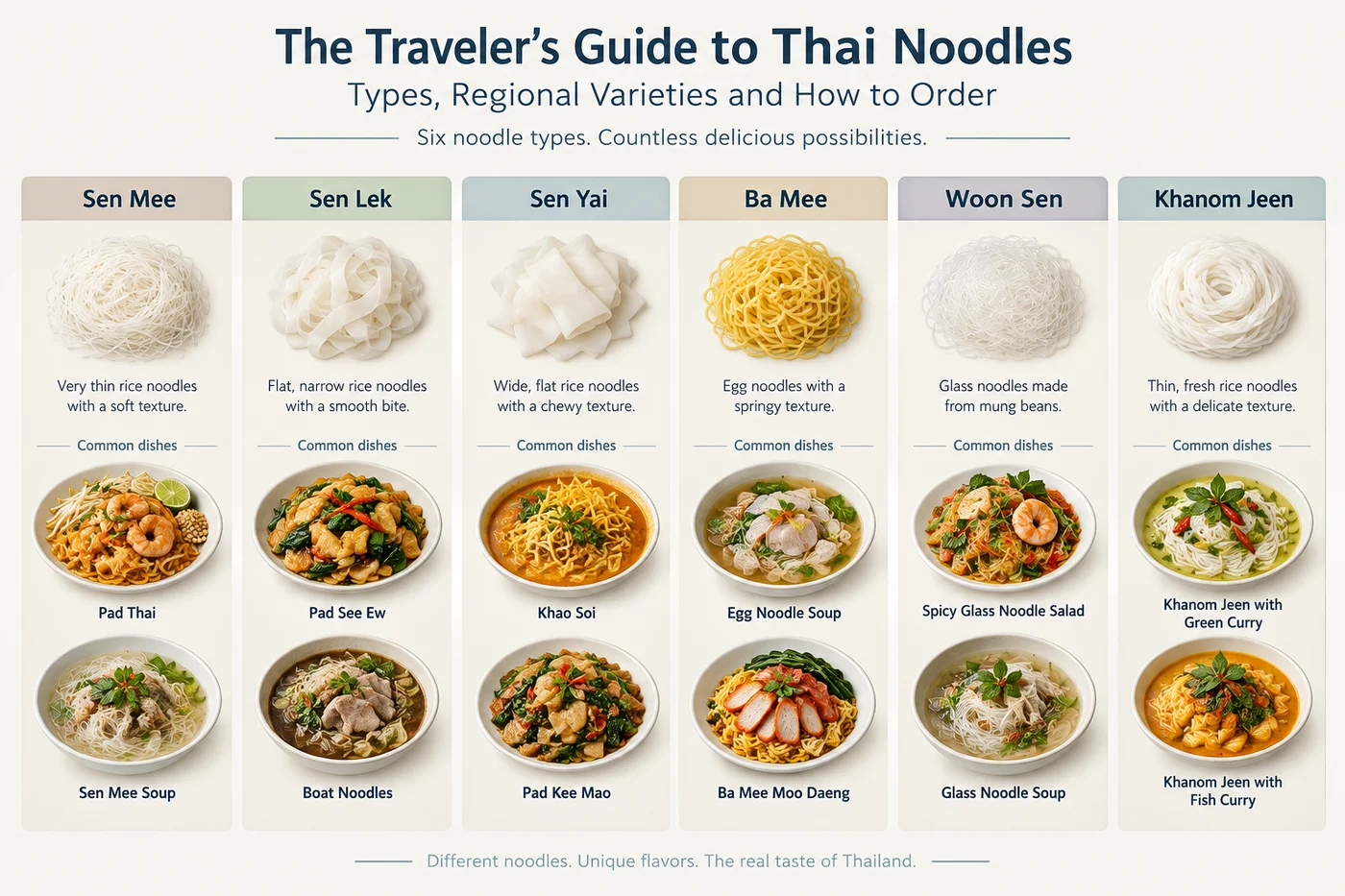
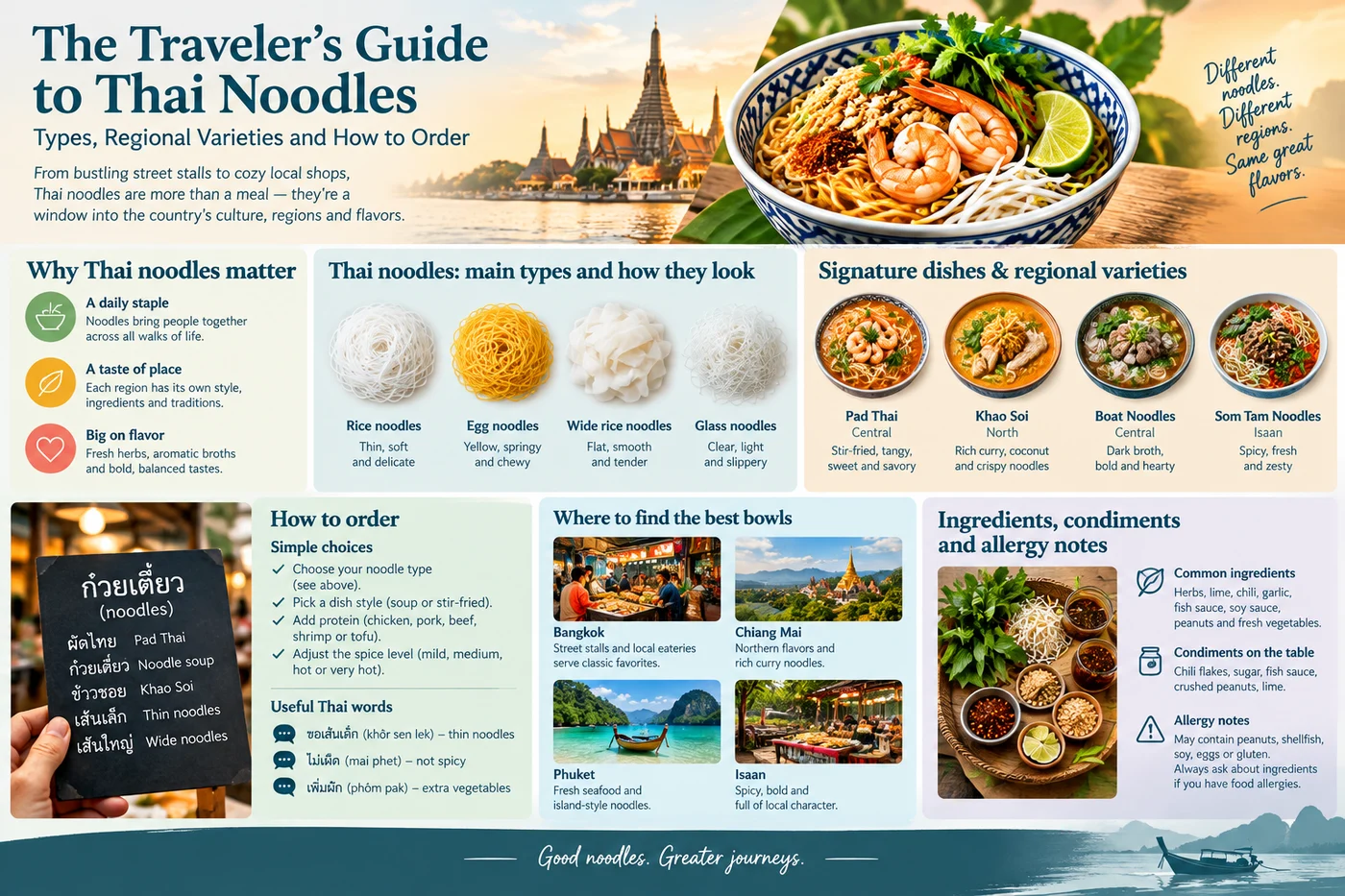
- Sen mee: very thin rice vermicelli (used in soups and light salads).
- Sen lek: thin flat rice noodles often used for stir-fries like pad Thai and many soups.
- Sen yai: wide flat rice noodles used in stir-fries and some brothy dishes.
- Ba mee (bami): Chinese-style wheat egg noodles, springy and yellow—common in soups and dry noodle bowls.
- Woon sen: glass or cellophane noodles (made from mung bean/starch) used in soups and salads.
- Khanom jeen: fresh, fermented rice vermicelli eaten with regional curry sauces; perishable and typically sold fresh.
Fresh versus dried forms affect texture and cooking time—many street stalls use fresh noodles when available.
Signature dishes and regional varieties
Some classic bowls to seek out:
- Pad Thai and Pad See Ew: popular stir-fried noodle dishes using sen lek or similar rice noodles (varieties and widths vary by cook).
- Boat noodles (kuaitiao ruea): strongly seasoned small-bowl soups with a central-city history in Bangkok.
- Khao soi: a northern curried noodle soup, a Chiang Mai highlight, made with egg noodles in a coconut-curry broth (origins reflect cross-border influences).
- Guay tiew: a general term for noodle soup, available across Thailand with many proteins and broths.
- Ba mee dishes: wheat/egg noodles served dry or in broth, often with pork, char siu and greens.
- Khanom jeen plates: fresh fermented noodles served with regional sauces—southern and northern versions vary in spice and ingredients.
Regional labels matter: some dishes are closely associated with particular provinces (for example, khao soi with northern Thailand), while other preparations and noodle choices shift from stall to stall.
How to order: simple choices and useful Thai words
Noodle stalls usually let you choose three things: noodle type, protein/toppings and how it’s served.
- Say the noodle name (or point at the display) and pick pork, chicken, beef, seafood or tofu. If you want vegetarian, ask for no meat and explicitly say no fish sauce or shrimp paste—these are common hidden ingredients.
- Choose 'nam' (น้ำ) for soup or 'hang' (แห้ง) for a dry/prepared bowl.
- Common customisation phrase: 'mai ngog' to request no bean sprouts.
Other practical notes: point to photos or bowls on display if vocabulary fails. If you have allergies, state them clearly in English and repeat slowly—don’t assume a dish is free from animal products.
Where to find the best bowls (Bangkok, Chiang Mai, Phuket, Isaan)
Every major destination has noodle specialities:
- Bangkok: wide street choices and the historic small bowls of boat noodles in old canal areas and food alleys.
- Chiang Mai and the north: look for khao soi and northern khanom jeen preparations at local markets and casual restaurants.
- Phuket and the south: island and coastal stalls serve regional noodle dishes reflecting Chinese and Malay influences.
- Isaan (northeast): noodle soups and stir-fries with bolder, tangy flavours; khanom jeen with spicy sauces is also common.
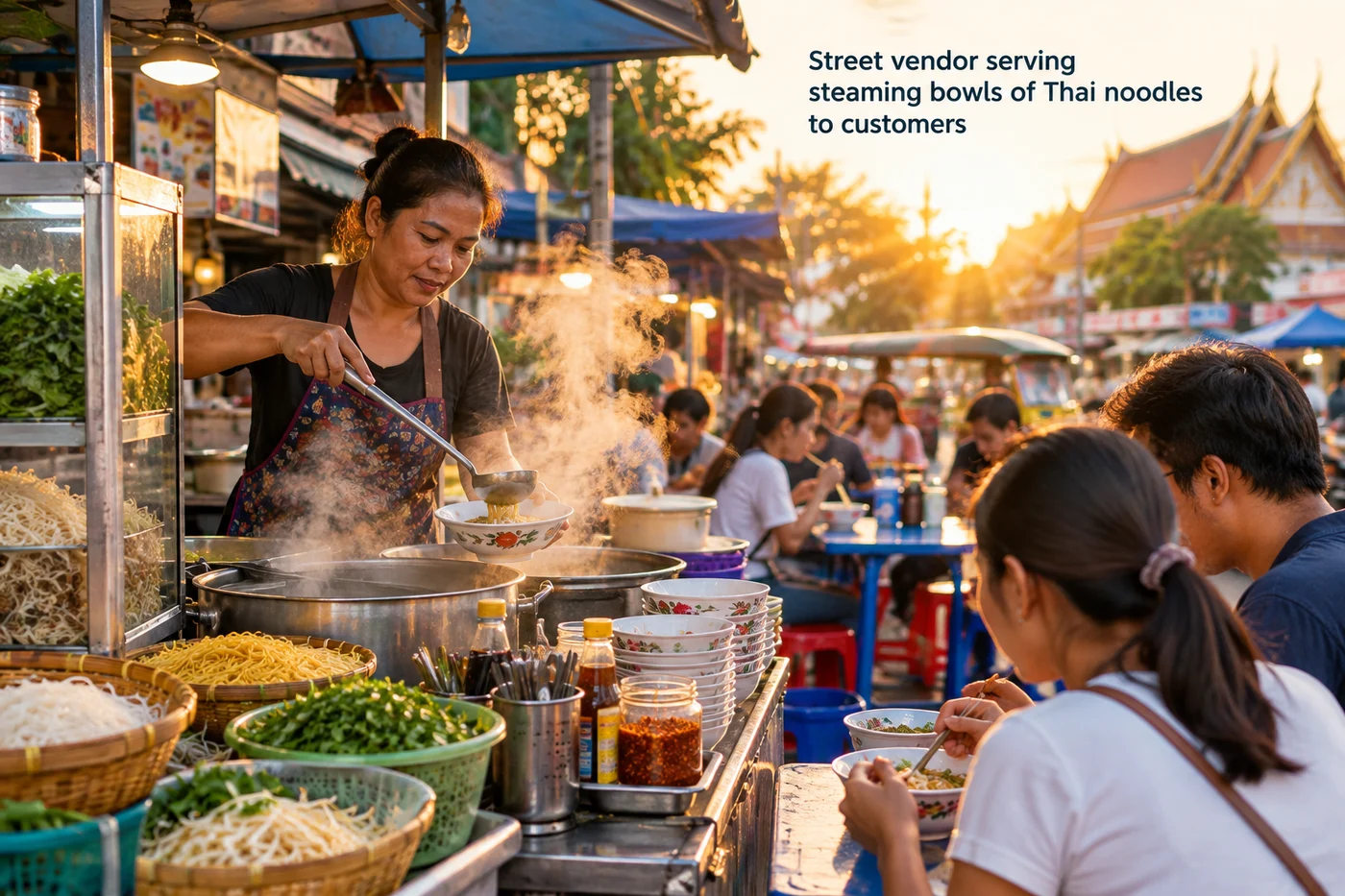
A good local indicator of quality: a busy stall with high turnover, open-air prep where you can see boiling pots and fresh ingredients, and locals in the queue. For more city-specific recommendations, consult HotelForU’s Bangkok street-food guide as an internal resource while planning.
Ingredients, condiments and allergy notes
Typical seasonings include fish sauce, palm sugar, tamarind, shrimp paste and fresh herbs. Condiments on the table often include sliced chilies in vinegar, dried chili flakes, sugar, fish sauce and crushed peanuts. Common allergens and animal products: fish sauce, shrimp paste, eggs, pork and shellfish. If you need vegetarian or vegan food, ask for dishes without meat, fish sauce and shrimp paste—and be prepared to double-check, especially for curries and fermented sauces like those served with khanom jeen.
Practical Tips
Pick busy stalls (high turnover) and watch noodle prep. Point at the bowl or the display if language gaps arise. For khanom jeen, prefer freshly made products and eat soon after purchase—these noodles are perishable. Always state allergies and ‘no fish sauce/shrimp paste’ clearly. Use cash for stalls and carry small change.
Important Considerations
Transliterations vary—verify noodle names at the counter. Origins of some dishes are debated; think of regional labels as guides, not strict rules. Avoid assuming vegetarian status; many Thai sauces and stocks contain fish or meat. Food-safety conditions and prices can change—use local advice and up-to-date guides.
Planning more of your trip? Browse our
Thailand Food & Restaurant Guides
for more practical Thailand food and dining information.
Final Thoughts
Thai noodles are a delicious, wallet-friendly way to travel through Thailand’s food regions. Learn the basic noodle names, practice 'nam' and 'hang', and don’t be shy about requesting modifications for allergies or diets. A little knowledge and curiosity will lead you to memorable bowls from Bangkok’s alleys to Chiang Mai’s markets.
Sources & Further Reading
- Tourism Authority of Thailand – Explore Thai Taste
- JIRCAS – Research on fermented rice noodles (khanom jeen)
- MICHELIN Guide – Primer on Thai noodles
- ThaiTable – How to order a bowl of noodles
Transport schedules, fares and operating rules can change. Always verify time-sensitive details with the official operator before travel.