HOTEL GUIDE
Thailand Packing Guide: What to Pack for Every Season, Region and Activity
A region- and season-aware packing guide for Thailand—Bangkok, islands, the north and rural areas—plus temple rules, meds, electronics, eco tips and printable checklists.
Planning what to pack for Thailand should be driven by season, region and the activities you intend to do. This concise guide covers clothes for Bangkok, islands, northern hills and rural border areas across the hot, rainy and cool seasons, plus temple-appropriate outfits, beach and snorkeling gear, hiking essentials, medications, electronics and luggage tips.
Key Takeaways
- Pack lightweight, quick-dry fabrics for heat; add a warm layer for November–February in the north.
- Bring modest temple clothing (shoulders and knees covered), reef-safe sunscreen for marine trips, and insect repellent (DEET or picaridin).
- Leave vapes at home, carry a universal adapter, and keep photocopies of documents; consult a travel clinic for vaccines and malaria advice.
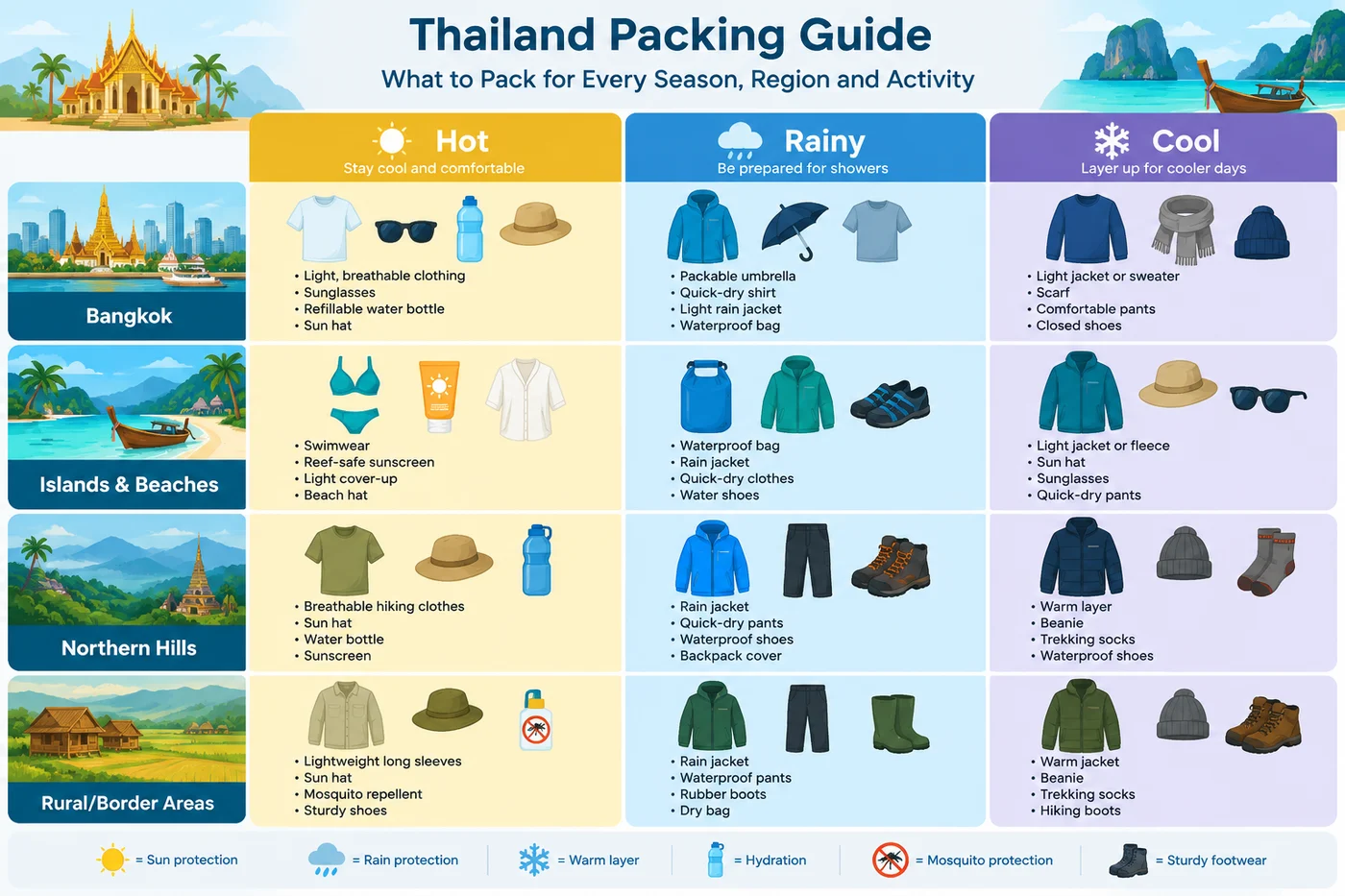
What to pack for Thailand: seasons, regions, and activities
Thailand broadly has three seasons—hot (Feb–May), rainy/monsoon (mid‑May–mid‑Oct) and cool/dry (mid‑Oct–mid‑Feb)—but conditions vary by region. Southern islands stay warm year‑round with less temperature change; the north (Chiang Mai, Pai) can be pleasantly cool or chilly at night in the cool season. Use lightweight breathable fabrics for the hot season, a packable rain jacket or poncho during monsoon months, and a warm fleece or light down for cool nights in the north.
Clothing and cultural dress: city, temples, islands and mountains
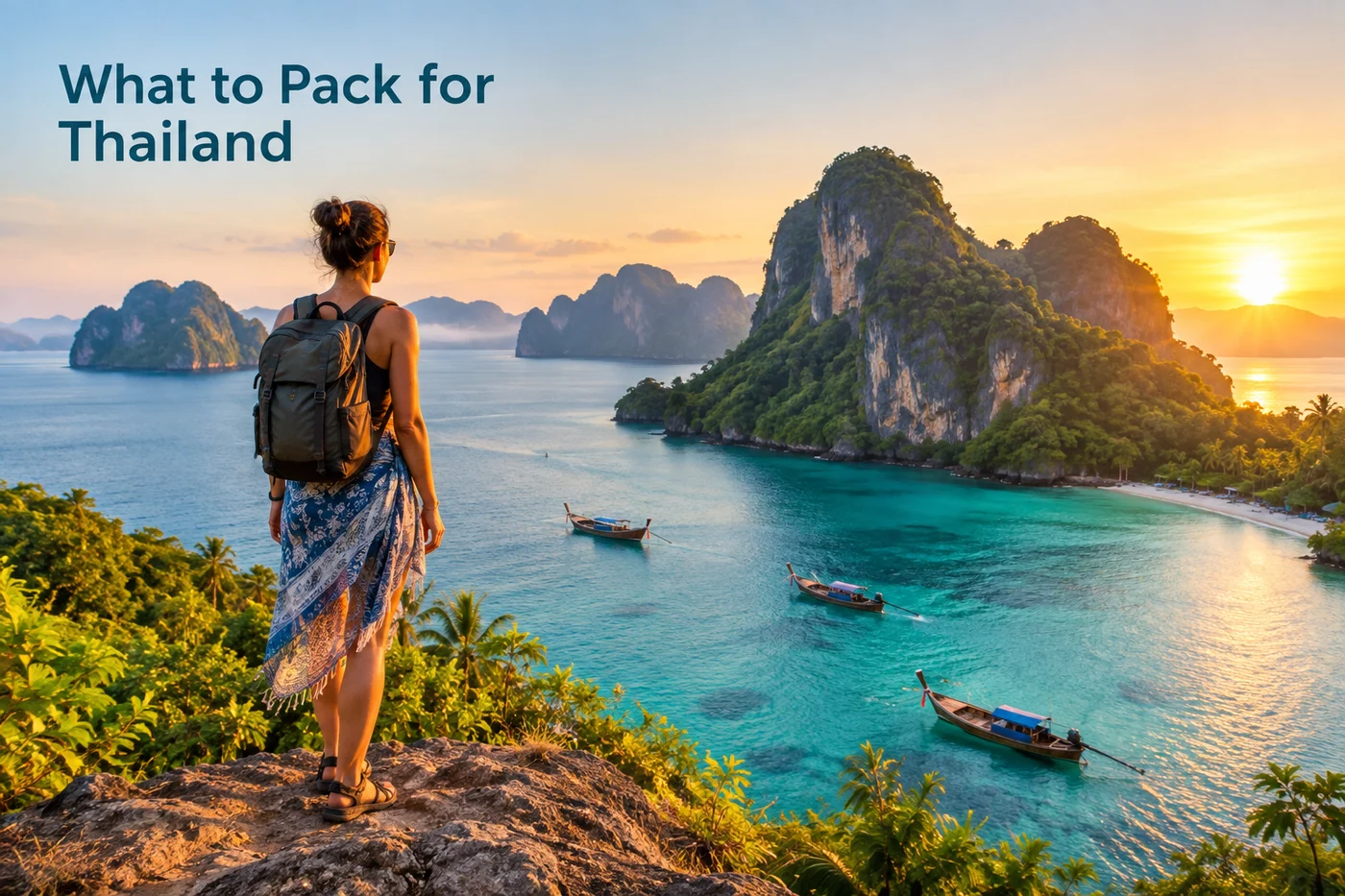
For Bangkok and cities: light shirts, breathable trousers or skirts, comfortable walking shoes, and one smarter outfit for evenings. For temples and royal sites: shoulders and knees must be covered—pack a light long-sleeve shirt, long skirt or trousers, and a sarong or scarf; some sites lend cover-ups but it’s polite to come prepared. For islands and beaches: swimwear, rash guard for snorkeling, sandals and a sunhat. For northern trekking: moisture-wicking layers, sturdy hiking shoes, warm hat and socks, and a light waterproof shell.
Health, insect protection and medications
Pack a basic first-aid kit, your routine prescriptions, and travel‑size pharmacy staples (anti‑diarrheal, pain relief, oral rehydration salts). Bring insect repellent containing DEET or picaridin—these are recommended by public‑health authorities—and consider permethrin for treating clothing if you’ll be in forested or rural areas. Malaria prophylaxis is only advised for specific border or rural zones: consult a travel clinic 4–6 weeks before departure. Avoid drinking unfiltered tap water unless you’ve confirmed local potability—use sealed bottled water or a reliable filter. Note: health guidance can change; always check CDC and local health advisories.
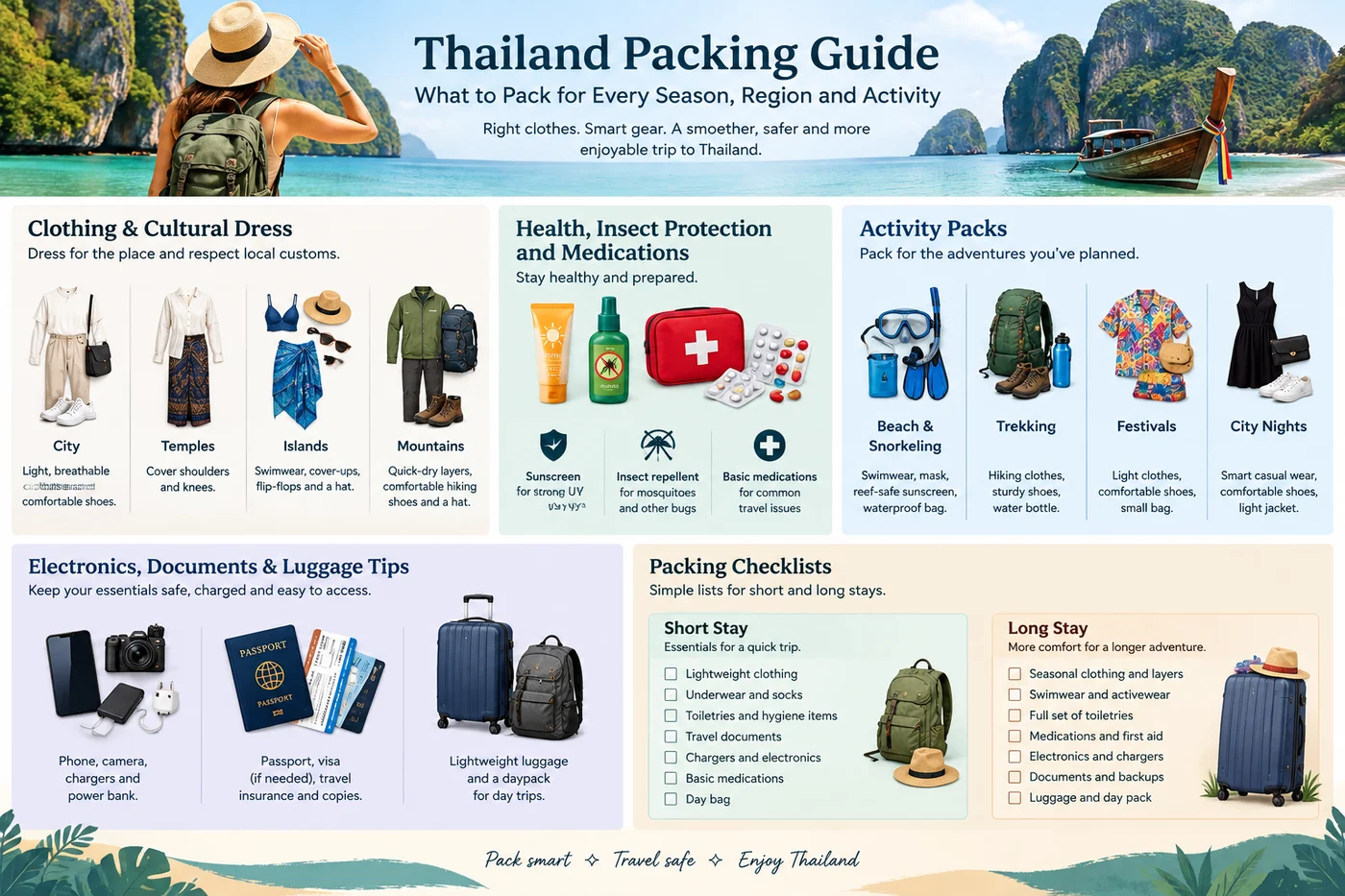
Activity packs: beach & snorkeling, trekking, festivals and city nights
Beach & snorkeling: reef‑safe sunscreen (some operators require it), mask/snorkel or expect to rent, UV rash guard, waterproof dry bag. Trekking/hiking: trail‑ready shoes, gaiters for leeches (in rainy season), headlamp, lightweight sleeping bag liner for homestays. Festivals & nights out: modest smart‑casual wear; lightweight layers for air‑conditioned venues. City exploration: comfortable walking shoes, small daypack, money belt or RFID‑blocking card sleeve. For diving or protected marine areas follow local operator rules on sunscreen and single‑use plastics.
Electronics, documents and luggage tips
Thailand uses 220–230V at 50Hz and many sockets accept multiple plug types—bring a universal adapter and check your device voltage (100–240V). Pack a small power bank, USB charging hub and a travel surge protector for sensitive gear. Carry important documents in your carry‑on and leave scanned copies with a trusted contact: passport, visa paperwork, travel insurance and vaccination records. Use TSA‑style locks and a discreet daypack; consider a lightweight waterproof dry sack for island transfers.
Short and long‑stay packing checklists (printable)
Short stay (3–7 days): 3 shirts, 2 bottoms, 1 smart outfit, underwear, swimwear, 1 light jacket, packable rain jacket/poncho, sandals and walking shoes, meds, insect repellent, universal adapter, photocopy of passport. 7–14 days: add extra underwear, a second pair of shoes, laundry soap or use local laundry, spare charger and toiletry refill. Long stay (2+ weeks): pack fewer clothes and plan to buy/get laundry locally—include stronger hiking boots if you’ll trek, prescription refill plan, and extra storage cubes. Temple kit (always): sarong or long skirt, lightweight long‑sleeve shirt, scarf. Printable checklist (compact): ID/passport, cash/cards, universal adapter, power bank, quick‑dry layers, rain protection, insect repellent, reef‑safe sunscreen, basic meds, sarong, closed shoes, sandals, light jacket.
Practical Tips
Pack cubes and a small lightweight drying line. Double‑bag electronics in ziplock bags for rainy days and boat transfers. Buy heavy items locally (insect repellent, sunscreen, trekking socks) to save luggage space. Keep a change of clothes and essentials in your carry‑on for domestic flight delays. Leave e‑cigarettes and vapes at home—Thai enforcement has increased.
Important Considerations
1) Do not pack e‑cigarette or vape devices—they are treated as prohibited in Thailand and enforcement has intensified. 2) Health advice and malaria zones change—consult CDC guidance and a travel clinic before travel. 3) Some dive operators or marine parks require reef‑safe sunscreen and restrict single‑use plastics—follow local rules.
Planning more of your trip? Browse our
Thailand Travel Guides
for more practical Thailand travel information.
Final Thoughts
A lightweight, season-aware approach will cover most trips to Thailand: breathable fabrics for heat, rain protection for the monsoon, and a warm layer for cool northern nights. Prioritise respectful temple clothing, insect protection and up‑to‑date health advice. Use this guide and the short checklist to tailor your bag to regions and activities—and enjoy Thailand prepared.
Sources & Further Reading
- Thai Meteorological Department – Seasonal Information
- Tourism Authority of Thailand – Dressing to Visit Royal Palaces
- Centers for Disease Control and Prevention – Thailand Traveler’s Health
Transport schedules, fares and operating rules can change. Always verify time-sensitive details with the official operator before travel.