HOTEL GUIDE
How to Eat Vegetarian and Vegan in Thailand: A Practical Traveler’s Guide
Practical, travel‑tested advice for finding safe and tasty vegetarian and vegan meals across Thailand — from jay flags and Thai phrases to street‑food hacks and supermarket labels.
If you want vegetarian food in Thailand, you can eat very well — but success depends on knowing local labels, key phrases and common hidden ingredients. This guide gives practical, on‑the‑ground advice for travellers who want genuinely meat‑free or vegan meals from street stalls to restaurants and supermarkets.
Key Takeaways
- Jay (เจ) is the stricter Buddhist/Taoist vegan standard; mangsawirat (มังสวิรัติ) usually means ‘vegetarian’ but may still include eggs, dairy or fish products.
- Always state explicit exclusions (e.g., 'mai sai nam pla' — no fish sauce) and ask about cross‑contamination at busy stalls.
- Use jay flags, festival vendors and dedicated vegan restaurants for the safest options; supplement B12 for long‑term vegans.
Quick primer: 'jay' vs 'mangsawirat'
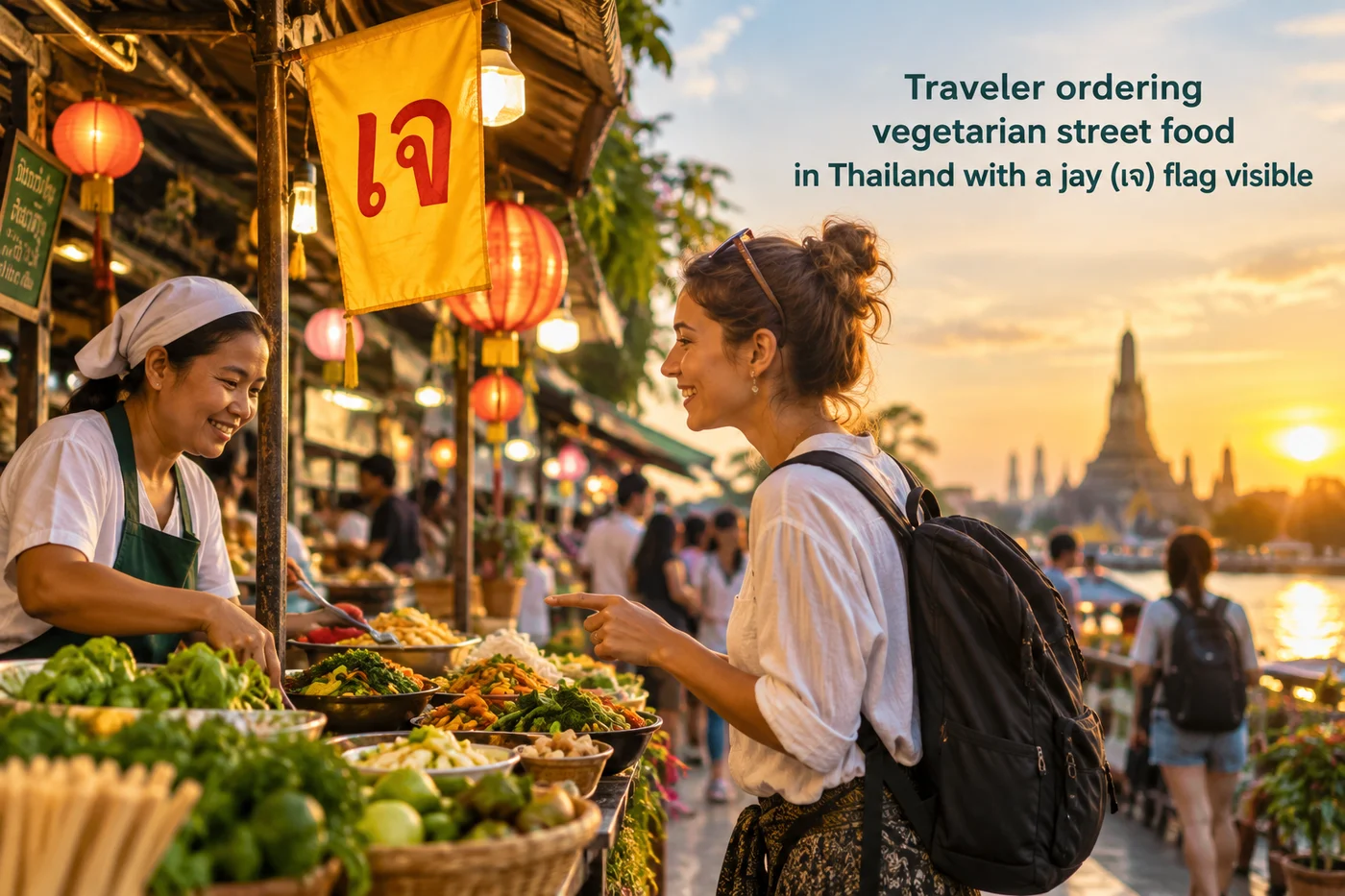
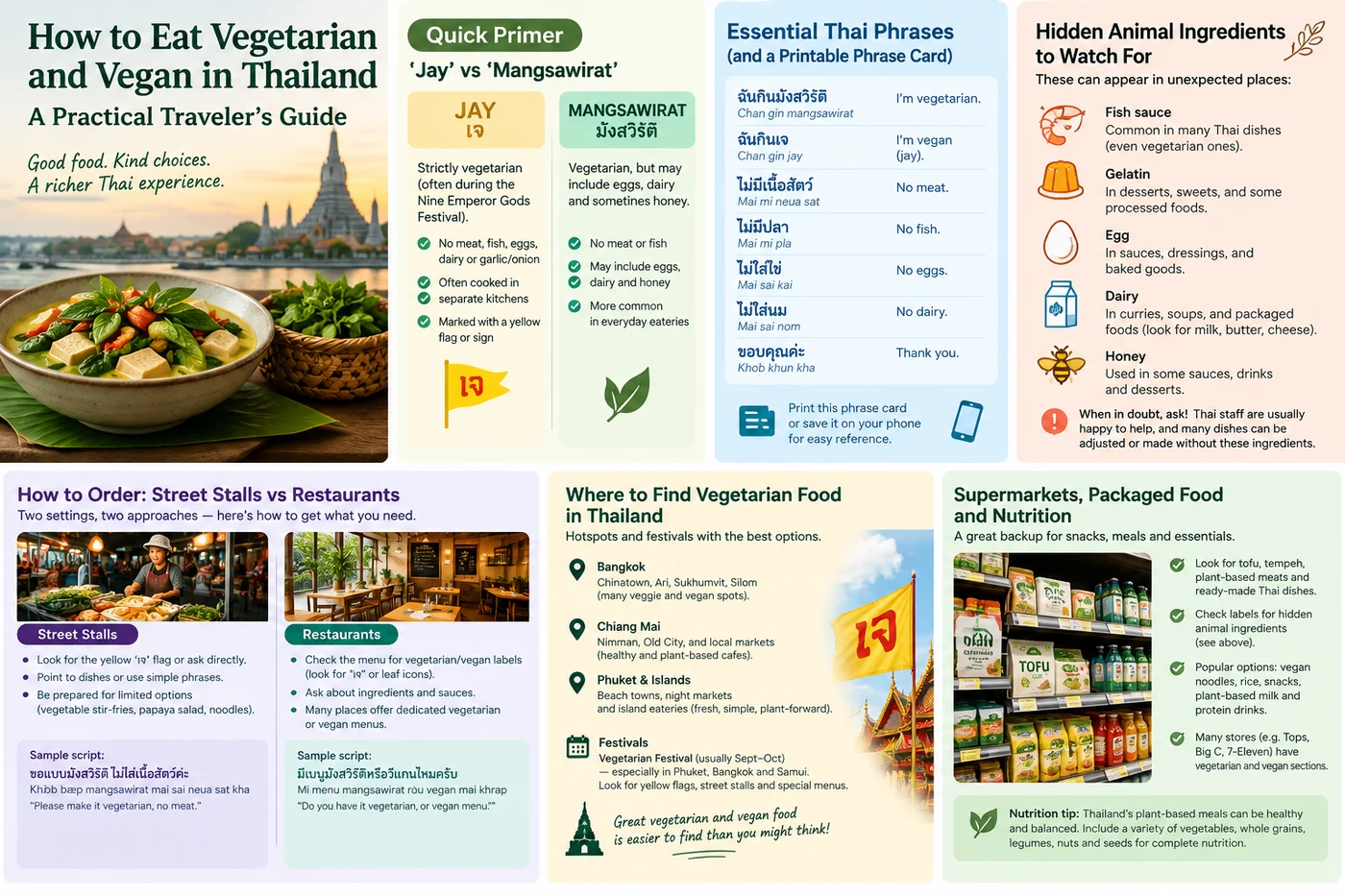
Two Thai terms matter. Jay (เจ) indicates food prepared to a stricter Buddhist/Taoist vegan standard — no meat, seafood, eggs, dairy and often no strong alliums (garlic/onion). Vendors selling jay food commonly display a yellow flag with the red character เจ. Mangsawirat (มังสวิรัติ) is the general word for 'vegetarian' and may still use eggs, dairy, fish sauce or oyster sauce unless the vendor clarifies otherwise. Treat English labels like 'vegetarian' as a starting point, not a guarantee.
Essential Thai phrases and a printable phrase card
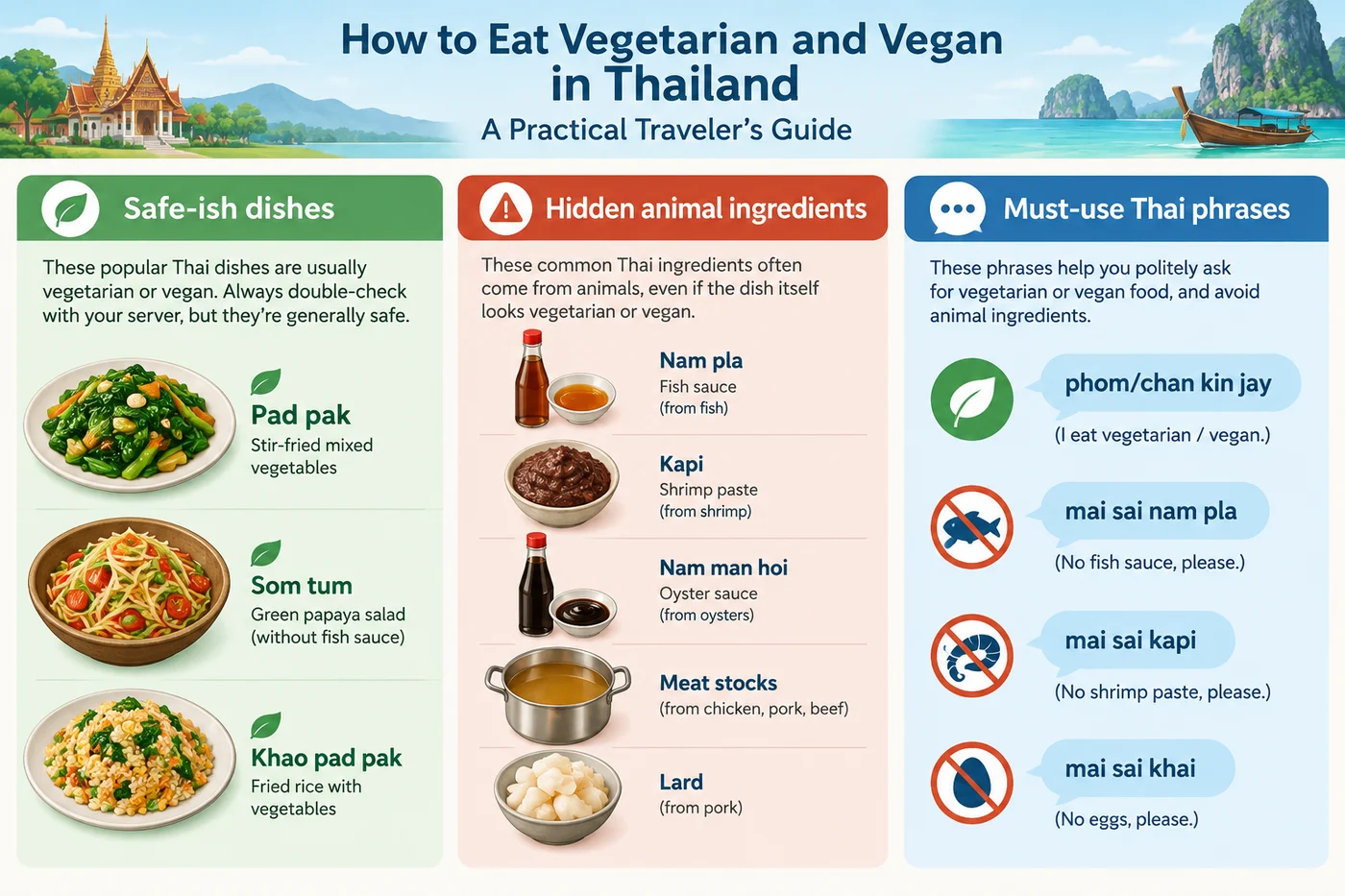
Learning a few short lines will save time and food-related disappointment. Lead with either the gendered opener 'phom kin jay' (ผม กินเจ — male) or 'chan kin jay' (ฉัน กินเจ — female) to indicate you want jay-style food. Then use specific exclusions:
– 'mai sai nam pla' (ไม่ใส่น้ำปลา) — no fish sauce
– 'mai sai kapi' (ไม่ใส่กะปิ) — no shrimp paste
– 'mai sai nam man hoi' (ไม่ใส่น้ำมันหอย) — no oyster sauce
– 'mai sai khai' (ไม่ใส่ไข่) — no egg
If you’re vegan, add 'mai sai nom' (ไม่ใส่นม) — no dairy. Keep these short and polite; staff appreciate clarity. A printed card with these Thai lines is useful for markets and busy stalls.
Hidden animal ingredients to watch for
Thailand uses a handful of seasonings that appear in many dishes: nam pla (fish sauce), kapi (shrimp paste), nam man hoi (oyster sauce) and meat or chicken stock used in soups and noodle broths. Lard or animal fats can appear in stir‑fries. Even dishes that look vegetable‑forward — som tam (papaya salad), pad pak (stir‑fried vegetables) or fried rice — commonly include these. Always name the specific ingredient you want excluded; saying only 'I’m vegetarian' is not reliable.
How to order: street stalls vs restaurants (real‑world scripts)
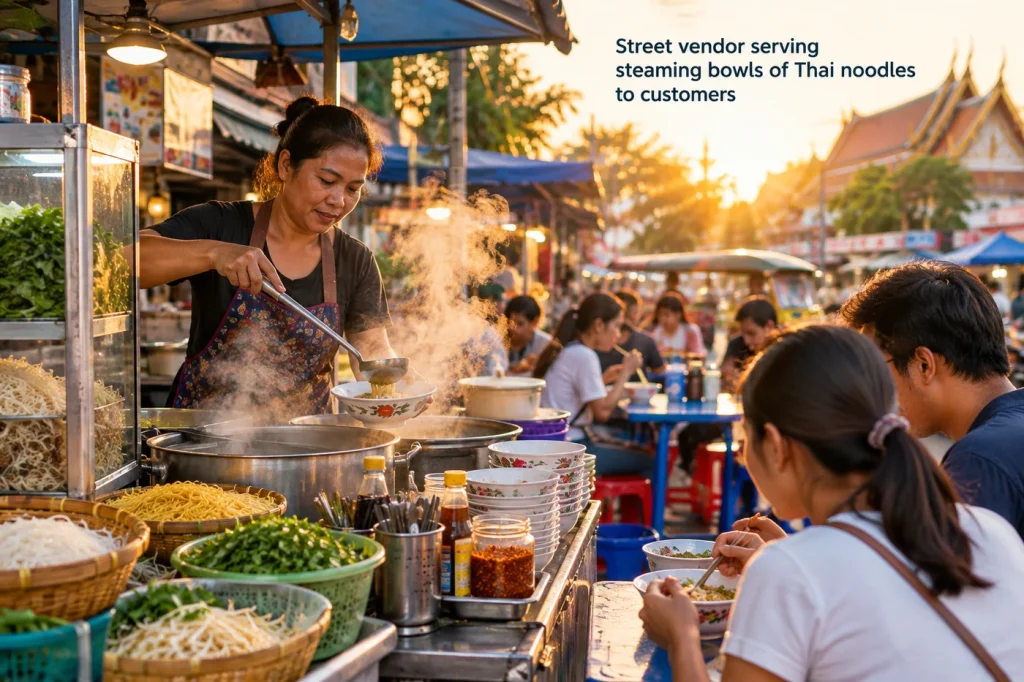
Street stalls: be explicit and ask about equipment. Example script: 'Phom kin jay, mai sai nam pla, mai sai kapi. Chai nang pan sop dai mai?' ('I eat jay, no fish sauce, no shrimp paste. Can you use a clean pan?'). Cross‑contamination is common — shared woks, oil and mortars. If you have shellfish or fish allergies, choose a dedicated jay/vegan stall.
Restaurants: you have more leverage. Ask for a jay version of the dish and repeat exclusions. If ordering from a non‑jay kitchen, treat 'vegetarian' as shorthand and confirm 'no fish sauce, no oyster sauce, no egg'. Be prepared for substitutions and ask how the dish is finished: 'Is there fish sauce in the dressing/broth?'
Where to find vegetarian food in Thailand: hotspots and festivals
Cities and tourist hubs offer the widest choice. Bangkok, Chiang Mai, Phuket and many islands now have dedicated vegan and jay restaurants, while temple canteens and vegetarian districts often do jay food. The annual Vegetarian (Gin Jay) Festival — notable in Phuket and parts of Bangkok — sees many more jay vendors, but festival dates shift with the lunar calendar, so check local listings before you travel. For city planning, link to other HotelForU pages such as our Bangkok restaurant guide to find jay-friendly neighbourhoods.
Supermarkets, packaged food and nutrition
Supermarkets carry soy sauces, tofu, plant milks and many packaged snacks. Read labels carefully: Thai ingredient lists may still include fish extracts. Look for products labelled 'เจ' (jay) or international vegan logos. Strict vegans should plan for vitamin B12 via fortified foods or supplements — B12 supplementation is widely recommended for those following a long‑term vegan diet. If you need medication or allergy cards, keep them in Thai and English.
Practical Tips
Carry a laminated phrase card with the Thai lines; look for yellow jay flags for quick wins; ask for a clean pan/mortar if you’re concerned about cross‑contamination; choose soups and curries only when you’ve confirmed the stock; during the Vegetarian Festival search vendors displaying เจ for wider jay options.
Important Considerations
Don’t assume 'vegetarian' on a menu means vegan—specify each ingredient to exclude; jay flags show intent but are not regulated—confirm if you need strict vegan or allium‑free food; cross‑contamination risks matter for allergies—choose dedicated kitchens when necessary.
Planning more of your trip? Browse our
Thailand Food & Restaurant Guides
for more practical Thailand food and dining information.
Final Thoughts
Thailand can be a wonderfully accommodating destination for vegetarians and vegans if you know the local terms, ask the right questions and watch for hidden ingredients. Use jay‑flagged stalls, festival vendors and vegan restaurants when you need certainty; otherwise, clear Thai phrases and a little patience will take you a long way.
Sources & Further Reading
- OutThailand — Vegetarian & Vegan Guide
- Phuket Vegetarian Festival — Official Site
- VeganTravelGuide — Thailand
- PMC — Review: Vitamin B12 and vegan diets
Transport schedules, fares and operating rules can change. Always verify time-sensitive details with the official operator before travel.