HOTEL GUIDE
Thailand Travel Health Guide: Vaccinations, Emergencies & Insurance
Practical, step-by-step health guidance for travellers to Thailand: vaccines, medicines, emergency care, pharmacies and insurance essentials.
If you’re planning a trip to Thailand, prioritising Thailand travel health before and during your visit reduces risk and stress. This guide covers recommended vaccines, how to pack a travel medical kit, where to find English-speaking hospitals in Bangkok, Chiang Mai and beach destinations, how ambulance and emergency care work, and what travel insurance should cover.
Key Takeaways
- See a travel clinic 4–6 weeks before departure for vaccine and malaria advice tailored to your itinerary.
- Pack prescriptions in original containers, a travel health kit, and insurer/emergency contacts; know how to contact accredited private hospitals.
- Carry travel insurance that explicitly covers local treatment, hospital guarantees and medical evacuation; call assistance before major decisions.
Quick pre‑trip checklist
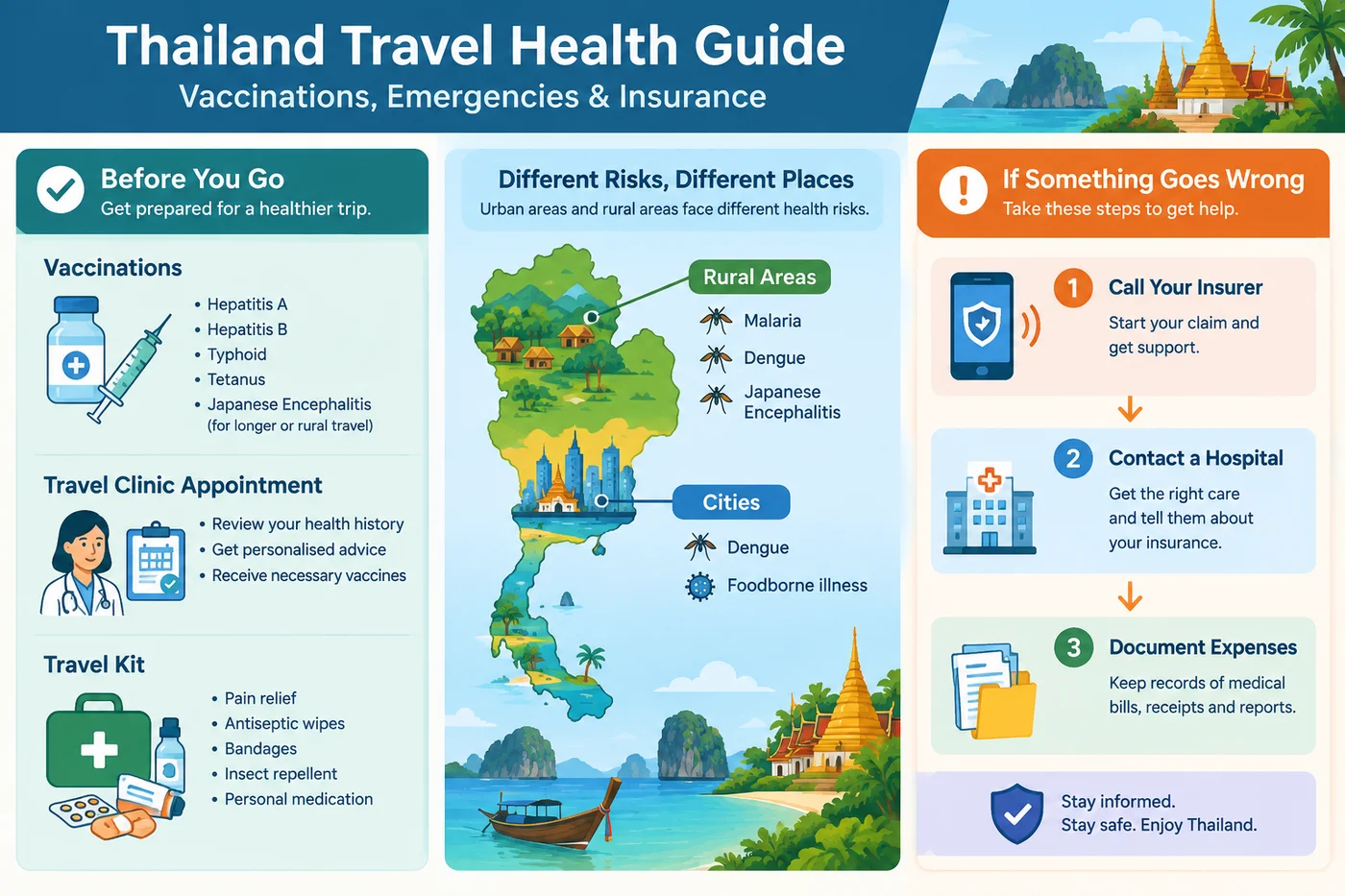
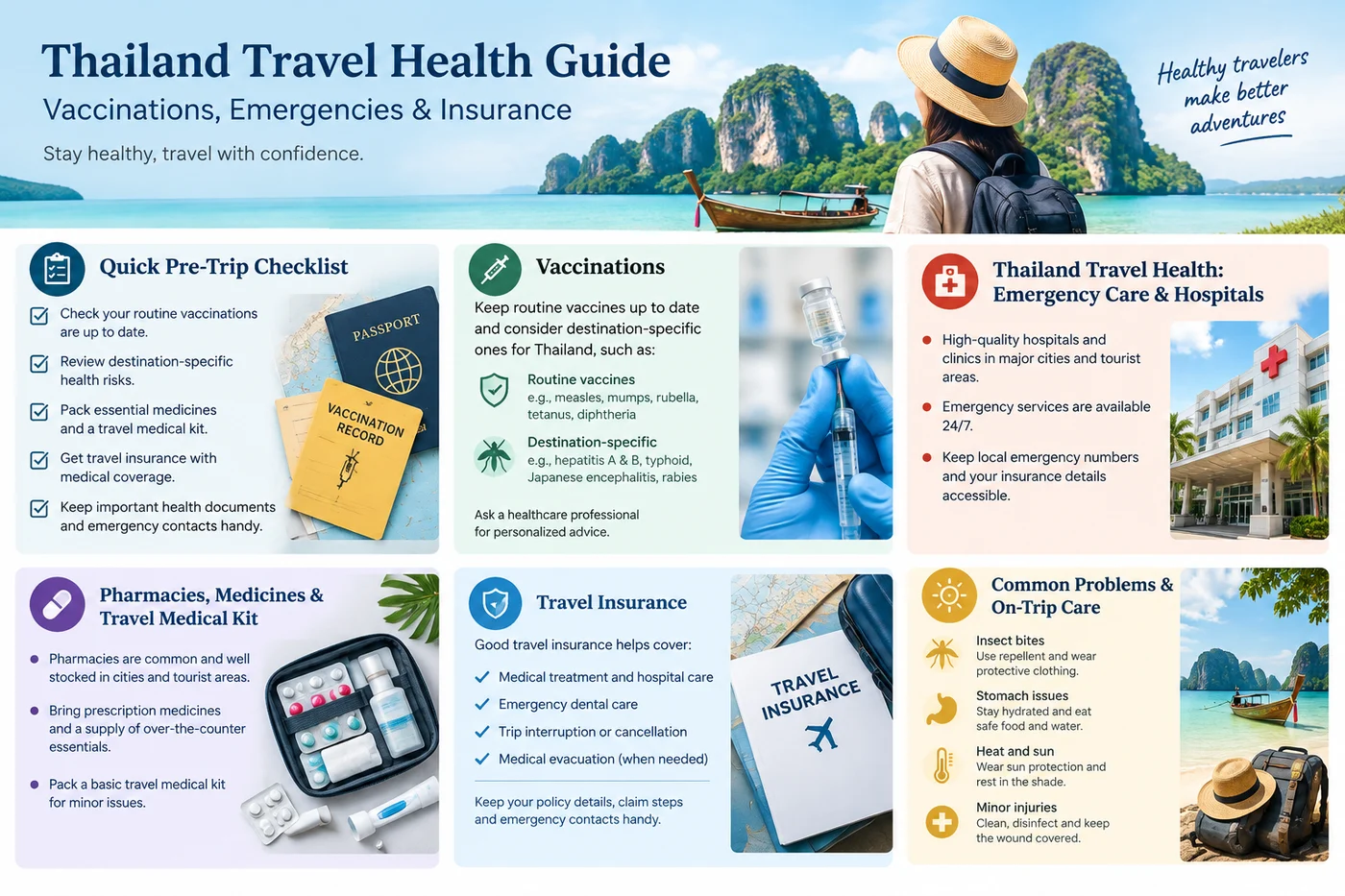
Before you fly: book a travel health appointment 4–6 weeks out, bring vaccine records, photocopy passports and insurance cards, and download your insurer’s emergency number and local embassy contacts. Essential actions: get routine vaccines up to date (MMR, Tdap), discuss Hepatitis A/B and typhoid, and evaluate need for rabies or Japanese encephalitis (JE) based on planned activities and season. If visiting forested or border areas, review malaria prophylaxis with a clinician.
Vaccinations: routine and destination‑specific
Routine vaccines (MMR, Tdap) are advised for all travellers. CDC guidance also recommends Hepatitis A for most travellers to Thailand and Hepatitis B for those with potential exposure. Typhoid, rabies and JE are recommended selectively: typhoid for long stays or high‑risk food exposure; rabies if you’ll be working with animals, doing extensive outdoor activities, or in remote areas; JE for rural or long‑stay travellers during transmission season. Vaccine guidance is itinerary‑dependent—confirm with a travel clinic. (Source: CDC Thailand guidance.)
Thailand travel health: Emergency care & hospitals
Thailand’s public emergency number for medical/ambulance assistance is widely listed as 1669, but local signage and hotel staff can confirm current numbers. For serious or complex care, private hospitals in Bangkok (for example Bumrungrad and other JCI‑accredited centres) and major tourist hubs routinely provide English services and international patient desks. Public hospitals handle emergency cases nationwide but may have longer waits and limited English. If you need specialist care, contact your insurer/assistance provider first—many private hospitals require a guarantee of payment for non‑insured patients. For lists of English‑speaking doctors and hospital contacts, check HotelForU’s Bangkok hospital round‑up or contact your embassy.
Pharmacies, medicines & travel medical kit
City and tourist‑area pharmacies (chains like Boots and Watsons and independent shops) dispense many over‑the‑counter medicines; however, controlled medicines and some antibiotics may require prescriptions or be subject to Thai FDA rules. Bring at least a 30‑day supply of essential prescription drugs in original containers, plus a printed prescription and a short letter from your doctor. Pack a travel medical kit with: oral rehydration salts, antiseptic wipes, adhesive dressings, paracetamol/ibuprofen, antihistamine, insect repellent (DEET or picaridin), sunscreen, topical hydrocortisone, prescription antibiotics only if advised, and any malaria pills your clinician prescribes. Copy this checklist into your phone for quick reference.
Travel insurance, claims & medical evacuation
Buy travel medical insurance that explicitly covers hospital treatment in Thailand, medical evacuation and repatriation. Before travel, note your policy number, emergency assistance phone and steps to obtain a hospital guarantee. Sample claim steps: 1) Call your insurer/assistance line immediately and get an authorisation/reference number; 2) If admitted, ask the hospital to contact your insurer for guarantee of payment; 3) Keep original receipts, medical reports and medication labels; 4) Complete insurer claim forms and submit copies of passport, boarding passes and proof of payment. Be aware of common exclusions—motorbike accidents may be excluded unless your policy specifically covers them and you meet licence requirements.
Common problems and on‑trip care
Traveller’s diarrhoea: stay hydrated using oral rehydration salts; use antimotility agents for symptomatic relief if advised; see a clinician if fever, severe abdominal pain or blood in stool occurs. Dengue and other mosquito‑borne illnesses: no routine dengue vaccine for most travellers—prevention is through repellents, long sleeves and screens; seek medical care for high fever, severe muscle pain or bleeding signs. Heat illnesses and sunburn: hydrate, rest in shade, use sunscreen and electrolyte solutions. Jellyfish stings: rinse with seawater (not fresh water), remove tentacles carefully, and seek medical attention for severe pain or allergic reactions. After any animal bite, wash the wound, seek urgent medical assessment for possible rabies prophylaxis and report the incident to local health authorities if recommended.
Practical Tips
Carry digital and paper copies of vaccine records and prescriptions. Save insurer and embassy numbers to your phone and leave copies with a trusted contact. For motorbike use, check your insurance coverage and local licensing rules. When in doubt about hospitals, call your insurer’s assistance line before accepting treatment to verify coverage and guarantees.
Important Considerations
Vaccine and malaria recommendations change—confirm current guidance with CDC or your local travel clinic. Private hospitals may request upfront payment; do not assume costs will be settled by your insurer without prior authorisation. Controlled medicines availability varies—bring essential prescriptions and documentation.
Planning more of your trip? Browse our
Thailand Travel Guides
for more practical Thailand travel information.
Final Thoughts
Good preparation reduces the chance that illness will spoil your trip. Book a travel health appointment, pack a sensible kit, carry comprehensive insurance and know how to contact English‑speaking hospitals and your insurer. If you do need care, prioritise safety, document everything and use your assistance provider to coordinate care and payments.
Sources & Further Reading
- CDC – Yellow Book: Thailand
- Thailand official portal – emergency contact info
- Bumrungrad International – accreditation and international services
- CDC – Pack Smart: Travel Health Kit
Transport schedules, fares and operating rules can change. Always verify time-sensitive details with the official operator before travel.