HOTEL GUIDE
Thailand Safety: Common Tourist Scams and How to Avoid Them
A concise, practical guide to the most common Thailand tourist scams and clear steps to prevent loss, document incidents and get help from Tourist Police and your embassy.
Thailand tourist scams remain a common nuisance in busy tourist zones. This practical guide summarises the scams travellers most often face — from tuk‑tuk detours and fake‑police checks to rental damage claims and ATM fraud — and gives clear, actionable steps to prevent loss and recover if targeted.
Key Takeaways
- Most scams cause financial loss rather than physical harm; prepared travellers who document incidents and call Tourist Police (1155) increase their chance of recovery.
- Simple prevention beats panic: photograph rentals, keep receipts, refuse passport deposits and verify offers independently.
- If targeted, gather evidence, move to a safe public place, call 1155 (Tourist Police) and your embassy; report the incident to TAT (1672) and your insurer.
Thailand tourist scams: Top scams to know
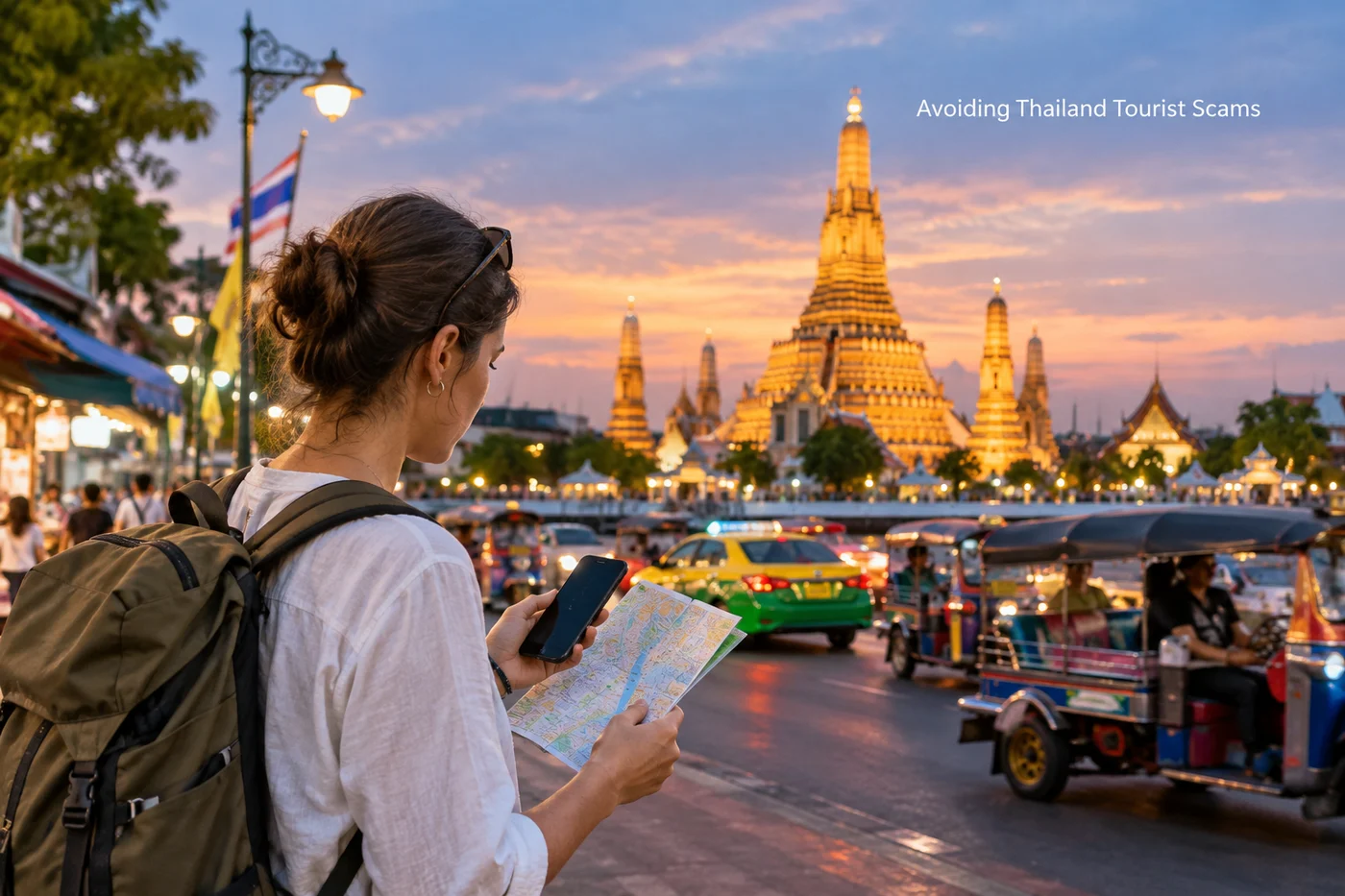
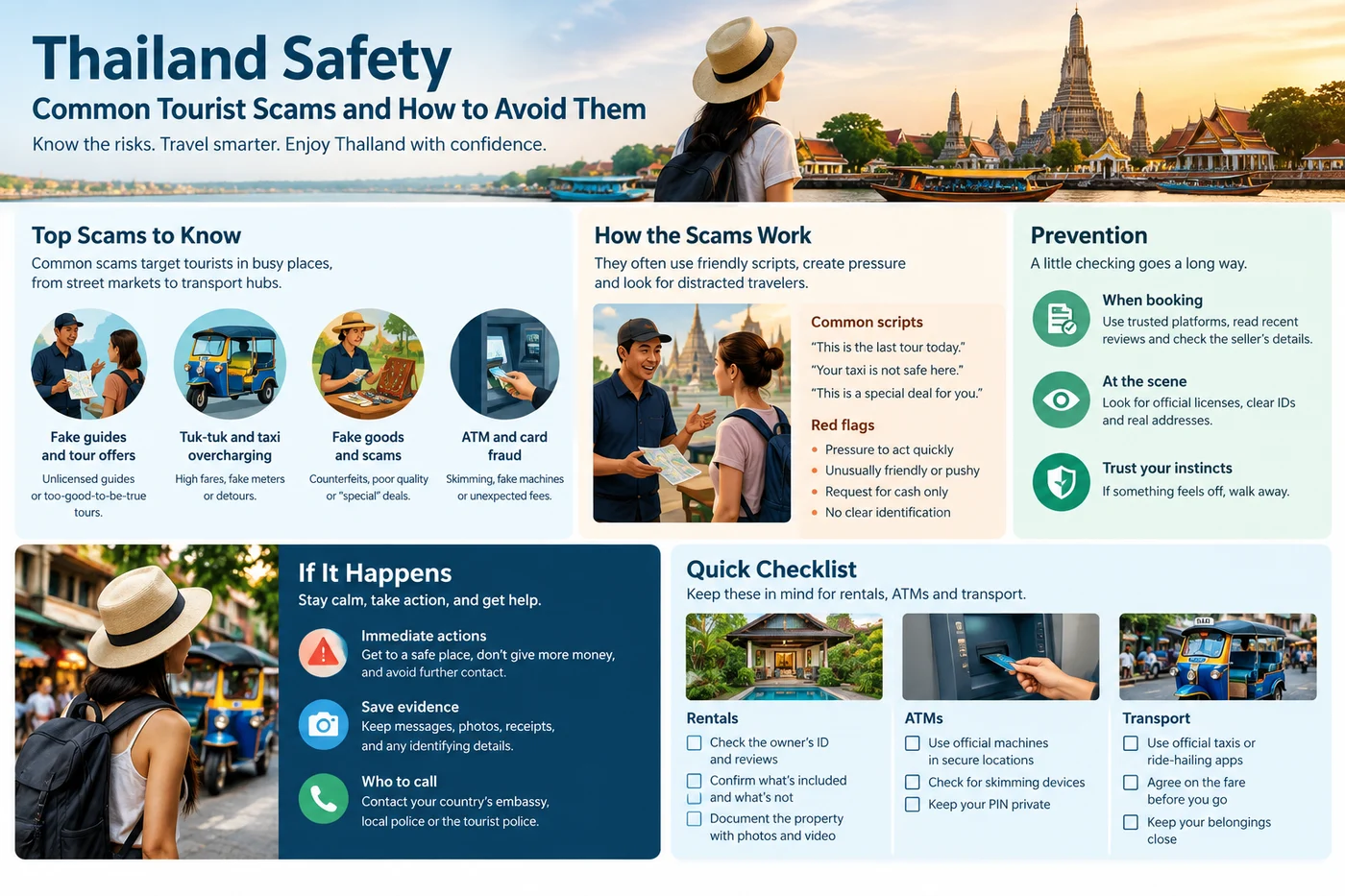
Short list of frequent rip‑offs and where they happen: tuk‑tuk or motorbike drivers claiming attractions are closed and steering you to commission‑paying gem/tailor shops (Bangkok temples, markets); jet‑ski and motorbike rental operators who later claim pre‑existing damage (islands and beach resorts); taxi/tuk‑tuk refusal to use the meter or vastly inflated fares (airports, tourist districts); nightlife overcharging and swapped bills (bars and clubs); fake police/ID checks asking for cash or passports; ATM/card skimming; and online romance or job recruitment scams that can lead to financial coercion. These concentrate in high‑tourist areas (Bangkok, Phuket, Pattaya and major islands) but variants appear elsewhere.
How the scams work — scripts and red flags
Scammers use simple, repeatable scripts. Examples and red flags: 1) 'Attraction closed today' script — a friendly stranger or tuk‑tuk offers a cheap tour and says a famed temple is closed, then drives you to gem or tailor shops; red flag: unsolicited offers, pressure to buy. 2) Rental damage bluff — operator accuses you of damage after you return a jet‑ski or motorbike, shows photos of 'damage' and demands cash; red flag: they ask to hold your passport or demand payment before paperwork. 3) Fake police — someone in plain clothes or wearing a loosely official badge asks to see your passport and then requests a cash 'fine'; red flag: no uniformed police ID, no official receipt. 4) ATM tampering — unusual card resistance or extra devices attached to machine; red flag: people loitering near ATM or devices on the card slot. Spotting these red flags early gives you time to refuse, document and walk away.
Prevention: what to check when booking and at the scene
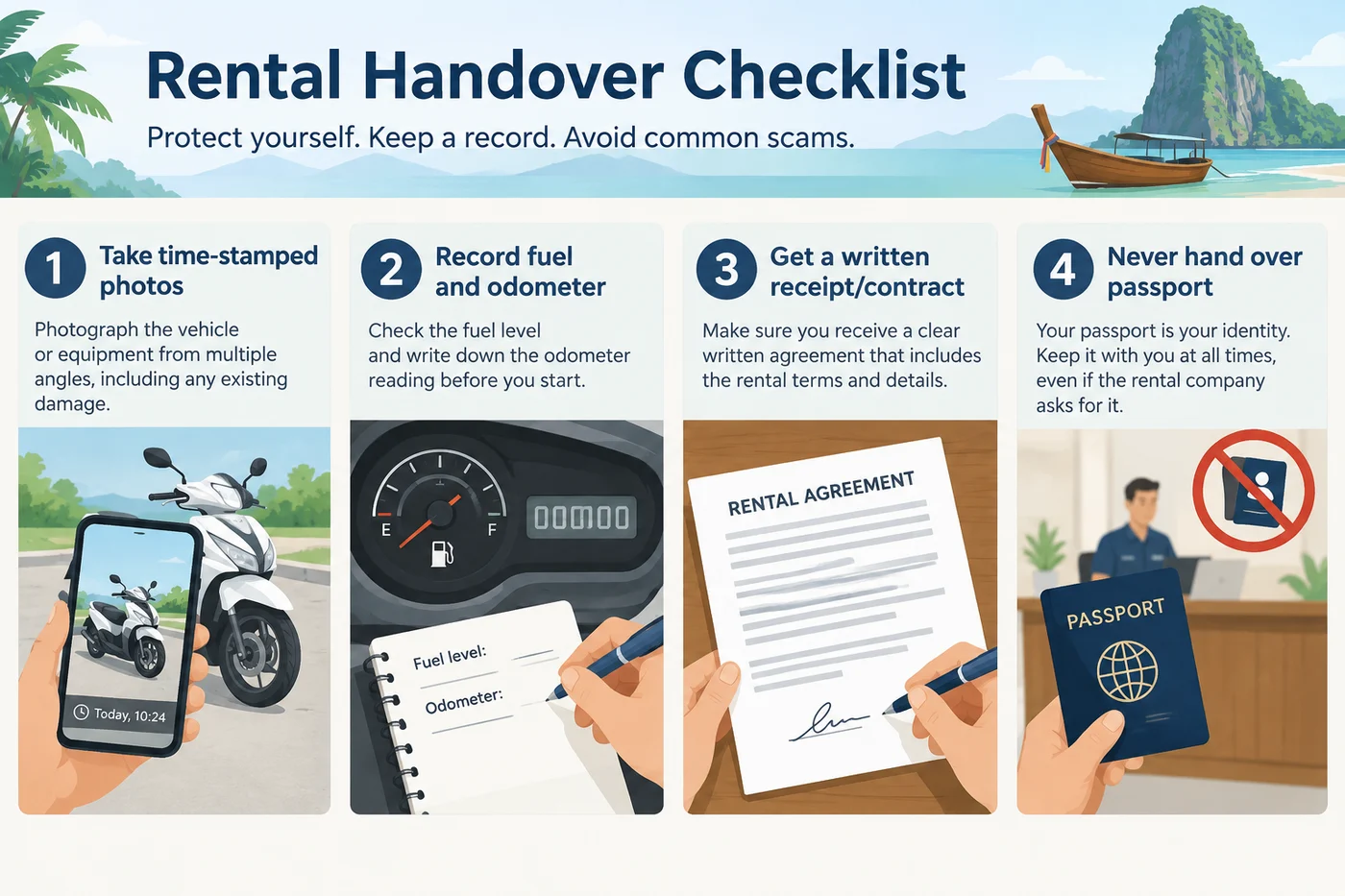
Before you go: book reputable hotels, licensed tour operators and transfers through recognised platforms or direct official desks. Save confirmation emails and take screenshots of supplier profiles and reviews. At rentals and handovers: 1) Insist on a written contract or receipt that lists charges and ID of the operator. 2) Photograph or video the vehicle/equipment from multiple angles (include a time reference like your phone lock screen) — show fuel level and odometer where applicable. 3) Never hand over your passport; offer a photocopy or a refundable deposit by card. 4) Pay by card where possible and keep receipts. For taxis, use metered taxis or rideshare apps (Grab/Bolt where available) and note the licence plate before you get in. For attractions, verify opening hours online or at an official ticket desk — decline unsolicited offers and walk away if pressure increases.
If it happens: immediate actions, evidence and who to call
Stay calm and avoid confrontation. Immediate steps: 1) Document everything — photos, video, timestamps, receipts, the other party’s ID, licence plate and witnesses. 2) Move to a public, well‑lit area. 3) Tell the vendor you will call Tourist Police (1155) and your embassy; this often de‑escalates the situation. 4) Call Tourist Police (1155) for on‑the‑ground assistance — the Tourist Police also have a mobile app and English help lines. 5) Report to the Tourism Authority of Thailand call centre (1672) for consumer issues and to note the incident. 6) Contact your embassy or consulate if your passport is held or you feel threatened; notify your travel insurer and card issuer if fraud or theft occurred. Keep copies of all reports and receipts — these are critical if you pursue a formal complaint or chargeback.
Practical checklist for rentals, ATMs and transport
A quick action list to save time when you’re on the ground: – Rentals: take time‑stamped photos, sign a written agreement, refuse passport deposits, record fuel/odometer, pay by card if possible. – Jet‑skis: insist on a full walk‑through with the operator, note any scratches, and keep the receipt. – Taxis/tuk‑tuks: insist on the meter or use rideshare; if fare disputes arise, note the licence and call Tourist Police 1155. – ATMs/cards: use ATMs attached to banks, cover the keypad, check for loose parts and review statements daily. – Online contacts: never transfer money for jobs or relationships without verification; be cautious of requests to handle packages or send funds. For more on temple‑area scripts and Bangkok advice, see our Bangkok safety guide (internal link opportunity: /bangkok-safety-tips).
Practical Tips
Keep digital copies of passport and travel documents in cloud storage. Use travel‑ready receipts: photograph each transaction and keep paper receipts. Set a daily check of card activity and enable transaction alerts. If a vendor demands immediate cash, ask for a written bill; refusal to provide one is a red flag. Travel in pairs or groups at night when possible; solo travellers should share their itinerary with someone at home.
Important Considerations
Report incidents promptly — outcomes vary by location and case. Tourist Police and TAT offer English help, but responses can be inconsistent; preserve evidence and get official report numbers. Do not physically resist scammers. Time‑sensitive enforcement or local campaigns change; check official pages (Tourist Police, TAT) before travel.
Planning more of your trip? Browse our
Thailand Travel Guides
for more practical Thailand travel information.
Final Thoughts
Knowledge and simple habits are your best defence. Many Thailand tourist scams rely on speed and surprise — slow down, document, and use official channels (Tourist Police 1155, TAT 1672) when things go wrong. With these practical steps you’ll reduce risk and be better placed to recover funds or get help if needed.
Sources & Further Reading
- Tourist Police, Thailand (official)
- Tourism Authority of Thailand (TAT) — tourist services
- U.S. Department of State — Thailand travel advisory
Transport schedules, fares and operating rules can change. Always verify time-sensitive details with the official operator before travel.