HOTEL GUIDE
Thailand Taxis & Ride‑Hailing Guide: How to Use Grab, Metered Taxis, Tuk‑Tuks and Motorcycle Taxis Safely
Step‑by‑step advice for using metered taxis, Grab and local transport in Thailand—what to expect, safety checks, common scams and regional tips for Bangkok, Chiang Mai and islands.
This practical guide explains how to use Thailand taxis and ride-hailing safely. It covers metered taxis, DLT‑certified apps (like Grab), tuk‑tuks and motorcycle taxis, what to expect on fares and extra charges, how to pay, and how to avoid common scams.
Key Takeaways
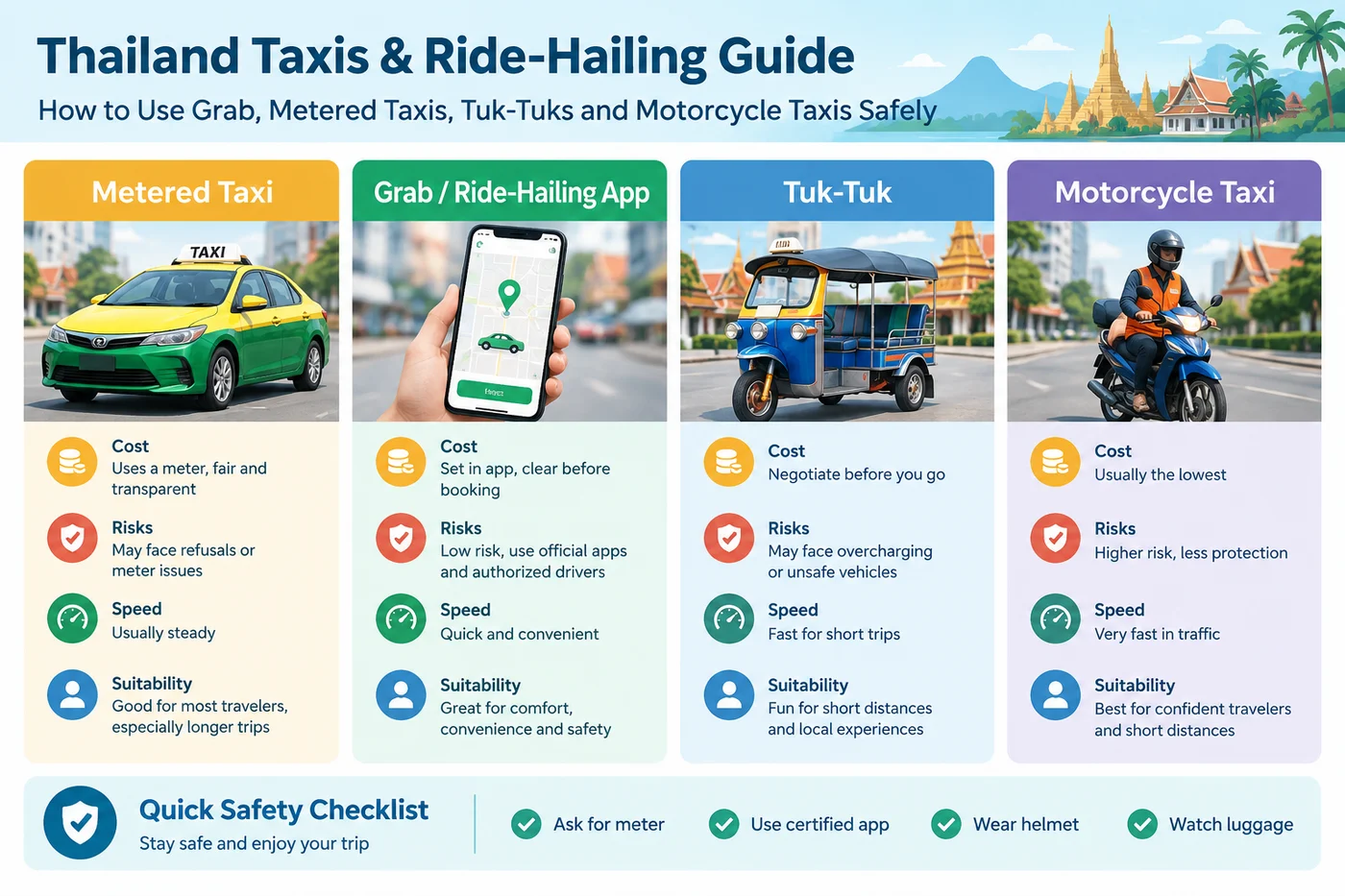
- Insist on the meter or use a DLT‑certified ride‑hailing app; refusal is reportable via DLT 1584.
- Tuk‑tuks are negotiated and prone to diversion scams; use them only for short, pre‑agreed rides.
- Motorcycle taxis are fast but higher risk—wear a helmet and avoid them at night or with bulky luggage.
What’s regulated: meters, certified apps and passenger rights
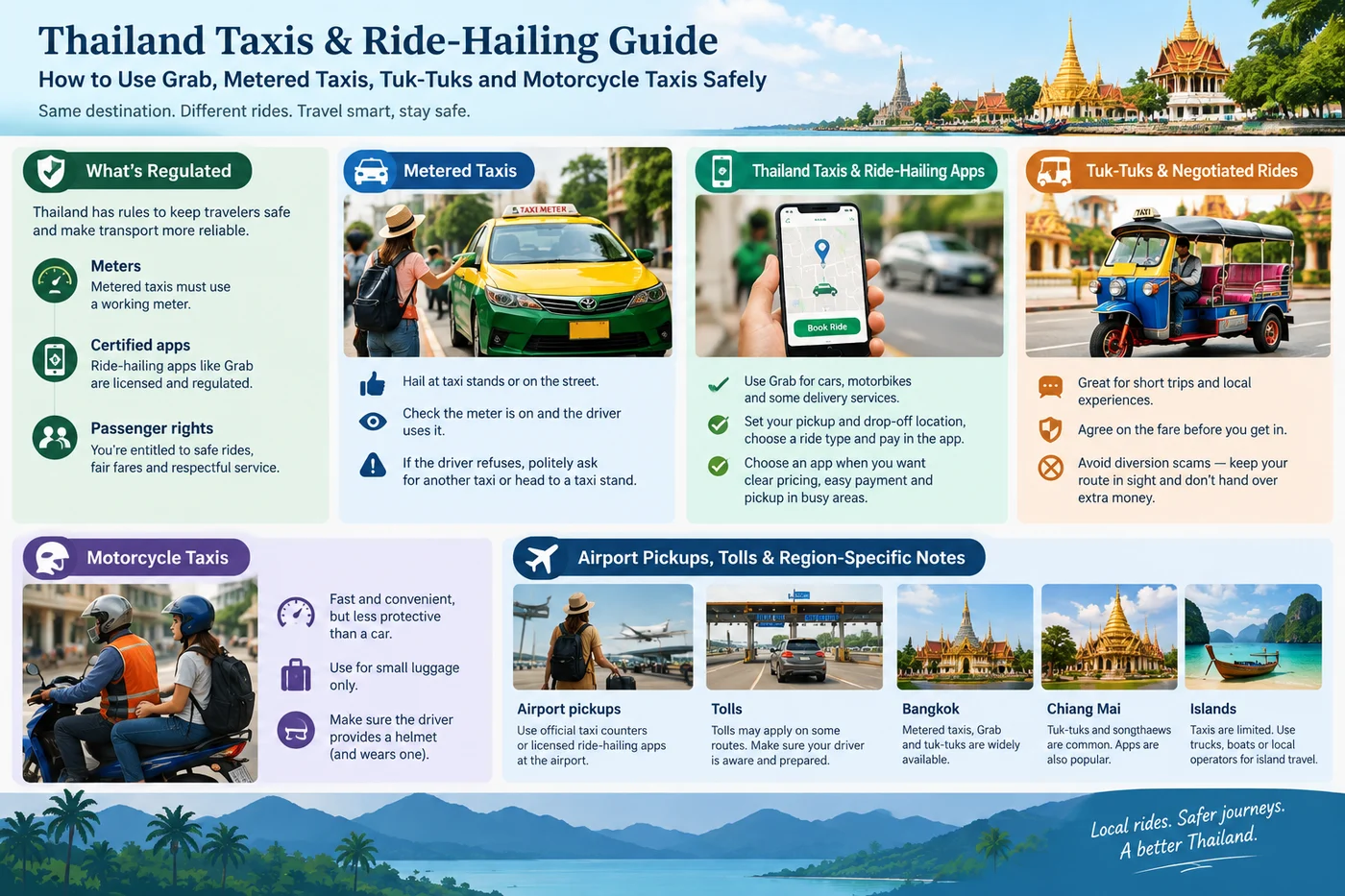
Thailand requires metered taxis to charge fares according to the meter; refusing the meter or demanding a flat rate is unlawful and can be reported. The Department of Land Transport (DLT) certifies ride‑hailing apps and recommends using certified services because they link licensed drivers and vehicles and provide stronger consumer protections. Keep the DLT passenger‑protection hotline (1584) and Tourist Police (1155) handy—you can report overcharging, refusal to run the meter, or app problems.
Metered taxis: how to hail, what to check and what to do if the driver refuses
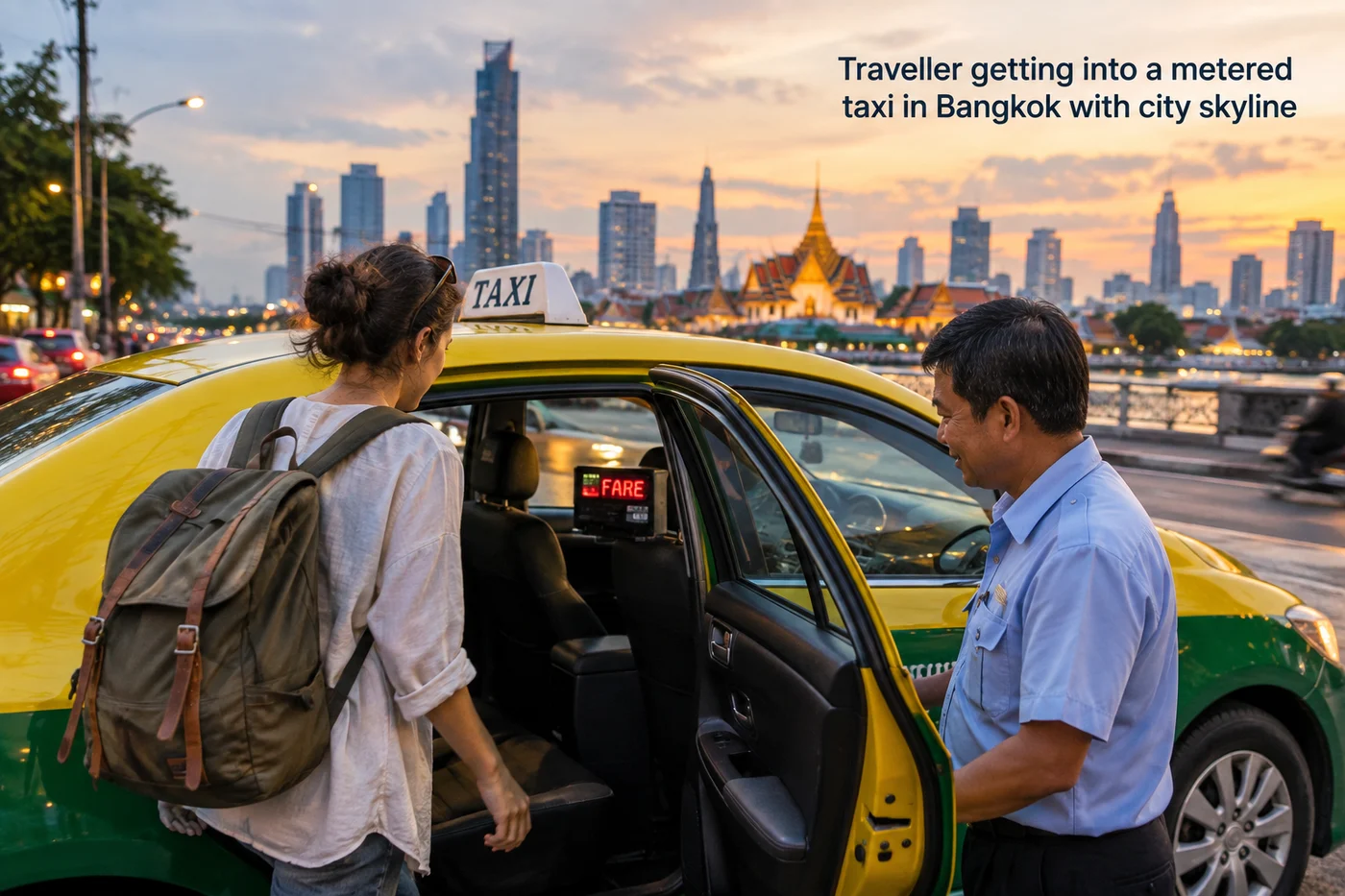
Hail metered taxis on the street or use an official taxi stand. Before you get in check: the taxi meter (working and visible), the driver ID card and the license‑plate number. If the driver refuses to use the meter, say politely in Thai: 'Meter kha/krab' and show you will report the taxi if necessary. If refusal continues: photograph the plate and driver ID, get out at a safe place, and call DLT 1584 to file a complaint. Real‑world example: for a short 2 km trip, insist on the meter—drivers quoting a flat tourist price are common near markets and attractions.
Thailand taxis and ride-hailing apps: Grab, how to use them and when to choose an app
Ride‑hailing apps let you book a driver, see vehicle details, track your route and pay cashless or in cash. Grab offers multiple products (taxi, private car and GrabBike) and in‑app safety tools; the company has been expanding safety features in recent rollouts (announcement details are time‑sensitive). Use apps when you want a digital receipt, GPS tracking, or a set pickup at airports or hotels. Booking tip: set a clear pickup pin and a visible meeting point—drivers appreciate exact landmarks. Keep a small amount of baht as backup in case your card or QR‑pay fails.
Tuk‑tuks and negotiated rides: when to ride and how to avoid diversion scams
Tuk‑tuks are fun for short, scenic trips but fares are negotiated and non‑metered. They are also a common vector for the 'Grand Palace closed' diversion or offers that end at commission‑paying shops. If approached near major sights, decline and walk to the official entrance or order a certified taxi/app. When you do use a tuk‑tuk: agree a clear price and route before starting, keep valuables close, and avoid offers that include unexpected stops.
Motorcycle taxis: speed vs safety, luggage and helmet rules
Motorcycle taxis are ideal for short, congested routes and are widely available at ranked spots (look for riders in numbered vests). They carry a higher crash risk—motorcyclists account for a large share of Thailand’s road fatalities—so use caution. Always ask for a helmet and fasten it; if you have bulky luggage, children, or are riding late at night, choose an enclosed car instead. Motorcycle taxi apps exist too, but local street drivers are often faster to flag down in cities.
Airport pickups, tolls and region‑specific notes (Bangkok, Chiang Mai, islands)
Airports may have official taxi desks that issue a numbered coupon and add airport surcharges and tolls. App pickups can be simpler—pick the designated app pickup point and allow time for queues. In Bangkok expect tolls and waiting‑time charges on longer trips; in Chiang Mai taxi availability is lower and motorcycle taxis are more common for short trips. On islands and small tourist towns, metered taxis may be rare—prebook a transfer with your hotel or use reputable airport‑transfer services. Always check luggage capacity before confirming a ride.
Practical Tips
Pre‑ride checklist: confirm the meter or book a certified app, photograph driver ID/plate, drop a trip share to someone, carry small baht. Payment: both cash and app payments are common—keep cash for tuk‑tuks and drivers who don’t accept cards. If charged extra for tolls or waiting, ask for a receipt or use the app receipt. Night safety: prefer apps or metered taxis for late‑night trips; avoid motorcycle taxis if visibility is poor. Real examples: short market run—use tuk‑tuk only after price agreed; airport transfer—use official airport taxi desk or certified app; refused fare—take plate photo, exit safely, call 1584.
Important Considerations
Certified app lists and app safety features change—check the DLT advice and app pages before travel. Enforcement of the meter law varies in practice; the DLT complaint process exists but results take time. Motorcycle taxis are faster but statistically more dangerous—balance speed against safety.
Planning more of your trip? Browse our
Thailand Travel Guides
for more practical Thailand travel information.
Final Thoughts
Using taxis and ride‑hailing in Thailand is straightforward if you protect yourself: insist on meters, favour DLT‑certified apps when you need a record, be cautious with tuk‑tuk offers, and treat motorcycle taxis as a higher‑risk option. Keep emergency numbers and simple evidence (photos, receipts) to hand—these make complaints and recovery easier if something goes wrong.
Sources & Further Reading
- Thailand Public Relations — DLT guidance on certified ride‑hailing apps
- Thai PBS Verify — meter law and DLT complaint channels (1584)
- Grab Thailand — transport products and safety information
- World Health Organization — Thailand road safety (motorcycle risks)
Transport schedules, fares and operating rules can change. Always verify time-sensitive details with the official operator before travel.