HOTEL GUIDE
Is Street Food in Thailand Safe? Practical Tips for Eating Like a Local
A practical, evidence-based guide to enjoying Thai street food without getting sick: how to spot clean stalls, which dishes are lower-risk, water and ice advice, and what to do if you fall ill.
Thailand street food safety is a common question for travelers. The short answer: you can eat street food in Thailand and keep your risk low by choosing busy, hot-cooked stalls, avoiding unsafe ice and raw items, and using basic hand hygiene. This guide gives clear, actionable steps—backed by Thailand’s public-health programs, WHO/FAO and CDC guidance—so you can enjoy local flavors without unnecessary worry.
Key Takeaways
- Eat hot, freshly cooked food from busy stalls; avoid raw/uncertainly washed produce and unsealed ice.
- Look for hygiene signals (busy stall, clean surfaces, vendor training/certification) and carry sanitizer and ORS.
- Higher-risk groups (pregnant, very young, elderly, immunocompromised) should be more selective or avoid risky items.
Thailand street food safety — Quick take
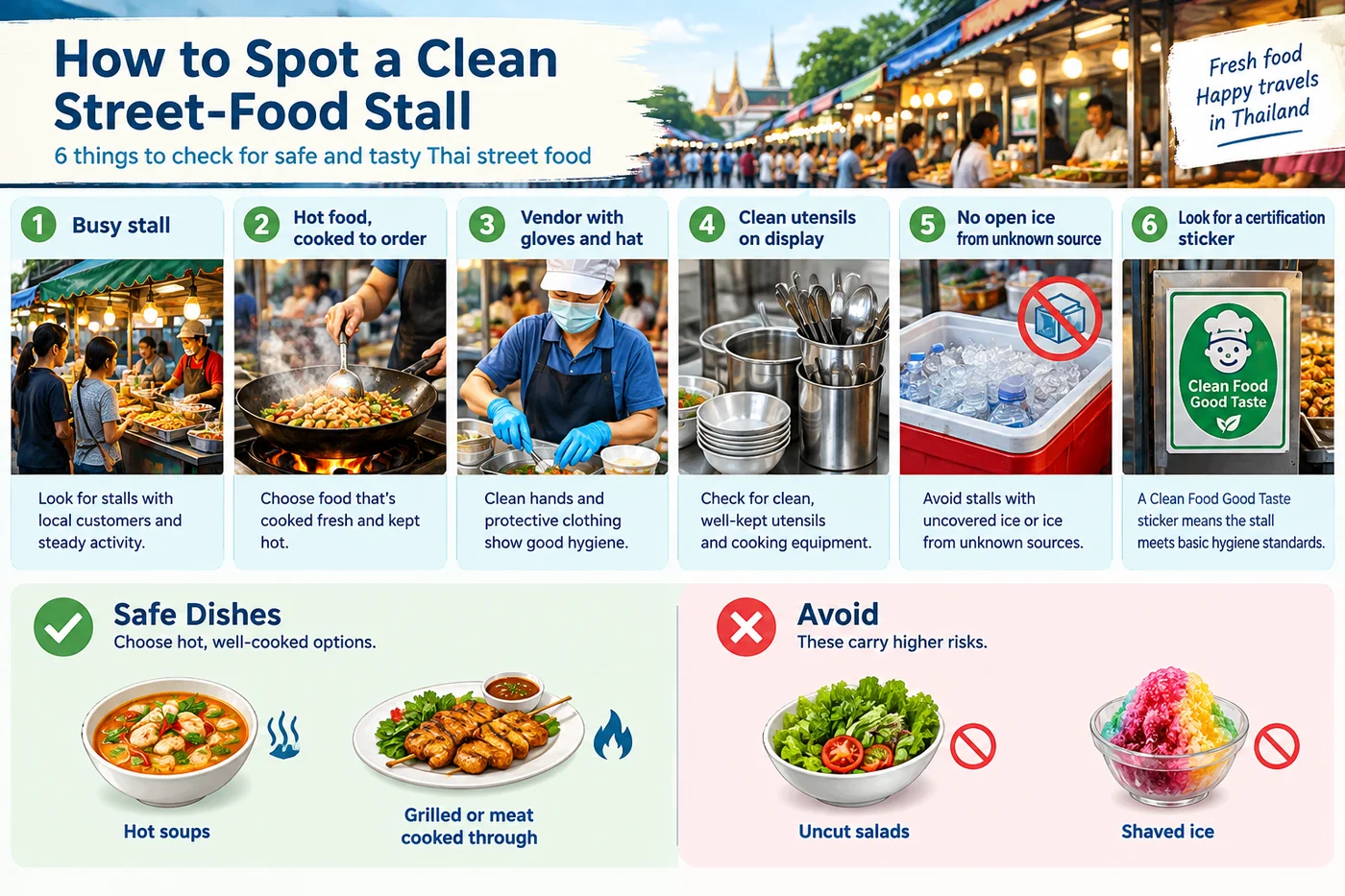
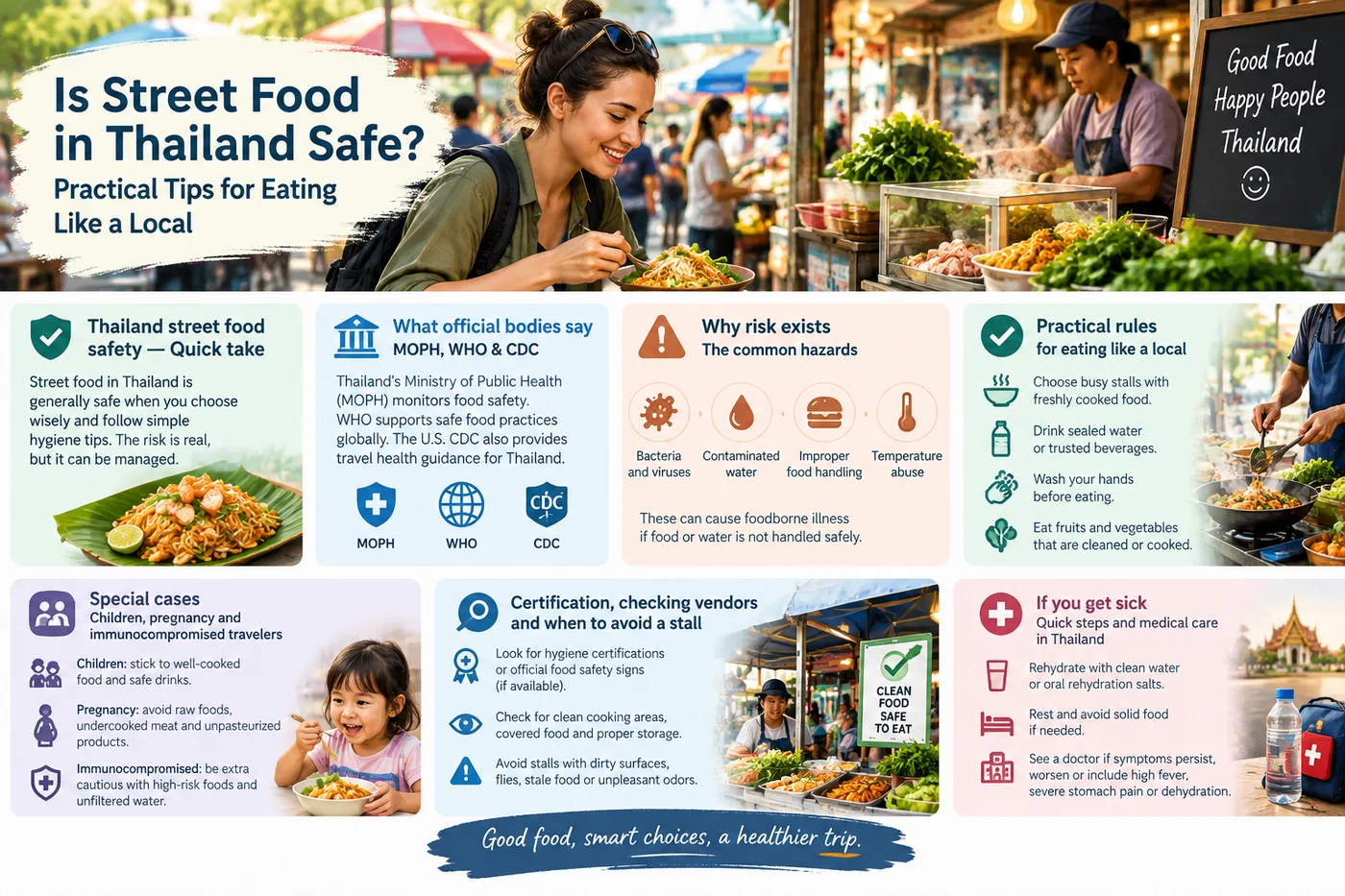
Street food in Thailand can be eaten safely by most travelers when you follow simple precautions. Thailand’s Ministry of Public Health runs the “Clean Food Good Taste” certification that promotes trained handlers, hand-washing facilities and safer practices—but certification reduces risk rather than eliminating it. International bodies (WHO/FAO) and the CDC recommend the same practical rules: choose hot-cooked food, prefer vendors with high turnover, avoid questionable ice and untreated water, and practise hand hygiene.
What official bodies say (MOPH, WHO & CDC)
Thailand’s Department of Health operates the Clean Food Good Taste program and publishes guidance and a public dataset of certified outlets; the scheme focuses on training, sanitation and consumer hand-wash facilities. WHO and FAO have a 2022 leaflet promoting similar vendor standards for safer street vending. The U.S. CDC (Yellow Book/travel pages) warns that travelers’ diarrhea is the most common travel illness and lists practical protective steps: eat hot food, avoid uncooked or poorly washed items, and be cautious about ice and tap water.
Why risk exists: the common hazards
Primary hazards for travelers are enteric bacteria and viruses that cause diarrhea (many different organisms), norovirus, and food‑ or water‑borne hepatitis A and E. Risk comes from contaminated water or ice, improper cooking or cooling, cross-contamination (raw to cooked), and poor hand hygiene. Local conditions vary—city vs. rural and by province—so watch for any local outbreak notices before sampling widely.
Practical rules for eating like a local
Follow these quick checks and ordering choices to lower your risk:
- Pick busy stalls: high turnover means fresher food and less time for bacteria to grow.
- Eat food cooked to order and served piping hot: heat kills most pathogens.
- Prefer simple hot dishes: soups, stir-fries, grilled meats and noodle soups are lower-risk than salads or raw shellfish.
- Avoid uncooked produce unless you see it washed in clean water and prepared safely.
- Say no to unsealed or cloudy ice—use bottled drinks with sealed caps or hot beverages.
- Use hand sanitizer or wash hands before you eat; vendors displaying hand-wash stations are better.
- Watch for basic hygiene: clean cooking surfaces, separate utensils for raw/cooked foods, and vendors who use tongs/spoons rather than bare hands.
Small language tips: say “mai sai nam khao” (no ice) or point to a sealed bottle to avoid confusion. Carry oral rehydration salts (ORS) and a small diarrhea kit for emergencies.
Special cases: children, pregnancy and immunocompromised travelers
These groups face higher risk and should be more cautious. Pregnant people should avoid higher‑risk items (raw fish, undercooked meat, unpasteurized dairy) and unverified ice. Small children and immunocompromised travelers should stick to fully cooked foods from reputable stalls or restaurants and avoid street‑sold salads, fresh juices with ice of unknown origin, and raw shellfish. When in doubt, choose a certified or busy sit-down eatery. Consult your travel-health provider before travel for personalized advice and vaccines (e.g., hepatitis A) as appropriate.
Certification, checking vendors, and when to avoid a stall
The Clean Food Good Taste (and upgraded Plus) program aims to raise standards—look for the sticker or ask locals. The national dataset of certified outlets is publicly available but changes over time, so don’t treat certification as a guarantee. Immediate red flags: visibly dirty surfaces, flies on food, food left uncovered for long periods, shared personal utensils, cloudy or melted/uncertain ice, and vendors who handle money and food without hand hygiene. If a stall looks neglected or you feel unsure, walk away—there are almost always alternatives.
If you get sick: quick steps and medical care in Thailand
If you develop diarrhea, vomiting or fever: rest and rehydrate with ORS or bottled fluids. Use anti‑diarrheal medication cautiously (avoid if you have high fever or bloody stools) and seek medical attention for dehydration, persistent high fever, or severe symptoms. Thailand has private hospitals and clinics with English-speaking staff in cities; travel insurance that covers medical evacuation and local treatment is strongly recommended. If symptoms are severe or you suspect hepatitis, see a doctor promptly. Keep receipts and records for insurance claims.
Practical Tips
Pack hand sanitizer and ORS packets. Eat where locals queue and choose hot-cooked dishes served immediately. Ask for 'no ice' or sealed bottled drinks. Watch for a hand-wash station, clean utensils and separate areas for raw and cooked foods. For children or high-risk travelers, prefer sit-down restaurants or certified vendors.
Important Considerations
Certification reduces but does not remove risk—check the government dataset for up-to-date listings. Local enforcement varies by region. Avoid blanket statements; if an outbreak is reported locally, follow health advisories. Consult a travel-health clinic about hepatitis A vaccination and carry travel insurance that covers hospital care in Thailand.
Planning more of your trip? Browse our
Thailand Travel Guides
for more practical Thailand travel information.
Final Thoughts
Street food is central to Thailand’s food culture and, with sensible precautions, most travelers can enjoy it without serious problems. Use the common-sense checks above, favour hot and freshly cooked items, and be extra careful if you’re pregnant, very young, elderly or immunocompromised. For more on travel health and practical packing tips, check our Thailand travel health guide and local updates before you go.
Sources & Further Reading
- FoodSan (Ministry of Public Health, Thailand) — Clean Food Good Taste
- WHO & FAO — Food safety is everyone’s business in street food vending (2022)
- Centers for Disease Control and Prevention — Food and Water Safety
- Thailand Department of Disease Control — Health Advice for Travellers
Transport schedules, fares and operating rules can change. Always verify time-sensitive details with the official operator before travel.