HOTEL GUIDE
Thailand Street Food Guide: How to Find Safe, Authentic Stalls and What to Try
Practical, evergreen advice for travellers on choosing hygienic, authentic Thai street-food stalls, regional must-tries, payment and allergy tips, and a concise safety checklist.
Street food is central to Thailand’s culinary identity — a living, affordable way to taste regional specialties. This Thailand street food guide gives practical, evergreen rules so international travellers can enjoy hawker stalls with confidence: how to select hygienic vendors, what to try in different regions, simple etiquette, and sensible health precautions.
Key Takeaways
- Pick stalls with high turnover, hot-cooked food and protected ingredients; busy local customers are a strong signal of freshness.
- Know a few regional dishes to order confidently and use translated cards if you have allergies or dietary needs.
- Carry small cash, a backup ORS/first-aid kit and follow CDC/FAO food-safety rules: prefer piping-hot, freshly cooked meals.
Thailand street food guide: How to spot a safe stall
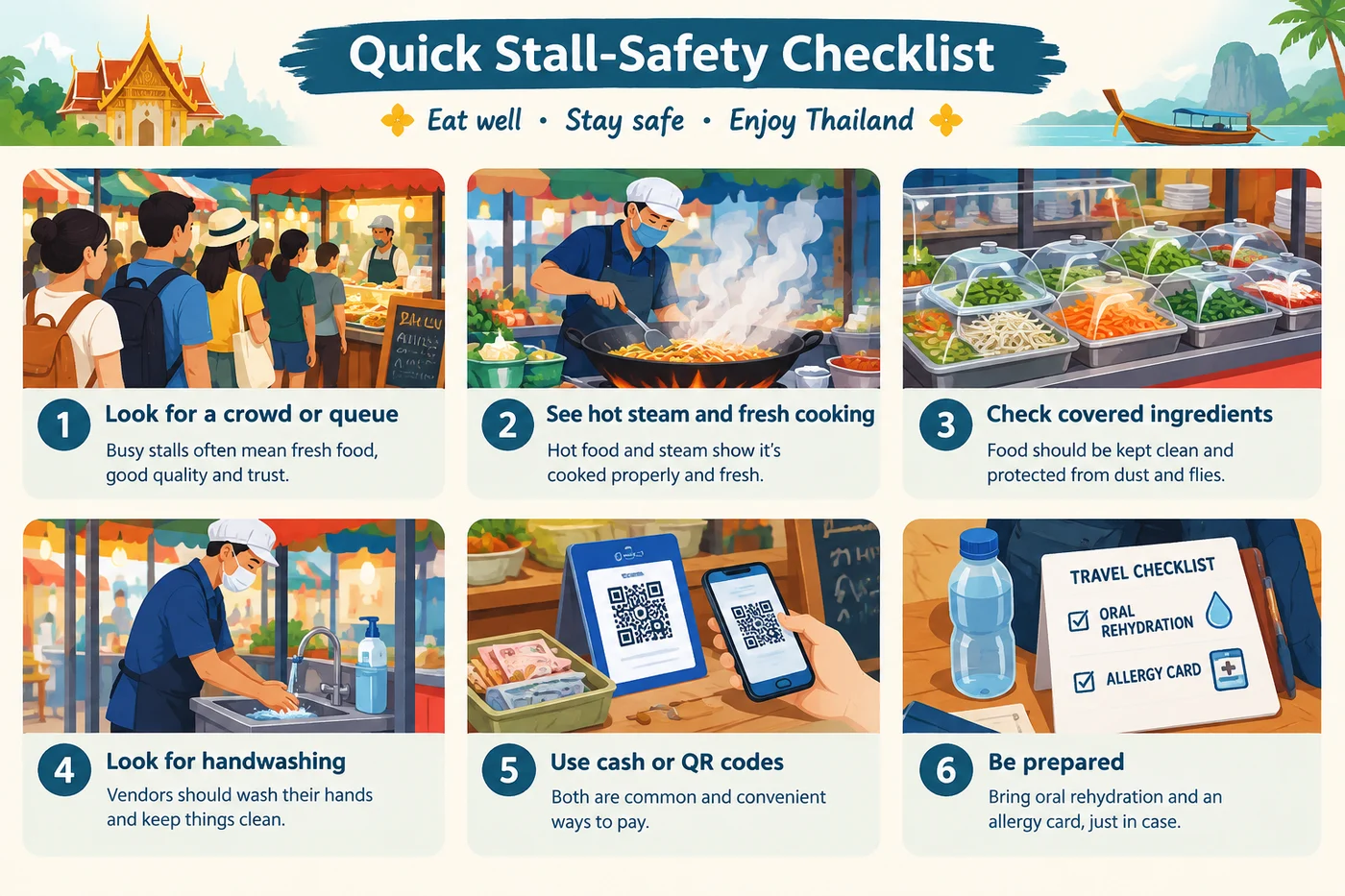
A quick visual checklist helps you decide where to eat. Look for:
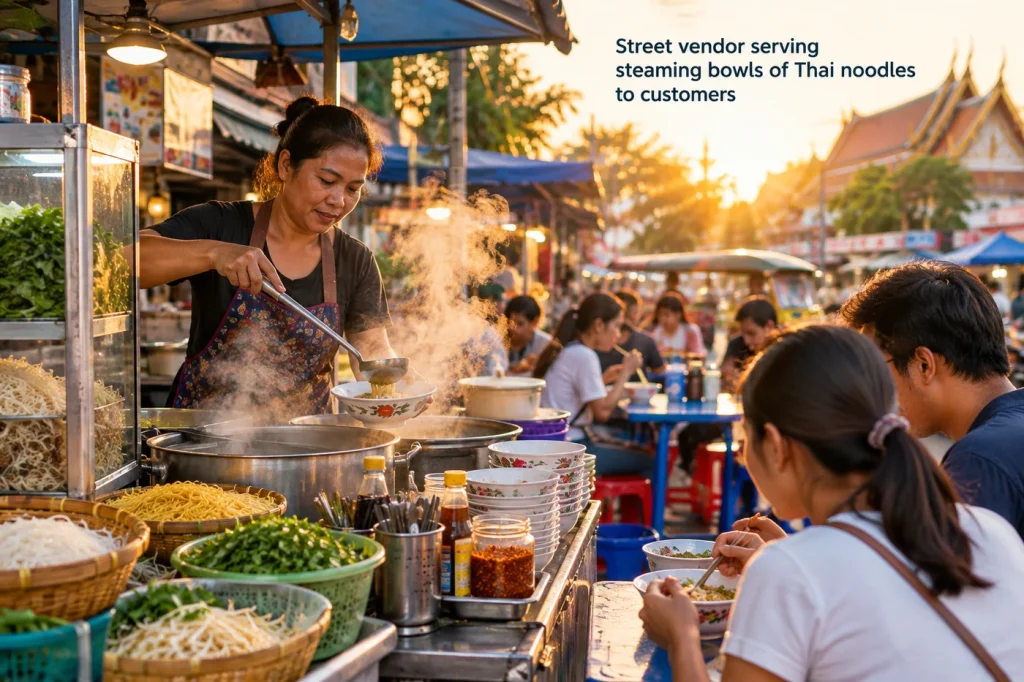
– Busy stall with mostly local customers — high turnover usually means fresher food and safer ingredients.
– Food cooked to order and served hot (steam or flames) — heat kills many pathogens.
– Ingredients displayed protected from flies and dust (covered trays, refrigeration for perishables).
– Clean utensils and separate serving spoons; vendors who avoid touching cooked food with bare hands.
– Visible hand-washing water, gloves, or periodic utensil-cleaning.
– Condiments in closed containers rather than open, repeated-dunk jars.
If you spot questionable signs — standing water, long-exposed salads, or vendors handling money and food without washing — choose another stall. These heuristics align with FAO hygiene guidance for street-vended foods and common travel-health advice.
Food-safety basics for travellers
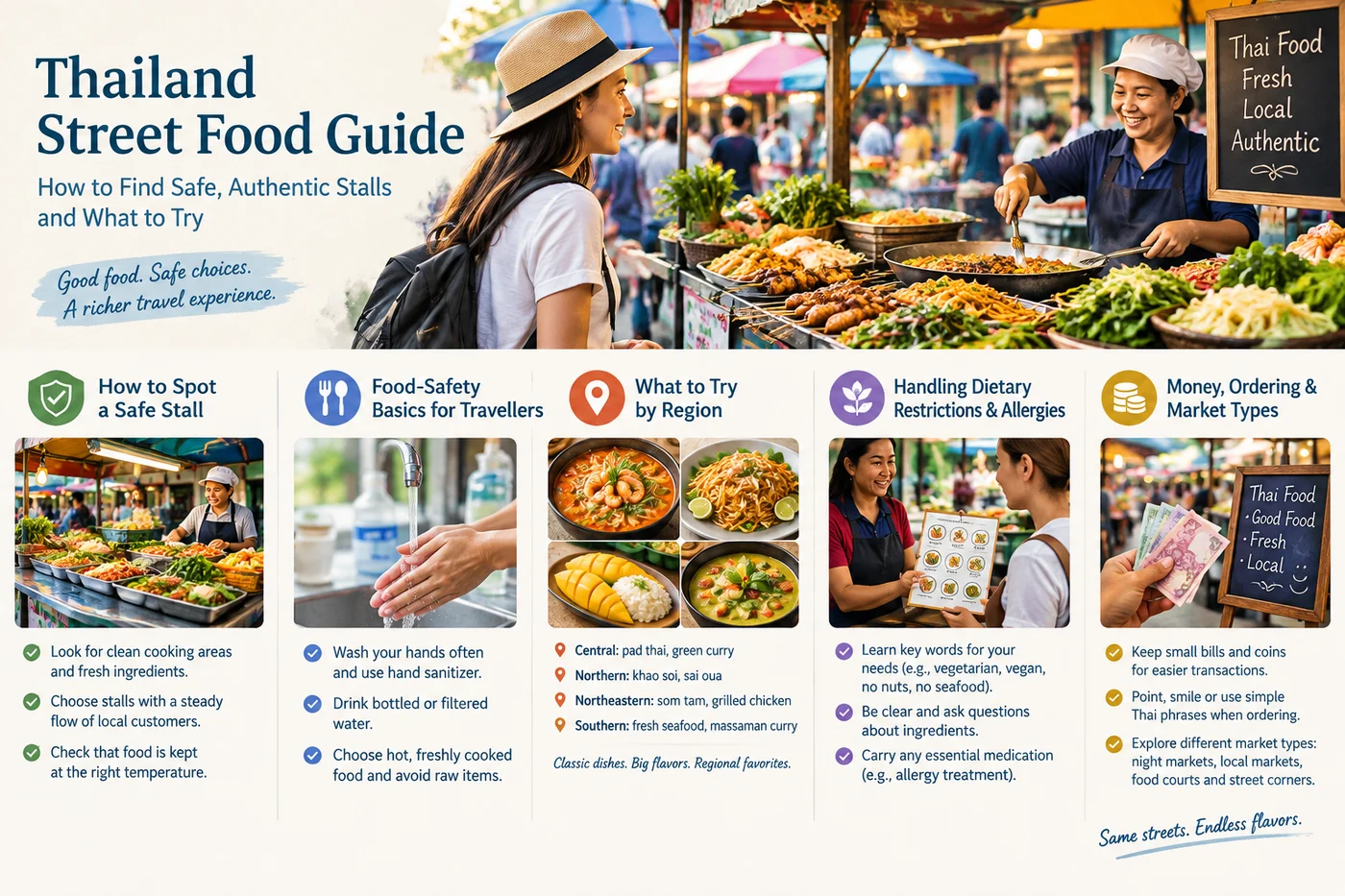
Follow simple rules from travel-health authorities (for example, the U.S. CDC and FAO): prefer hot, freshly cooked food; avoid raw vegetables or fruits you can’t peel; drink bottled or boiled water and be cautious with ice in remote areas. Meal timing matters: eat during peak meal hours when stalls are busiest so ingredients turn over quickly. If you have a weakened immune system, are pregnant, or have chronic conditions, consult your clinician before relying on street food — risk levels differ between Bangkok, provincial cities and islands.
What to try by region — safe, classic choices
Knowing a few staple dishes helps you order with confidence. These are widely available and commonly cooked hot:
– Bangkok: Pad Thai, khao man gai (Hainanese chicken rice), boat noodles, mango sticky rice (fresh fruit and hot rice-based desserts).
– Chiang Mai (North): Khao soi (curried noodle soup), sai ua (spicy herbal sausage) — often grilled or served hot.
– Phuket & the South: Hokkien-style stir-fried noodles and abundant fresh seafood cooked to order; roti with egg or banana at night markets.
– Isan (Northeast): Som tam (papaya salad) — request low spice or modified ingredients, larb (minced meat salad) and gai yang (grilled chicken), usually cooked hot.
Ask for dishes 'hot' and freshly prepared. Many sweet snacks (like mango sticky rice) are safe when sold by busy, reputable vendors.
Handling dietary restrictions & allergies
Small-stall kitchens commonly share woks and utensils, so cross-contamination is real. If you’re vegetarian, vegan, halal, or have allergies:
– Carry a short translated card (Thai and English) stating your restriction clearly; keep one for severe allergies listing reactions and forbidden ingredients.
– For severe allergies, bring prescribed emergency meds (epinephrine) and avoid high-risk items like mixed sauces or shellfish unless prepared fresh and separately.
– For halal requirements, seek vendors displaying halal certification or ask at Muslim-run stalls (common in southern Thailand and urban areas).
– Note that 'no egg' or 'no fish sauce' requests are common but may not eliminate cross-contact in small kitchens. Consult a travel clinician if you have severe sensitivities before relying on street food.
Money, ordering and market types
Street-food scenes vary: daytime morning markets, open-air evening markets, and mobile carts by roads. Practical points:
– Carry small notes and coins for small purchases. Many urban stalls now accept QR/PromptPay or e-wallets, but acceptance is not universal — keep cash as a fallback.
– Ordering: point, name the dish, or show a photo; many vendors respond to simple Thai phrases but pointing to a display plate is common.
– Tipping: not required — leave small change or round up if you wish. Be respectful in queues and avoid cutting lines at busy markets.
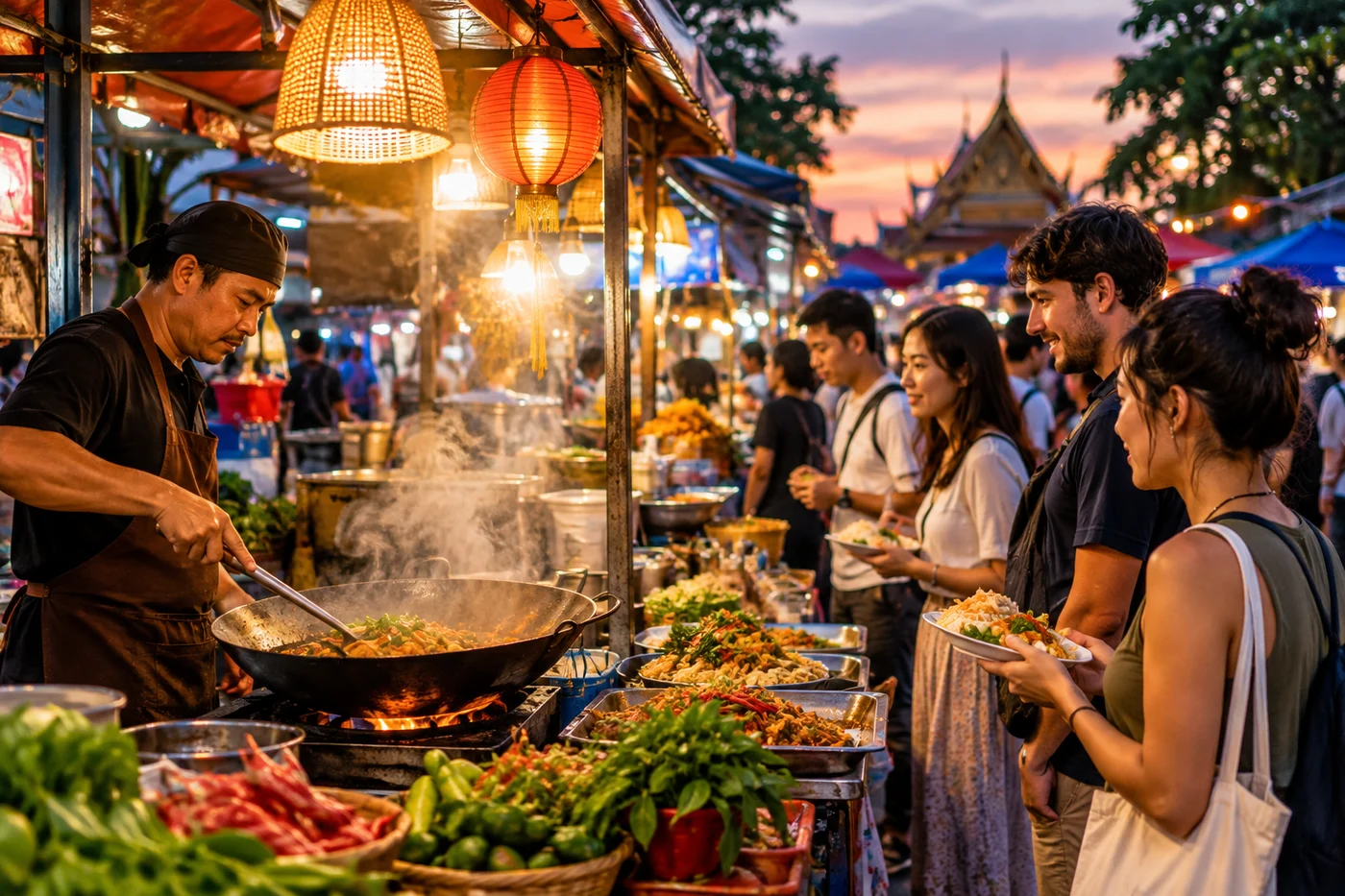
– Markets can be more varied and offer prepared salads, sweets and drinks; night markets often feature snack-style dishes and desserts. Choose busy sections of the market for the best turnover.
Practical Tips
Carry a printed allergy card in Thai, a small first-aid kit with oral rehydration salts, and a credit card plus small cash. Eat during busy meal times, prefer hot-cooked items, and avoid raw produce you can’t peel. Photograph the stall or its menu if you want to remember a dish and return. When in doubt, ask hotel staff or consult the Tourism Authority of Thailand (TAT) pages for official food-district info.
Important Considerations
Do not assume ice or tap water is safe everywhere — conditions vary by island and rural areas. Digital payment acceptance is increasing (QR/PromptPay) but can change quickly; don’t rely on it exclusively. If you have severe allergies or are immunocompromised, consult a healthcare professional before travel and consider avoiding high-risk street-food situations.
Planning more of your trip? Browse our
Thailand Food & Restaurant Guides
for more practical Thailand food and dining information.
Final Thoughts
Street food is one of the best ways to taste Thailand — with simple precautions you can sample widely and safely. Use the visual checklist, know a few regional dishes, carry basic medical and payment backups, and enjoy the markets with confidence. For city-specific hotel and neighbourhood recommendations, see HotelForU.net’s Bangkok and Chiang Mai guides to pair food stops with places to stay.
Sources & Further Reading
- Tourism Authority of Thailand — Local Food
- CDC — Thailand Travel Guidance (Yellow Book)
- FAO — Guidance on street‑vended foods and hygienic practice
Transport schedules, fares and operating rules can change. Always verify time-sensitive details with the official operator before travel.