HOTEL GUIDE
Thailand Festivals Guide: When to Go, What to Expect and How to Experience Major Celebrations
A practical guide to Thailand’s major festivals—Songkran, Loy Krathong/Yi Peng and regional celebrations—when they happen, where to go and how to join respectfully.
This Thailand festivals guide gives travellers clear, practical information on when major celebrations take place, what to expect and how to experience them respectfully. Festivals in Thailand combine Buddhist rituals, local folklore and lively street traditions—dates often shift by region or by the lunar calendar, so plan with official sources close to travel.
Key Takeaways
- Songkran (mid-April) and Loy Krathong (full-moon of the 12th lunar month) are nationwide anchors; many other vibrant regional festivals run year-round.
- Check local municipal and official TAT/CAAT notices for year-specific dates and rules—especially for lanterns, fireworks and river offerings.
- Respect temple etiquette, use biodegradable krathongs, and book transport and hotels early—festival crowds affect schedules and availability.
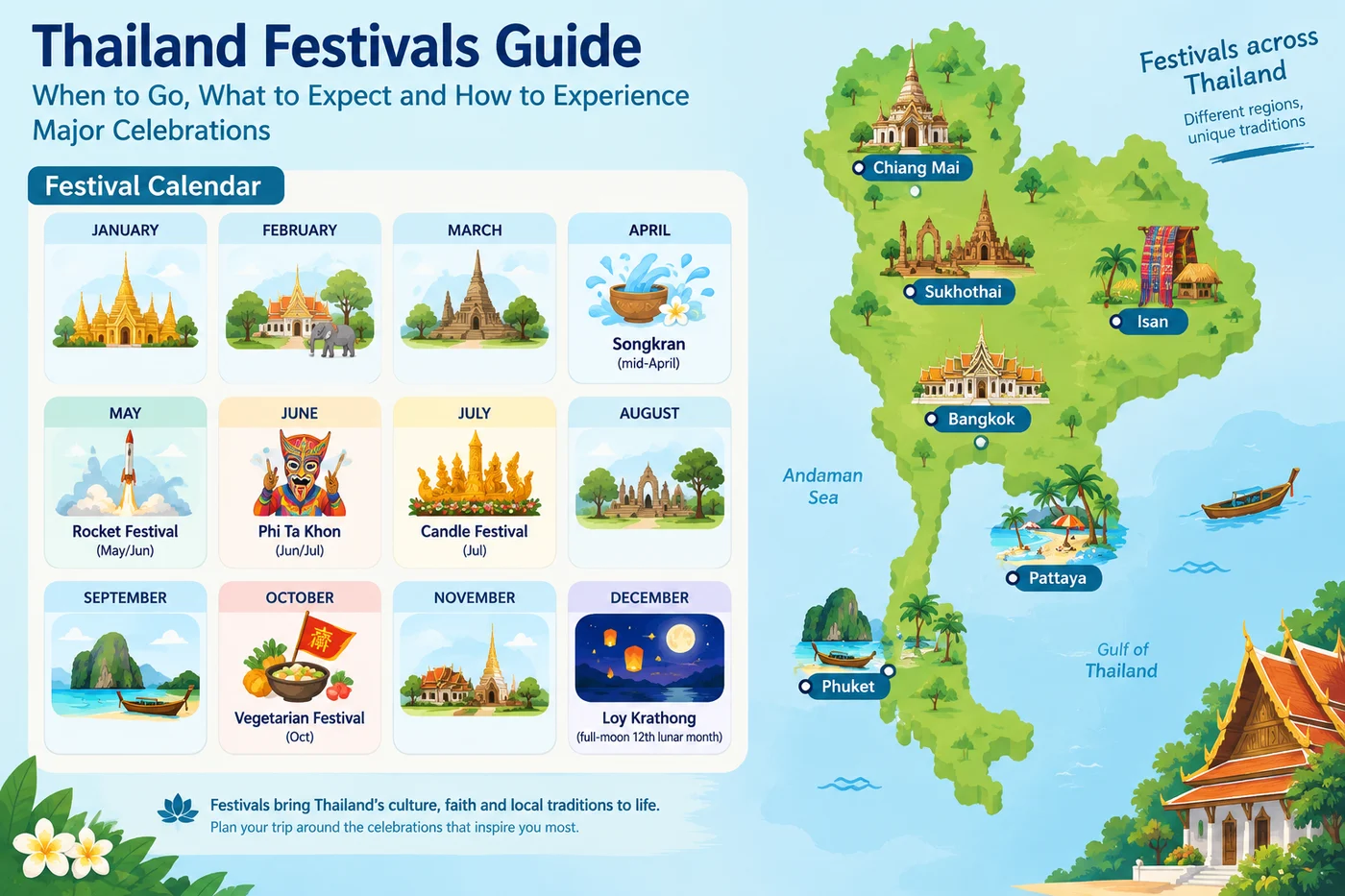
When to go: Thailand festivals guide — timing & how dates shift
Two national markers are easy to remember: Songkran, the Thai New Year, is celebrated nationwide in mid‑April (traditionally 13–15 April, with many local extensions), while Loy Krathong falls on the full moon of the 12th month of the Thai lunar calendar (so the Gregorian date changes annually). Other major events—Vegetarian Festival, Candle Festival, Phi Ta Khon, Bun Bang Fai (Rocket Festival)—follow regional calendars or Buddhist lunar months. Always verify year-specific dates with the Tourism Authority of Thailand (TAT) and local municipality or provincial PRD pages because local programmes and exact nights for lantern releases or parades change each year.
Major festivals: what happens and where to go
Songkran: A national mix of merit-making, family visits and playful water‑blasting. Cities like Bangkok and Chiang Mai host large public events: Bangkok combines river ceremonies and citywide street celebrations, while Chiang Mai’s tone includes temple rituals and organised water zones. Expect wet streets, lively crowds and temple visits early in the day.
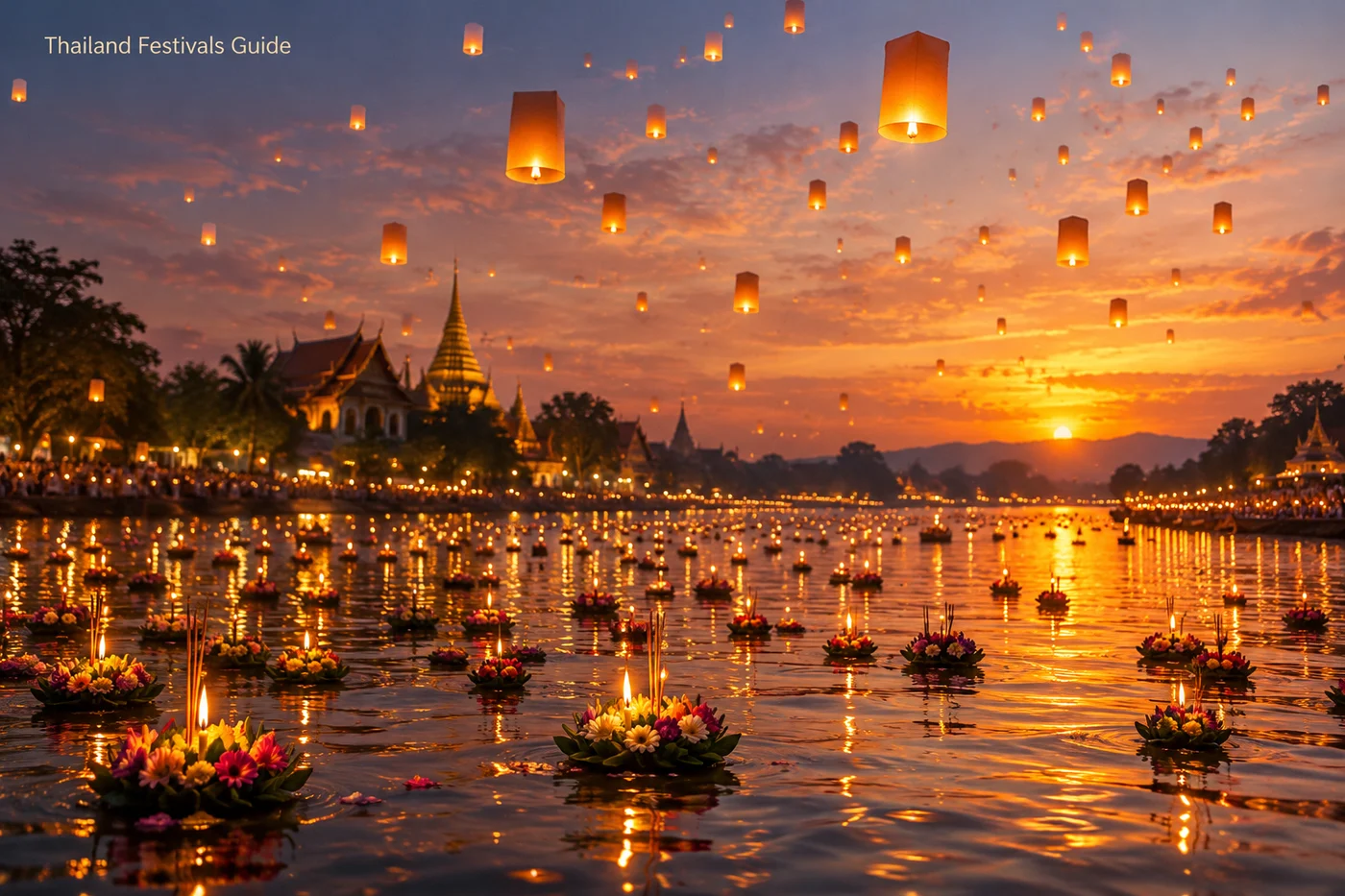
Loy Krathong & Yi Peng: In central and southern Thailand people float krathongs (small offerings) on rivers and canals. In Lanna North (Chiang Mai) Loy Krathong is paired with Yi Peng sky‑lantern events and candlelit processions. Always prefer biodegradable krathongs and follow local rules for lantern releases—some provinces restrict them for safety.
Regional highlights (short):
– Sukhothai: famous for candle-lit historical-park ceremonies and classic Loy Krathong displays.
– Phuket & coastal towns: Loy Krathong by the sea with beach events.
– Isan (Northeast): Bun Bang Fai (rocket launching) in late spring; lively, rural pageantry.
– Isolated local festivals (Phi Ta Khon, candle festivals, boat races) offer unique local culture but can be weather- and date-dependent.
Regional highlights and best places to experience them
Bangkok — best for large-scale official events, river ceremonies and combined temple/city programmes; book hotels early and expect traffic disruptions.
Chiang Mai — top choice for Yi Peng lanterns and northern-style Loy Krathong; check Chiang Mai provincial PRD rules on lantern releases and buy eco-friendly krathongs.
Sukhothai — renowned historical-park Loy Krathong & Candle Festival with formal ceremonies; ideal for photographers and cultural events.
Pattaya & coastal provinces — Wan Lai water days and beach Loy Krathong variants; family-friendly and often extended beyond national Songkran dates.
Isan (Ubon Ratchathani, Yasothon) — for authentic rocket festivals and rural pageants; these are great for travellers seeking local colour rather than big-city parties.
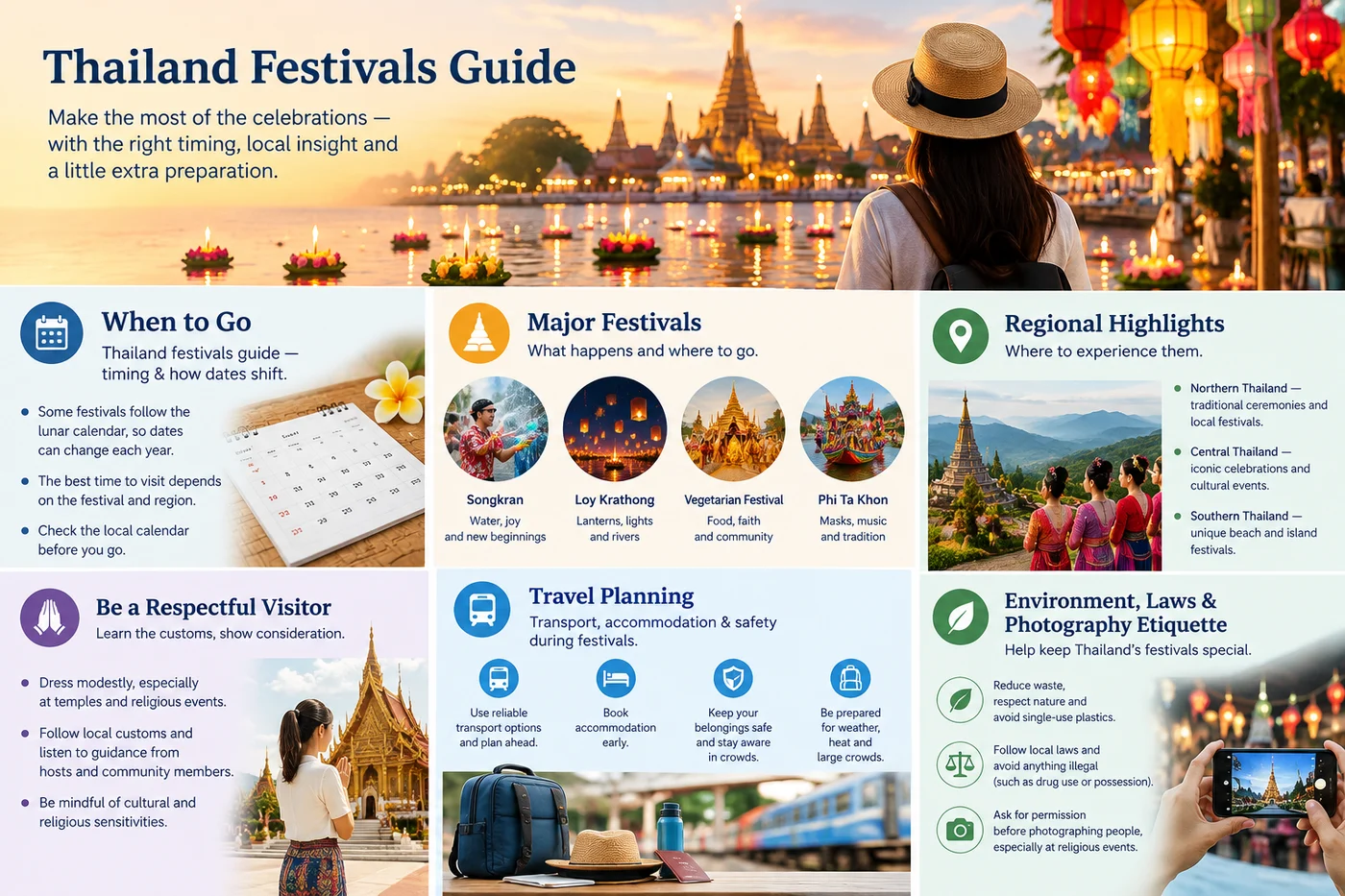
How to participate respectfully
Use this Thailand festivals guide to prioritise respectful participation over spectacle. Key dos and don’ts:
Do:
– Dress modestly in temples (shoulders and knees covered), remove shoes when required.
– Ask before photographing monks, rituals, or private family ceremonies; avoid flash in low-light temple moments.
– Buy or make biodegradable krathongs (banana-leaf or bread) and follow organisers’ disposal guidance.
Don’t:
– Spray water at monks, the elderly, infants, commuters or emergency staff—this is disrespectful and sometimes illegal.
– Release sky‑lanterns where local authorities have banned them—check CAAT NOTAMs and provincial advisories.
If you plan to join rituals, follow local instructions, keep a low voice in sacred spaces and accept that some events prioritise merit-making over tourism.
Travel planning: transport, accommodation & safety during festivals
Book transport and accommodation well in advance; festival periods fill hotels and trains. Expect heavy traffic, road closures and altered ferry/timetable services—allow extra travel time. Safety pointers:
- Keep valuables secure in crowds; use anti-theft bags and photocopies of travel documents.
- For Songkran: waterproof phone cases, quick-dry clothing and non-slip shoes help; avoid glass bottles in the street.
- Observe local alcohol rules; some community ceremonies are alcohol-free.
For longer stays, digital nomads should note that coworking spaces and cafés in festival cities may have reduced hours or be booked for events—check schedules ahead.
Environment, laws and photography etiquette
Local authorities often run eco‑Krathong campaigns—avoid foam/plastic krathongs and pick biodegradable options. Sky‑lanterns, fireworks and open flames are regulated: Chiang Mai and some provinces publish formal restrictions, and the Civil Aviation Authority of Thailand issues AIP/NOTAM warnings when mass releases might affect aircraft. Before planning to release lanterns or use large fireworks, verify local municipal orders and CAAT notices.
Photography etiquette: ask permission for close portraits, avoid photographing grieving or private family rituals, and be sensitive when photographing children or religious objects. When in doubt, follow the lead of locals and event marshals.
Practical Tips
Confirm festival dates with TAT and provincial PRD pages within weeks of travel. Pack light waterproof gear and a secure money belt, book hotels and intercity seats early, and carry local emergency numbers. Carry small change for temple donations and biodegradable krathong purchases.
Important Considerations
Dates shift annually—Loy Krathong follows the lunar calendar; Songkran has core national dates but local 'Wan Lai' programmes vary. Sky‑lanterns and open‑flame activities may be banned or require permits—check CAAT NOTAMs and provincial orders. Always prioritise local rules and temple etiquette.
Planning more of your trip? Browse our
Thailand Travel Guides
for more practical Thailand travel information.
Final Thoughts
Thailand’s festivals reward travellers who prepare: time your visit using official calendars, pick destinations that match your interests (family‑friendly, photographic or immersive local experiences), and use this Thailand festivals guide to travel responsively—respectful participation makes the festival memorable for both you and the communities you visit.
Sources & Further Reading
- Tourism Authority of Thailand (TAT) Newsroom
- Visit-Thailand.org – Loy Krathong guidance
- Chiang Mai Provincial PRD (lantern rules example)
- Civil Aviation Authority of Thailand (CAAT) AIP supplement (NOTAM example)
Transport schedules, fares and operating rules can change. Always verify time-sensitive details with the official operator before travel.