HOTEL GUIDE
Thailand Ferry & Island-Hopping Guide: How to Get Between Islands, Book Tickets and Travel Safely
A practical, evergreen guide for getting between Thailand’s islands: main piers, boat types, booking options, weather and safety tips, plus sample island-hopping routes.
This practical Thailand ferry guide explains how to get between the country’s islands and coastal hubs, how to book, and what to expect when seas and schedules change. Whether you’re heading to Koh Samui, Koh Phi Phi, Koh Lipe or Koh Chang, this guide focuses on realistic, safety-first advice and reliable booking practices.
Key Takeaways
- Andaman and Gulf islands follow different monsoon patterns—check local forecasts and expect seasonal cancellations.
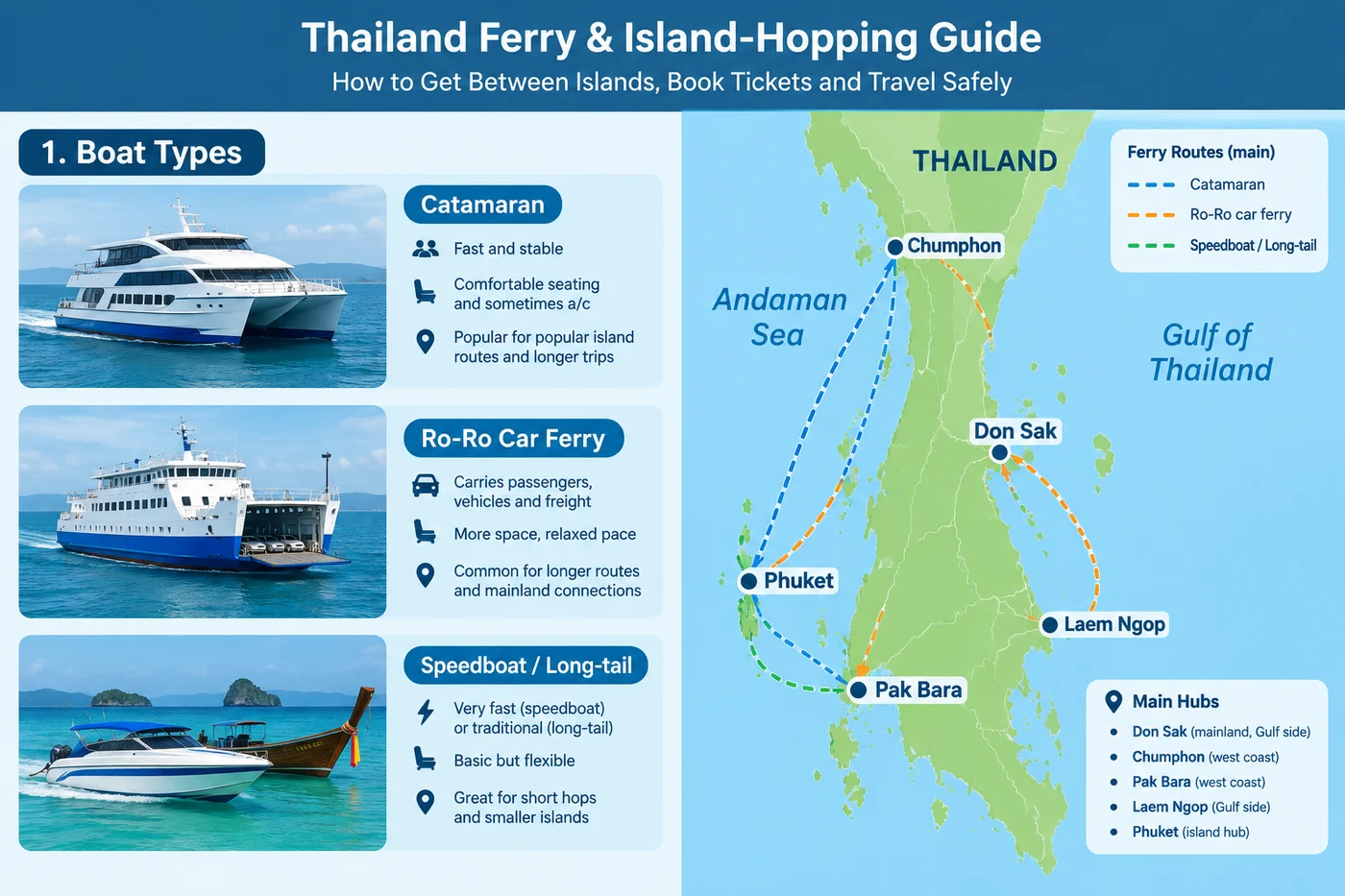
- Know the main piers (Don Sak, Chumphon, Pak Bara, Laem Ngop, Phuket/Krabi) and boat types to choose the right crossing.
- Book with reputable operators or aggregators, confirm your pier and transfer details, and allow time for weather delays.
Quick overview: Andaman vs Gulf seasonality
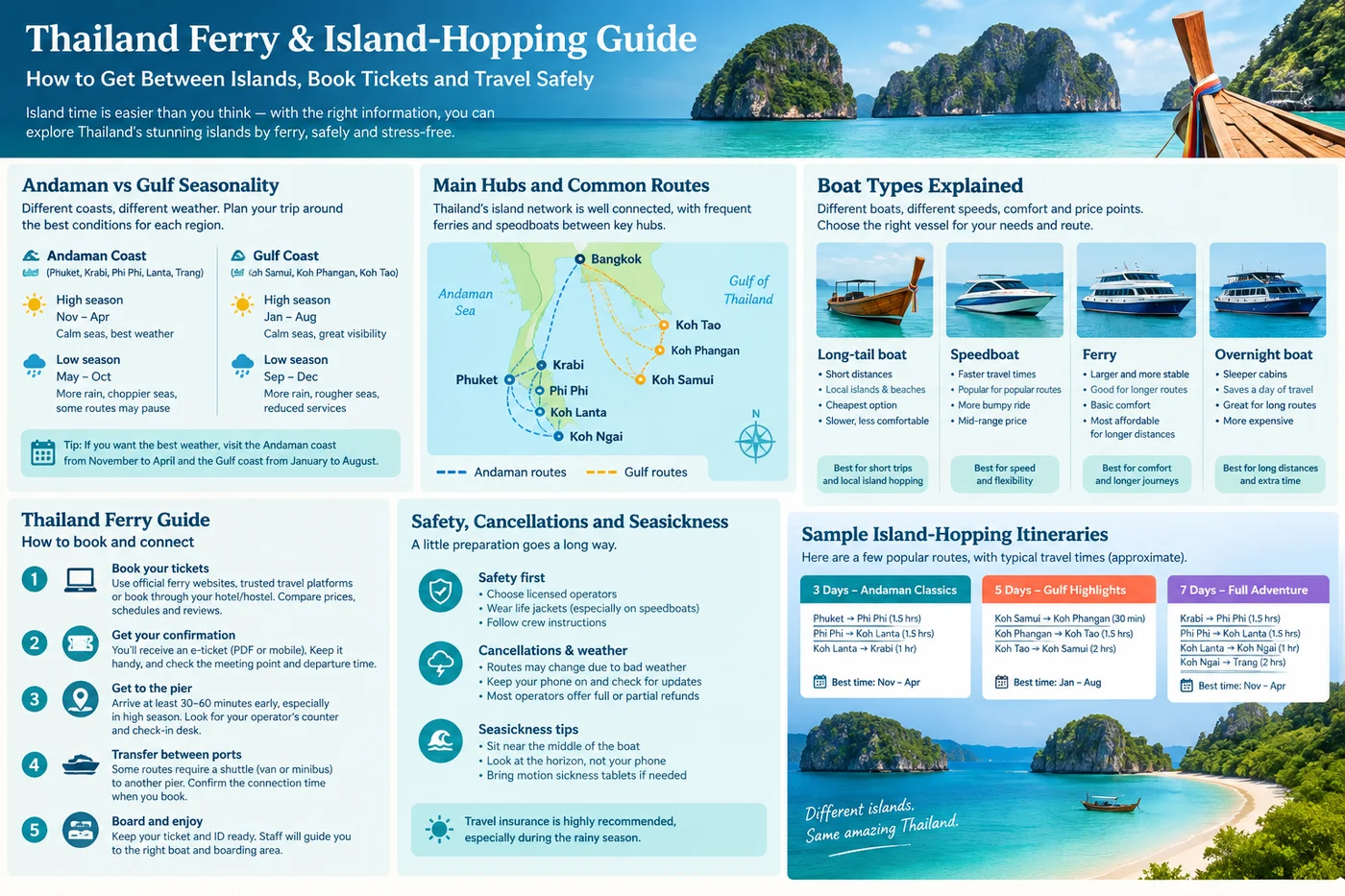
Thailand’s two main island regions run on largely opposite monsoon schedules. The Andaman coast (Phuket, Krabi, Phi Phi, Koh Lipe) is typically wettest roughly May–October, while the Gulf islands (Koh Samui, Koh Phangan, Koh Tao) usually see heavier rain later — roughly October–December. These are general patterns: always check the Thai Meteorological Department or local tourism warnings before travel. Seasonal winds and official marine advisories materially affect small-boat services and fast-ferry reliability.
Main hubs and common routes
Most island crossings start at a mainland pier or a larger island hub. Key mainland gateways include Don Sak (Surat Thani) for Samui/Phangan/Tao, Chumphon for Koh Tao/Samui options, Pak Bara (Satun) for Koh Lipe, and Laem Ngop/Trat for Koh Chang and Koh Kood. Phuket and Krabi piers serve Phi Phi and the west-coast island network. When planning, confirm the exact pier and counter on your e‑ticket: the same island can have multiple piers and operators with different boarding points.
Boat types explained: pick the right vessel
Understand vessel types and when to choose each:
– High-speed catamarans and fast ferries: passenger-only, comfortable and quicker for medium-distance crossings. Good for travellers without vehicles.
– Ro‑Ro and conventional car ferries: take vehicles and more luggage; slower but often steadier in rough conditions.
– Speedboats and long-tail boats: used for short hops, remote beaches and transfers between nearby islands. They are faster but more affected by waves.
Each type has pros and cons for comfort, luggage and safety. For families or those prone to seasickness, a larger conventional ferry is usually a gentler option.
Thailand ferry guide: How to book and connect
Booking options: (a) Book directly with major operators (best for route-specific questions and refunds), or (b) use reputable aggregators for timetable comparisons and combined bus+ferry tickets. Aggregators make it easy to buy through one voucher, but always check the operator counter, the exact pier name and the printed check‑in time on your voucher. Many companies ask for passport or ID details at booking or check-in—requirements vary, so follow the operator’s instructions.
Transfers and combined tickets: If your ticket includes a land transfer, confirm the pickup point and buffer time between bus arrival and ferry check-in. Counters typically require you to arrive 30–60 minutes before departure, but check the operator’s guidance. Keep electronic and printed copies of vouchers and any identification the operator requests.
Safety, cancellations and seasickness
Thailand’s Marine Department enforces passenger-ship standards and requires life-saving equipment and certified crew on commercial services. Before boarding, note where lifejackets are kept and listen to the crew briefing. Small-boat services are most likely to be suspended in strong winds or heavy seas—local marine offices and provincial authorities may order services closed for safety. Bring motion-sickness medication or wristbands if you’re prone to seasickness, hydrate, and travel with valuables in a waterproof pouch. During monsoon warnings, expect last-minute cancellations and plan flexible onward travel.
Sample island-hopping itineraries and timing
First-time visitors: Combine 2–3 nights per island to avoid rushed crossings. Typical sequences: Samui → Koh Phangan → Koh Tao in the Gulf, or Phuket → Phi Phi → Krabi (or vice versa) in the Andaman. Families: favour Ro‑Ro or larger ferries for steadier rides, and avoid too many short speedboat hops. Remote-route example: for southern gems like Koh Lipe, plan extra buffer days—services can be affected by weather and are often less frequent.
Always allow at least half a day of buffer when connecting flights, long-haul buses or trains, and consider travel insurance that covers cancellations and missed connections.
Practical Tips
• Re-check your operator’s live schedule the day before and morning of travel.
• Keep passports/IDs handy (photocopies and waterproof pouch).
• Pack a small day bag with motion-sickness remedies and essentials—leave large trunks with the ferry if allowed.
• Arrive early at the pier and confirm the exact boarding point.
• If unsure about an operator’s safety standards, choose a well-known company or ask to see lifejackets and the vessel’s registration.
Important Considerations
• Do not rely on a sold ticket to guarantee a crossing during official weather warnings—authorities may suspend services.
• Avoid unlicensed or overcrowded small boats; look for an official operator counter and visible safety equipment.
• Luggage rules and ID checks vary; verify at booking and on your voucher.
Planning more of your trip? Browse our
Thailand Travel Guides
for more practical Thailand travel information.
Final Thoughts
This Thailand ferry guide aims to give clear, practical steps so you can choose the right route and vessel, book sensibly, and travel with confidence. Plan around seasonal patterns, pick the boat type that suits your group, and allow buffer time for weather-related changes. For destination details and local transfer tips, see HotelForU’s Phuket and Koh Samui guides as internal resources to link when planning your trip.
Sources & Further Reading
- Thailand Marine Department (passenger-ship rules)
- Seatran Ferry (operator information and pier contacts)
- Lomprayah (high-speed ferry operator)
- 12Go (booking platform FAQ)
Transport schedules, fares and operating rules can change. Always verify time-sensitive details with the official operator before travel.