HOTEL GUIDE
Thailand Long‑Distance Bus Guide: Choose Routes, Book & Travel Overnight
A practical guide for international travellers on Thailand bus travel: understand bus types, where to buy tickets, what to expect at terminals, overnight comfort tips and safety checks.
Thailand bus travel is one of the most flexible and affordable ways to move between Thai cities. This guide explains the common bus types, where to buy tickets, what to expect at terminals, how to sleep comfortably on overnight runs and the checks you must make before you book.
Key Takeaways
- Pick the bus type (seater, VIP, sleeper or minivan) to match sleep comfort and price; check seat photos and layout with the operator.
- Book through reputable OTAs, operator counters or The Transport Co.; always confirm boarding point, luggage rules and e‑ticket collection procedures.
- Prepare for overnight travel with a short checklist: valuables with you, earplugs and layers, power bank, and a clear plan for luggage and refunds.
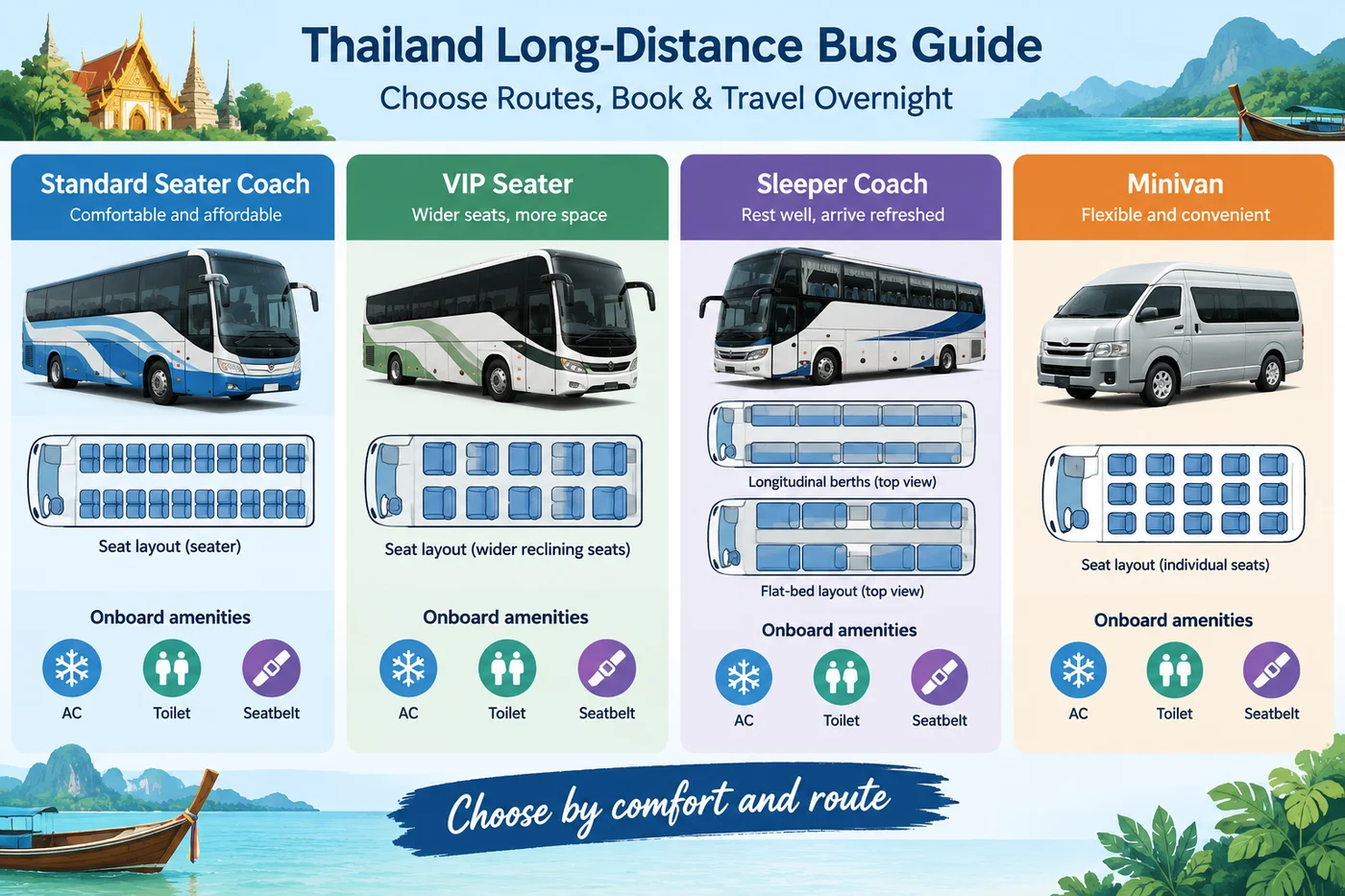
Thailand bus travel: Types of long‑distance buses
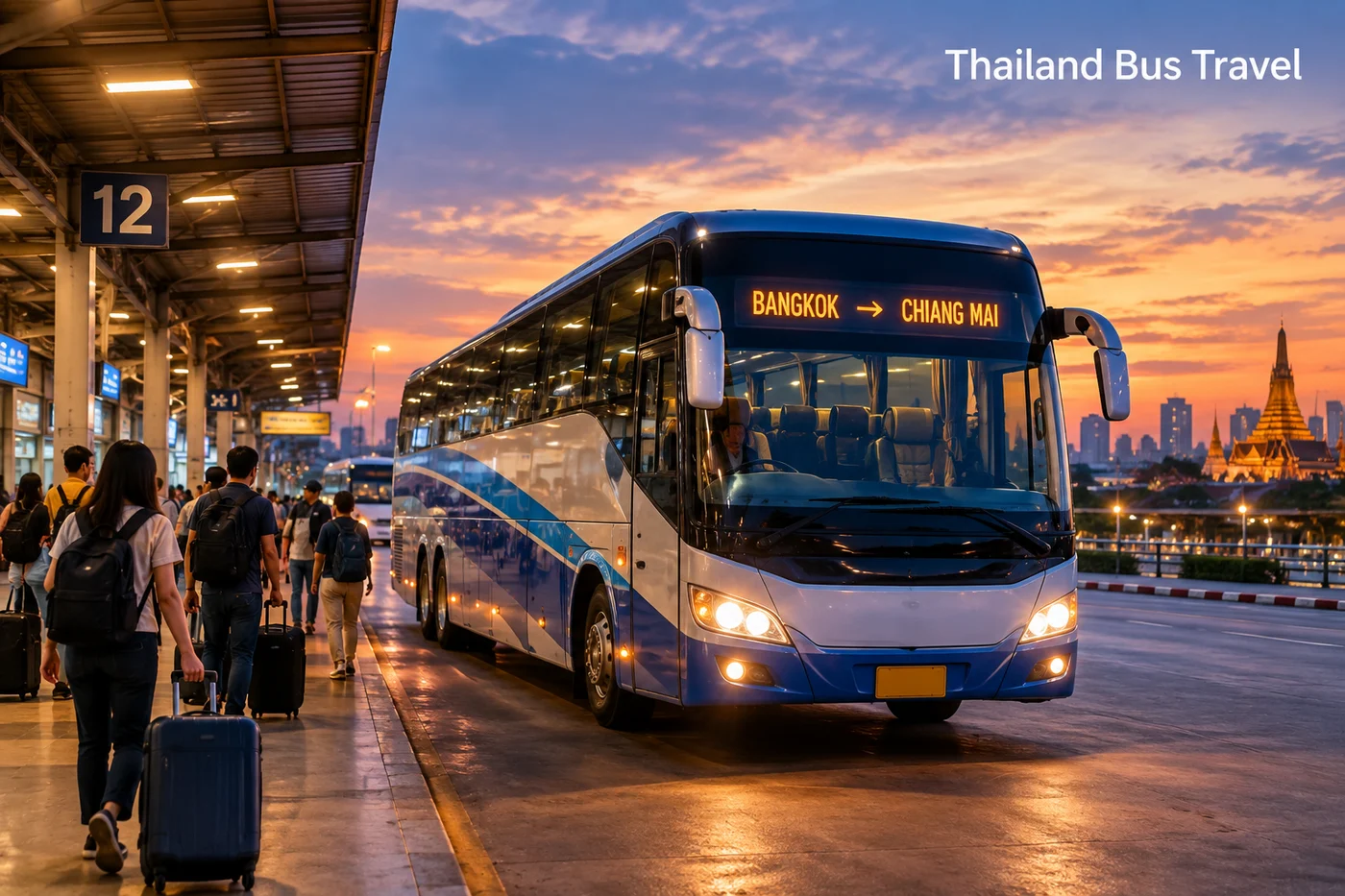
Long‑distance services in Thailand come in several products. Standard air‑conditioned seater coaches are the basic, economical option. 'VIP' or 'VVIP' seater coaches offer wider, more reclining seats and fewer seats per row—marketing labels vary by company, so review seat diagrams and photos. Sleeper coaches provide longitudinal berths or deep‑recline beds for overnight runs; layouts and privacy differ between operators. Minivans and public vans cover shorter routes or last‑mile connections—these are cheaper but less comfortable for long overnight trips. Seat belts are increasingly common on newer coaches, but their availability varies; always confirm safety features before booking.
How to choose a route and coach for overnight travel
Match comfort to distance and timing. For trips over 6–8 hours, a legitimate sleeper coach or a VIP seater with strong recline is worth the extra cost if you need sleep. On routes with frequent stops, opt for direct services labelled 'non‑stop' or check the operator’s timetable for fewer scheduled breaks. Consider boarding and arrival times: an overnight that arrives before dawn is convenient, but late-night arrivals at small terminals can be less well‑lit—plan local onward transport in advance. For families or travellers with lots of luggage, choose operators with clear luggage allowances and staff who tag hold bags.
Where and how to book tickets
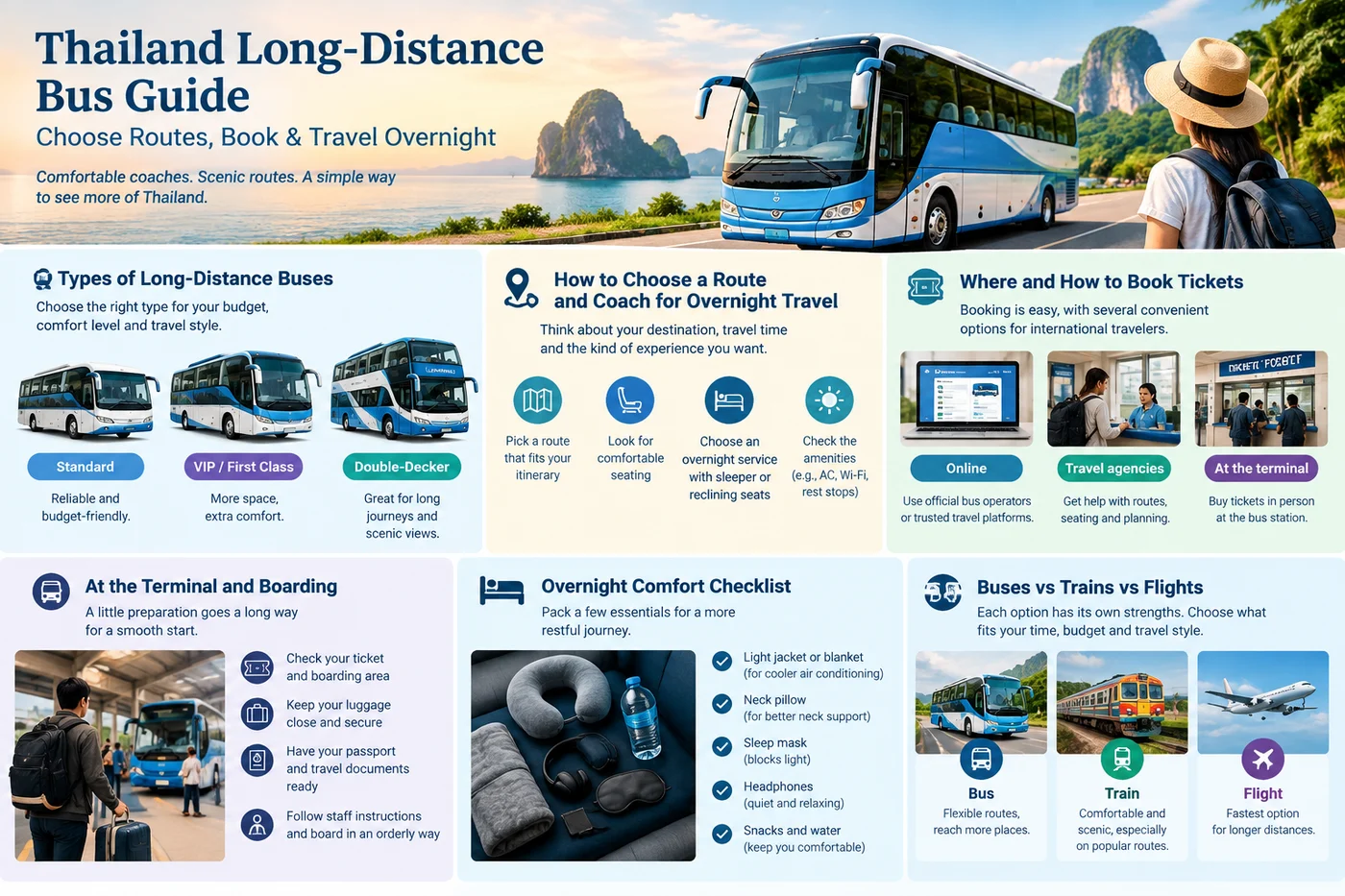
You can buy intercity bus tickets at (1) station counters operated by The Transport Co. and private companies, (2) operator websites when available, or (3) reputable aggregators/OTAs such as 12Go or BusOnlineTicket. OTAs usually show seat maps, baggage notes and accept online payment; they issue e‑tickets or booking references that most companies accept at the counter. Important: policies on e‑ticket boarding, baggage allowances and refunds are operator‑specific—confirm the operator’s terms in your booking confirmation and keep the booking reference and passport/photo ID when collecting or boarding. For official routes and state‑run services, see The Transport Co. (transport.co.th).
At the terminal and boarding
Arrive at least 30–60 minutes before departure for popular routes or overnight coaches. Bangkok’s main terminals are Mo Chit (north/northeast), Ekkamai (east) and the New Southern Bus Terminal (south)—terminal assignments can change, so check your booking confirmation. Drop checked luggage with the operator staff and keep the tag; do not store passports or irreplaceable documents in the hold. Exchange your e‑ticket for a paper boarding pass if required—some operators accept a QR or email on your phone, others insist on counter collection. Note security: provincial terminals vary in facilities and lighting; organise onward transport before you arrive late at night.
Overnight comfort checklist
On top of packing normal travel items, take these for a better night on board: earplugs and a soft eye mask, a compact blanket or warm layers, neck pillow, power bank and a short USB charging cable, antibacterial wipes and small hand sanitizer, medication for motion sickness if you’re prone, and a copy of your ticket and passport. Keep valuables, meds and electronics in a small daypack under the seat or on your person. Expect one or two short restroom/food stops on most overnight routes; don’t count on onboard toilets on minivans or older coaches.
Buses vs trains vs flights: how to decide
Use buses when you want flexible schedules, direct provincial terminals, or lower cost. Trains are usually roomier for overnight travel and offer couchettes/sleeping berths on certain lines; they can be more comfortable for sleepers on busy trunk routes (book early). Flights save time on long routes (e.g., Bangkok–Chiang Mai or Bangkok–Phuket) but add airport transfers and higher cost. Consider total door‑to‑door time, luggage allowances and comfort: for overnight trips of 8–12 hours, a good sleeper coach can be competitive with a night train; for shorter trips, VIP buses or flights may be preferable. If you plan multi‑stop travel, compare schedules on OTAs and the operator site before booking.
Practical Tips
Before booking: verify the operator’s luggage allowance, refund/cancellation windows and whether seat belts are fitted. At booking: save the booking reference and a screenshot of the e‑ticket; note the exact boarding point and terminal. At the terminal: tag hold bags, keep ID and valuables with you, and arrive early. Overnight: sleep aids, layers and a power bank improve comfort. After booking: keep a copy of the operator’s customer‑service phone number and the OTA booking page. Avoid unofficial touts offering tickets outside terminals; buy from counters or reputable online sellers.
Important Considerations
Do not assume uniform baggage rules or seat layouts—these vary by operator and change frequently. Terminal boarding points and schedules are subject to change; always check the confirmation sent by the operator. Seat‑belt law changes are evolving—confirm seat‑belt availability with the company if safety features are crucial to you. Never pack passports or irreplaceable items in checked baggage.
Planning more of your trip? Browse our
Thailand Travel Guides
for more practical Thailand travel information.
Final Thoughts
Thailand bus travel is a practical way to see the country if you match the service to your needs. With a few checks—confirming seat type, luggage policy and boarding point—and simple onboard precautions, overnight bus journeys can be safe, affordable and fairly comfortable. For longer itineraries, compare buses with trains and flights to decide by total travel time and cost. If you need a quick next step, check the operator page for your route or use a trusted OTA to view seat diagrams before booking.
Sources & Further Reading
- The Transport Co., Ltd. (official)
- 12Go (bus product and booking guidance)
- BusOnlineTicket (local OTA FAQ and procedures)
Transport schedules, fares and operating rules can change. Always verify time-sensitive details with the official operator before travel.