HOTEL GUIDE
Thailand Bus Travel: How to Book, Choose Classes & Stay Safe
A concise, practical guide for international travellers on booking and riding long‑distance buses in Thailand: classes, terminals, ticketing, luggage and safety.
Thailand bus travel is often the most flexible and affordable way to move between cities and regions. This practical guide explains how long‑distance coach services are organised, how to buy tickets, what each class means, luggage and seat rules, safety best practices and when to choose a train or flight instead. Read this before you book a cross‑country or overnight coach.
Key Takeaways
- Book popular long routes in advance via official operator sites/apps or reputable resellers.
- Know the class (ordinary, VIP, sleeper) and ticket‑collection rules before you travel.
- Use main terminals (Mo Chit, Ekkamai, Southern) and follow simple safety checks on board.
How Thailand’s long‑distance bus network is organised
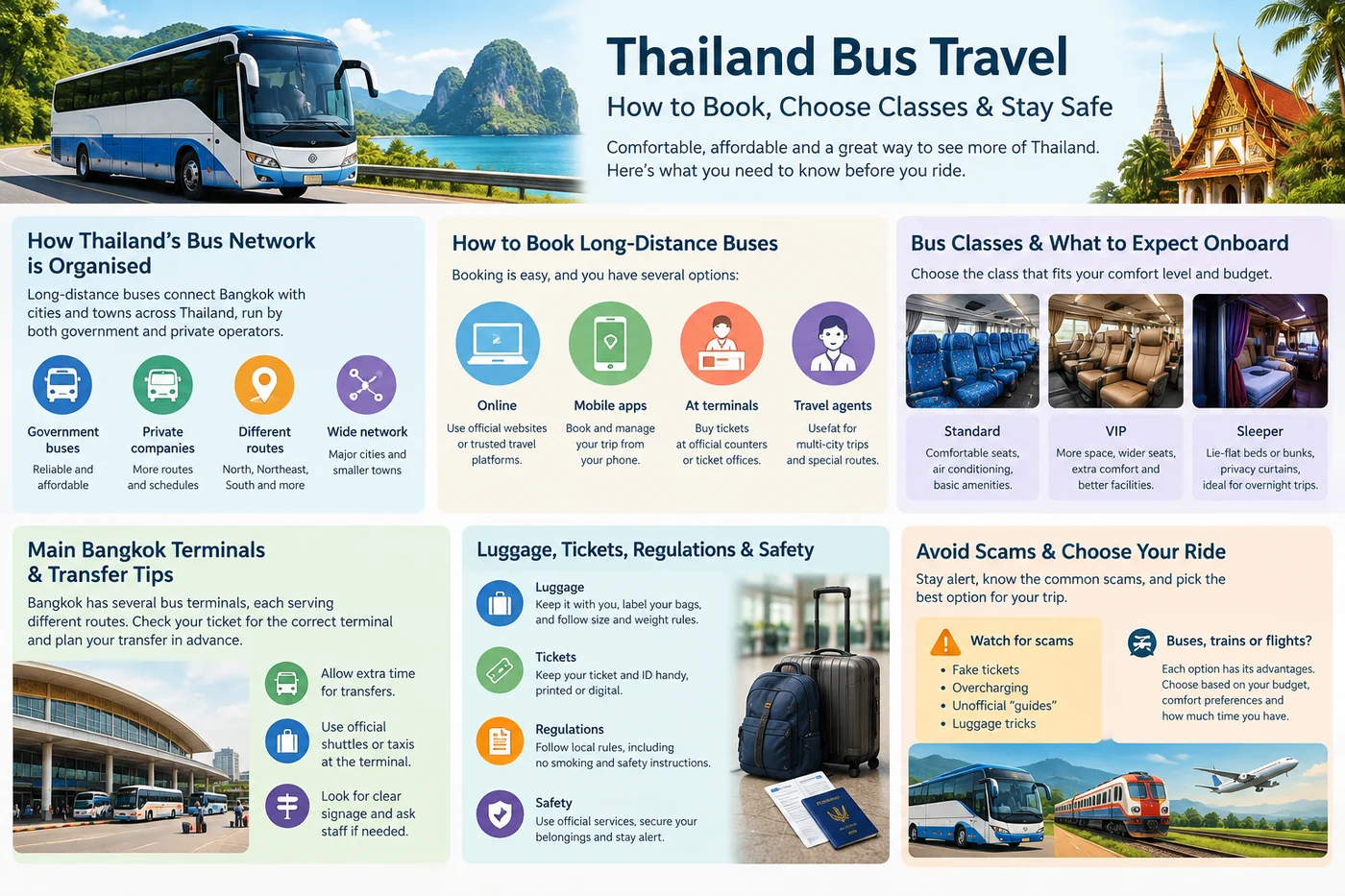
Thailand’s intercity coaches are a mix of the state operator (Transport Co., Ltd., commonly called BKS or BorKorSor) and many private companies. Transport Co. runs scheduled routes from major terminals and sells tickets via its official portal (tcl99web.transport.co.th) and a nationwide counter network. Private operators (for example Nakhonchai Air) publish distinct products and online booking options. Regional operators serve secondary towns. Because timetables and route patterns change seasonally, always verify the operator’s timetable for your travel date.
How to book long‑distance buses
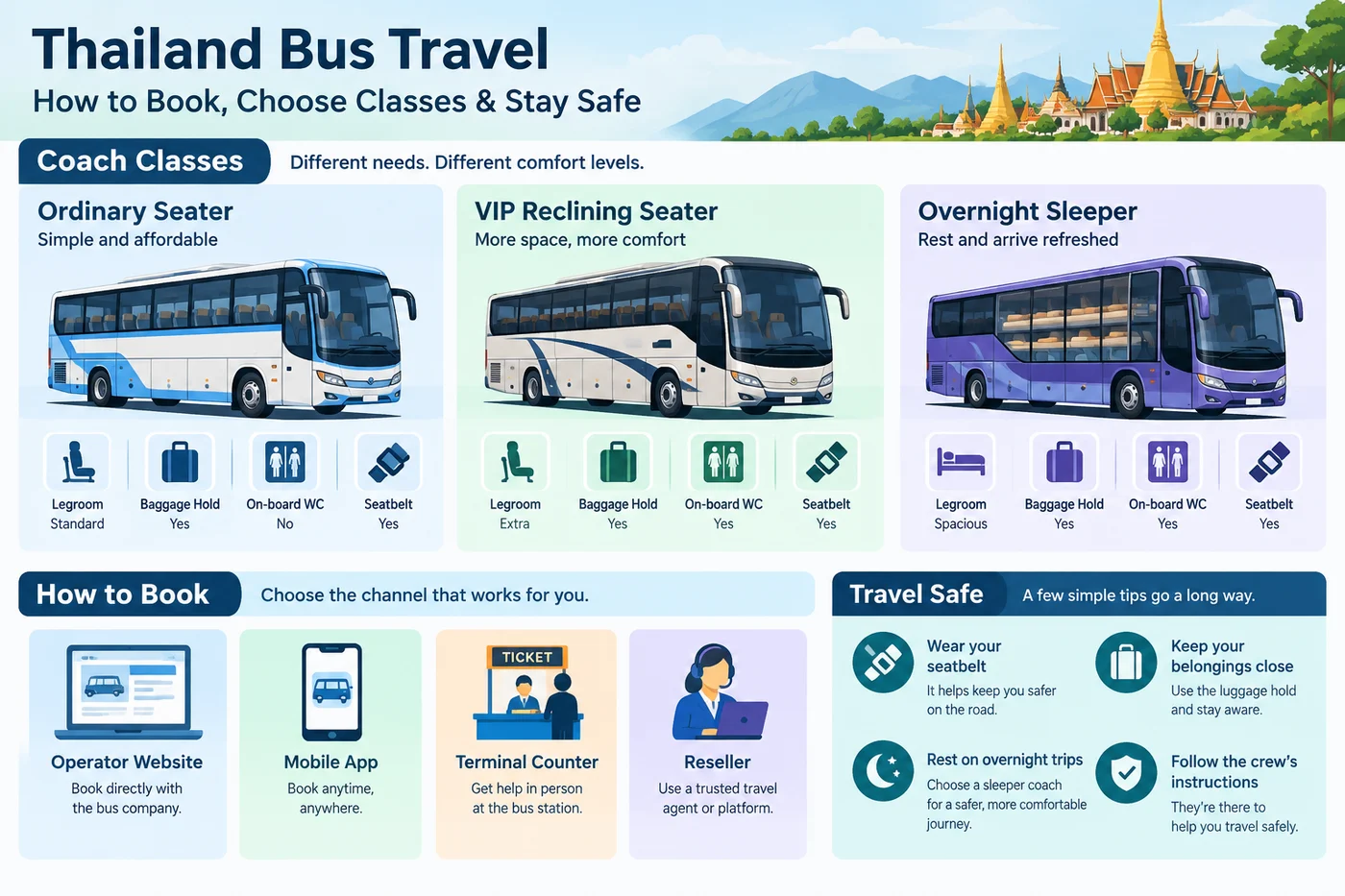
You can buy tickets in four main ways: operator websites and apps, terminal counters, official booking hotlines and reputable third‑party platforms (examples commonly used: BusX, 12Go). Steps for a typical online booking:
- Search the operator’s site or an authorised reseller for your date and route.
- Choose class (see next section) and review cancellation/collection rules—some operators require in‑person collection or Thai ID for certain fares.
- Pay with card or supported local methods and save the e‑ticket or booking reference.
- If the operator requires physical collection, allow time to pick up tickets at the terminal counter before departure.
Always check the operator’s published travel conditions after booking—each company sets its own refund and boarding rules.
Thailand bus travel — classes and what to expect onboard
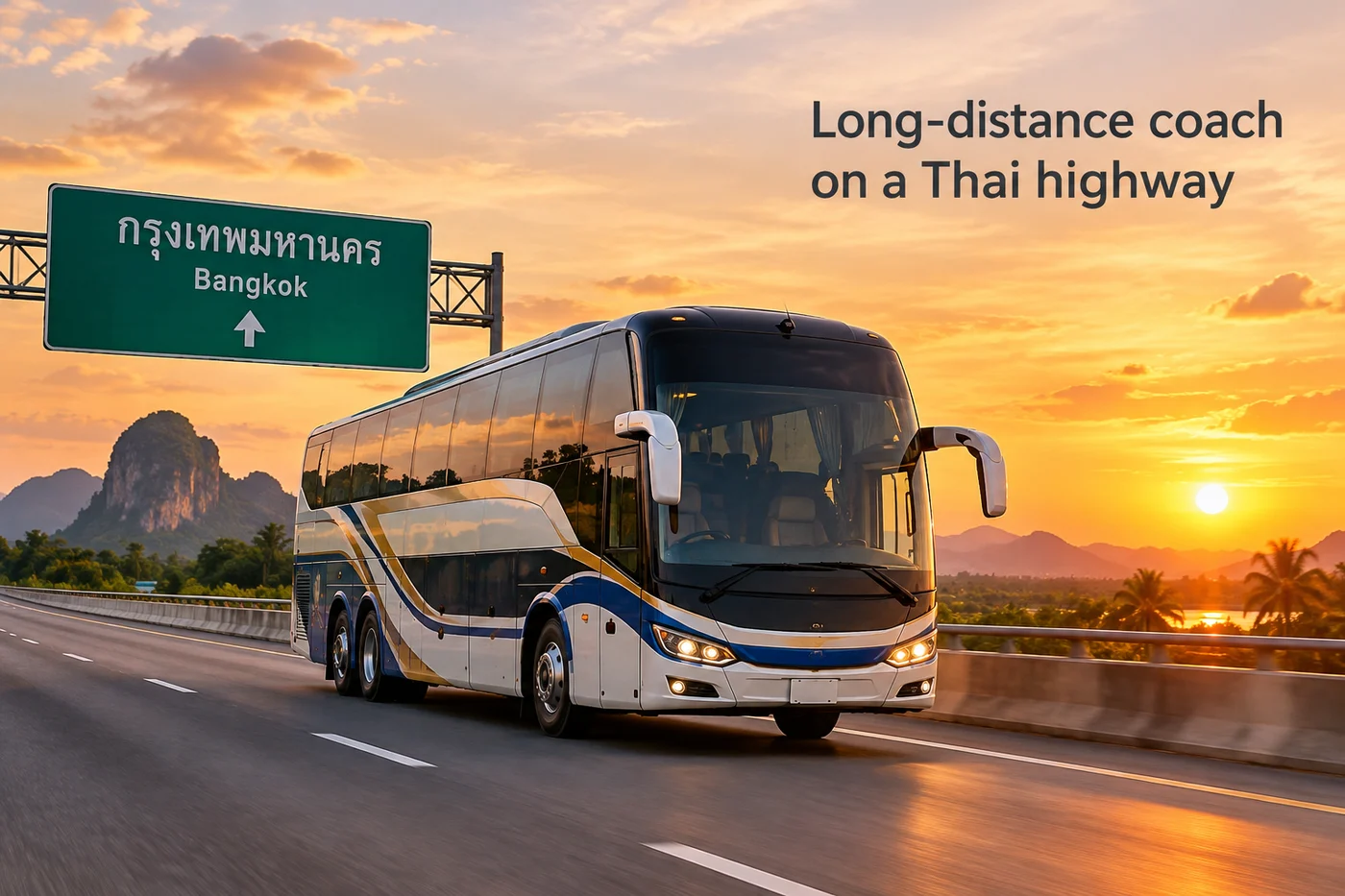
Coach classes are usually described as ordinary/seater, first‑class or VIP, and overnight sleepers. Ordinary coaches are basic seater buses with higher density; first/VIP coaches have fewer seats, more legroom and often reclining seats; sleeper coaches provide bunks or fully reclined seating for overnight runs. Amenities differ by operator: some VIP coaches include onboard Wi‑Fi, toilets and charging points; others do not. Seat belts may not be fitted on every coach—check the vehicle description before booking and wear them where available.
Main Bangkok terminals and practical transfer tips
Bangkok’s long‑distance services depart from three established terminals: Mo Chit (Northern/Northeastern), Ekkamai (Eastern) and the Southern Bus Terminal (Sai Tai Mai). Each terminal has ticket counters, luggage storage and local transport links (metro, BTS or taxis). Plan your transfer time carefully: terminals are busy at peak hours and during holidays. If you have large luggage, confirm whether it goes into the coach hold or must be collected at a separate baggage office—procedures vary.
Luggage, tickets, regulations and safety
Operators publish baggage allowances and seat policies—do not assume uniform rules. Common points:
- Baggage: Checked luggage usually goes in the coach hold; small hand luggage fits overhead or under the seat. Operators may limit the number or weight of pieces.
- Ticket collection and ID: Some bookings can be shown on a phone; others require counter collection and ID. Read the operator’s conditions at purchase.
- Regulation and safety: The Department of Land Transport oversees road passenger services in Thailand. Vehicles must carry compulsory motor insurance and drivers should meet licensing and inspection standards; however, enforcement and facilities vary, so use common‑sense safety checks: board in daylight when possible, note the coach number, keep valuables with you and wear seat belts where present.
If a bus is late or cancelled, contact the operator immediately and keep booking references handy.
Safety, common scams and choosing between buses, trains and flights
Common issues travellers report include unofficial touts at terminals, unfamiliar ticket‑collection requirements and miscommunication about seat assignments. Avoid scams by buying from official counters or trusted platforms, checking the coach plate and driver name against your ticket, and refusing offers from street agents that sound different to your reservation.
When to choose another mode:
– Trains: Preferable for scenic routes, daytime comfort and if you want a sleeper cabin (booked through State Railway of Thailand).
– Flights: Faster for longer distances or tight schedules; compare total door‑to‑door time and cost.
Use buses when you want flexible schedules, direct stops to smaller towns, or lower fares on short to medium routes. For detailed comparisons, link to our trains guide to help decide the best option for your itinerary.
Practical Tips
Book popular routes in advance. Save booking references and screenshots of e‑tickets. Arrive at the terminal 30–60 minutes before departure for domestic services (allow more time during holidays). Keep passport/ID handy if collecting tickets. Store valuables in a daypack you keep with you on board. Pack snacks, water and a small power bank for overnight runs.
Important Considerations
Schedules, fares, vehicle fit‑out and ticket collection rules change frequently—always verify details with the operator before travel. Cross‑border services may be suspended or require specific entry rules; check both operator notices and border/immigration guidance.
Planning more of your trip? Browse our
Thailand Travel Guides
for more practical Thailand travel information.
Final Thoughts
Long‑distance buses are a practical way to explore Thailand if you know how to pick the right class, book through trusted channels and follow basic safety checks. For most travellers, advance research and a small checklist (ticket reference, ID, luggage plan) turn a potentially stressful trip into a smooth, economical journey.
Sources & Further Reading
- Transport Co., Ltd. (official booking portal)
- Nakhonchai Air — travel conditions and booking
- Tourism Authority of Thailand — bus travel guidance
- Department of Land Transport (DLT) — official site
Transport schedules, fares and operating rules can change. Always verify time-sensitive details with the official operator before travel.