HOTEL GUIDE
Thailand Border Crossings: Practical Guide for Overland Travel
A concise, practical guide to the main land and river crossings between Thailand and Laos, Cambodia, Myanmar and Malaysia — transport links, visa rules, vehicle paperwork and safety tips.
Thailand border crossings are the routes most international travellers use when going overland or by boat to Laos, Cambodia, Myanmar and Malaysia. This practical guide lists commonly used checkpoints, the transport links that serve them, paperwork you’ll need, what to expect at immigration and how to avoid common problems. Always confirm hours and visa rules with official sources before you travel.
Key Takeaways
- Use official sources (Thai Immigration TDAC, embassy eVisa sites) to confirm visa rights and checkpoint status within days of travel.
- Major crossings have reliable bus/rail/ferry links but operating hours and vehicle rules vary — plan transport and paperwork in advance.
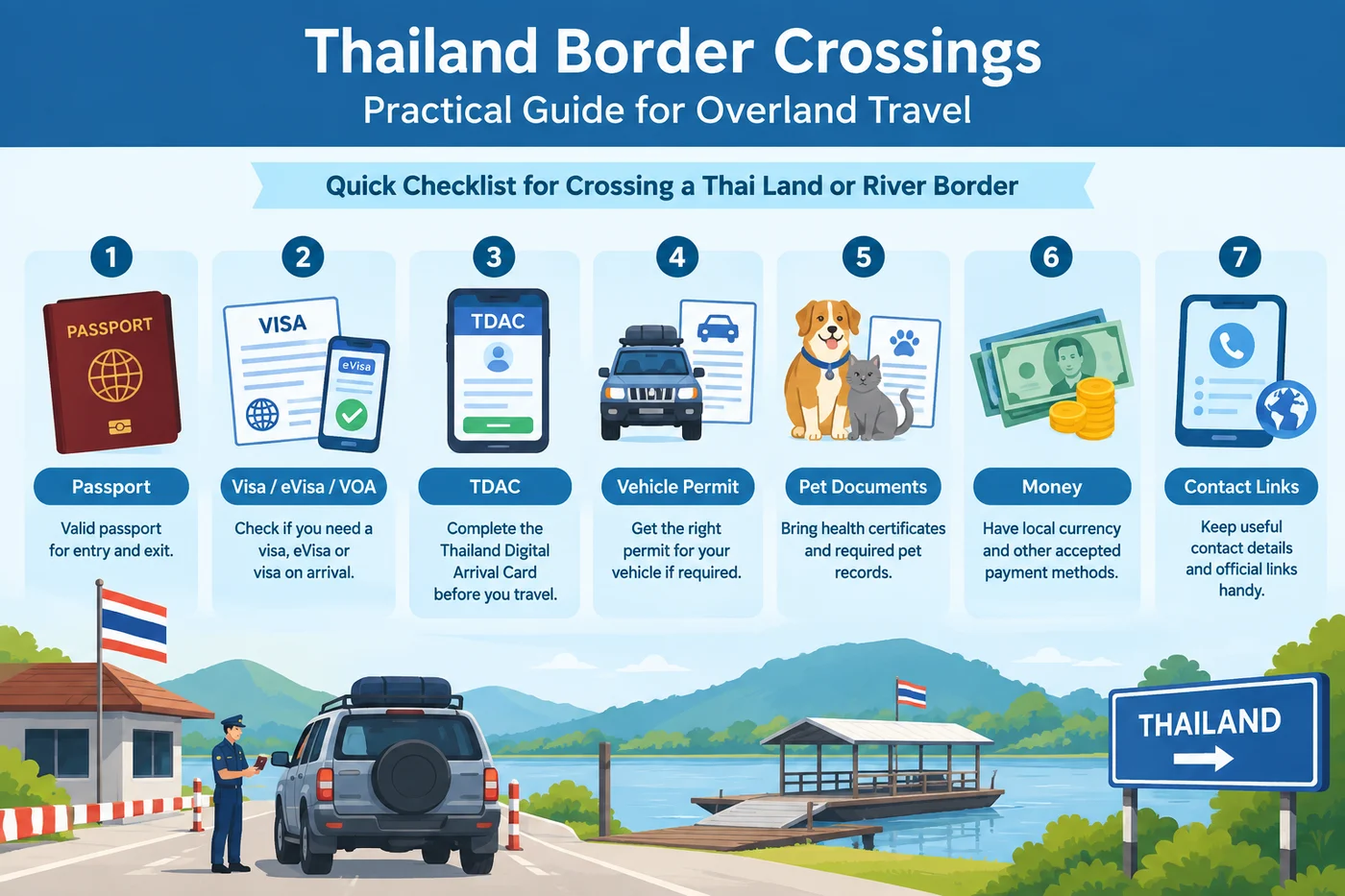
- Carry originals: passport, visa/eVisa/VOA evidence, vehicle permits, pet/child documents and cash for border fees and taxis.
Thailand border crossings: quick overview
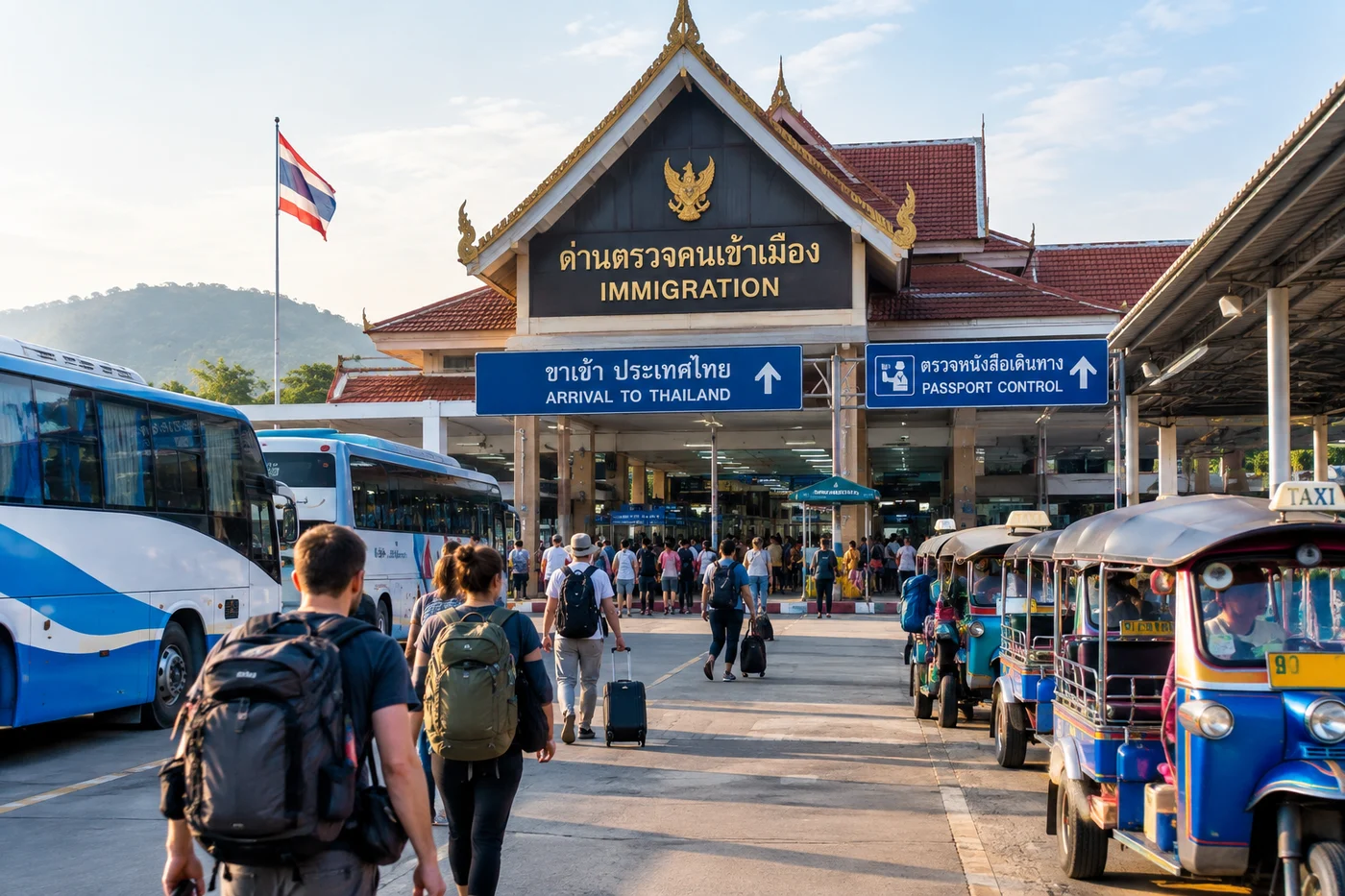
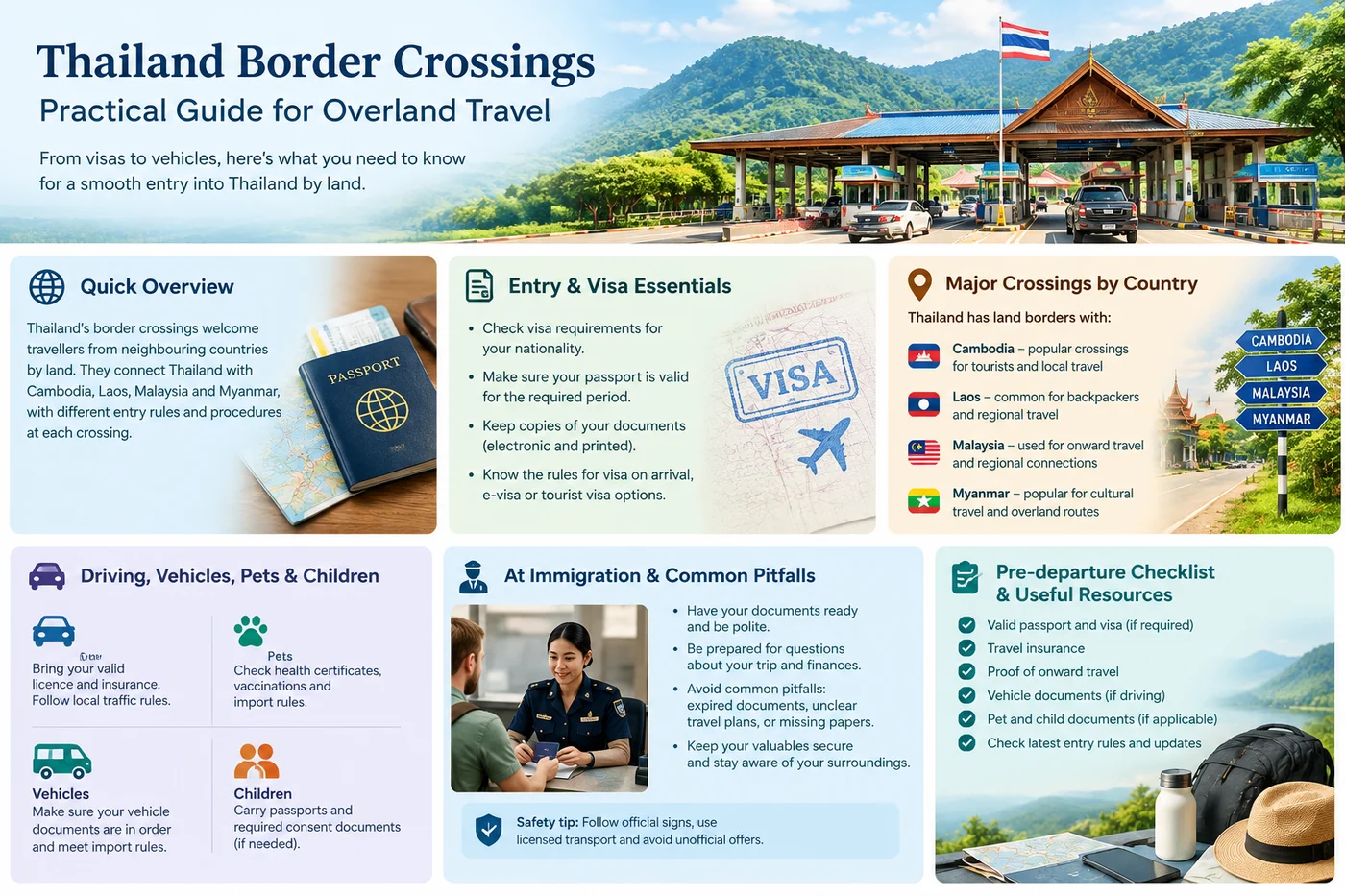
Crossings come in four basic types: road/land checkpoints, river/ferry crossings (Mekong/other rivers), rail links (Padang Besar on the Malaysia line), and seaports. Not every checkpoint accepts foreign arrivals — some are for local trade or daytime-only returns. Many Thai checkpoints are not 24/7; opening hours and whether a crossing allows full tourist entry can change quickly. Before you go, check the specific checkpoint’s status with official immigration or embassy sites.
Entry & visa essentials
Visa rules differ by nationality, arrival mode and checkpoint. Thailand offers eVisa alternatives elsewhere and a list of designated Visa on Arrival (VOA) checkpoints — consult the Thai government VOA list for checkpoints authorised to issue visas. Thailand now uses the Thailand Digital Arrival Card (TDAC); submit TDAC within three days before arrival where required. For neighbouring countries, use their official eVisa/immigration portals to confirm which land points accept foreigners (for example Myanmar’s eVisa portal). Never rely solely on third‑party summaries — confirm with official embassy or immigration pages.
Major crossings by country (what travellers use and how to get there)
Laos: Most international travellers cross on Friendship Bridges across the Mekong. Key links: Nong Khai–Vientiane (bus/train to Nong Khai), Chiang Khong–Houayxay (north; buses/overnight minivans), Mukdahan–Savannakhet and Nakhon Phanom–Thakhek. Ferries and buses serve many river crossings.
Cambodia: Popular crossings for tourists include Aranyaprathet–Poipet (buses from Bangkok), Hat Lek–Koh Kong (bus + ferry to Sihanoukville) and Chong Sa Ngam–Poi Pet for onward travel. Expect a busy, informal atmosphere at Poipet; prebook transport where possible.
Myanmar: Not all Thai–Myanmar checkpoints accept foreigners at all times. Common crossings are Mae Sot–Myawaddy, Mae Sai–Tachileik and Ranong–Kawthaung (boat). Check Myanmar’s eVisa/immigration pages before planning, and expect stricter document checks.
Malaysia: Major crossings are Padang Besar (rail and road), Sadao–Bukit Kayu Hitam (road), and southern border points such as Sungai Kolok–Rantau Panjang. Trains connect at Padang Besar; buses run frequent services to Sadao and Sg Kolok. For vehicle crossings, confirm which posts allow private vehicles.
Driving, vehicles, pets and children
Driving across borders requires paperwork: original vehicle registration, a temporary import permit or carnet where required, proof of insurance valid in the neighbouring country and sometimes a local driving licence translation. Some checkpoints restrict motorcycles or private cars; check the crossing’s vehicle rules ahead of time.
Travelling with pets: you’ll need vaccination records (rabies), a veterinary health certificate and any import permits required by the destination country — processes and quarantine rules vary.
Travelling with children: carry original birth certificates and, if one parent is absent, a notarised consent letter. Border officers commonly inspect these documents; having them in English speeds processing.
What to expect at immigration, common pitfalls and safety tips
Expect basic document checks: passport, visa/eVisa/VOA evidence, TDAC confirmation (if required), and sometimes proof of onward travel or accommodation. Border officers may stamp passports on arrival/departure — keep pages free. Typical pitfalls: relying on unofficial ‘agents’ who promise fast visas at land borders, accepting unmetered taxis from the checkpoint, or missing that a crossing is open for locals only. Scams can include overpriced unofficial currency exchange and claims that your passport needs temporary ‘processing’ unless you pay a fee — always pay fees at the immigration window and get receipts.
Safety tips: use official counters, keep valuables secure, confirm bus schedules that cross the border (operators sometimes have separate border-transfer arrangements), and allow extra time for peak periods and ferry delays (river levels affect services).
Pre-departure checklist and resources
Before you travel, complete this checklist:
- Passport valid for the destination’s required period.
- Visa/eVisa/VOA eligibility confirmed on official sites.
- TDAC submitted if entering Thailand (see Thailand Immigration TDAC).
- Vehicle registration, temporary import permit/carnet and green card insurance or local cover.
- Pet vaccination certificate and import permits where needed.
- Child travel documents and parental consent letter if applicable.
- Local currency for small fees, taxi fares and tips.
- Printed reservations and contact numbers for the checkpoint or neighbouring country’s immigration if available.
Resources: check the Thai Immigration TDAC site and the Thai government VOA checkpoint list for up-to-date authorised points; check Myanmar’s official eVisa portal for which crossings accept foreign entries. For Malaysia or Laos, consult the relevant official immigration or embassy pages. Also consider HotelForU’s Thailand travel pages for local transport links and timetable planning.
Practical Tips
Always verify opening hours and whether a crossing issues full tourist entry or local-day returns. Prebook cross-border buses or trains when possible, take photocopies of key documents, carry some local cash for small fees, and keep digital scans of passport and visas. If using a vehicle, confirm insurance validity and whether a temporary import permit is issued at your chosen checkpoint.
Important Considerations
Visa lists, VOA eligibility and checkpoint operating status change frequently. Do not rely on forum posts or old guides for legal entry rules — check TDAC, official embassy/eVisa sites and the Thai government VOA checkpoint list within days of departure.
Planning more of your trip? Browse our
Thailand Travel Guides
for more practical Thailand travel information.
Final Thoughts
Thailand border crossings can be straightforward with preparation. Use official immigration resources, arrange transport and paperwork in advance, and allow extra time for border formalities. Confirm everything close to your travel date to avoid surprises.
Sources & Further Reading
- Thailand Digital Arrival Card (TDAC) – Immigration Bureau
- Thai government list of designated Visa on Arrival checkpoints
- Myanmar eVisa portal (Ministry of Immigration & Population)
- Malaysia border-control regulations (official text)
Transport schedules, fares and operating rules can change. Always verify time-sensitive details with the official operator before travel.