HOTEL GUIDE
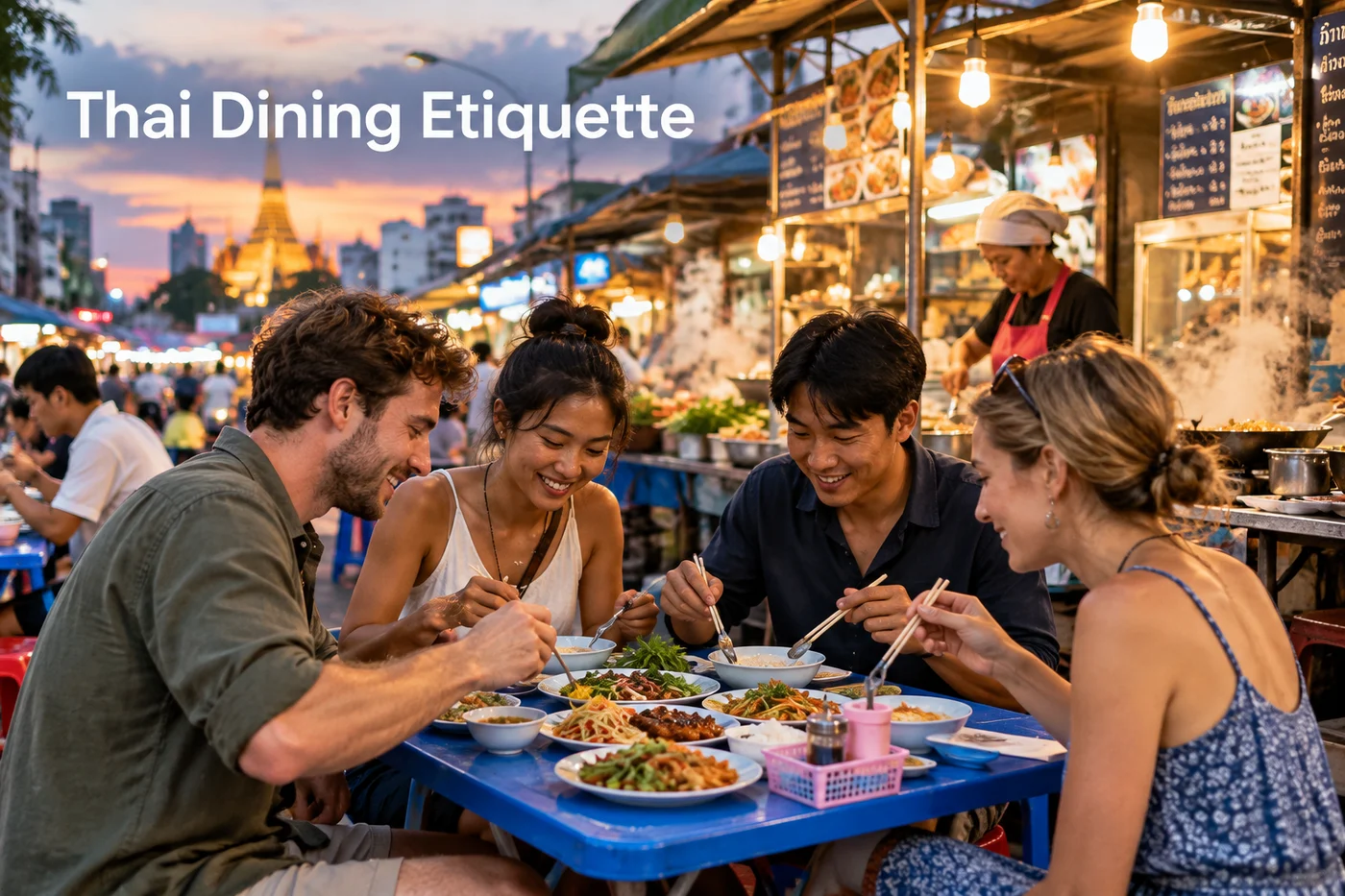
Thai Dining Etiquette: Practical Manners, Tipping and How to Eat in Thailand
A concise, traveler-focused guide to Thai dining etiquette—how to eat, share, tip and behave at restaurants, street stalls, temples and family meals.
Thai dining etiquette matters less as strict rules than as everyday respect. Knowing a few practical customs—how to use a fork and spoon, how to share dishes, and what to avoid at temples and homes—will help you dine confidently at restaurants, street stalls and family tables across Thailand.
Key Takeaways
- Use a spoon as your main utensil, share dishes from the center, and serve elders first in formal settings.
- Sticky rice is eaten by hand in Isaan—use the right hand to pinch small balls; chopsticks are for noodles only.
- Tipping is appreciated but not mandatory—check bills for service charges (often noted as “service” or “++”) and leave small cash tips when pleased.
Thai dining etiquette: Quick rules at a glance
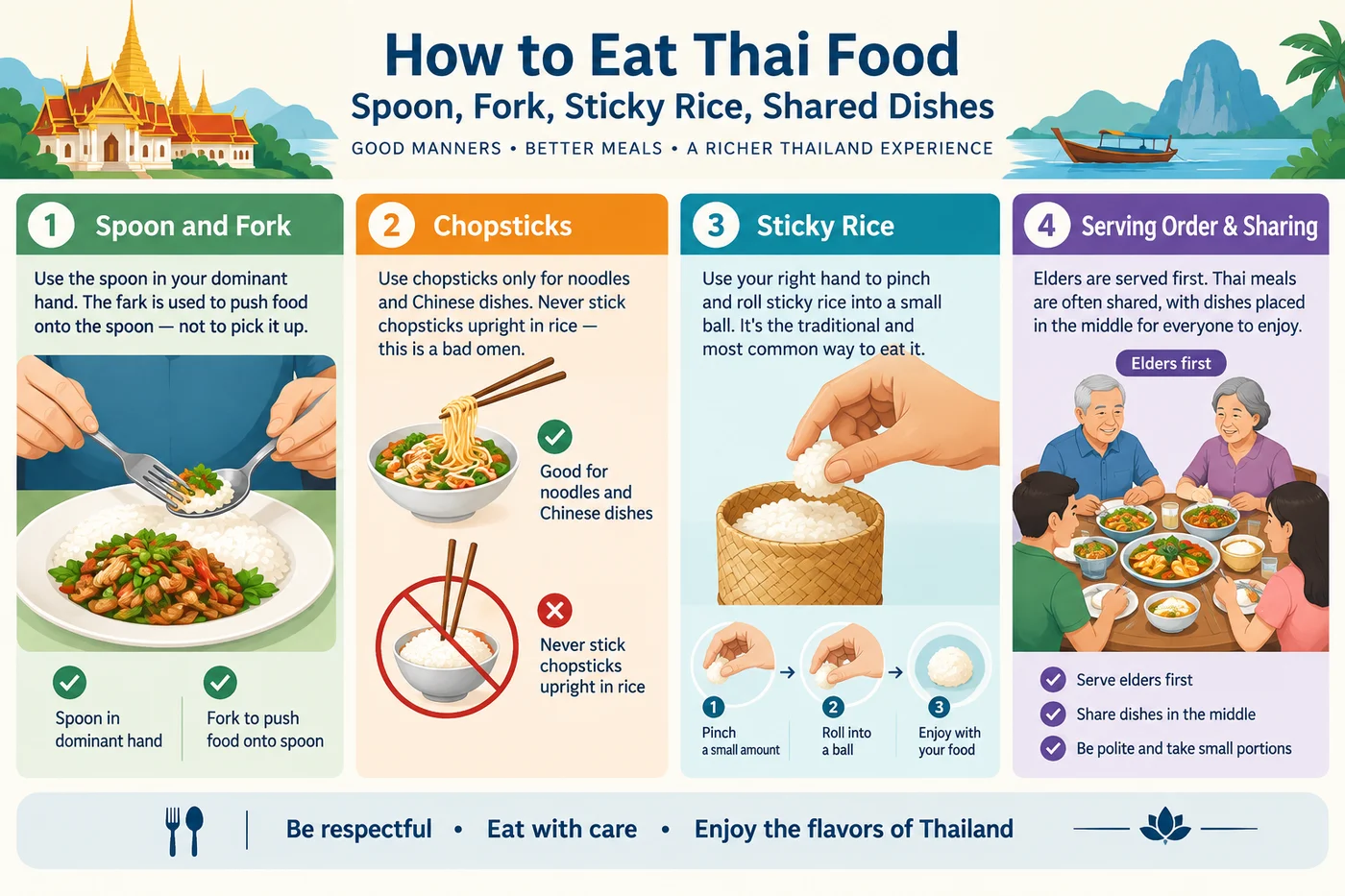
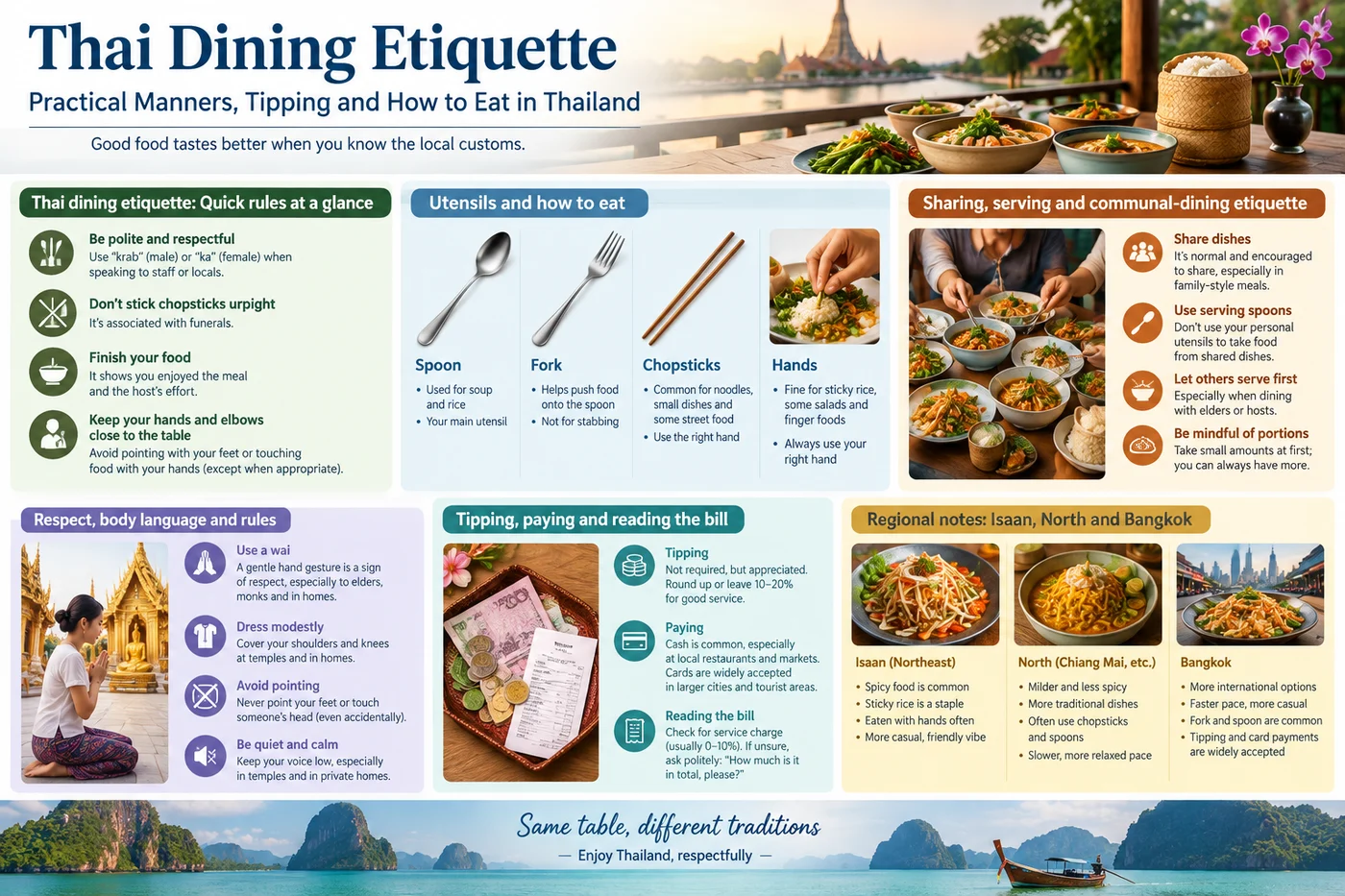
Do: use a spoon in your dominant hand and keep portions small when helping yourself from shared plates; wai (slight bow with hands) or smile to thank hosts; remove shoes where required in homes and some casual eateries. Don’t: touch a person’s head, point your feet toward others or Buddha images, stick chopsticks upright in rice, or put your feet on chairs or tables. In formal settings, wait for elders or the host to begin. These simple habits signal respect more than perfect mastery of local customs.
Utensils and how to eat: spoon, fork, chopsticks and hands
The spoon is the primary utensil: hold it in your dominant hand and use the fork only to push food onto the spoon. Knives are uncommon at the table because dishes are served ready-to-eat in bite-sized pieces. Chopsticks are supplied for noodle or Chinese-style dishes; never stick them vertically into rice (this resembles funeral rituals). Sticky rice (khao niao) is eaten by hand in Isaan and parts of the north—pinch or roll a small ball with the right hand to scoop other dishes. When using hands, keep them clean and only touch food with the right hand in traditional contexts.
Sharing, serving and communal-dining etiquette
Thai meals are typically communal: several dishes are placed in the centre and everyone serves themselves. Use shared serving spoons where supplied, and take modest portions so others can try each dish. If you’re paying, it’s polite to offer to serve elders or guests first. In formal or family meals, the eldest or the host may be invited to begin; follow their cue. When dining at a street stall, smaller plates are common—order several dishes to share and balance flavours (spicy/sour/sweet) across the table.
Respect, body language and rules at temples and homes
Respect and hierarchy matter. The head is considered the most sacred part of the body—never touch someone’s head, including children. Feet are the lowest—avoid pointing them at people, food or sacred images and don’t rest feet on furniture. In homes and some informal restaurants, remove shoes at the entrance. Dress modestly when invited to a home or visiting temples; cover shoulders and knees. If you must refuse food, do so gently with thanks—say 'khawp khun krap/ka' (thank you) and a soft excuse. Hosts generally appreciate polite, understated refusals rather than blunt declines.
Tipping, paying and reading the bill
Tipping in Thailand is appreciated but not compulsory. Many mid-to-upscale restaurants add a service charge (look for “service” or “++” on the menu or bill) and tax may be itemized separately—practices vary and can change, so check the receipt. In casual street-food stalls and small eateries, leave small change or round up. For table service, leaving 50–100 THB for a small meal or 5–10% in appreciation at higher-end venues is common practice among visitors, but always consider local norms and service level. When splitting bills, ask the staff—many urban restaurants are used to separate checks; street stalls often prefer one payer.
Regional notes: Isaan, North and Bangkok differences
Expect regional variation. In Isaan (northeast), sticky rice is the staple and is almost always eaten by hand with grilled meats, larb or papaya salad. Northern meals sometimes feature communal bowls and unique serving orders; food there can be milder and includes dishes not common in Bangkok. In central Bangkok and tourist areas you’ll see more Western utensils, table service and restaurants accustomed to international diners. Use local cues: mirror the behavior of the group you’re dining with; that’s the easiest way to avoid awkward missteps.
Practical Tips
Carry small change for street stalls and tips. Watch the table for serving spoons and use them. If given sticky rice in a bamboo basket, use the right hand. When unsure, smile, say 'khap/ka' (thank you) with a wai and follow your host’s lead. For more dining options and restaurant recommendations in Thailand, see our restaurants guide at https://hotelforu.net/restaurants.
Important Considerations
Tipping practices and service-charge policies can change—always check your bill. Regional customs vary widely; what’s normal in Isaan may surprise Bangkok diners. Thais generally do not expect perfection from foreigners; polite attempts and respectful behavior are welcomed.
Planning more of your trip? Browse our
Thailand Food & Restaurant Guides
for more practical Thailand food and dining information.
Final Thoughts
A few simple habits—using a spoon, sharing small portions, showing modest respect for elders and sacred spaces—will get you very far. Thai dining etiquette isn’t a strict code but a set of gestures of respect. Keep your eyes open, follow your hosts, and enjoy the food—most Thais value warmth and politeness over flawless technique.
Sources & Further Reading
- Ministry of Culture — Thai Social Etiquette (table manners & respect)
- OutThailand — How to Eat Thai Food (utensils & table etiquette)
- ThailandKnowledge — Isaan Food Culture (sticky rice practice)
Transport schedules, fares and operating rules can change. Always verify time-sensitive details with the official operator before travel.