HOTEL GUIDE
The Traveler’s Guide to Thai Desserts: What to Try, Where to Find Them and How to Order
A practical guide to Thailand’s classic sweets—what to try, where to buy them, how they’re served, ordering phrases, allergy notes and when fruit desserts are best.
Thai desserts are a vibrant, coconut-forward corner of Thailand’s food culture. From mango sticky rice to khanom krok and the Portuguese‑inspired 'Thong' sweets, Thai desserts mix rice, coconut and palm sugar into textures and flavours many travellers find addictive. This guide explains what to try, where to find authentic versions, how to order, and what to watch for if you have dietary restrictions.
Key Takeaways
- Start with mango sticky rice, khanom krok and bua loy for classic textures: sticky rice, soft coconut pancakes and sweet tapioca balls.
- Find desserts at morning markets, night markets, Chinatown, temple fairs and dedicated cafés—choose busy vendors and those that prepare to order.
- Confirm ingredients for allergies (eggs, coconut, nuts) and ask about mango season; point and use 'ao' to order quickly at stalls.
What Are Thai Desserts? Core ingredients and context
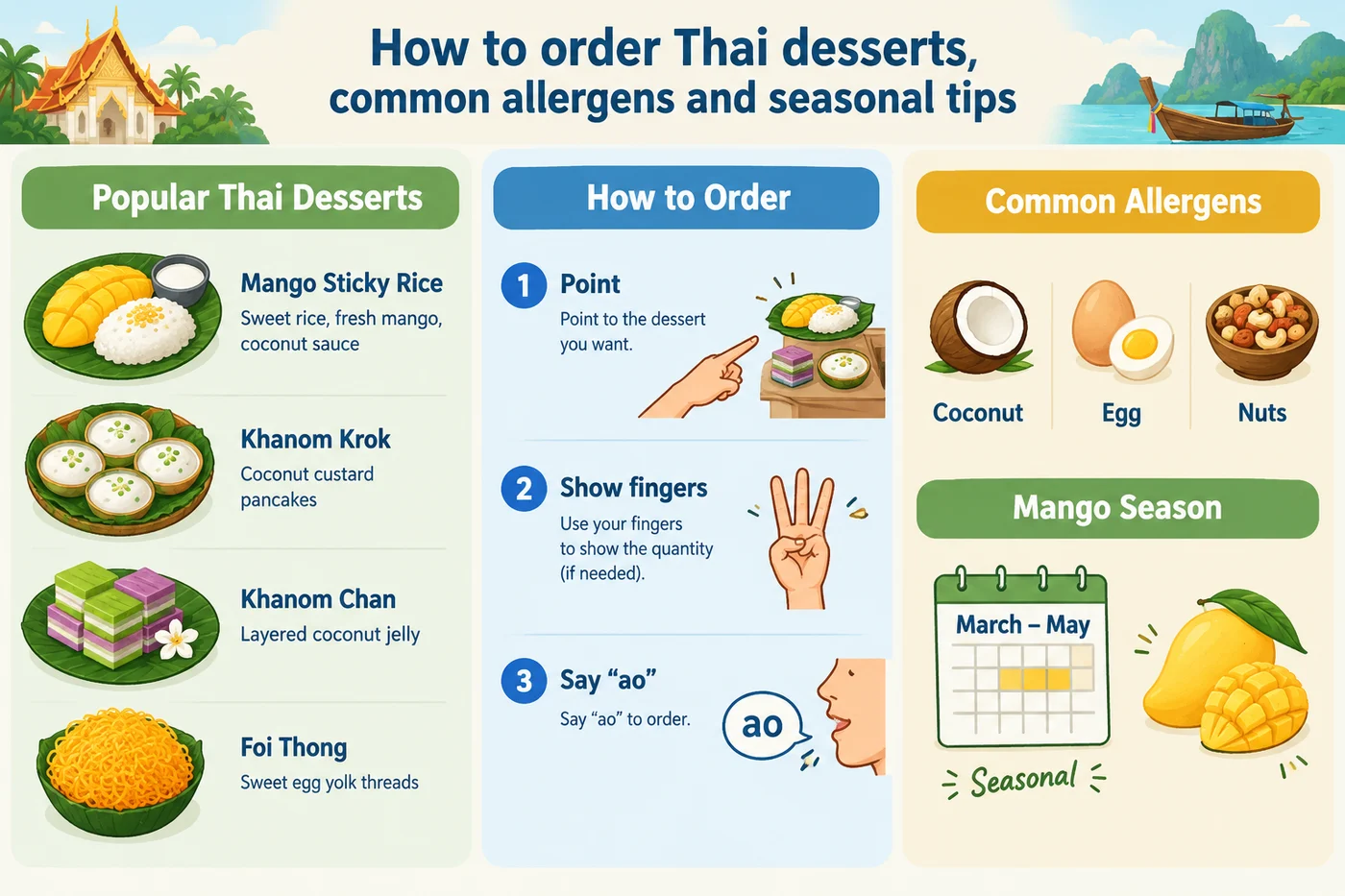
The Thai word khanom covers snacks and sweets. Most traditional Thai desserts rely on three core ingredients: rice or rice flour (including glutinous or 'sticky' rice), coconut milk/cream, and palm sugar. Tapioca starch, mung bean, and eggs are common additions for texture and richness. Many ceremonial sweets—especially the 'Thong' family such as foi thong and thong yip—trace back to 17th‑century Portuguese influences and are now part of Thai auspicious-food traditions.
Must‑try sweets and quick tasting notes
Start with these classics:
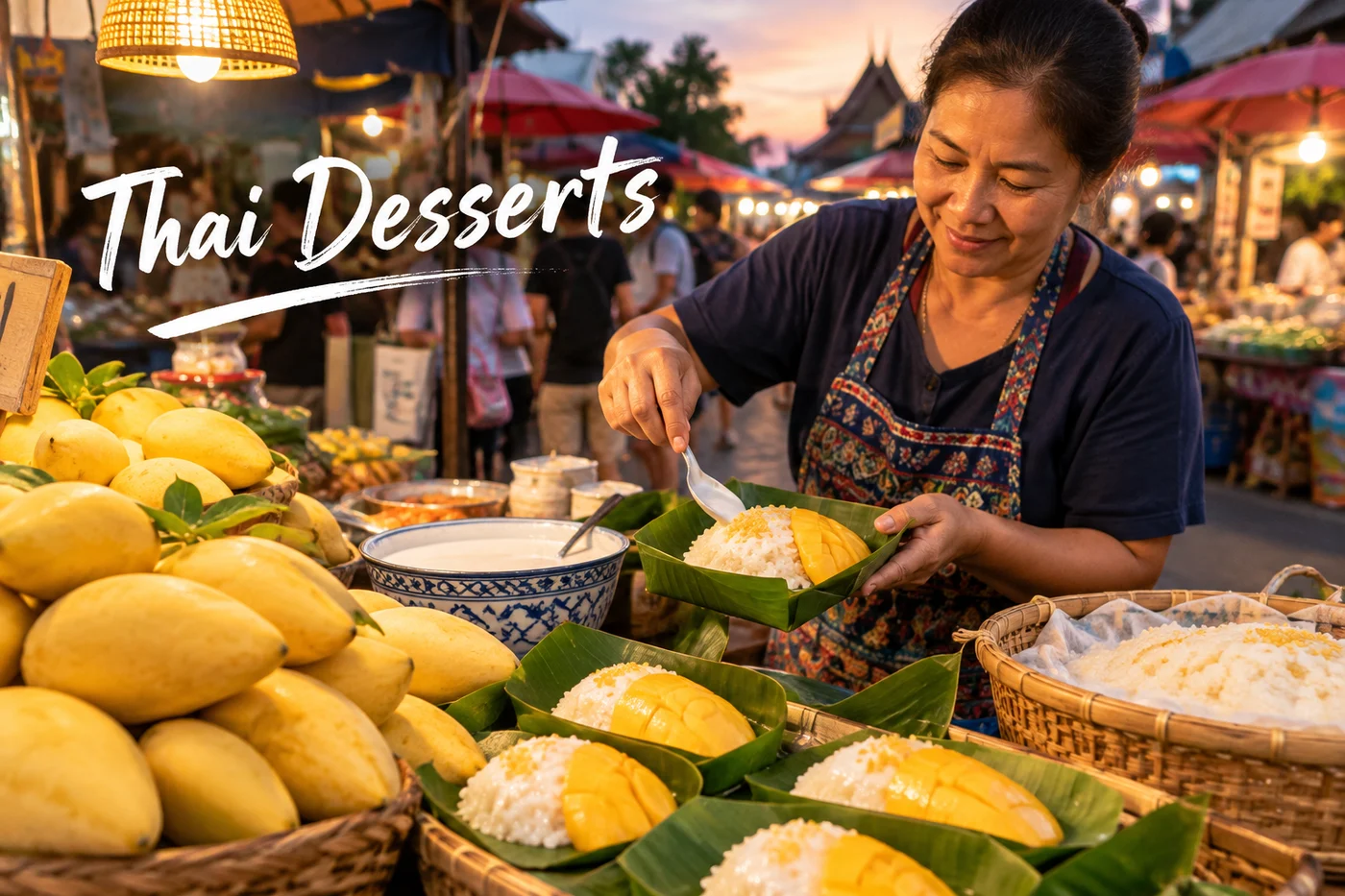
– Khao niao mamuang (mango sticky rice): sweet glutinous rice with rich coconut sauce and ripe mango. Best in mango season (see seasonality).
– Khanom krok: small coconut‑rice griddle pancakes—crispy edges, soft, slightly salty interior.
– Bua loy: small rice‑flour balls in warm sweet coconut milk, sometimes with an egg yolk added.
– Khanom chan: steamed, subtly sweet layered cake with a firm, chewy texture.
– Foi thong, thong yod, thong yip: egg‑yolk sweets from the 'Thong' family—very sweet, often used in ceremonies.
– Khanom mo kaeng: a custard-like baked pudding made with mung bean or taro, coconut milk and egg.
– Tub tim grob: crunchy water chestnut cubes in chilled coconut milk (often called 'red rubies').
Tasting tip: Thai desserts often balance sweet with a hint of salt (from coconut) rather than overwhelming sweetness.
Where to find authentic Thai desserts
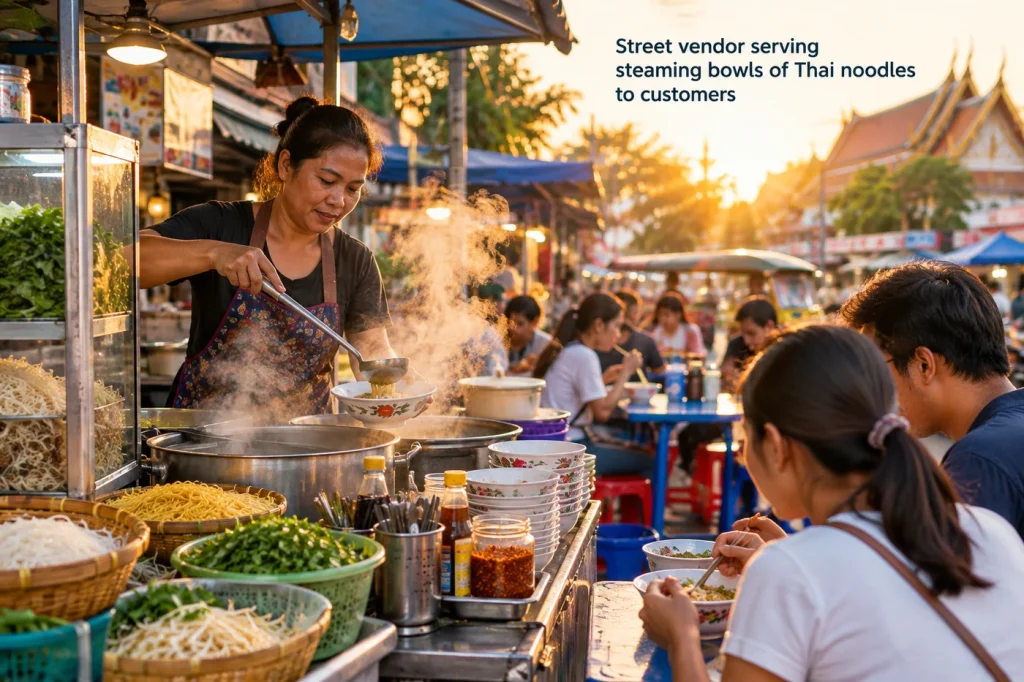
You’ll see desserts everywhere: morning markets and fruit carts for fresh mango and fruit desserts; street-food stalls and night markets for khanom krok and bua loy; Chinatown and temple fairs for regional specialties; and dedicated dessert cafés and mall dessert counters for polished versions. For local authenticity, follow the crowds—busy stalls that prepare desserts to order are usually fresher. If you’re in Bangkok, Chiang Mai or Phuket, check HotelForU’s Bangkok street-food guide (internal link opportunity) for market recommendations and neighbourhood favourites.
How to order: simple phrases and practical signals
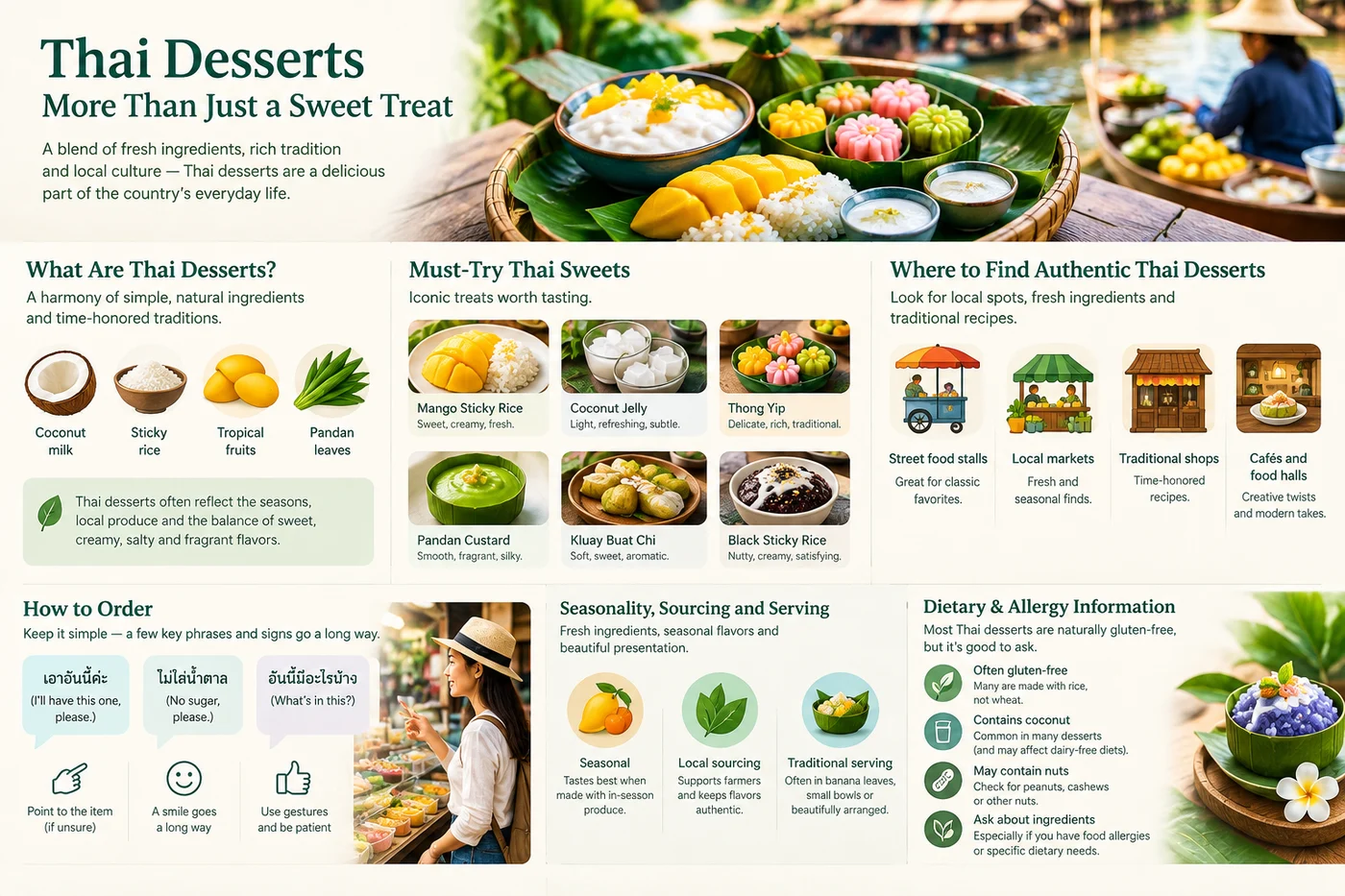
Ordering is straightforward: point at the item, hold up fingers for quantity, or say 'ao' (I’ll take). Vendors commonly accept cash; acceptance of Thai QR payments is increasing (this varies by vendor and location). If you want it less sweet, say 'not very sweet' in English and point—many stall vendors understand simple requests. For takeaway, vendors will wrap portions in banana leaf or plastic containers; for eat‑in at market tables, be ready with small notes and to clear your plate if no service staff is present.
Seasonality, sourcing and serving notes
Fruit-forward desserts depend on seasonality. Mango sticky rice is best during Thailand’s main mango season—roughly March–May with peaks often in April–May—but vendors sell the dish year‑round; outside peak months fruit quality varies. When freshness matters, ask the vendor about the mango variety or whether the fruit was locally sourced. Many desserts are assembled or cooked to order; watch how cut fruit is stored (ice, shaded containers) and prefer stalls where you can see preparation.
Dietary and allergy information
Common allergens in Thai desserts include coconut (ubiquitous), egg (notably in 'Thong' desserts and many custards), and nuts in some modern or fusion sweets. Rice and tapioca are gluten‑free, but cross‑contamination is possible. For vegetarian or vegan diets, check for egg and whether condensed milk or dairy is used—many street versions use coconut cream, which is vegan‑friendly, but you must confirm. Always ask the vendor about specific ingredients if you have allergies; pointing to ingredients and saying 'no egg' while miming an allergy is a pragmatic approach.
Practical Tips
Choose busy stalls where desserts are made to order. Point or hold up fingers for quantity and use 'ao' to indicate you want something. Carry small cash notes (many small vendors are cash-only); QR payments are increasingly accepted but vary by vendor. For mango sticky rice, ask about the mango variety or season if freshness matters. If you have allergies, explicitly ask about eggs and coconut before buying.
Important Considerations
Do not assume all desserts are vegetarian or vegan—eggs and condensed milk are common. Mango quality depends on season and can vary; dates given for seasonality are approximate and subject to change. Prefer vendors with visible preparation and local customers; avoid stalls where fruit sits unrefrigerated in heat.
Planning more of your trip? Browse our
Thailand Food & Restaurant Guides
for more practical Thailand food and dining information.
Final Thoughts
Thai desserts are an easy and delicious way to sample Thailand’s flavour palette—textured rice, fragrant coconut, and palm sugar‑sweetness. With a few simple phrases, a watchful eye for hygiene and a quick check for allergens, you can taste a wide variety of sweets across markets, night bazaars and cafés. Be adventurous: start with one or two small portions and pair them with Thai tea or strong coffee to balance sweetness.
Sources & Further Reading
- Thailand Foundation — Nine Auspicious Thai Desserts
- Tourism Authority of Thailand — Thai desserts overview
- Visit‑Thailand — Thai fruit and where to buy
Transport schedules, fares and operating rules can change. Always verify time-sensitive details with the official operator before travel.