HOTEL GUIDE
Thai Cooking Classes for Travelers: How to Choose, What to Expect and Top Dishes to Learn
A practical guide for travelers: compare class formats, typical menus, dietary options, realistic outcomes and booking tips for Thai cooking classes in major destinations.
Thai cooking classes are one of the most rewarding ways to learn about Thailand’s food culture and return home with practical skills. This guide explains common class formats, what to expect on the day, the signature dishes you’ll likely learn, how schools handle dietary needs, and how to pick and book the right experience.
Key Takeaways
- Choose a class format that matches your time, language needs and dietary requirements—market tours are common but not guaranteed.
- Expect hands‑on cooking with 3–6 dishes, printed/digital recipes and a participation certificate; menus often rotate by season.
- Confirm allergy handling, class size and pickup/meeting logistics with the provider before booking.
Why take a Thai cooking class
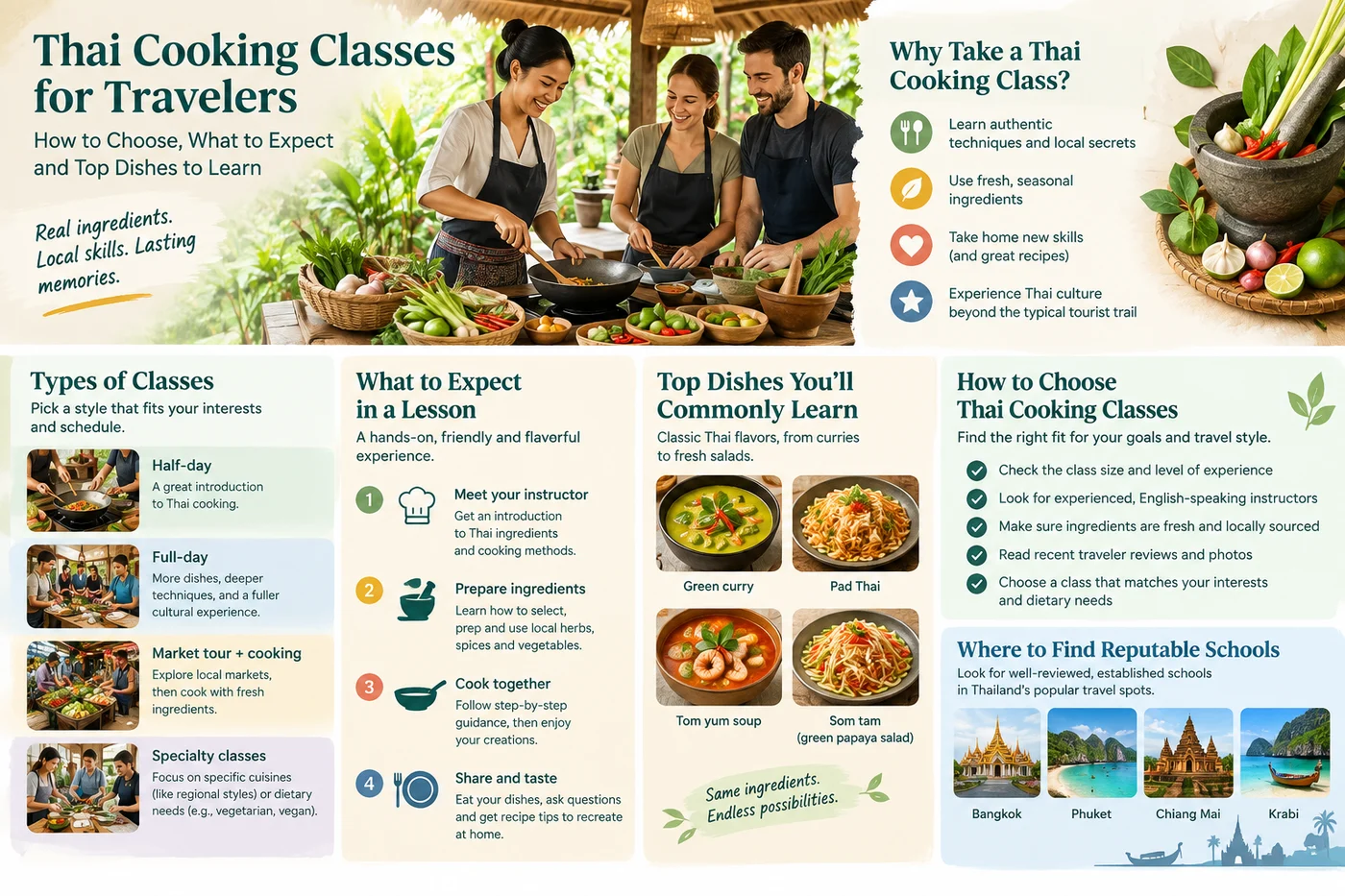
A short class gives practical skills—knife basics, spice-paste pounding, wok technique—and cultural context for common ingredients. For travellers the benefits are immediate: you eat what you make, get printed or digital recipes to take home, and gain confidence shopping for Thai ingredients abroad. Classes also make memorable souvenirs and are easy to combine with sightseeing or a hotel stay.
Types of classes: half‑day, full‑day, market and more
Most visitor-focused schools offer half‑day and full‑day formats. Half‑day sessions typically cover 3–5 dishes and often include a morning market visit; full‑day options cover 4–6+ dishes and deeper technique time. Other formats: hotel-based demonstrations, farm‑to‑table or garden classes, homestay/community experiences and private lessons. Multi‑day or professional courses exist but are a separate commitment.
Group vs private: group lessons are social and usually lower cost; private lessons let you set menu and pace. Market‑to‑table and farm classes emphasise sourcing and seasonality; hotel classes may be more controlled and less focused on market visits.
What to expect in a lesson
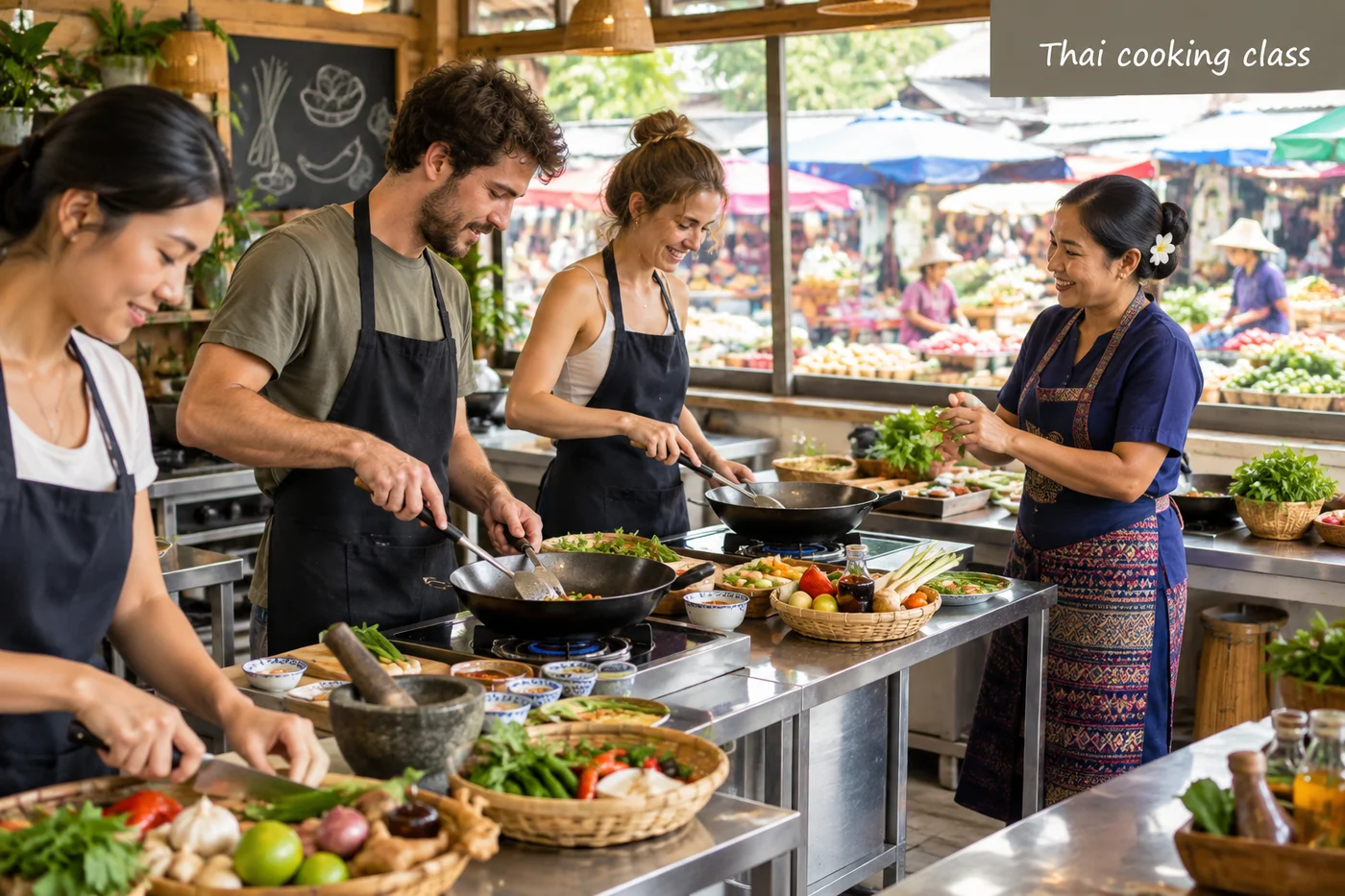
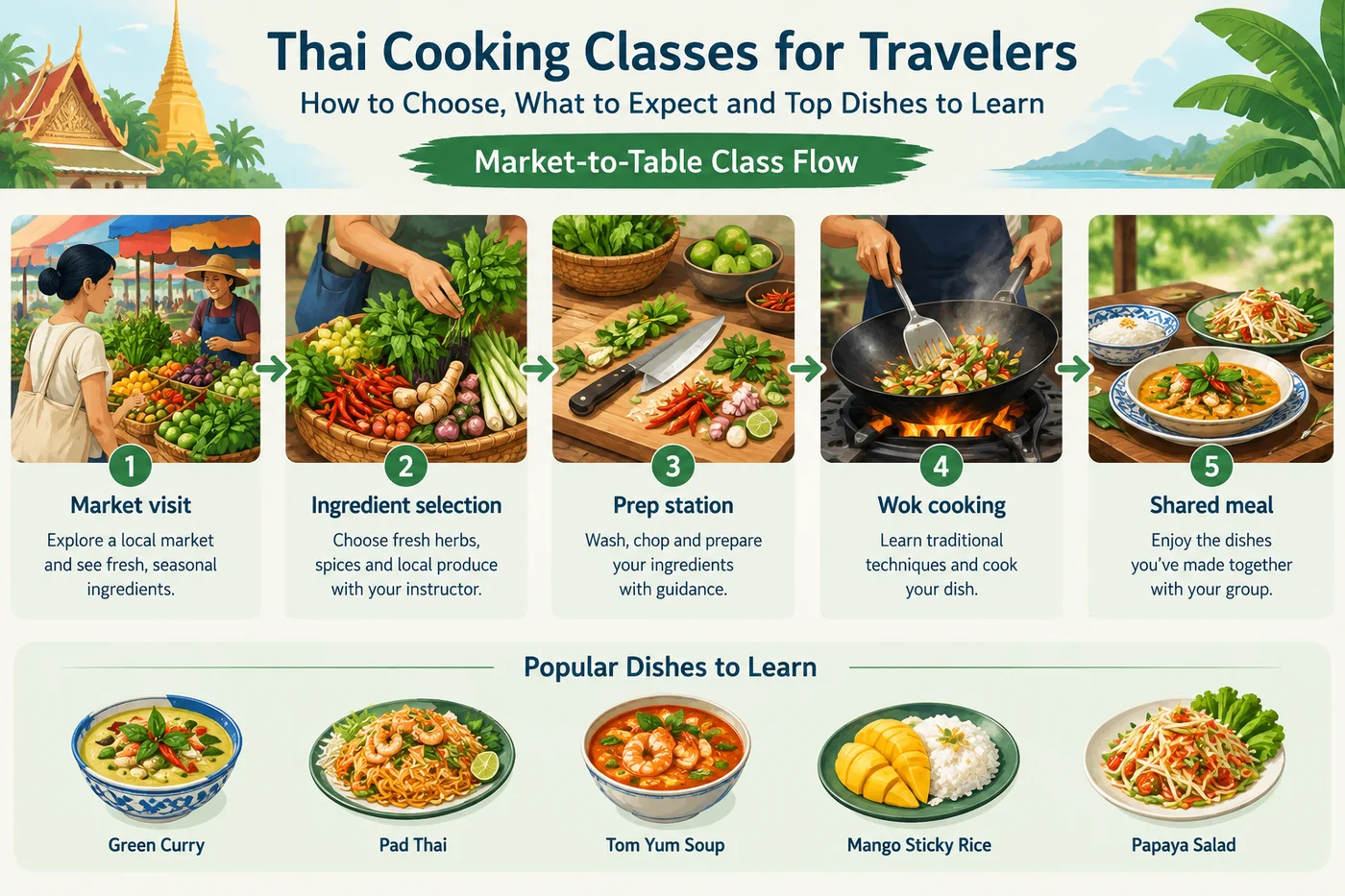
Typical class flow: meet at school or arrange pickup, visit a market or garden (if included), return to the kitchen for a demo and hands‑on cooking, then sit down to eat your meal. Most schools provide recipe sheets (printed or digital) and a simple participation certificate. Teaching style varies from guided, one‑dish‑at‑a‑time instruction to supervised self‑cooking—check the level of hands‑on involvement when you book.
Menus rotate based on season and availability, so sample menus are illustrative rather than fixed. Expect common elements: a curry, a stir‑fry or noodle dish, a soup, a salad and often a dessert.
Top dishes you’ll commonly learn
Here are staple recipes you’re likely to encounter and what you’ll learn from each:
- Pad Thai: rice‑noodle soaking and stir‑fry timing, balancing sweet, sour and salty flavours.
- Green curry (kaeng khiao wan): fresh curry paste pounding, coconut‑milk simmering and balancing heat.
- Tom Yum Goong / Tom Kha Gai: building layered soup flavours with herbs (lemongrass, galangal) and control of sour/spicy notes.
- Som Tam (green papaya salad): pounding technique and dressing balance; variations (with/without dried shrimp) are common.
- Pad See Ew / stir‑fries: high‑heat wok technique and sauce glazing for texture.
- Mango sticky rice: working with glutinous rice and coconut syrup ratios for desserts.
Learning point: classes teach recipes and core techniques—not exhaustive professional training—so realistic outcomes are practice-ready home recipes and improved cooking instincts.
How to choose Thai cooking classes
Select a class by matching format, language and dietary needs. Ask these questions before booking:
- Will the instructor teach in English (or your language) and how large is the group? Smaller groups mean more hands‑on time.
- Is there a market or farm visit, and is transport or pickup included? These are common but not always provided.
- Can the school accommodate vegetarian, vegan, halal or allergy requests? Notify them in writing and ask about cross‑contamination procedures.
- Are recipes provided and is a participation certificate included?
- How frequently do menus rotate and will you get the dishes you want?
Check recent reviews, official listings (for example the Tourism Authority of Thailand), and the school’s own pages. If you need proximity to accommodation, pair a class with a nearby stay—search HotelForU’s Bangkok hotel guides or local hotel listings to simplify logistics.
Where to find reputable schools in Thailand’s hotspots
Major destinations all offer a range of options: Bangkok (market and restaurant schools), Chiang Mai (farm and community classes), Phuket and Krabi (island and hotel‑based classes), and Koh Samui (resort and private lessons). Look for operators with clear class descriptions, sample menus, allergy policies and recent guest reviews. Official tourism listings such as the Tourism Authority of Thailand are useful starting points; established schools publish sample menus and class inclusions online—but always confirm details directly with the operator before booking.
Practical Tips
What to bring/wear: closed-toe shoes, breathable clothes, a small towel or handkerchief, and cash for optional market purchases. Book early in high season; inform schools of allergies/dietary needs in writing. Expect a printed/digital recipe pack—take photos of instructor tips. If you plan to buy ingredients to take home, check customs rules.
Important Considerations
Menus, pickup, class size and pricing can change—confirm specifics with the provider. Participation certificates are souvenirs, not professional credentials. For strict allergies, ask about separate stations and cross‑contamination policies and insist on written confirmation.
Planning more of your trip? Browse our
Thailand Food & Restaurant Guides
for more practical Thailand food and dining information.
Final Thoughts
A well-chosen Thai cooking class is a compact cultural and culinary experience—practical skills, a shared meal and recipes to practice at home. With a few checks (language, dietary handling, market visit and class size) you’ll pick an experience that suits your travel style and return home cooking with more confidence.
Sources & Further Reading
- Tourism Authority of Thailand – Cooking Class listings & Green Tourism resources
- Blue Elephant Cooking School – course and sample menu pages
- Thai Akha Kitchen – morning class information and FAQs
Transport schedules, fares and operating rules can change. Always verify time-sensitive details with the official operator before travel.