HOTEL GUIDE
Thai Breakfast Guide: What Locals Eat, Where to Try It and Practical Tips
A traveler-focused guide to Thai breakfast: common dishes, where locals eat in Bangkok, Chiang Mai and the south, ordering phrases, dietary options and safety tips.
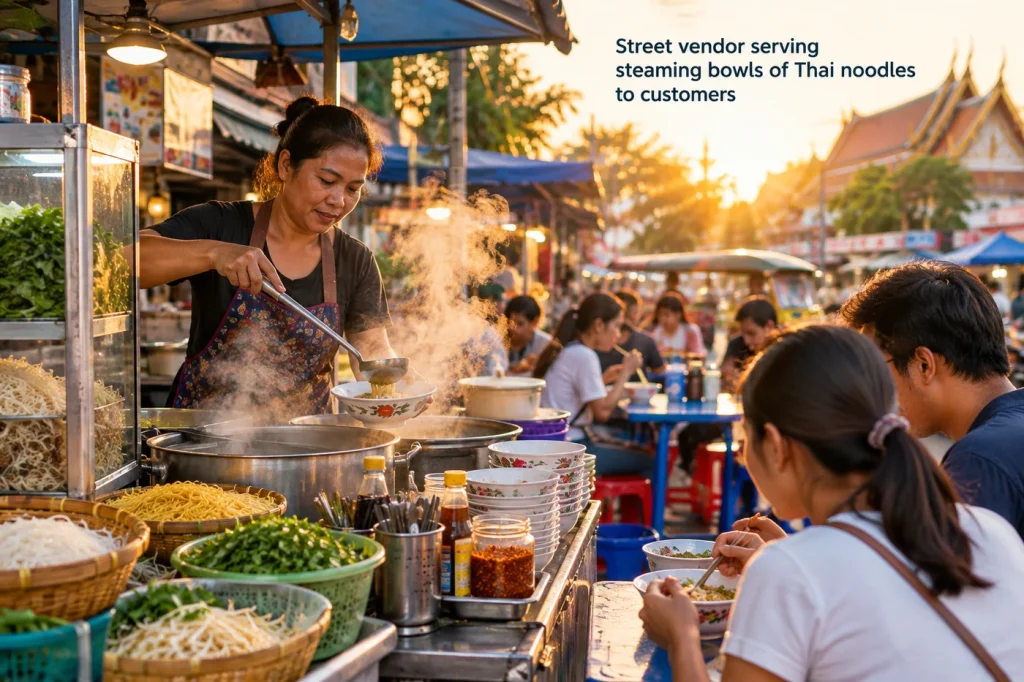
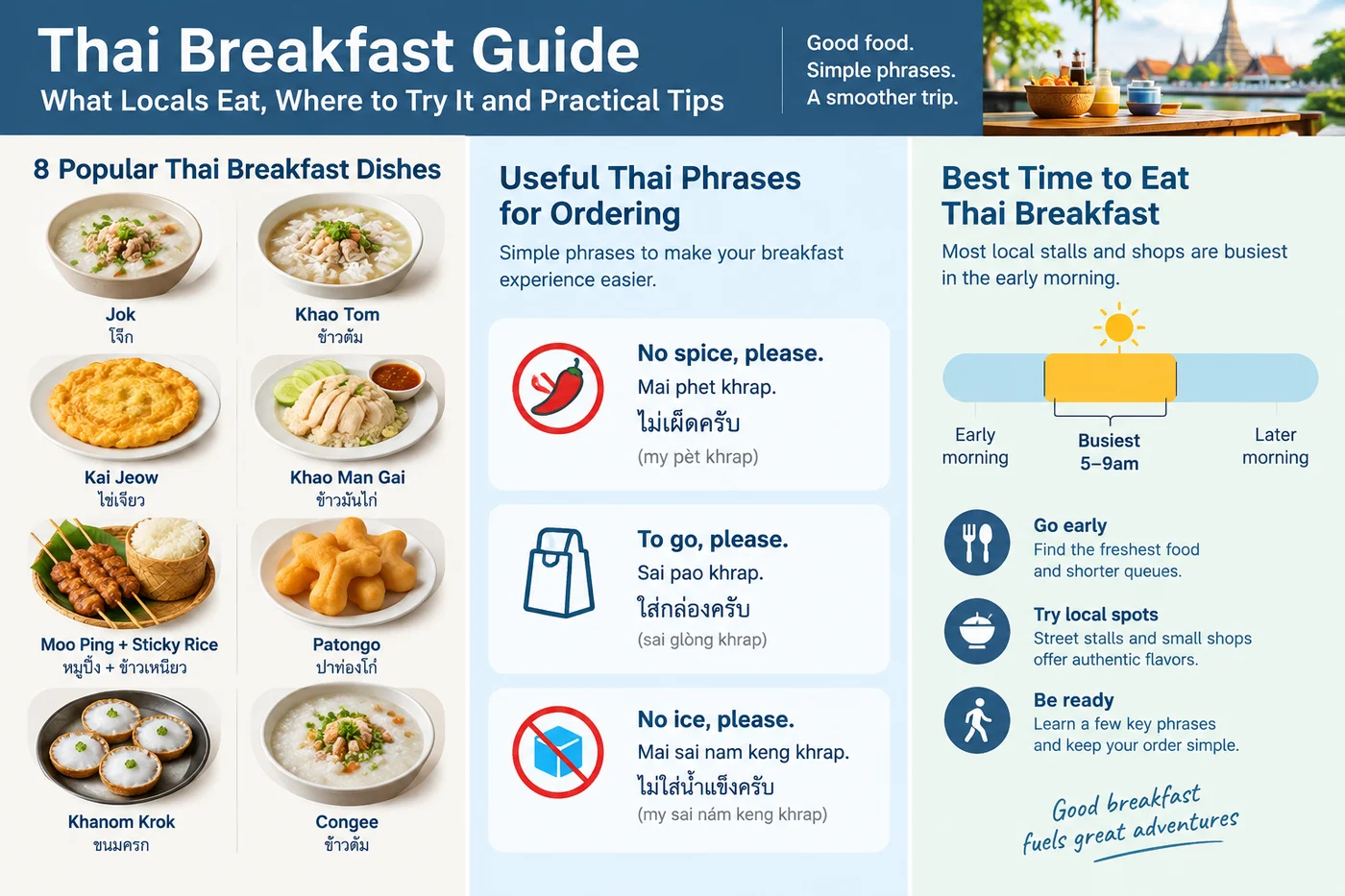
Thai breakfast is a lively, largely street-food affair: think steaming bowls of jok (rice porridge), khao tom (rice soup), grilled moo ping with sticky rice, patongo fried dough, and quick Hainanese khao man gai. This Thai breakfast guide explains what locals eat across regions, where to find morning stalls and markets, simple ordering phrases, and quick safety and dietary tips for travelers.
Key Takeaways
- Many Thai breakfasts are sold at markets and street stalls—go early (often 5–9am) for the best selection.
- Try jok, khao tom, kai jeow and moo ping + sticky rice; hotels and breakfast cafes also serve local favourites.
- Verify halal/vegetarian status and follow basic food-safety practices (bottled water, busy stalls, hot-cooked dishes).
Thai breakfast: What locals eat
Breakfast in Thailand is diverse but practical—foods are often portable, affordable, and ready fast. Familiar morning dishes include:
- Jok (rice porridge/congee): a silky porridge often served with minced pork, century egg or a raw egg stirred in.
- Khao tom (rice soup): lighter than jok, usually with fish, shrimp or pork and herbs.
- Kai jeow: a fluffy Thai-style omelet served over rice and flavoured with fish sauce; a common comfort option.
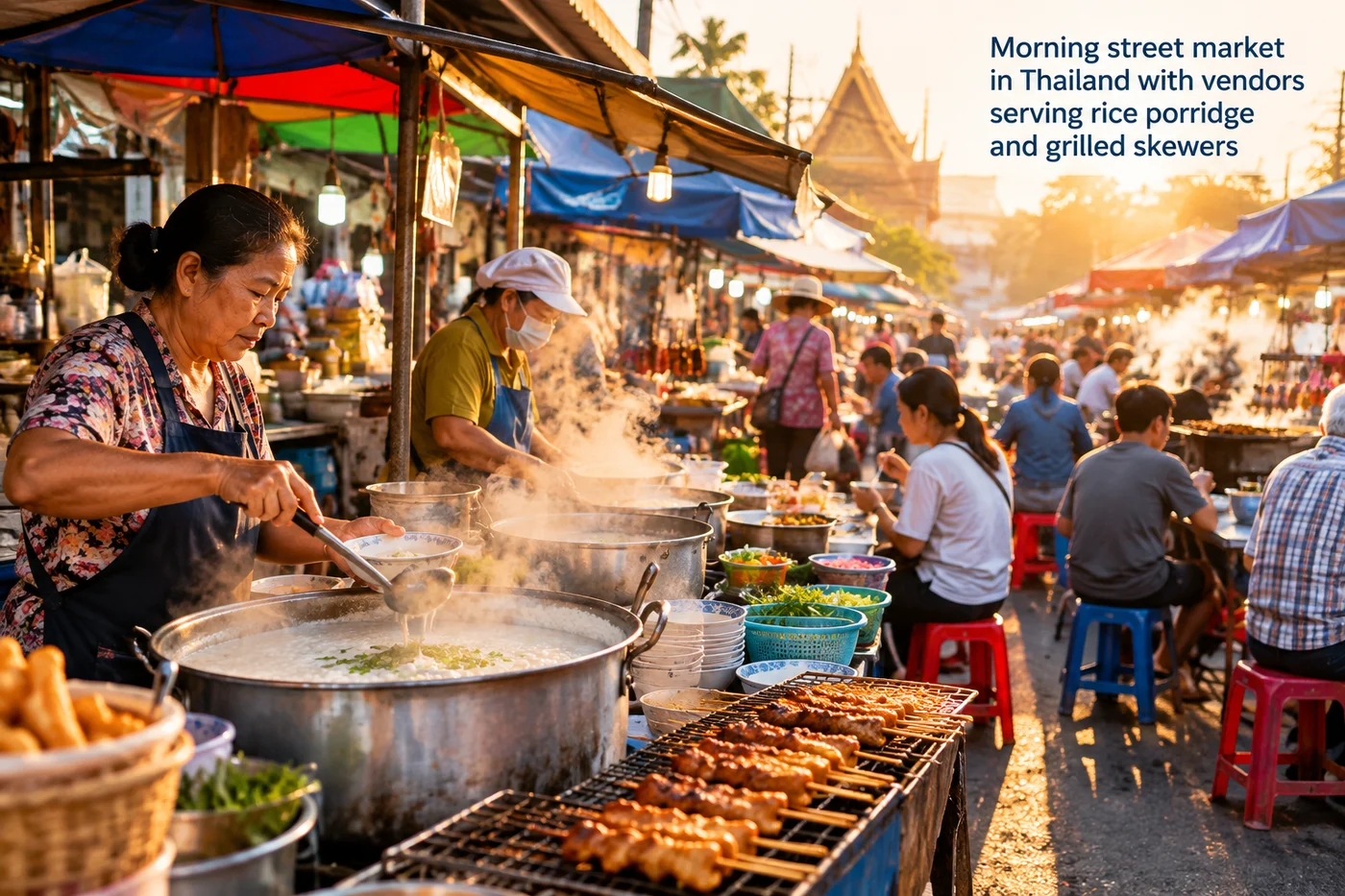
- Moo ping + sticky rice: grilled pork skewers sold at morning stalls; quick and filling.
- Khao man gai: Thai Hainanese chicken-and-rice with fragrant stock and spicy dipping sauce.
- Patongo (pa tong go): fried dough sticks, often eaten with condensed milk or soy-dipping sauce.
- Khanom krok: coconut-rice pancakes—sweet/savoury and ideal from open pans.
These items reflect a live food culture: many vendors specialise in one dish and open early to serve commuters, students and temple-goers.
Regional differences and where to try them
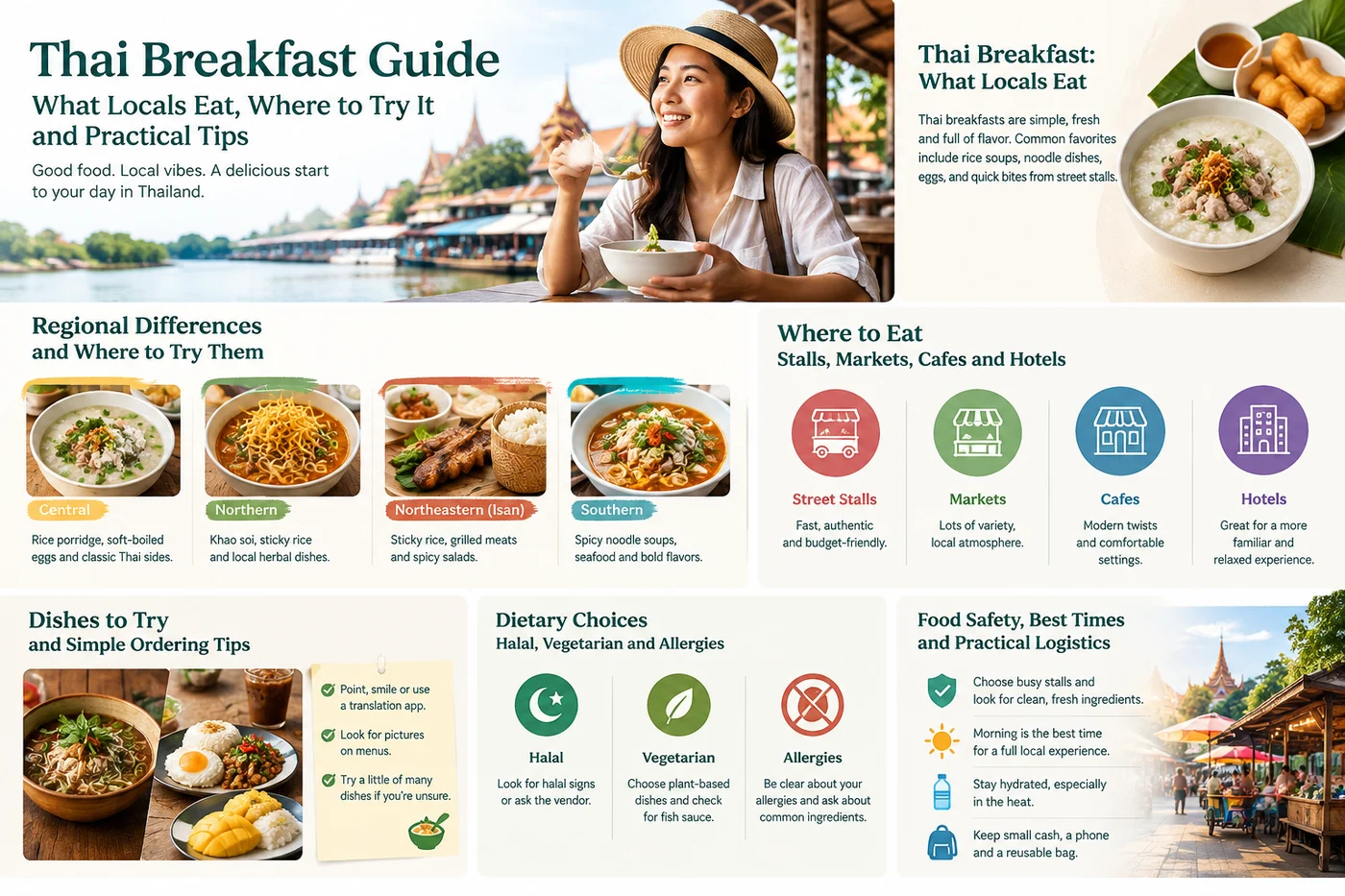
Regional taste and availability shape morning menus. In Bangkok you’ll find almost everything—jok vendors, khao man gai shops, patongo stalls and moo ping near transit hubs and morning markets. Chiang Mai emphasises northern favourites and Khao Soi appears more in breakfast cafes; small jok bowls and rice-soup stalls cluster near temples and markets. In Isan (northeast) expect sticky rice, grilled meats and savoury breakfast salads; the southern provinces and Muslim-majority areas offer more halal options and seafood-forward breakfasts.
Best bets by city: morning markets and neighbourhoods. In Bangkok look to traditional morning markets and Chinatown for patongo and jok; in Chiang Mai the markets around the Old City and Warorot are excellent; in Phuket and southern towns search morning fish markets and local halal eateries. (Before visiting a named stall, re-check current hours—vendor schedules change seasonally.)
Internal-link opportunity: see our Bangkok food guide for market names and street-food neighbourhoods.
Where to eat: stalls, markets, cafes and hotels
Thai breakfasts are served in four common venues:
- Street stalls and cart vendors: fastest and cheapest; many dishes are cooked-to-order. Ideal for adventurous eaters.
- Morning markets: vendors cluster around wet markets and sell hot soups, grilled meats and sweets—food is fresh and turnover is high.
- Breakfast cafes: in major cities you’ll find hybrid cafés serving Thai breakfast alongside coffee and Western options—good for a more comfortable seat.
- Hotel buffets and restaurants: upscale hotels frequently include jok, khao tom and khao man gai on their breakfast menus, making them a convenient place to try classics with reliable hygiene standards (example: sample hotel menus list local dishes alongside Western items).
Cash is king at small stalls; many cafes and hotels accept cards. Expect vendors to sell until they sell out, so mornings are best.
Dishes to try and simple ordering tips
Short descriptions and ordering cheats:
- Jok (โจ๊ก): order "jok moo" for pork. To ask for less spice say "mai pet".
- Khao tom (ข้าวต้ม): "khao tom pla" means fish, "khao tom moo" means pork.
- Kai jeow (ไข่เจียว): a typical order is "kai jeow khao" (omelet with rice). Add "khâaw" for rice.
- Moo ping (หมูปิ้ง): ask "neung sai khao noi" for sticky rice on the side.
- Khao man gai (ข้าวมันไก่): ask for the sauce on the side if you prefer less heat.
- Patongo (ปาท่องโก๋): often served with condensed milk—say "mai wan" to avoid extra sweetness.
Useful phrases: "Mai pet" (not spicy), "Ao pák" (to go), "Mai sai nam kaeng" (no ice). Watching your dish being cooked and choosing busy stalls reduces risk.
Dietary choices: halal, vegetarian and allergies
Halal and vegetarian options are widely available but certification and practices vary. Southern provinces and specific Bangkok neighbourhoods offer many halal-certified vendors; Thailand’s Central Islamic Council maintains listings—always ask to confirm current certification.
Vegetarian options often carry the marker เจ (jay)—Buddhist vegetarian—on menus. Popular vegetarian breakfast choices include plain jok (ask for no meat), khanom krok made without fish sauce, and simple rice with omelet. If you have allergies, clearly state them and avoid buffet-style shared utensils and sauces unless you trust the vendor.
When in doubt, choose dishes cooked fresh and served hot, and ask a host or vendor about ingredients.
Food safety, best times and practical logistics
Most locals eat breakfast early—many stalls open from around sunrise and busiest service finishes by mid-morning. For the widest selection aim for 6–9am.
Food-safety basics:
- Drink bottled water; avoid ice if you’re unsure of its source.
- Prefer hot, cooked-to-order food over long-sitting cold displays.
- Choose busy stalls—the higher turnover usually means fresher ingredients.
- If pregnant or immunocompromised, consult a doctor and be cautious with raw or undercooked items (e.g., eggs added to porridge).
Payment and seating: smaller stalls are often cash-only and offer plastic stools; cafes and hotels provide a more comfortable, seat-and-bill experience.
Practical Tips
Go early (5–9am) for the best choice. Carry small bills or coins for street stalls. Learn three phrases: "mai pet" (not spicy), "ao pák" (to go) and "mai sai nam kaeng" (no ice). Choose busy vendors and hot-cooked dishes; use bottled water.
Important Considerations
Vendor hours and recognitions change—verify opening times and halal certification before you go. Food-safety advice reduces risk but is not a guarantee; travelers with health concerns should consult official health sources.
Planning more of your trip? Browse our
Thailand Food & Restaurant Guides
for more practical Thailand food and dining information.
Final Thoughts
Thai breakfast is a delicious way to start the day and to experience local life. Whether you sit at a market stall with a steaming bowl of jok or enjoy a hotel breakfast that includes local classics, a little early-morning exploration will repay you with flavour and insight.
Sources & Further Reading
- Tourism Authority of Thailand – Destination Thailand
- Rosewood Hotels Bangkok – sample breakfast menu (example of hotels serving Thai morning dishes)
- U.S. Department of State – Thailand travel advisory (food & water safety guidance)
Transport schedules, fares and operating rules can change. Always verify time-sensitive details with the official operator before travel.