HOTEL GUIDE
The Traveler’s Guide to Thai Breakfast: What to Eat, When to Go and Where to Find It
A practical guide to Thai breakfast — must‑try dishes, where to eat them (markets, stalls, hotels), morning timings, ordering tips and safe routes in Bangkok, Chiang Mai and the south.
Thai breakfast is less a single menu and more a morning rhythm: rice or noodle soups, grilled meats, omelettes and Chinese-influenced snacks eaten hot and fast. If you want to try real Thai breakfast, expect to eat what locals eat at any other meal — often from street stalls and markets rather than a Western-style bakery. This guide explains what to order, where to find it, when to go and how to stay safe while exploring morning food across Thailand.
Key Takeaways
- Thai breakfast is usually soups, rice dishes and grilled snacks available at markets, kopitiams and hotel buffets by 5–9am.
- Must‑try items: jok, khao tom, khao man gai, moo ping, khao khai chiao, pathongko and regional specialties such as khao soi or southern dim sum.
- Pick busy stalls, bring small banknotes, ask about ingredients for vegetarian/halal needs and avoid exposed food left in heat.
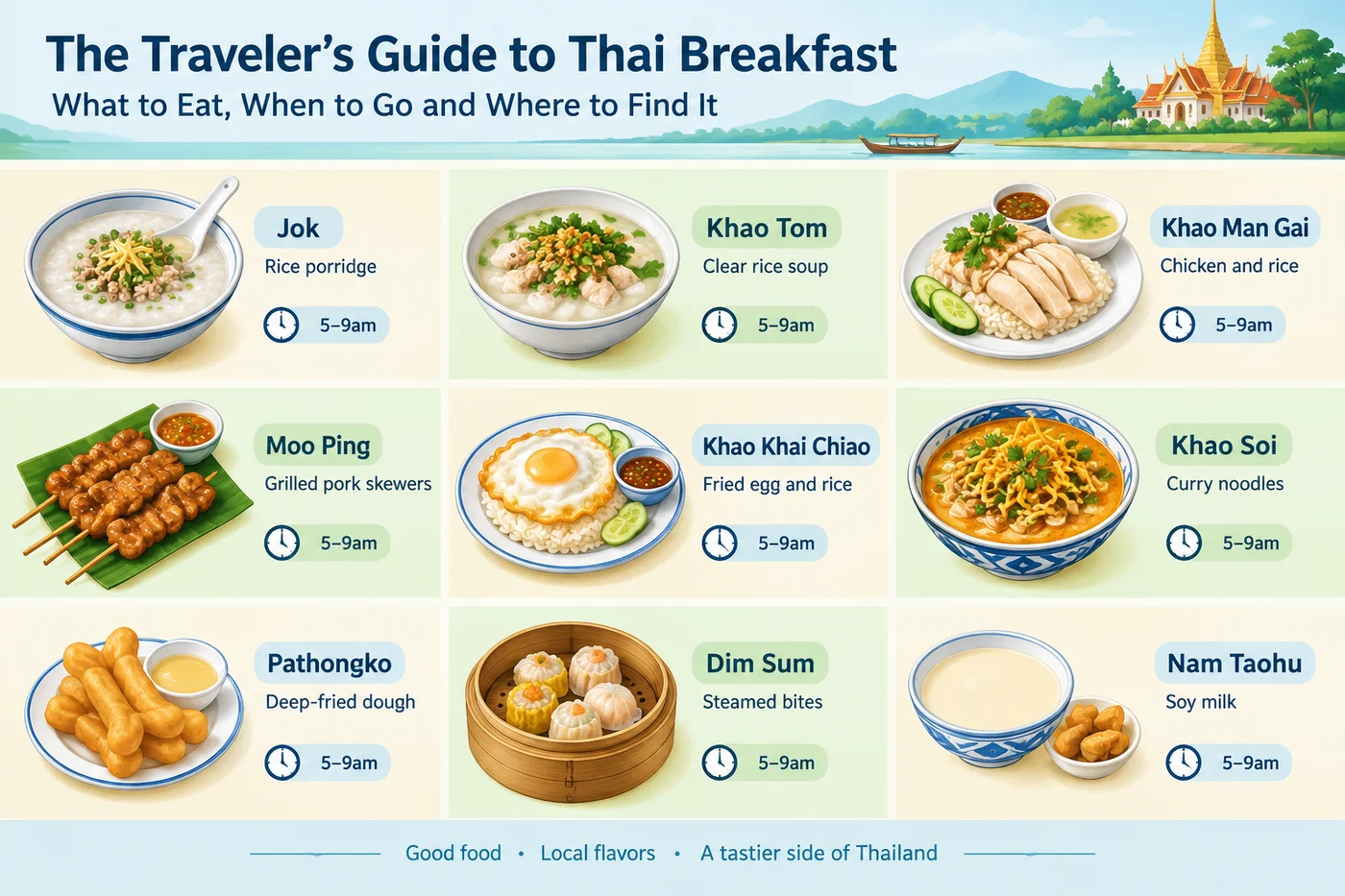
Thai breakfast: what to eat and when
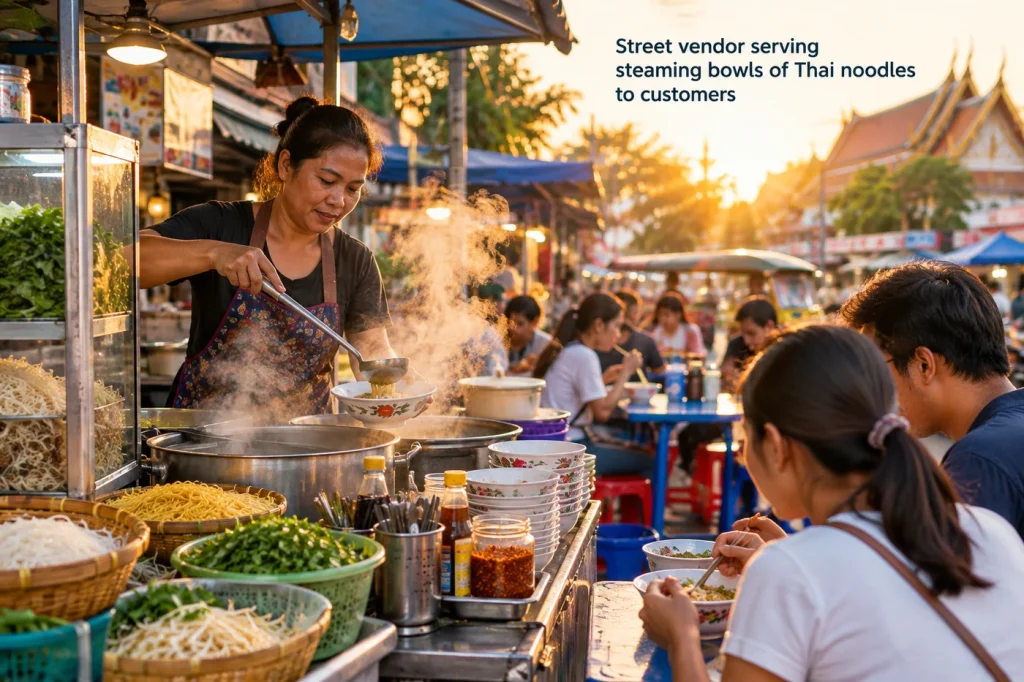
Typical Thai breakfast centers on hot, comforting dishes rather than cereal or pastries. Common items include jok (rice porridge or congee), khao tom (rice soup), khao man gai (Hainanese-style chicken rice), khao khai chiao (Thai omelette over rice), moo ping (grilled pork skewers) and pathongko (deep-fried dough) often served with warm soy milk (nam taohu). Many morning stalls open very early — you’ll commonly find the best selection between roughly 5–9am, though this varies by town and season. Vendors who specialise in breakfast often sell out or pack away by mid‑morning.
Must‑try dishes (short descriptions)
• Jok — Silky rice porridge, often topped with minced pork, a soft egg and ginger; soothing and widely available.
• Khao tom — Lighter rice soup with clear broth, herbs and choice of meats or seafood; a staple for travellers wanting something gentle.
• Khao man gai — Poached chicken on fragrant rice, served with spicy-sour sauce and clear chicken broth.
• Khao khai chiao — A fluffy Thai-style omelette served on rice, quick, filling and commonly sold by street stalls.
• Moo ping — Charred, sweet-savoury pork skewers sold from carts; an ideal on‑the‑go snack.
• Pathongko + nam taohu — Thai fried dough with warm soy milk; a Chinese-influenced breakfast pairing.
• Regional picks: khao soi and sai ua in the north; dim-sum–style breakfasts and kopi in parts of the south (e.g., Trang).
Where to find breakfast: markets, kopitiams, hotels and stalls
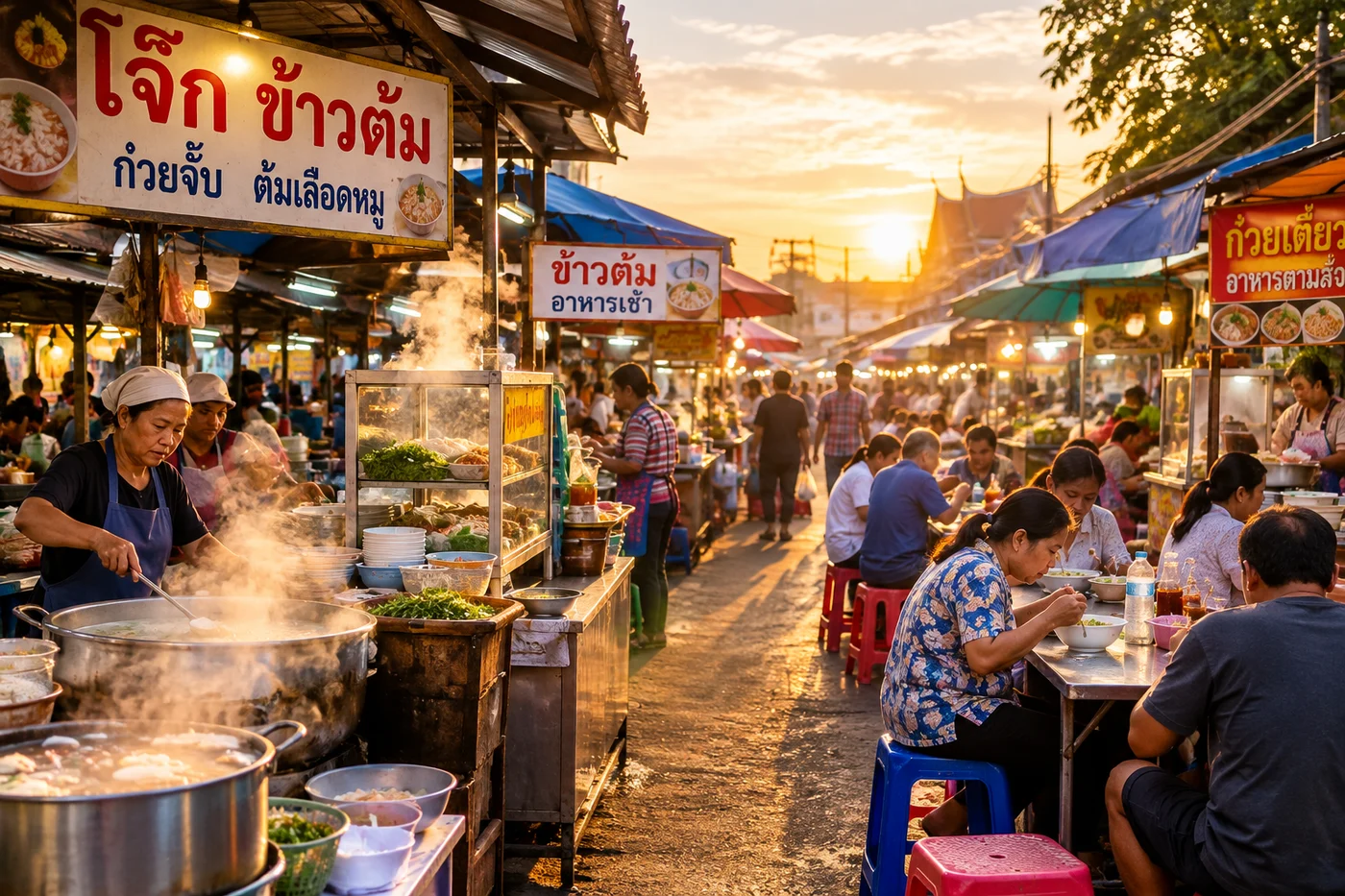
Your best bets are fresh morning markets and dedicated breakfast stalls — places with early trade and fast turnover. Local kopitiams (coffee shops) serve cha yen (Thai iced tea) and oliang (Thai iced coffee) alongside noodle soups and omelettes. Major hotels and many breakfast buffets also offer Thai favourites like jok, khao tom and moo ping, so you can sample local morning dishes without leaving your accommodation (see an example hotel menu cited in official hotel materials).
Practical note: many market stalls remain cash-first and may not accept digital wallets. Carry small banknotes. If you prefer convenience, 7‑Eleven and cafés offer limited options, but the widest, most authentic range is at markets and street clusters during the early window.
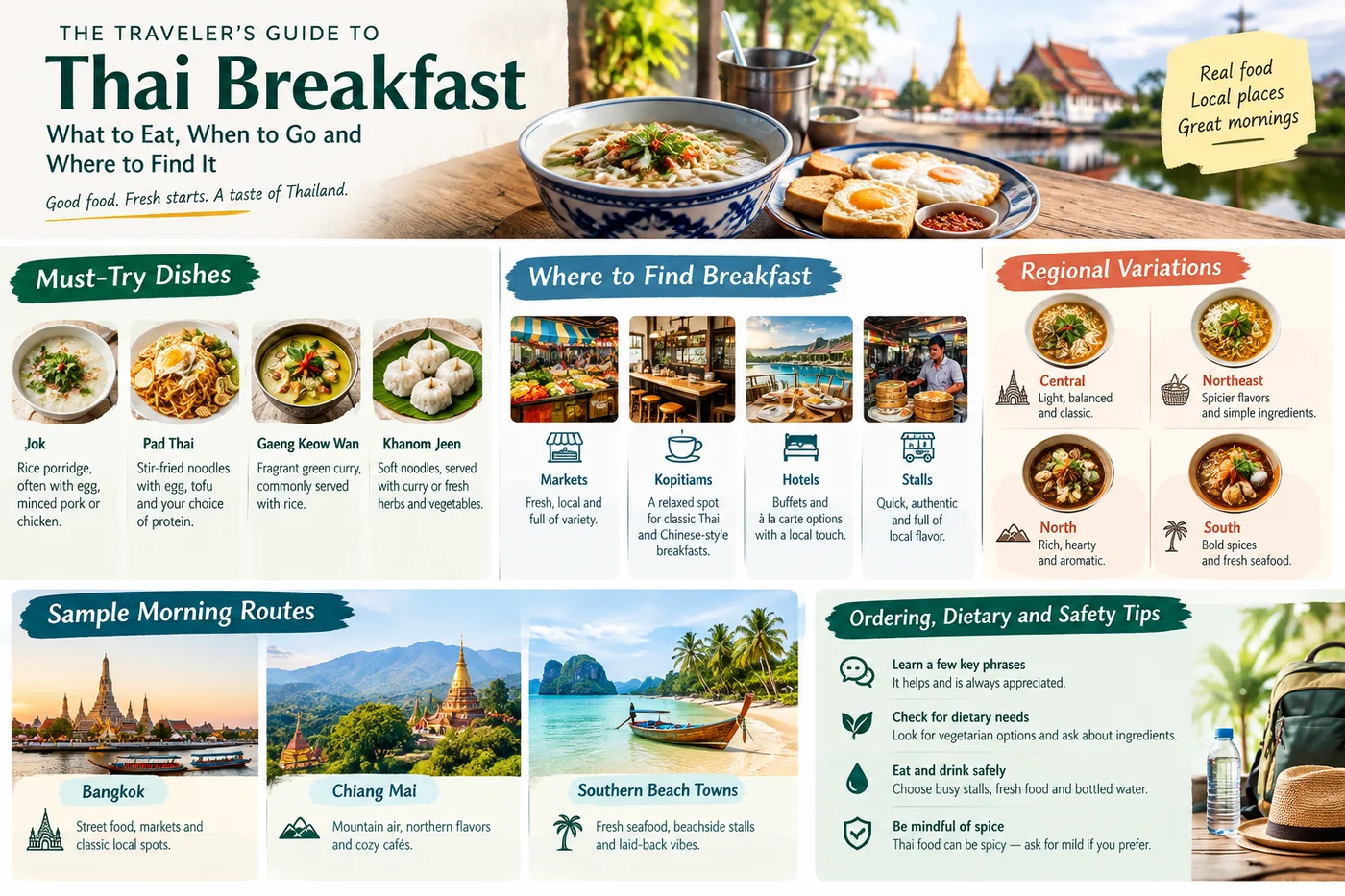
Regional variations to expect
Northern Thailand: expect khao soi and grilled sausages like sai ua; breakfasts here often use curry flavours and northern herbs.
Northeast (Isan): rice and sticky rice dishes, grilled meats, and spicy salads may appear early in local markets.
Central/Bangkok: a huge variety — noodle soups, jok, khao man gai and moo ping — with strong Chinese influences in areas with Chinatown communities.
South and southern beach towns: kopitiams and dim-sum-style breakfasts are common in places like Trang; coffee culture influenced by Malaysian and southern Chinese cuisines produces unique morning drinks and snacks. Official regional guides highlight these local specialities — check the Tourism Authority of Thailand for local foodie features.
Sample morning routes: Bangkok, Chiang Mai and southern beach towns
Bangkok (easy start): Begin with a hotel buffet to try jok or khao man gai, then ask the concierge for a nearby fresh market or noodle-stall row and go between 6–9am. (Tip: see our Bangkok street-food guide for walking routes and maps — internal link opportunity: /bangkok-street-food.)
Chiang Mai: Head to a morning market such as Warorot (Kad Luang) for khao soi, jok and grilled snacks. Markets here commonly open at dawn and are busiest early.
Southern beach towns: Try a kopitiam for kopi (local coffee) and dim-sum items, or seek out morning seafood stalls and pork specialties in regional hubs like Trang. Regional tourist materials note that southern towns keep strong morning traditions and unique local items.
Ordering, dietary and safety tips
Ordering made easy: point at the dish you want, show photos on your phone or a number if the stall lists prices. Use a translation app if needed; asking for 'not spicy' and confirming ingredients is sensible for travellers with dietary restrictions.
Vegetarian/halal: Many Thai dishes include fish sauce, shrimp paste or stock. Ask directly about ingredients or seek vegetarian stalls and Muslim-owned vendors if you need halal meat. Hotels and major restaurants can usually confirm halal/vegetarian options.
Food safety: prefer stalls with a queue (high turnover means fresher food); choose items served hot; avoid food left uncovered in the heat. Drink bottled water and be cautious about ice if you have a sensitive stomach.
Payments and etiquette: carry small banknotes for market stalls and be prepared to pay cash. Respect local queueing and table-sharing customs — stools and shared tables are normal in busy markets.
Practical Tips
1) Go early (roughly 5–9am) for the best variety. 2) Pick busy stalls — queues are a quality signal. 3) Bring small cash, bottled water and a translation app or photos of the dish to point at.
Important Considerations
Vendor schedules, exact opening times and menu availability change by town and season — verify hours locally (hotel concierge, market websites or recent guides) before making plans. Avoid claiming fixed stall times or prices without current sources.
Planning more of your trip? Browse our
Thailand Food & Restaurant Guides
for more practical Thailand food and dining information.
Final Thoughts
Sampling Thai breakfast is one of the fastest ways to understand the country’s food culture: simple, bold-flavoured dishes served hot in the company of locals. With a little planning — go early, follow the queues, and ask about ingredients — you’ll find memorable morning meals from bustling markets to peaceful kopitiams.
Sources & Further Reading
- Tourism Authority of Thailand — Thai Foodie Map / regional food features
- InterContinental Bangkok — In‑room / breakfast menu (PDF)
- FindThaiNow — Chatchai (Hua Hin) market guide and morning market tips
- Feel Chiang Mai — Warorot (Kad Luang) market guide
Transport schedules, fares and operating rules can change. Always verify time-sensitive details with the official operator before travel.