HOTEL GUIDE
A Traveler’s Guide to Seafood in Thailand: How to Choose, Order and Stay Safe
How to enjoy seafood in Thailand safely: where to buy it, how to check freshness, ordering tips, basic safety and sustainability pointers for travellers.
Seafood in Thailand is everywhere—from beachside grills and live-tank restaurants to wet markets and night-market stalls. For travellers the choices are exciting, but knowing where seafood comes from, how to judge freshness and which raw items to avoid will help you enjoy more meals and fewer risks.
Key Takeaways
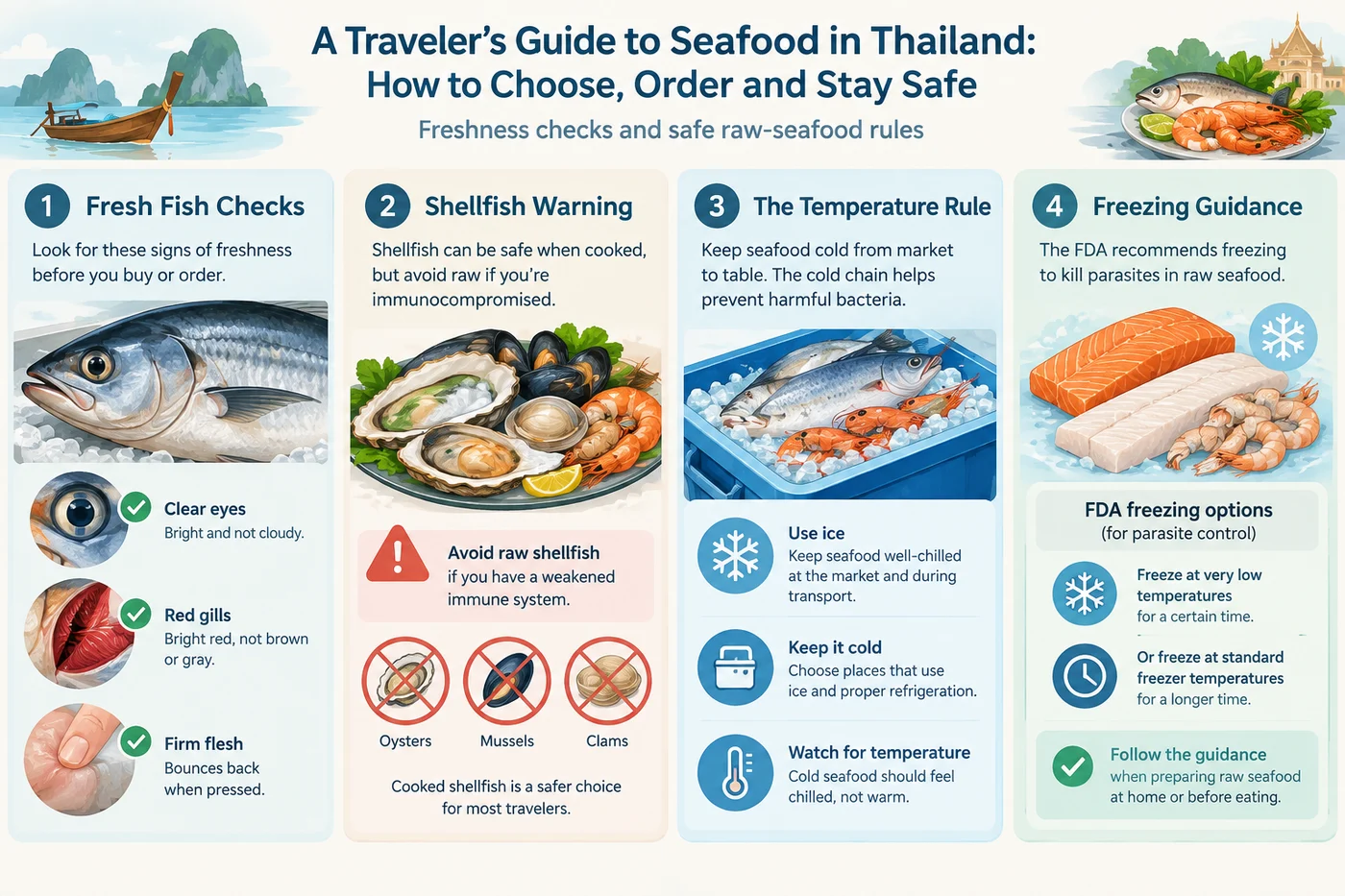
- Look for cold-chain cues (ice, chilled displays, live tanks) and sensory freshness signs (clear eyes, red gills, mild sea smell).
- Avoid raw shellfish and high-risk raw items if you have liver disease, diabetes, or weakened immunity; freezing only reduces parasite risk, not bacteria or toxins.
- Choose reputable stalls or restaurants that show good hygiene, source from certified processors, or use live-tank/iced displays and busy turnover as signs of reliability.
Seafood in Thailand: Where it's sold and how it's served
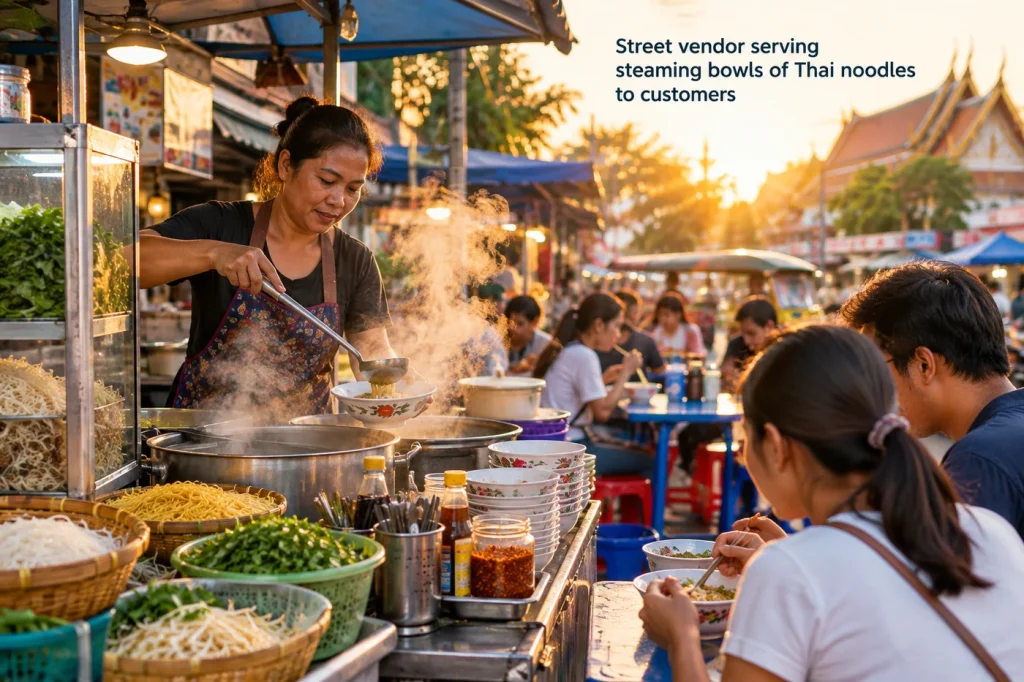
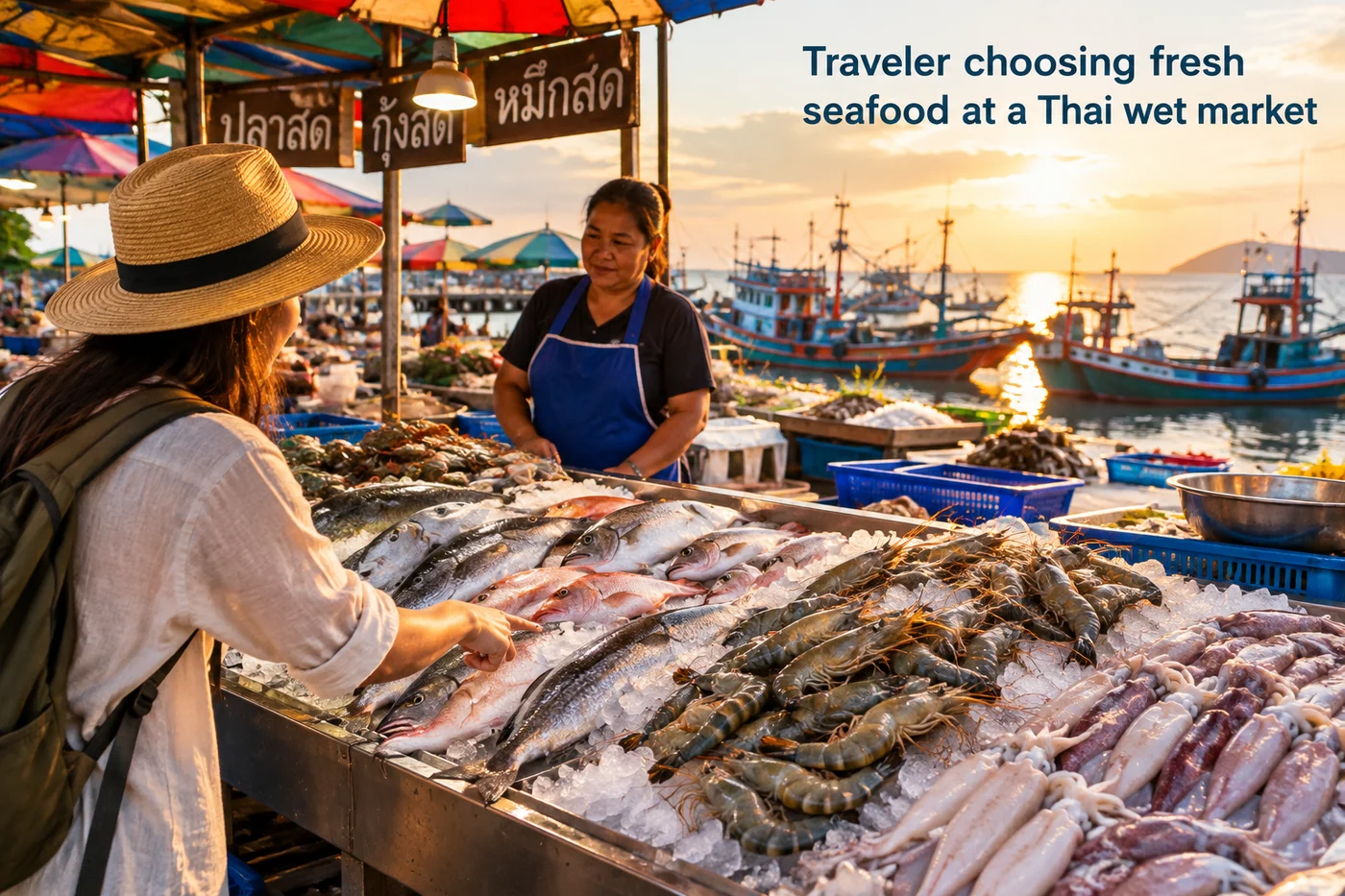
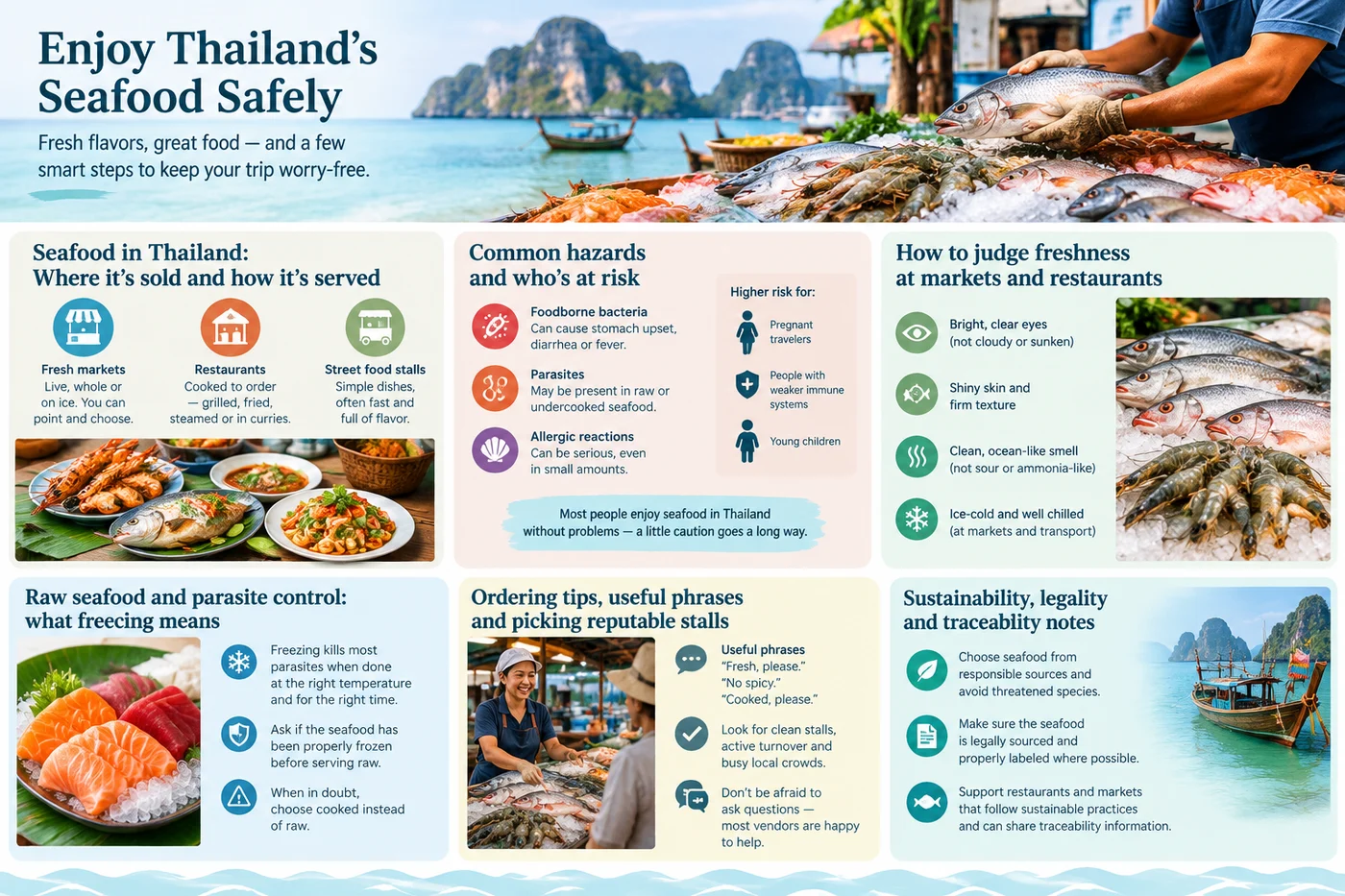
Seafood in Thailand appears in four common settings: wet markets (whole fish, prawns, crab on ice), live-tank restaurants (customers pick live crabs, prawns, fish), beachside grills and seafood shacks (grilled or steamed catch) and night markets or street-food stalls (ready-to-eat curries, stir-fries, salads). Regional styles vary: Bangkok and the Central plains mix farmed finfish with imported seafood; the Gulf of Thailand and Andaman coast feature local prawns, squid and reef fish; southern menus include richer curries and more shellfish. Knowing the venue helps you judge turnover and handling: busy coastal stalls usually sell fresher catch than remote tourist spots with slow turnover.
Common hazards and who’s at risk
Major food-safety risks with seafood include bacterial infections (notably Vibrio species in warm waters and shellfish), viral contamination (norovirus, hepatitis A in bivalves), parasites in raw finfish, and toxin illnesses (scombroid from temperature-abused tuna, ciguatera from reef fish). Travelers with chronic liver disease, diabetes, hemochromatosis or immunosuppression are at higher risk and should avoid raw shellfish and risky raw preparations. International guidance also notes that freezing can reduce parasite risk but does not remove bacteria or pre-formed toxins—so freezing is not a universal safety fix.
How to judge freshness at markets and restaurants
Use sensory checks and cold-chain cues when buying or ordering:
– Fish: clear, convex eyes; bright red gills; firm flesh that springs back when pressed; no sour or ammonia-like odour.
– Shellfish: shells closed or close when tapped; for live prawns/crabs look for movement.
– Smell: a mild sea/iodine scent is normal; strong fishy, sour or musty smells suggest spoilage.
– Cold chain: ice that contacts the fish, chilled displays, or visible refrigeration. Temperature control is the single most important spoilage limiter.
In restaurants prefer displays with good turnover (lots of customers) or live tanks; avoid seafood left exposed on warm counters.
Raw seafood and parasite control: what freezing means
If you plan to eat raw finfish (ceviche-style, sashimi-style) ask whether the restaurant freezes fish to parasite-control standards. Accepted international options (for parasite risk reduction) include freezing at −20°C (−4°F) for 7 days or at −35°C (−31°F) until solid and holding for at least 15 hours—these protocols target parasites but do NOT reliably stop bacterial pathogens like Vibrio or viral contamination. ‘Sushi-grade’ is not a regulated guarantee: ask for specifics (how and where the fish was handled, whether it was frozen and for how long) before ordering raw.
Ordering tips, useful phrases and picking reputable stalls
Simple ordering tips:
– Pick busy stalls or restaurants with visible turnover and clear cold storage.
– When in doubt choose cooked preparations: grilled (pla yang), steamed (ho mok/nueng), curries (gaeng), or stir-fries (pad plat). Cooked shellfish and high-heat preparations reduce many bacterial risks.
Useful Thai phrases:
– "Ao pla yang" (I want grilled fish)
– "Ao goong yang" (grilled prawns, please)
– "Yuu hai sai na khrab/ka?" (Do you keep it on ice?)
– "Nai chai thaw praahm frozen mai?" (Was this frozen before serving raw?)
Signs of trustworthy vendors: clean prep surfaces, vendors wearing gloves or using tongs, separate cutting boards for raw/cooked, and posted sourcing or certification mentions. For more on markets in Bangkok and safe street food choices, see HotelForU's local market guides.
Sustainability, legality and traceability notes
Thailand has invested in reforms to tackle illegal, unreported and unregulated (IUU) fishing and to improve traceability; formal measures and export controls exist, and many processors follow HACCP and international standards. Enforcement and traceability still vary by operator and region—look for restaurants that advertise certified farms (BAP/ASC) or reputable suppliers if you care about sustainability and labour issues. When in doubt, prefer well-known restaurants or sellers that can describe where their seafood came from.
Practical Tips
• Choose cooked over raw if you’re unsure about sourcing.
• Use the sensory checklist (eyes, gills, flesh, smell) and check for ice or live tanks.
• Avoid raw bivalves (oysters, clams) if you have liver disease, diabetes or weakened immunity.
• Ask whether raw fish was frozen per parasite-control standards; accept only clear answers.
• Stick to busy venues with fast turnover and visible hygiene practices.
Important Considerations
Freezing reduces parasite risk but does not eliminate bacterial pathogens, viruses or marine toxins. Local health advisories or temporary closures can appear quickly—check recent local public-health notices before eating raw bivalves. If you have a high-risk medical condition, avoid raw shellfish and risky raw preparations altogether.
Planning more of your trip? Browse our
Thailand Food & Restaurant Guides
for more practical Thailand food and dining information.
Final Thoughts
Seafood in Thailand is a highlight of the trip when you combine curiosity with a few simple checks: ask about sourcing, prefer cold-chain and busy vendors, and favour cooked or well-handled raw dishes only when proper freezing and hygiene controls are confirmed. That approach will let you enjoy coastal flavours while keeping safety front of mind.
Sources & Further Reading
- Department of Fisheries, Thailand
- FAO Code of Practice for Fish and Fishery Products (freshness & handling)
- CDC — Vibrio and seafood guidance for travelers
Transport schedules, fares and operating rules can change. Always verify time-sensitive details with the official operator before travel.