HOTEL GUIDE
Eating Seafood in Thailand: A Traveler’s Guide to Freshness, Safety and Where to Go
A practical, travel‑ready guide to finding and enjoying fresh seafood in Thailand: how to spot freshness, avoid common risks, where to eat, and simple Thai words to order.
Seafood in Thailand is everywhere — from beachside grills and live‑tank restaurants to bustling morning markets. If you want to eat seafood in Thailand safely and confidently, focus on species, handling, and preparation. This guide explains how to judge freshness, avoid common toxins and infections, where to find reliable stalls and restaurants, and what vulnerable travelers should skip.
Key Takeaways
- Prefer fully cooked seafood from busy, reputable vendors; raw shellfish carries documented Vibrio risk.
- Judge freshness by clear eyes, red gills, firm flesh, neutral smell, and cold storage; avoid suspicious preservatives.
- Avoid large reef predators (ciguatera risk) and raw/half‑cooked shellfish if pregnant, elderly, or immunocompromised.
Common risks every traveler should know
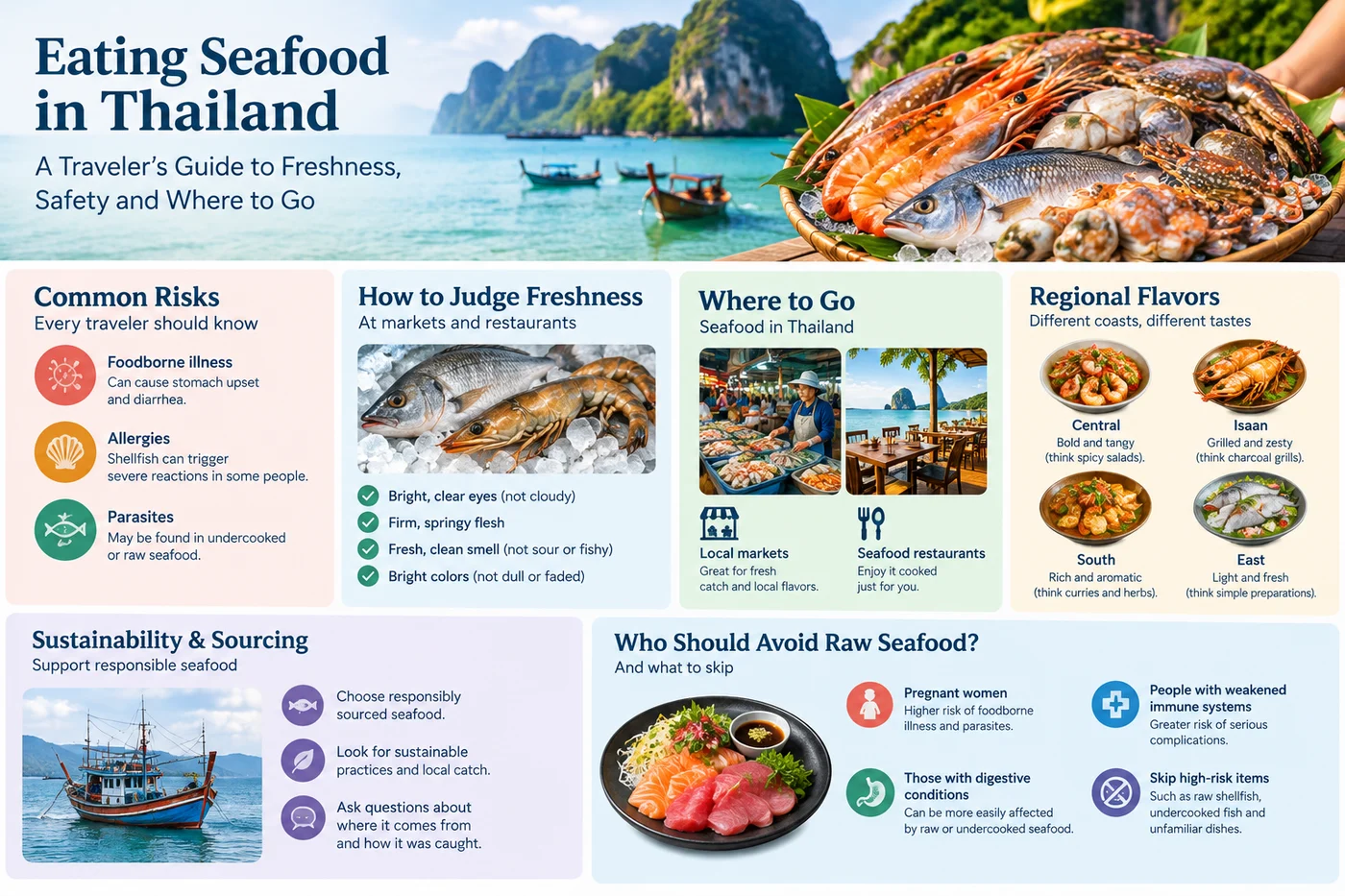
Thailand’s public‑health authorities and international guidance highlight three main marine‑seafood risks: bacterial Vibrio infections (linked to raw or undercooked shellfish), scombroid (histamine) poisoning from spoiled tuna/mackerel, and ciguatera from certain reef predators. Symptoms range from rapid flushing and gastrointestinal upset to neurological complaints. If you suspect seafood poisoning—severe vomiting, breathing problems, or neurological signs—seek local medical care or contact your embassy. (See official Thai guidance and CDC travel pages listed below.)
How to judge freshness at markets and restaurants
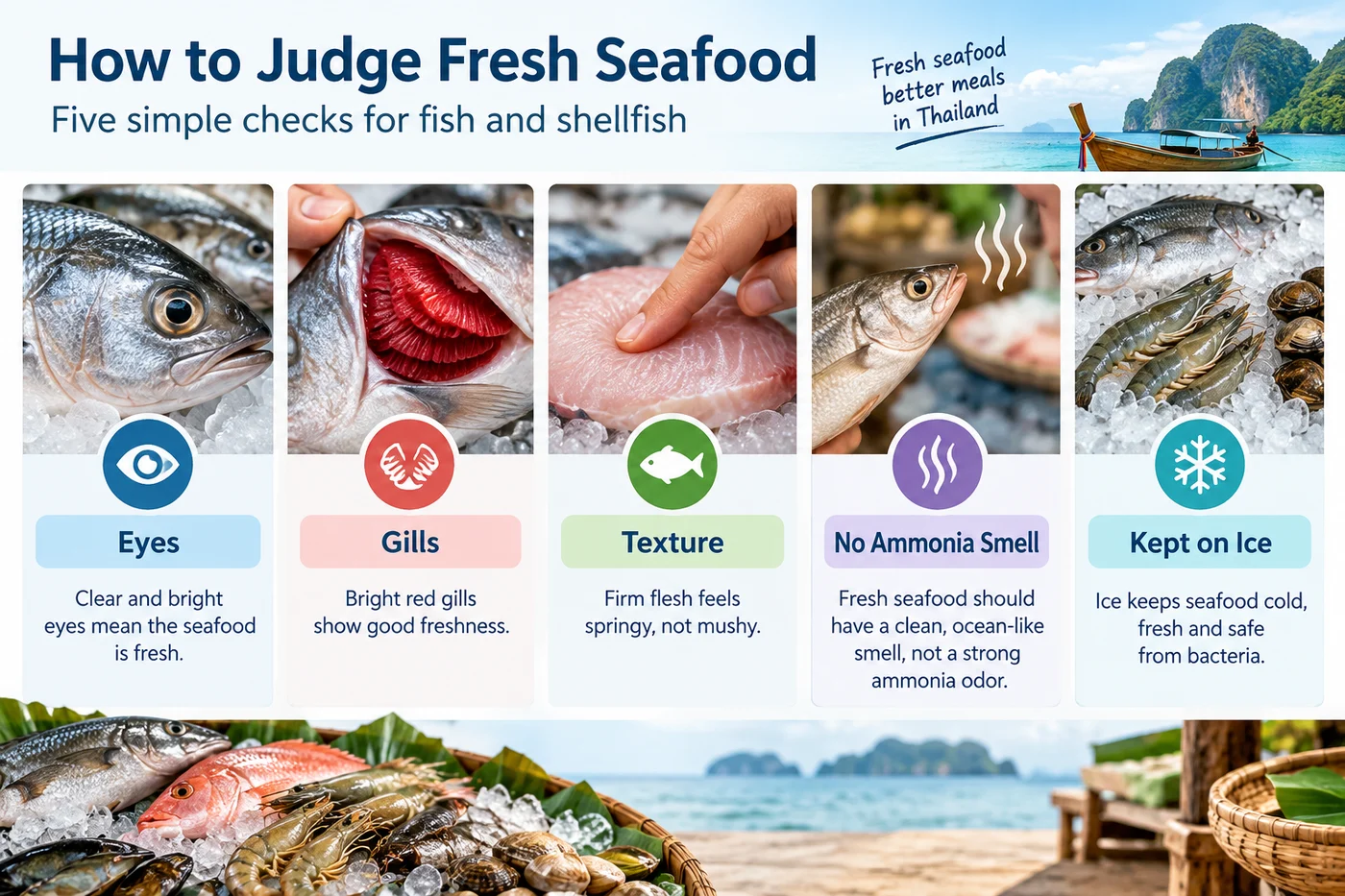
Look for simple, reliable signs used by Thai health authorities: fish with clear, bulging eyes; bright red gills; firm flesh that springs back when pressed; no strong ammonia or 'off' odour; and seafood kept visibly cold on ice or in chilled tanks. For shellfish, prefer closed shells or live tanks with active movement. Avoid vendors who offer suspicious 'preserved' seafood—Thai authorities warn against illegal formalin use. If the vendor can’t explain how seafood was stored or the display seems warm or smelly, walk away.
Seafood in Thailand: Where to Go
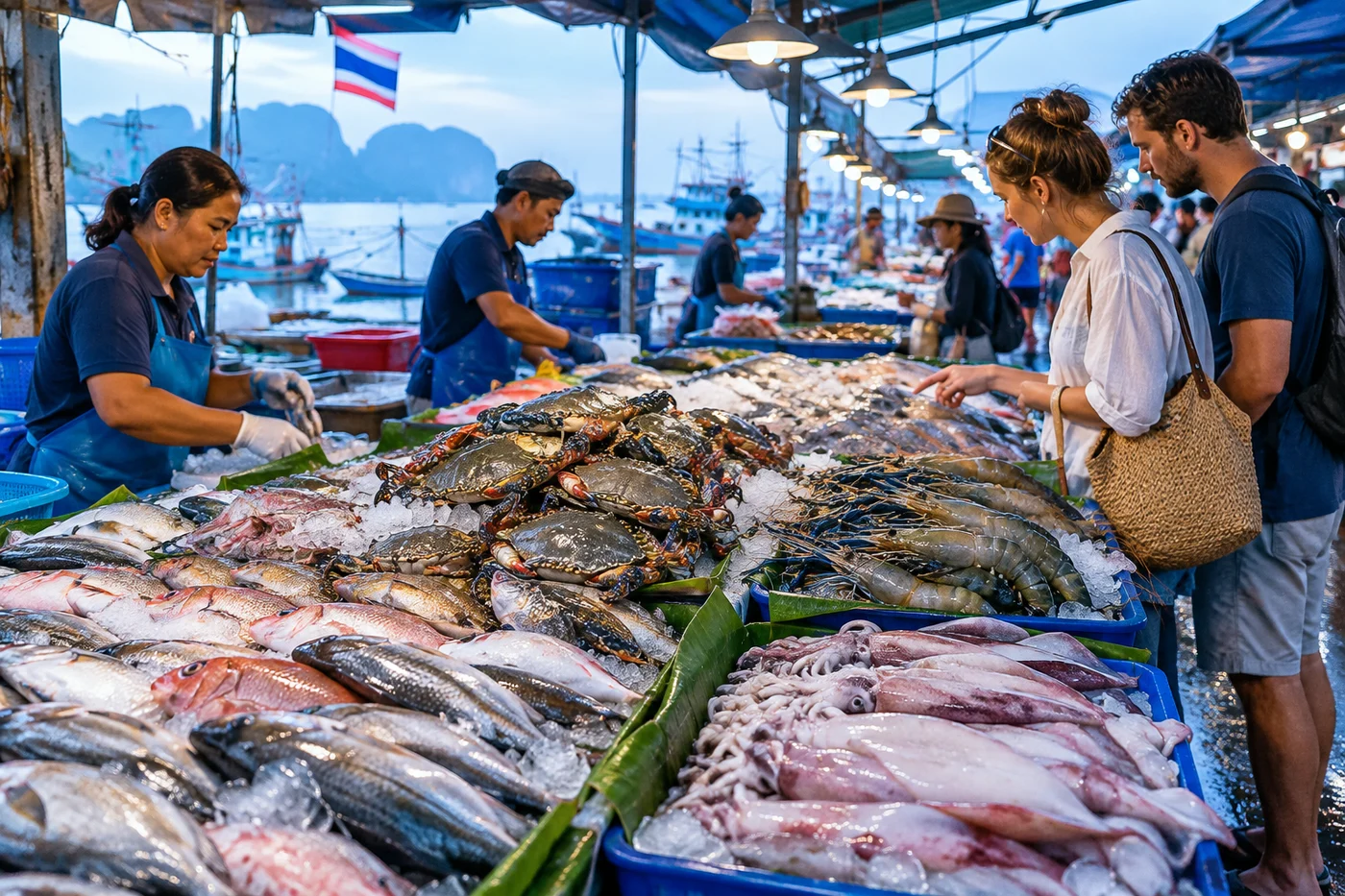
For safe, fresh experiences choose: busy seaside seafood restaurants with live tanks; well‑known morning fish markets (where deliveries arrive early and turnover is high); popular night markets where dishes are freshly grilled to order; and reputable hotels or established restaurant chains with clear hygiene standards. Live‑tank stalls let you pick the catch and watch it cooked — useful for assessing freshness — but still insist on fully cooking shellfish. For planning, see our Thailand restaurant guides for city‑specific recommendations and local market picks.
Regional differences and popular preparations
Thailand’s coasts give different specialties. The Andaman (west) coast is known for large reef fish and richer curries; the Gulf (east) coast and the eastern seaboard supply extensive shellfish and farmed shrimp. Common preparations include simple grilling (pla pao, salt‑crusted fish), stir‑fried dishes, steamed seafood with herbs, and chilled shellfish—sometimes offered raw. Remember: cooking reduces many bacterial risks but does not remove heat‑stable toxins like ciguatoxin; public‑health advice is to avoid large reef predators such as some groupers and barracuda.
Sustainability, sourcing and what to ask
Sustainability ratings for Thai seafood vary over time. If sustainable sourcing matters to you, ask whether shrimp are farmed with certification (ASC, BAP) or whether tuna is pole‑caught or MSC‑certified; check current Seafood Watch or certification websites for up‑to‑date guidance. Social‑risk issues and supply‑chain improvements exist in Thailand, but don’t rely on vague claims—request a certificate or look up the brand. When in doubt, choose smaller, local species with lower known impacts.
Who should avoid raw seafood, and what to skip
Pregnant people, young children, older adults, and immunocompromised travelers should avoid raw or undercooked seafood—especially oysters and other shellfish—because Vibrio and other pathogens have documented presence in Thai retail coastal shellfish. Also avoid so‑called 'half‑cooked' dishes or street preparations that keep seafood at room temperature before serving. For toxin risks, avoid large reef predators and internal organs where toxins concentrate.
Practical Tips
Carry hand sanitizer for market visits; buy from busy vendors with high turnover; ask to see live tanks or recent deliveries; choose hot‑served dishes and avoid raw oysters/ceviche; learn a few Thai seafood words (fish = pla, shrimp/prawn = kung, crab = pu, squid = pla meuk); and if eating raw is important to you, verify a restaurant’s sourcing and hygiene and accept the added risk.
Important Considerations
Thai authorities advise fully cooking seafood to reduce illness risk and warn against formalin preservation. Ciguatera toxins are heat‑stable—avoid large reef predators. Vibrio has been detected in Thai oysters; vulnerable travelers should avoid raw shellfish. Sustainability certifications change—check current Seafood Watch/MSC/ASC/BAP listings before making claims.
Planning more of your trip? Browse our
Thailand Food & Restaurant Guides
for more practical Thailand food and dining information.
Final Thoughts
Seafood in Thailand can be a highlight of any trip if you combine common‑sense safety checks with local knowledge. Focus on freshness signs, choose busy reputable vendors, prefer fully cooked dishes if you’re in a higher‑risk group, and ask about sourcing if sustainability matters. With those steps you’ll be able to enjoy Thailand’s seafood while minimizing avoidable risks.
Sources & Further Reading
- Department of Health, Ministry of Public Health (Thailand) — consumer guidance
- Centers for Disease Control and Prevention (CDC) — Fish poisoning, travel guidance
- PubMed — study on Vibrio in retail Thai oysters
- Monterey Bay Aquarium Seafood Watch — national guide (sustainability context)
Transport schedules, fares and operating rules can change. Always verify time-sensitive details with the official operator before travel.