HOTEL GUIDE
A Traveler’s Guide to Regional Thai Cuisine: Flavors and Dishes of North, Isan, Central and South Thailand
A practical guide to Thailand’s four main food traditions—Northern (Lanna), Northeastern (Isan), Central and Southern—covering flavors, dishes, where to eat and traveler tips.
Understanding regional Thai cuisine helps you know what to order, where to travel and which flavors to expect. Thailand’s food traditions divide broadly into four regional styles—Northern (Lanna), Northeastern (Isan), Central and Southern—each shaped by geography, history and local ingredients. This guide compares flavor profiles, lists signature dishes with quick pronunciation tips, recommends where to try them, and gives practical ordering and dietary advice.
Key Takeaways
- Northern food is herbal, less sweet and often uses sticky rice and curried noodles (khao soi).
- Isan is bold, sour and fermented—think som tam, larb and sticky rice eaten by hand.
- Central and Southern foods use jasmine rice and coconut—Central offers balanced curries and stir-fries; the South is spicier and seafood-forward.
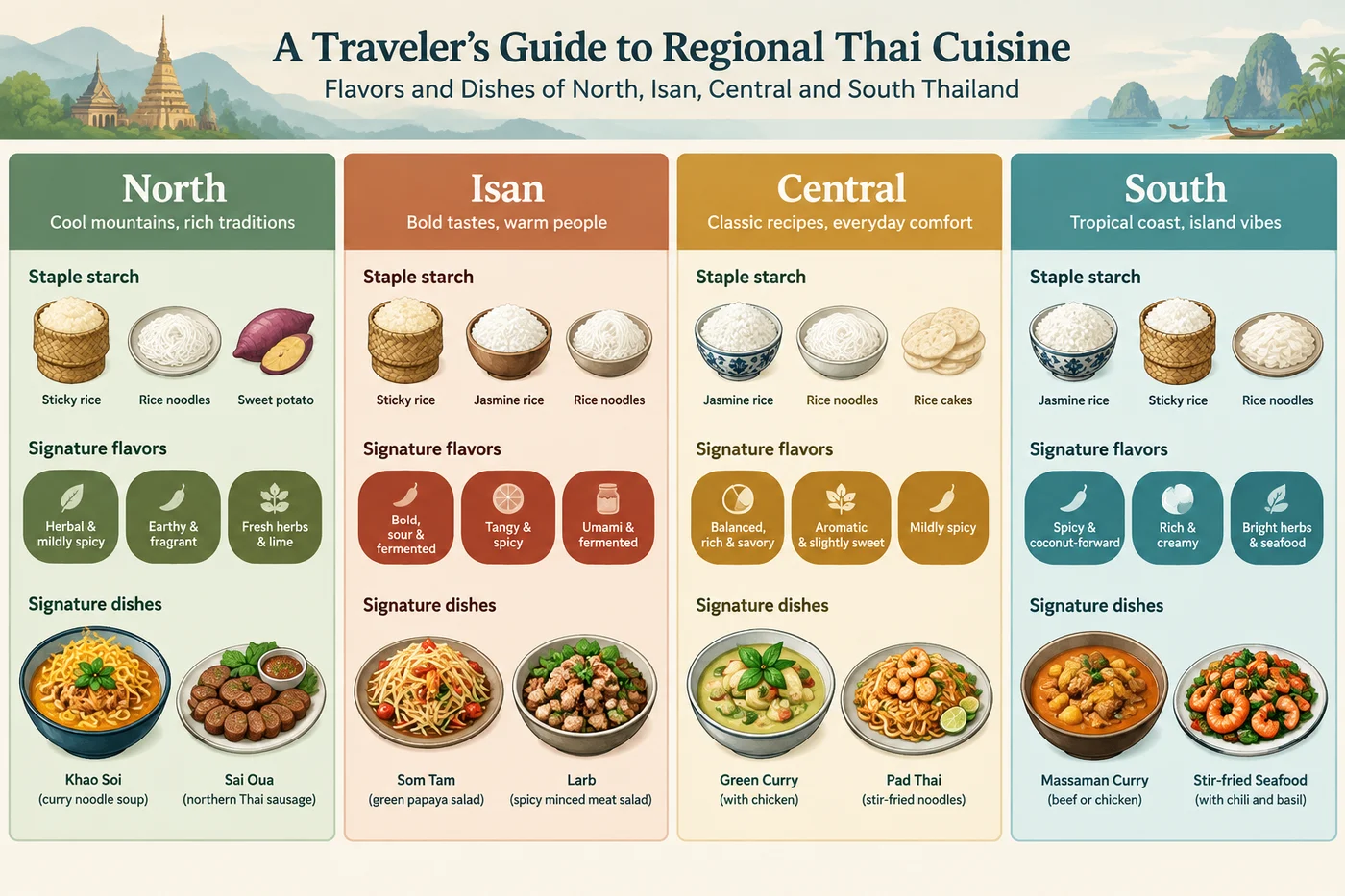
Regional Thai Cuisine: Four regional overviews
North (Lanna): Milder heat, fragrant herbs (cilantro root, kaffir), and dishes with Yunnan/Myanmar influence. Staples include khao soi (curried noodle soup) and sai ua (herbal pork sausage). Sticky rice is common.
Isan (Northeastern): Built around sticky (glutinous) rice and grilled meats. Flavors are salty, sour and spicy with frequent use of fermented fish (pla ra). Signature items: som tam (papaya salad), larb (meat salad) and gai yang (grilled chicken).
Central: The base of many internationally known Thai dishes. Jasmine rice is the staple; expect coconut-milk curries (green curry), Pad Thai and dishes refined in Bangkok and the royal court.
South: Coconut-forward, intensely spicy and seafood-rich. Malay and South Indian trade routes influenced chilies, tamarind and regional condiments such as nam budu.
Signature dishes to try (what to order and how to say it)
North
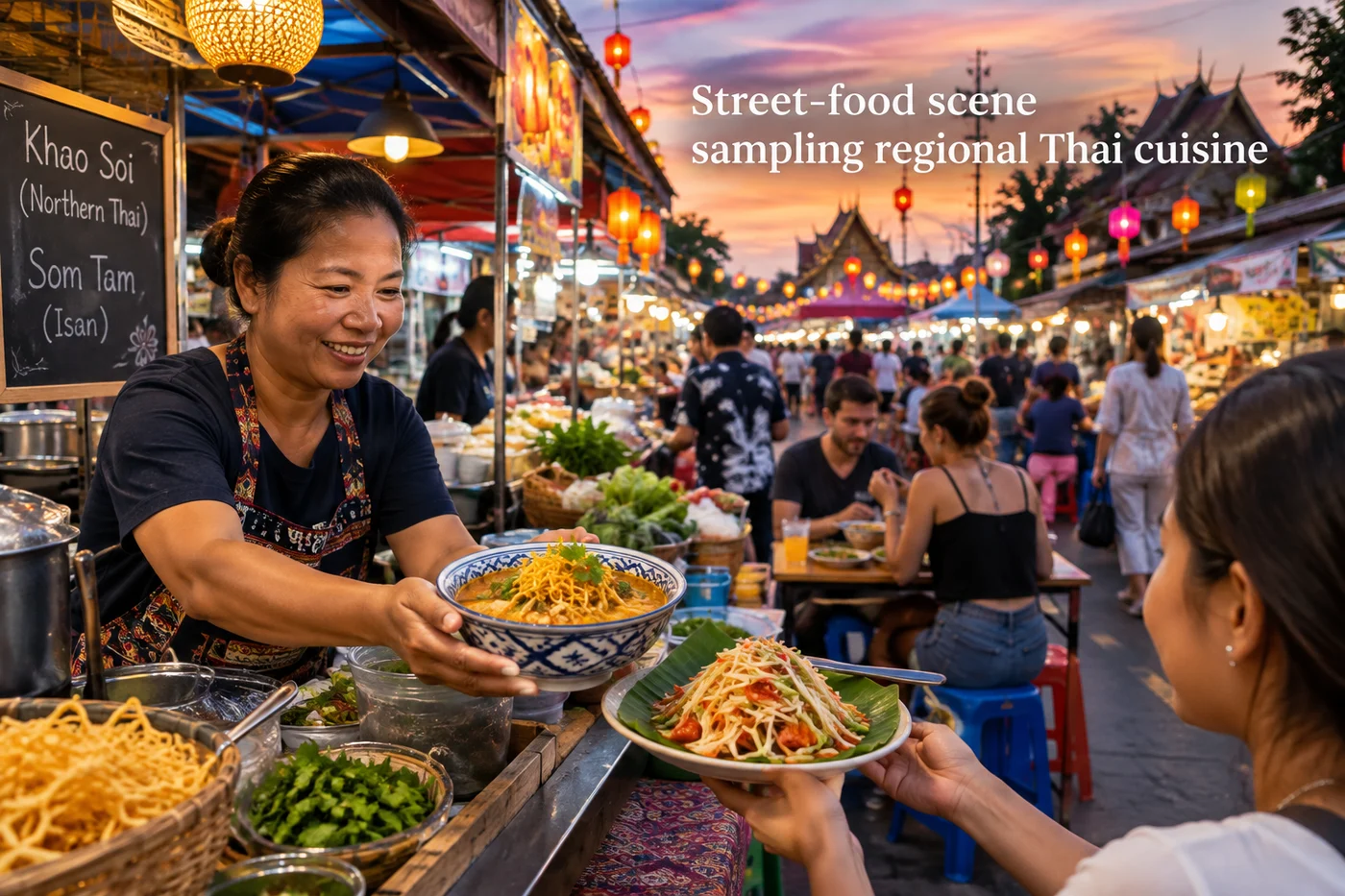
– Khao soi (khao soy): creamy curried noodle soup—try in Chiang Mai.
– Sai ua (sigh oo-ah): Northern herbal pork sausage, aromatic and grilled.
– Nam prik ong (nahm prik awng): tomato-chili relish served with fresh vegetables.
Isan
– Som tam (sohm tahm): green papaya salad—ask for 'mai pet' (not spicy) or 'phet nit noi' (a little spicy).
– Larb (lahb): minced meat salad with lime and toasted rice powder.
– Gai yang (guy yahng): charcoal-grilled chicken, often paired with sticky rice.
Central
– Pad Thai (pad tie): stir-fried rice noodles with tamarind and peanuts.
– Gaeng keow wan (green curry): coconut-milk curry, fragrant and can be very spicy.
– Tom yum goong (tom yum goong): hot-and-sour prawn soup.
South
– Gaeng som (gaeng som): sour fish curry with tamarind and turmeric.
– Massaman (masaman curry): South-influenced coconut curry with warm spices.
– Fresh seafood curries and grilled fish seasoned with local herbs.
Key ingredients and cooking techniques
Staples: Northern and Isan meals use sticky (glutinous) rice; Central and Southern dishes use jasmine rice. Coconut milk is central to Central and Southern cuisines but used sparingly in Isan.
Fermented seasonings: Pla ra (fermented freshwater fish) is a backbone of many Isan flavors; Southern dishes use coastal fermented condiments like nam budu. These are pungent—try small amounts first.
Techniques: Northern cooking favors slow-simmering curries and grilled sausages; Isan emphasizes grilling and pounding (mortar-and-pestle) for salads; Central cuisine features stir-frying and curry pastes; Southern cooks often use long-simmering, spice-rich sauces with coconut milk.
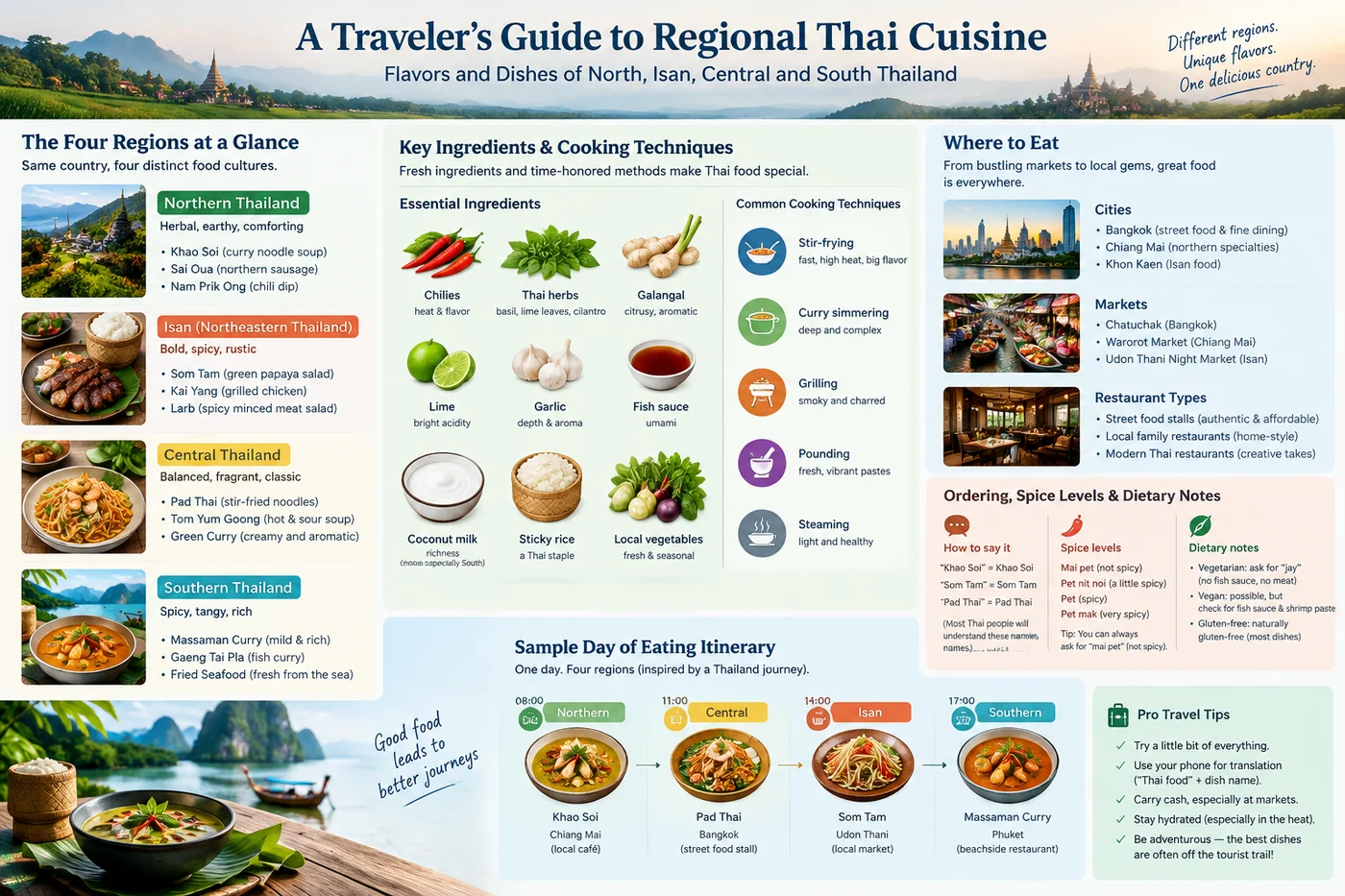
Where to eat: cities, markets and restaurant types
North: Chiang Mai night markets (Sunday Walking Street, Warorot Market) and family-run 'kitchen' restaurants for khao soi and sai ua.
Isan: Khon Kaen, Udon Thani and Ubon Ratchathani have lively Isan food scenes. In Bangkok, head to Isan-style eateries near Victory Monument and Pratunam.
Central: Bangkok is the best place to sample regional variety—street stalls, riverside restaurants and royal-court style restaurants. Use HotelForU’s Bangkok neighborhood guides to match hotels with food neighborhoods.
South: Phuket Town, Trang and Hat Yai offer seafood markets and southern curry houses. On islands, try small seafront restaurants for fresh fish and curries.
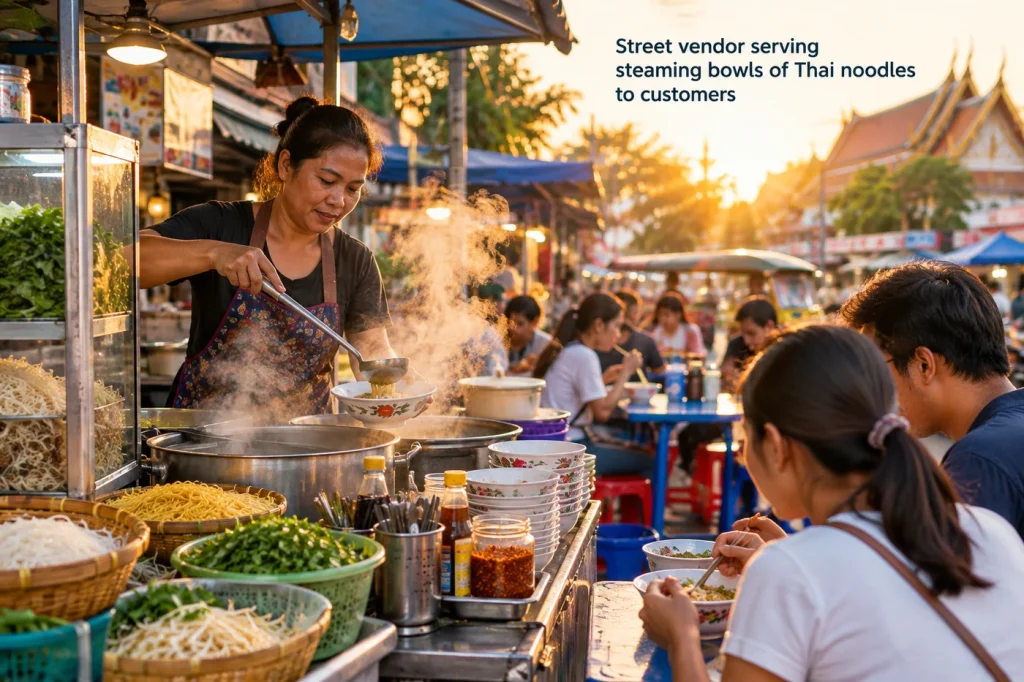
Markets vs Restaurants: Markets and busy street stalls are where you’ll find authentic, inexpensive versions; mid-range restaurants are useful for clearer allergen communication and milder spice requests.
Ordering, spice levels and dietary notes
Spice: Many Isan and Southern dishes are very hot. To request milder food say 'phet nit noi' (a little spicy) or 'mai phet' (not spicy). For curries, ask for 'mai sai prik' (no chilies) if needed.
Vegetarian and halal: Vegetarian options exist in all regions but may still include fish sauce or shrimp paste—explicitly state 'jay' (Jain/vegetarian Buddhist) or ask 'mai sai nam pla/kapi?' (no fish sauce/shrimp paste). Southern Thailand has many halal kitchens due to Muslim communities, but verify certification if required.
Allergens & fermented items: Peanuts, shellfish, shrimp paste (kapi) and soy/fish sauces are common. If you have severe allergies or sensitivities to fermented foods (pla ra, nam budu), avoid raw-market versions and choose reputable restaurants.
Hygiene: Choose busy stalls with turnover and visible cooking; bottled water is safest. When in doubt, select cooked dishes over salads or raw seafood if hygiene is a concern.
Sample day-of-eating itineraries
Chiang Mai (North day): Breakfast—khao soi at a local shop. Lunch—grilled sai ua with sticky rice at a market. Afternoon—visit Warorot Market for nam prik samplers. Dinner—Northern-style hot pot or family-run restaurant.
Udon Thani or Khon Kaen (Isan day): Morning—sticky rice and grilled pork from a street stall. Lunch—som tam and larb at a busy Isan restaurant. Evening—barbecue-style gai yang and local beer at an open-air grill.
Bangkok (Central day): Breakfast—street pad thai. Lunch—green curry with jasmine rice at a mid-range restaurant. Evening—riverside seafood or a food tour sampling regional specialties from across Thailand.
Trang/Phuket (South day): Morning—market seafood omelet. Lunch—gaeng som with fresh fish. Evening—coastal curry and grilled prawns at a seaside restaurant.
Practical Tips
Ask for spice levels ('mai phet' = not spicy, 'phet nit noi' = a little spicy). Say 'mai sai nam pla/kapi' to avoid fish sauce/shrimp paste. Eat sticky rice by hand in the North/Isan; use communal plates in the Central region. For fermented items, sample small portions first and choose well-reviewed vendors.
Important Considerations
Fermented products (pla ra, nam budu) are pungent and can upset sensitive stomachs—consume cautiously. Allergens (peanuts, shellfish, soy, fish sauce) are widespread—communicate allergies clearly. Halal availability is regionally strong in the South but verify certification when required.
Planning more of your trip? Browse our
Thailand Food & Restaurant Guides
for more practical Thailand food and dining information.
Final Thoughts
Regional diversity is one of Thailand’s greatest culinary strengths. Use this guide to prioritize dishes, choose the right cities and ask the right questions at markets or restaurants. Regional boundaries are flexible—think of this as a practical roadmap, not a definitive map of authenticity. Enjoy exploring, tasting and learning along the way.
Sources & Further Reading
- Tourism Authority of Thailand — Discover Thai Cuisine: Famous Four Regions
- Tourism Authority of Thailand — Explore Thai Taste: Thai Foodie Map
- Ministry of Culture (Thailand) — Southern regional food heritage
Transport schedules, fares and operating rules can change. Always verify time-sensitive details with the official operator before travel.