HOTEL GUIDE
Halal Food in Thailand: A Practical Guide for Muslim Travelers
Clear, practical advice for Muslim and halal-conscious travellers: where to find halal food in Thailand, how certification works, what to eat, verification tips, apps and sample routes.
Yes — halal food in Thailand is widely available, especially in the south and in major tourist cities. This practical guide explains how Thai halal certification works, where to find safe halal choices across regions, what dishes are reliably halal, and simple verification and etiquette tips to make dining easy and worry‑free.
Key Takeaways
- Look for the official Thai halal logo and confirm current listings on the Thailand Halal Information Center (THIC/halal.or.th).
- Halal options concentrate in southern provinces and major tourist hubs; smaller inland towns can be mixed — always ask and verify.
- Use simple Thai phrases, apps and hotel/restaurant verification to avoid cross‑contamination and alcohol issues.
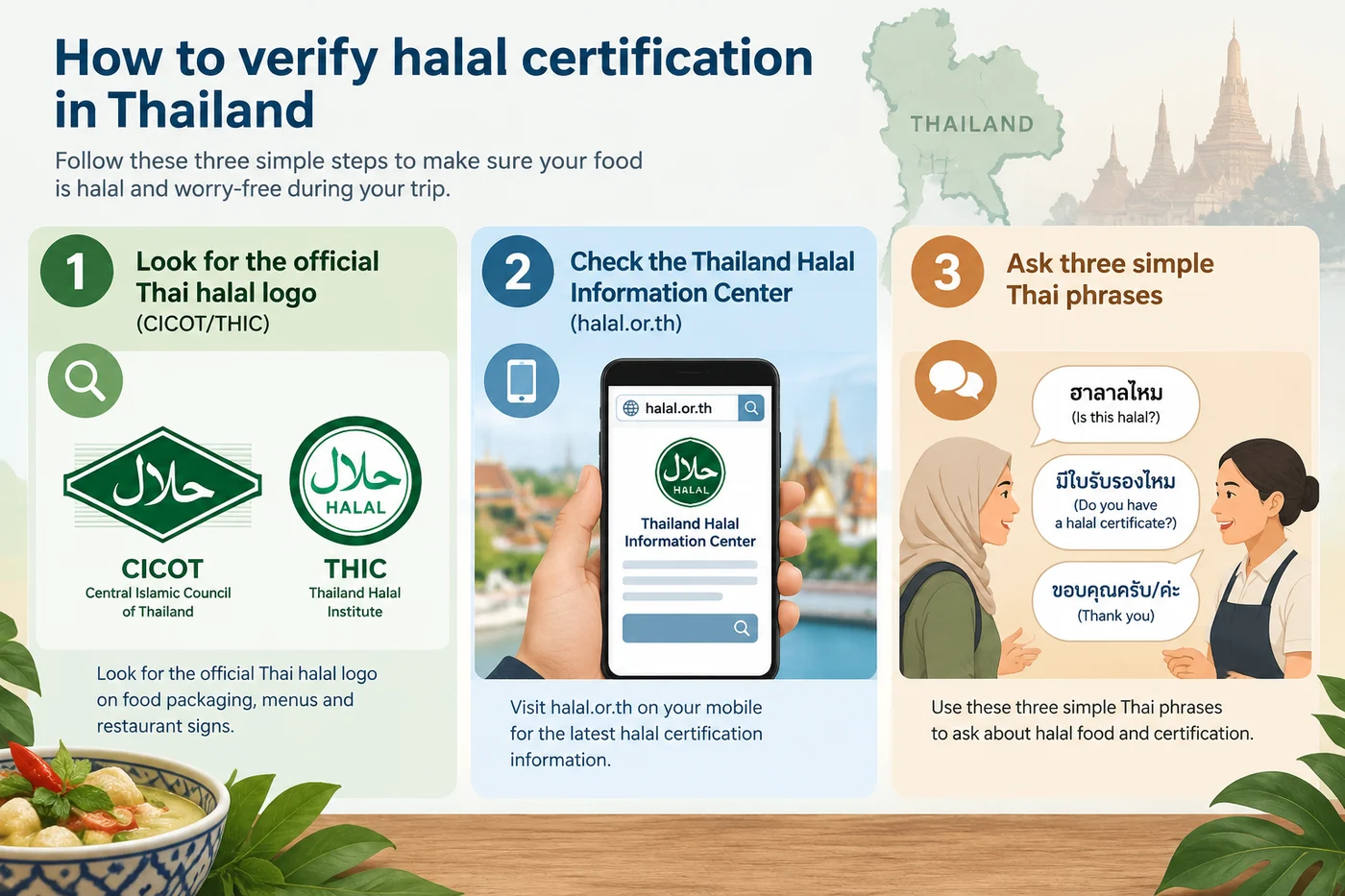
How halal certification works in Thailand
Thailand’s principal halal authority is the Central Islamic Council of Thailand (CICOT). CICOT defines the national halal mark and works with provincial Islamic committees to inspect businesses and issue certification. The Thailand Halal Information Center (THIC / halal.or.th) publishes searchable lists of certified restaurants, hotels and halal products. Chulalongkorn University’s Halal Science Center supports testing and quality assurance. Certification lists change often; always confirm a business’s current status on THIC before travel.
Where to find halal food in Thailand — regions & cities
Halal food in Thailand is easiest to find in:
- Southern provinces (Pattani, Yala, Narathiwat and parts of Songkhla): Muslim-majority areas with abundant halal restaurants and markets. Note: these provinces have distinct security considerations — check travel advisories.
- Major cities and tourist hubs: Bangkok, Phuket, Krabi, Chiang Mai and Hat Yai have many certified restaurants, halal‑friendly hotels and mosque networks.
- Islands and resorts: Phuket and parts of Krabi and Koh Samui host halal-certified outlets, especially around tourist piers and town centers.
Smaller inland towns and rural areas may have limited halal options; plan ahead when leaving urban hubs.
How to verify halal status
Don’t rely only on self-declared signs. Steps to verify:
1) Look for the official Thai halal mark (CICOT/Provincial Islamic Committee logo).
2) Search the THIC database (halal.or.th) or ask staff for the restaurant’s registered name/number and cross-check.
3) When in doubt, ask where meat is sourced and whether pork or alcohol is used in cooking. Remember that provincial committees and recognized foreign halal certificates may differ — check CICOT guidance when you need to confirm recognition of foreign certifiers.
For laboratory or ingredient queries, the Halal Science Center at Chulalongkorn University provides testing and technical resources.
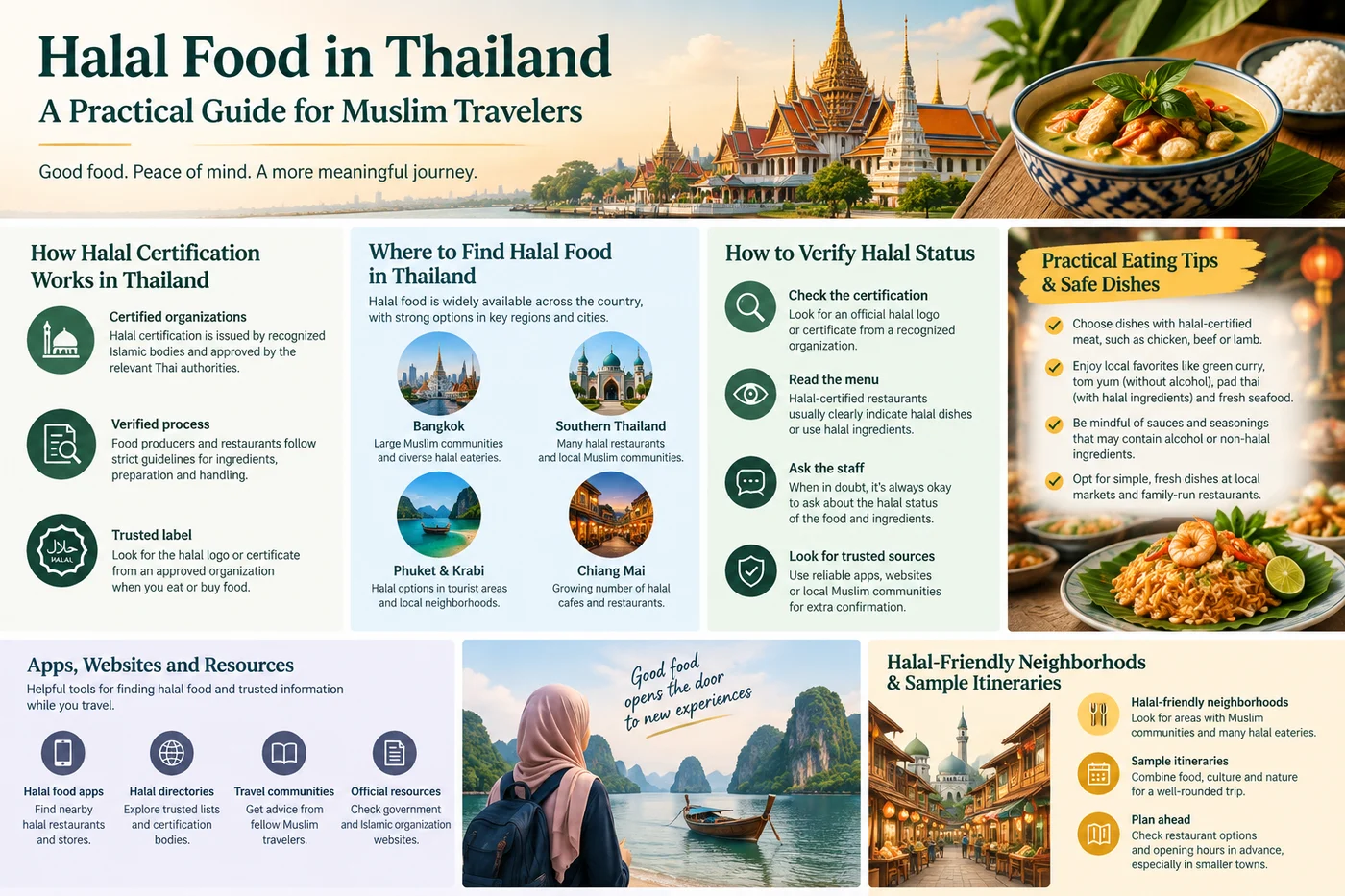
Practical eating tips & safe dishes
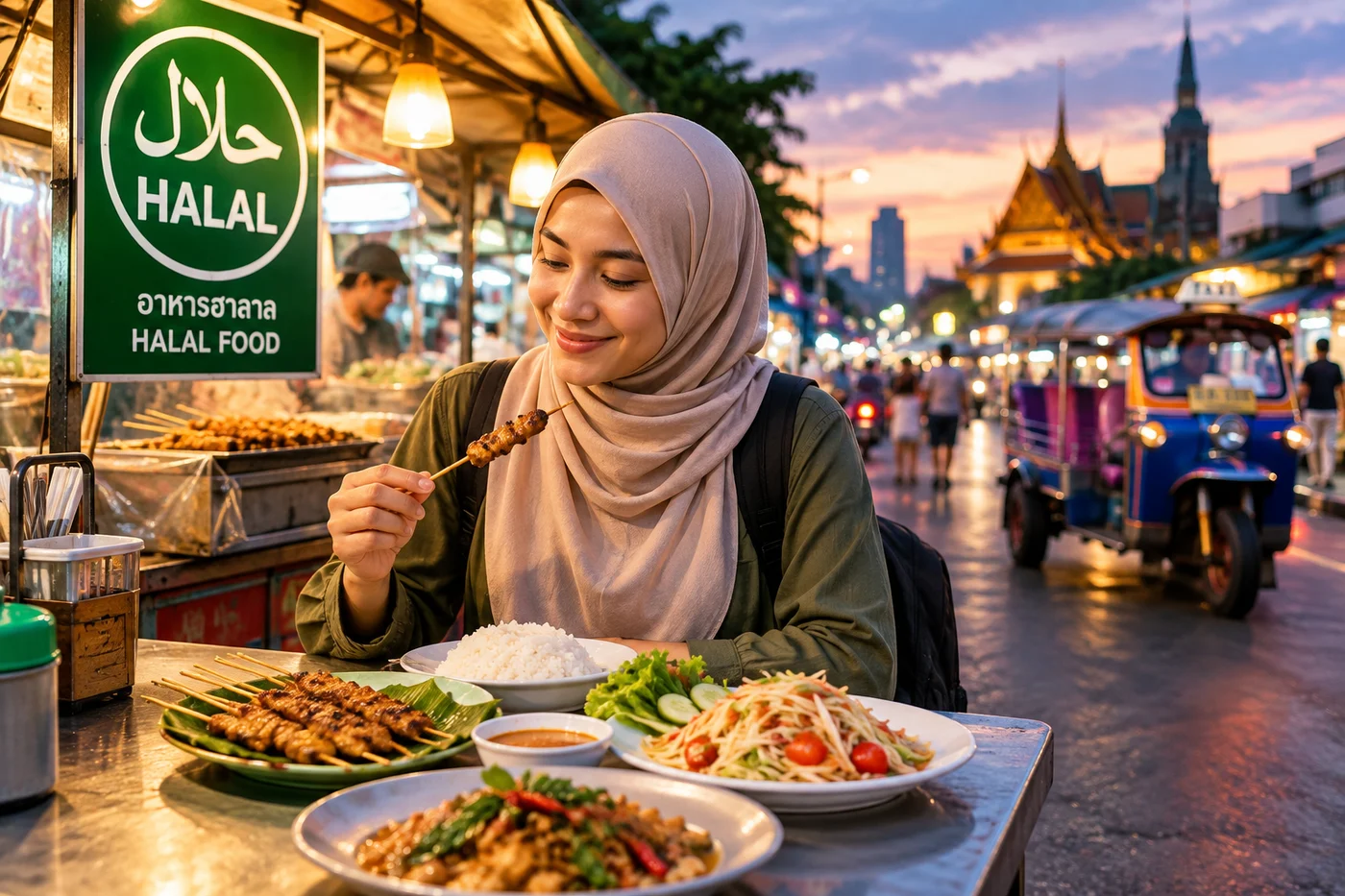
Common halal-friendly Thai dishes: plain jasmine rice, som tam (ask to omit fish sauce if necessary), pad pak (stir‑fried vegetables), kai yang (grilled chicken, confirm source), tom yum and tom kha with seafood (confirm no shrimp paste or fish sauce if you avoid those), and many northern specialties made with chicken or beef.
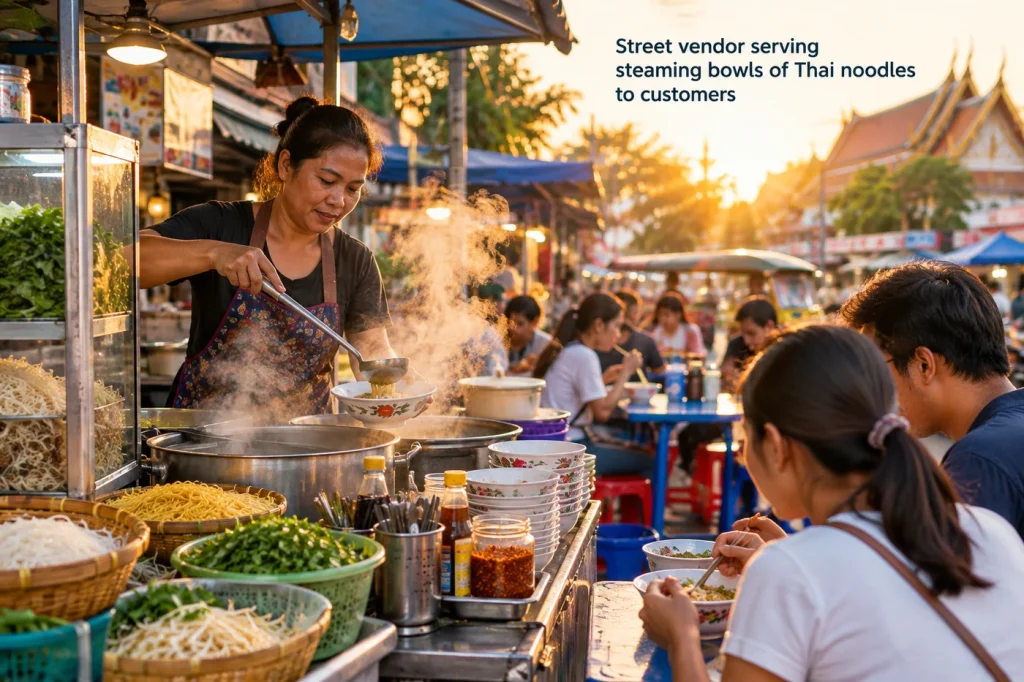
Street food caution: many popular street dishes are halal at Muslim vendors, but cross‑contamination with shared woks, oil, or utensils can occur. Ask if oil or tongs are shared with pork or if alcohol is used in marinades. If a vendor is non‑Muslim, ask specific questions rather than assuming.
Seafood: fish and shellfish are generally permissible, but check sauces and broths for fish sauce, shrimp paste or alcohol.
Alcohol: some Thai restaurants and hotels serve alcohol openly; ask whether alcohol is used in cooking or kept on the premises if that matters to you.
Apps, websites and resources
Key official resources: THIC (halal.or.th) for certified listings and CICOT for regulations and updates. The Tourism Authority of Thailand (TAT) publishes Muslim‑traveller e‑brochures and guides that list Muslim‑friendly services. Useful tools:
- THIC searchable database for restaurants, hotels and products.
- TAT 'Halal Check‑in Thailand' e‑brochure for regional Muslim‑friendly services.
Also use general apps (maps and review platforms) but cross-check any listing with THIC before you go. Hotels with Muslim-friendly services often have halal food packages — ask reception and request certification details. If you maintain a travel page on HotelForU.net, link to city-specific halal dining guides (for example, Bangkok halal dining pages) so readers can drill down.
Halal-friendly neighborhoods & sample itineraries
Quick neighborhood picks:
- Bangkok: areas around Petchaburi and parts of Silom have many halal options and nearby mosques.
- Phuket Town & Patong: look for halal restaurants near the pier and in Old Town.
- Chiang Mai: the Old City and the area near the central mosque host halal eateries.
- Hat Yai: a major southern hub with abundant halal food and prayer facilities.
Sample day: in a city, start with a certified halal breakfast spot (check THIC), visit local markets for halal snacks sold by Muslim vendors, and choose a certified restaurant for dinner. For island travel, plan meals near your pier town where certified outlets cluster.
Practical Tips
Ask three simple things: 1) 'Halal mai?' (ฮาลาลไหม?) — Is this halal? 2) 'Neua/ gai/ moo maa jaak tee nai?' — Where does the meat come from? 3) 'Lot nam pla/ sato riew mai?' — Is fish sauce or alcohol used? Carry a screenshot of the THIC listing or the restaurant’s certificate. Prefer certified outlets for mixed menus; when using street vendors, watch for separate cooking utensils and shared oil.
Important Considerations
Certification lists and business status change frequently — always verify on THIC (halal.or.th) or ask CICOT if you need official confirmation. Travel to Thailand’s three southernmost provinces requires checking current government travel advisories: security conditions can change. Not all ‘Muslim‑friendly’ signs indicate official certification; ask direct questions about ingredients and preparation.
Planning more of your trip? Browse our
Thailand Food & Restaurant Guides
for more practical Thailand food and dining information.
Final Thoughts
Halal food in Thailand is accessible and varied if you plan a bit: use official verification (THIC), learn a few Thai phrases, and prioritise certified outlets in unfamiliar towns. With these simple checks and local awareness you can enjoy Thailand’s cuisine with confidence.
Sources & Further Reading
- Thailand Halal Information Center (THIC) — official site
- Central Islamic Council of Thailand (CICOT) — regulation PDF
- Halal Science Center, Chulalongkorn University
- Tourism Authority of Thailand (TAT) — 'Halal Check-in Thailand' e-brochure
Transport schedules, fares and operating rules can change. Always verify time-sensitive details with the official operator before travel.