HOTEL GUIDE
How to Explore Food Markets in Thailand: Wet Markets, Food Halls and What to Buy
A practical traveler's guide to navigating wet markets, morning markets, night food bazaars and modern food halls in Thailand — what to eat, what to buy and how to stay safe.
Food markets in Thailand are the easiest place to taste real Thai flavours, stock up on pantry staples and watch food culture in action. From dawn wholesale halls to neon-lit night food markets and modern food halls, markets serve locals and travellers alike. This guide explains market types, what to buy, how to order, and simple safety and packing tips so you can shop and eat like a pro.
Key Takeaways
- Know the market types: wet/fresh, morning wholesale, night food markets, floating markets and modern food halls.
- Choose busy stalls, eat hot-cooked food, and buy pantry items (nam pla, kapi, palm sugar) for travel-friendly souvenirs.
- Follow hygiene advice, ask before photographing, and check airline/customs rules before packing perishables.
Market types you’ll meet in Thailand
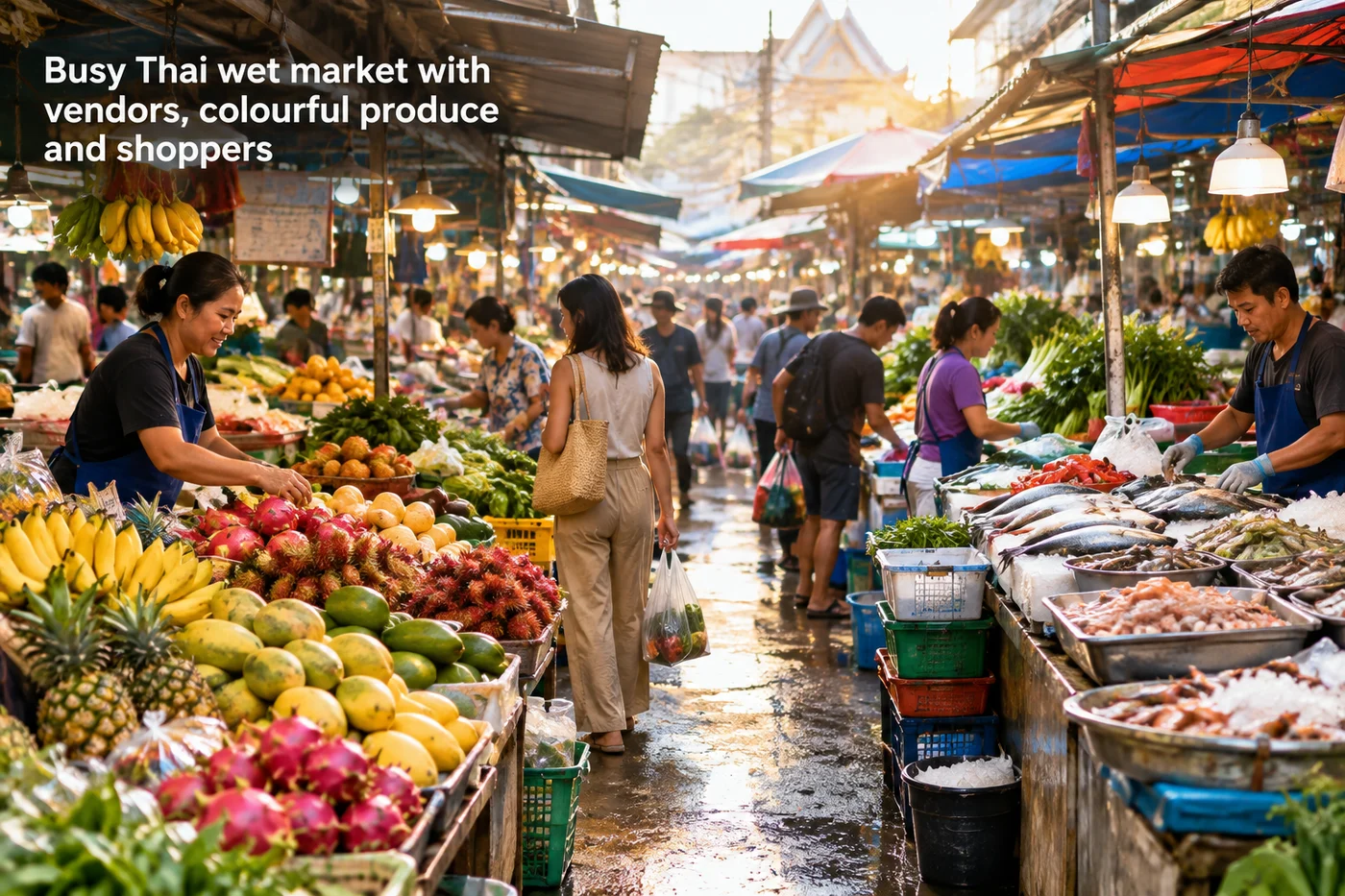
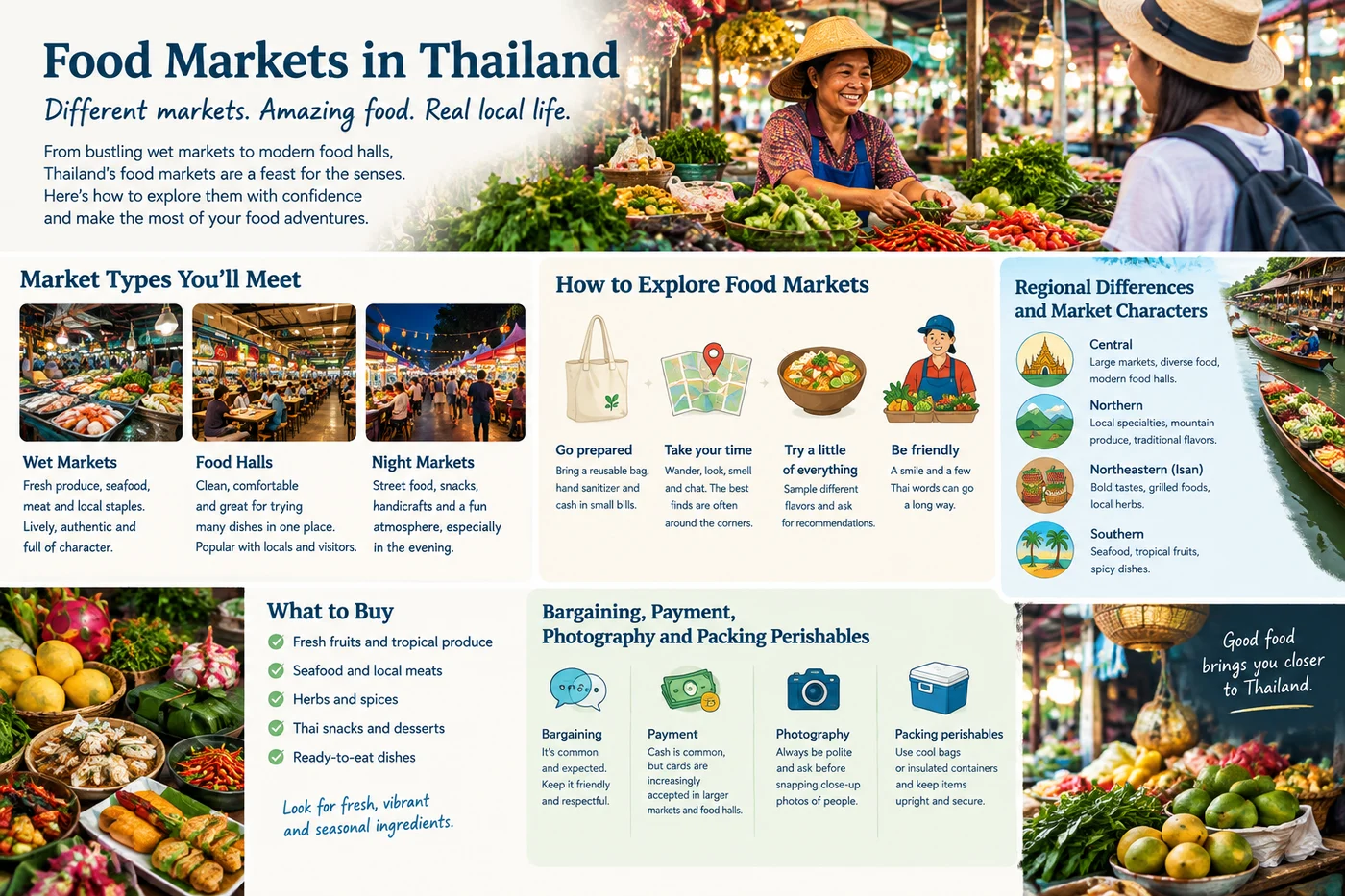
Thailand’s market scene is varied. Wet or fresh markets (talat sod) are where most fresh fish, meat, fruit and vegetables are sold; they’re working marketplaces, not tourist attractions. Morning wholesale markets and sections (often active before dawn) supply restaurants and vendors. Night food markets or night bazaars focus on ready-to-eat street food and snacks. Floating markets are scenic, often tourist-oriented but still offer fresh produce and snacks. Finally, modern food halls (operator-managed, curated vendors and shared seating) blend premium groceries with dining — examples include Central Food Hall-style venues. Market names, hours and vendor mixes change frequently, so check local pages for the latest details.
How to explore food markets in Thailand
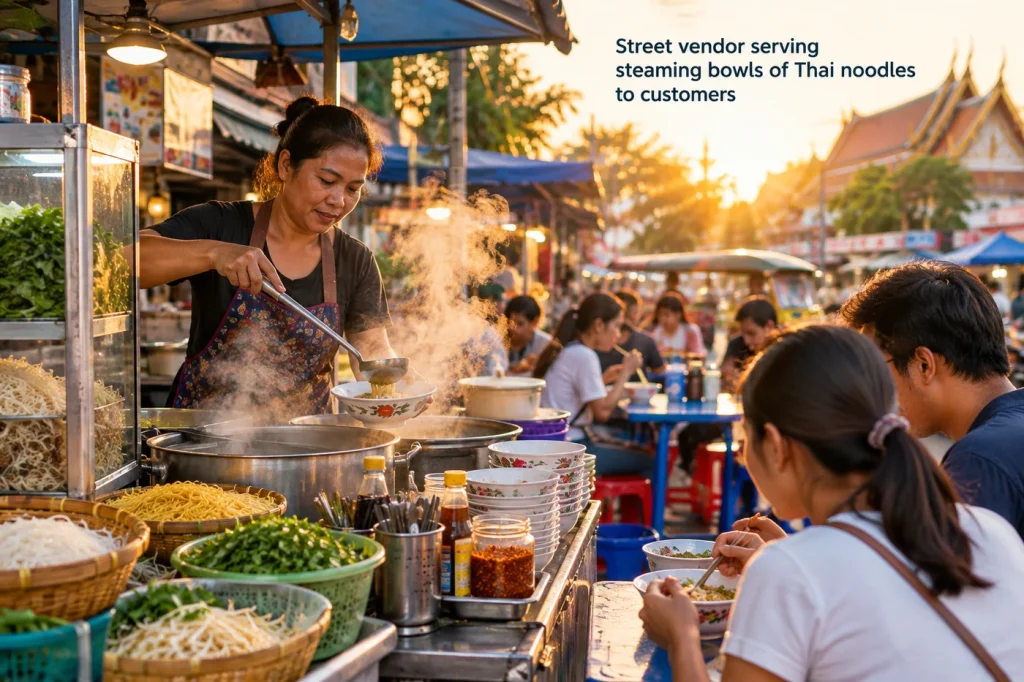
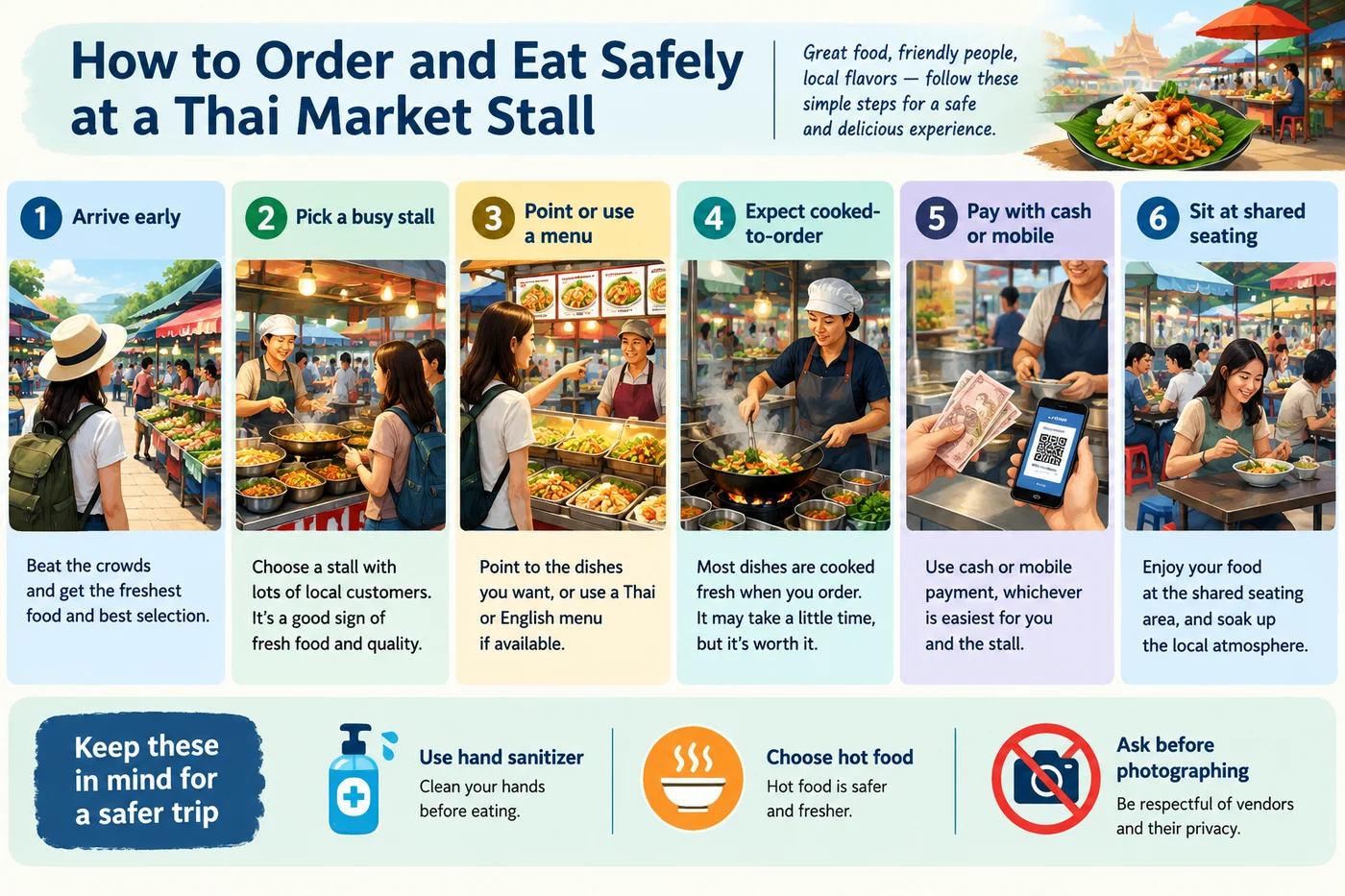
Start early for the freshest produce and the busiest stalls; many wholesale sections operate around dawn. Walk the rows to scout stalls—busy ones mean high turnover and fresher food. When you order cooked food: point to a menu photo or dish, say simple Thai phrases (e.g., ‘ao nit noi’ for less spicy) or use gestures, and watch for food served piping hot. Pay attention to the way locals eat—shared seating is common. For hygiene, prefer stalls where food is cooked to order, kept hot, and where vendors use tongs or utensils rather than bare hands. The World Health Organization advises improved hygiene and crowd control in traditional markets; for personal safety, follow travel-health guidance from authoritative sources such as the CDC before you go.
What to buy at food markets in Thailand
Markets are the best place to pick up Thai pantry staples and ready-to-eat favourites. Look for:
– Pantry: fish sauce (nam pla), fermented shrimp paste (kapi), palm sugar, tamarind paste, packaged curry pastes and dried chillies. These travel well and make practical souvenirs.
– Fresh aromatics: lemongrass, galangal, kaffir (makrut) lime leaves, Thai basil — buy only if you can use or pack them quickly.
– Fruit: seasonal tropical fruit such as mango, rambutan or mangosteen (availability varies by season).
– Ready-to-eat: som tam (green papaya salad), mango sticky rice, grilled skewers (moo ping), noodle soups and freshly grilled seafood at coastal markets.
Ask vendors to repackage liquids (fish sauce) or paste into sealed containers for travel.
Regional differences and market characters
Markets reflect regional foodways. Bangkok’s wet markets (e.g., Khlong Toei, Or Tor Kor) are large and diverse, serving city residents and restaurants. Northern markets like Chiang Mai’s focus on local vegetables, mountain herbs and northern snacks. In the south and coastal areas (Phuket, Songkhla) expect abundant fresh seafood and Malay-influenced spices. Isan (northeast) markets bring fermented fish, papaya salads and grilled meats. Seasonal fruit varieties shift with Thailand’s hot, rainy and cool seasons, so what’s abundant in one region may be scarce in another.
Bargaining, payment, photography and packing perishables
Bargaining is common in many markets but should be polite and light-hearted—start a little below the asking price and smile. For cooked food, prices are usually fixed and bargaining is unnecessary. Carry small notes and coins; many food stalls are cash-first, though city markets increasingly accept mobile payments. Ask permission before photographing vendors or their stalls—some will say yes, others prefer no. For taking food home: prefer sealed, packaged goods (fish sauce, dried spices, curry paste). Fresh meat, fish and cut fruit are harder to transport unless you have reliable refrigeration or vacuum sealing; always check airline and customs rules before packing perishables.
Practical Tips
1) Visit early for freshness; night markets are best for street-food variety. 2) Choose busy stalls (high turnover). 3) Use hand sanitizer after handling produce and before eating. 4) Buy pantry items as souvenirs—less likely to be restricted in transit. 5) Ask before photographing people or private stalls.
Important Considerations
Market conditions, vendor lists and hours change frequently—verify details from official market pages. WHO advises limiting or suspending sale of live wild mammals in traditional markets where regulation is absent; avoid direct contact with live/wild animals. Follow CDC travel-health guidance on vaccinations and food/water safety before travel.
Planning more of your trip? Browse our
Thailand Food & Restaurant Guides
for more practical Thailand food and dining information.
Final Thoughts
Exploring food markets in Thailand is one of the most rewarding ways to understand local food culture. Move slowly, follow simple safety rules, and let the market rhythms guide you—whether you’re hunting pantry finds like nam pla and kapi or savouring a steaming bowl at a busy stall. For market-by-market tips and neighbourhood picks, see HotelForU’s Bangkok market guides and local restaurant pages.
Sources & Further Reading
- World Health Organization — Interim guidance on traditional food markets (WHO/FAO/OIE/UNEP)
- VisitThailandToday — Khlong Toei Market guide
- Hot Thai Kitchen — Guide to Thai ingredients
- CDC — Travel / Eat and drink safely
Transport schedules, fares and operating rules can change. Always verify time-sensitive details with the official operator before travel.