HOTEL GUIDE
Driving in Thailand: Complete Guide to Renting a Car, Road Rules, Tolls and Safety
A practical, step-by-step guide for international travellers on driving in Thailand — licences, renting, insurance, tolls, safety and accident procedures.
Planning a self-drive trip? This practical guide to driving in Thailand explains what you must carry, how to rent legally and safely, and the everyday road rules you’ll need. Read on for licence rules, insurance essentials, toll payments and safety advice so you can plan routes and avoid common pitfalls when driving in Thailand.
Key Takeaways
- You can drive with an IDP or recognised national/ASEAN licence; temporary licences are available via provincial offices.
- Rentals normally require a domestic licence, a credit card and an IDP; confirm insurance, deposit and inspection details in writing.
- Use EXAT Easy Pass for Bangkok expressways, follow left‑hand driving rules, and prioritise defensive driving—avoid rural night driving when possible.
Driving in Thailand: licences & legal requirements
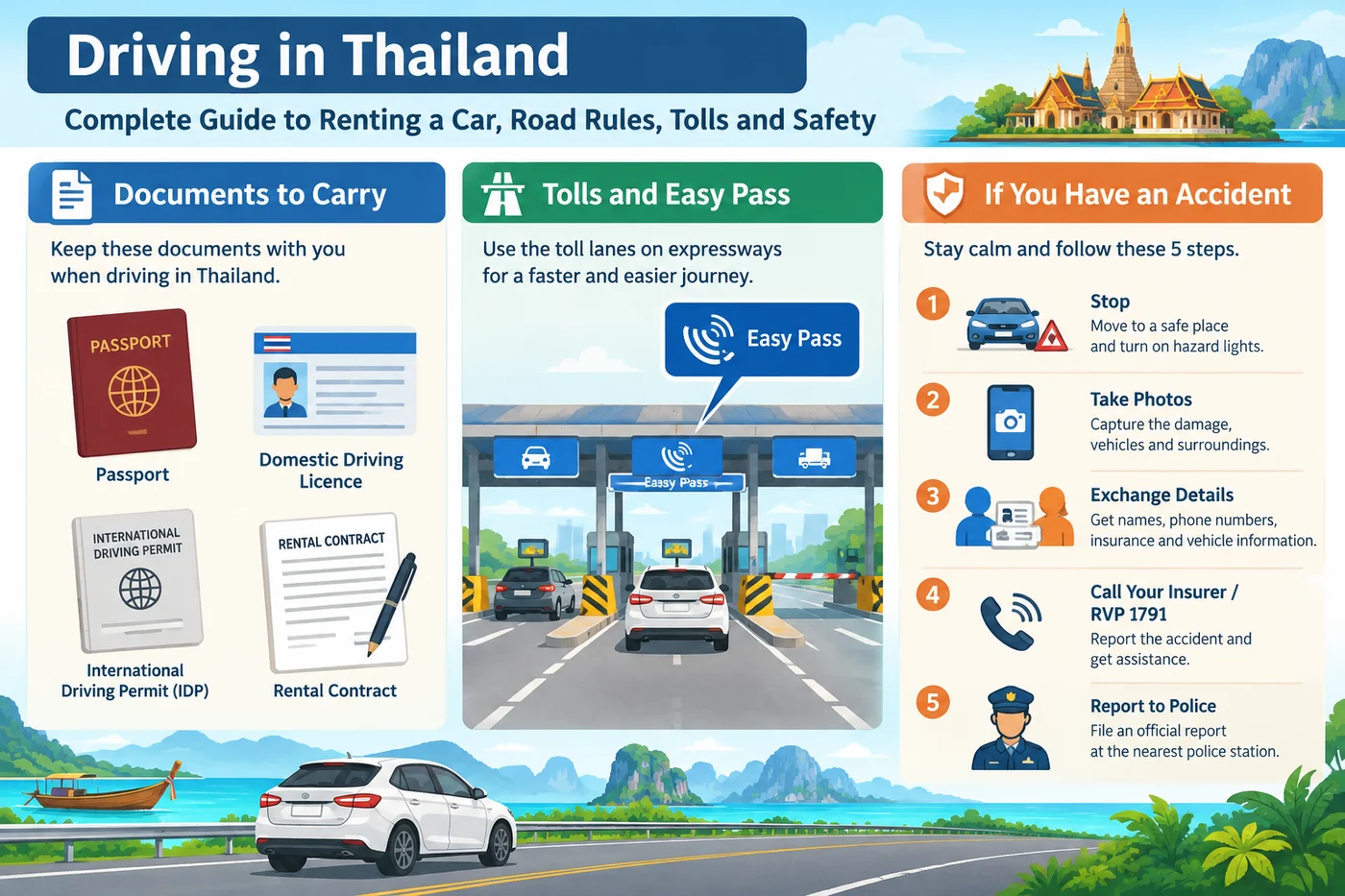
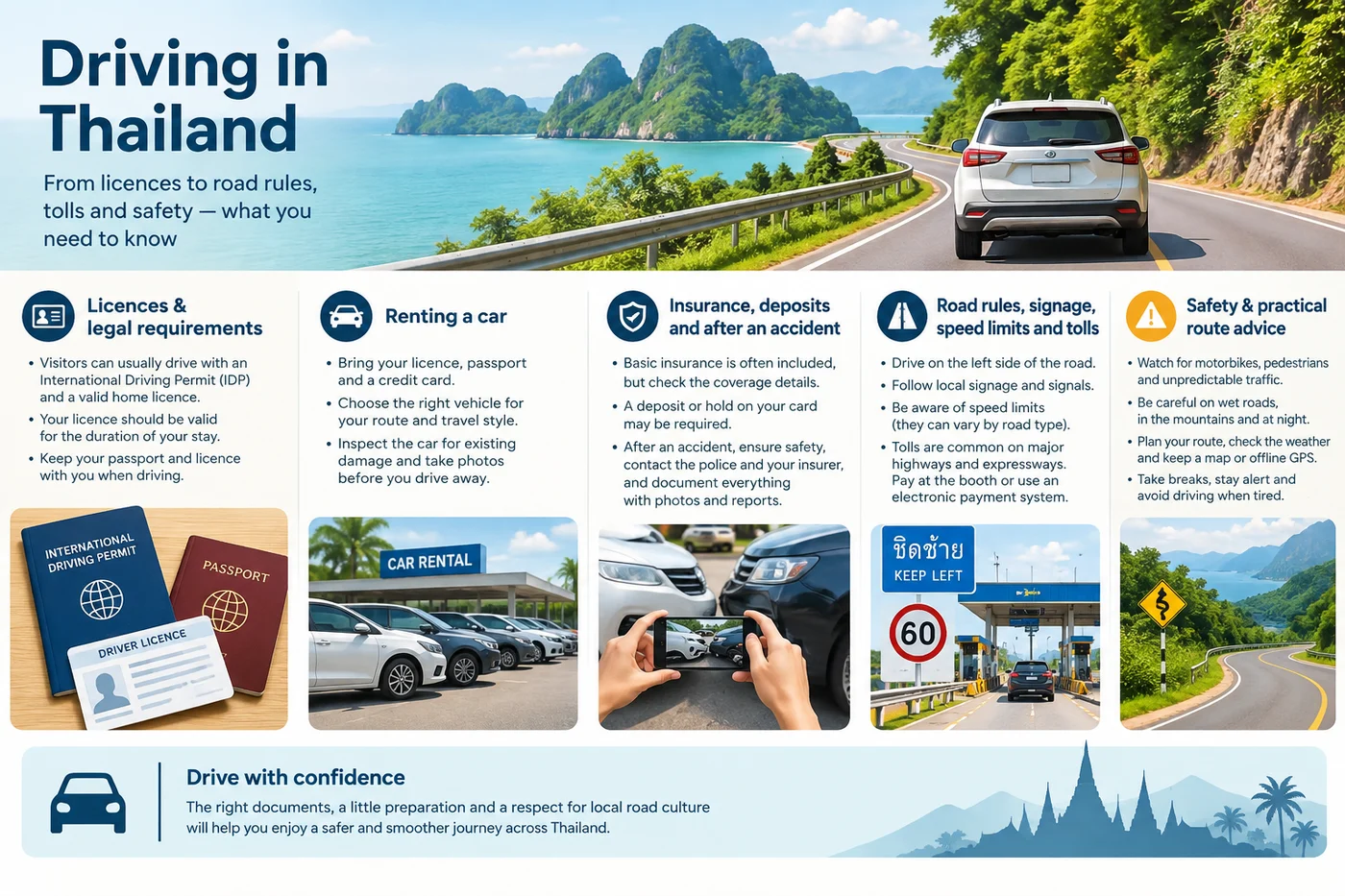
Who can legally drive: foreign visitors may drive using a valid International Driving Permit (IDP – Geneva 1949 or Vienna 1968) or a recognised ASEAN licence (sometimes with an official English/Thai translation). Some travellers without a recognised licence can get a 30‑day temporary driving licence through the provincial Land Transport Office (often arranged by licensed travel agencies). These rules are set out by the Department of Land Transport; because licence recognition and procedures change, always verify requirements before you travel. Carry your passport, domestic licence and any IDP while driving.
Renting a car: requirements, vehicle choice and inspection
Major rental companies typically require a valid domestic driving licence plus, in practice, an IDP for many nationalities, a credit card in the main driver's name and a minimum age (commonly 21; some vehicle classes require older drivers). Policies vary by company and branch—check terms before booking.
Choosing a vehicle: match car size to roads and luggage. Small cars suit city and highway trips; pick an SUV or pickup for remote routes or rough rural roads. For mountain passes, a small, nimble car or compact SUV is easier to handle.
Before you drive: inspect the vehicle with staff and photograph any existing damage. Confirm fuel policy, mileage limits, cross‑border permissions, one‑way fees and whether the rental includes an electronic toll device (many Bangkok branches supply Easy Pass-compatible tags). Get all coverage and excess details in writing.
Insurance, deposits and what to do after an accident
Thailand has compulsory motor insurance (the Protection for Motor Vehicle Victims, often referred to as Por Ror Bor) administered by local bodies; rental firms also offer optional CDW/LDW and third‑party policies. Ask what the compulsory cover does and does not pay for, and which actions (e.g., driving off‑road or driving without the correct licence) could void coverage.
If you’re in a collision: 1) Stop, switch on hazard lights and protect the scene. 2) Check injuries and call emergency services if anyone is hurt. 3) Photograph vehicles, damage, licence plates and the location. 4) Exchange names, contact and insurance details. 5) Contact your rental company and insurer and, if applicable, the Road Accident Victims Protection contacts (RVP hotline: 1791). Report to the local police if required and obtain an official record—insurers and rental companies will usually demand it.
Road rules, signage, speed limits and tolls
Drive on the left; most cars are right‑hand drive. Seatbelts are mandatory for front-seat passengers; motorbike helmet laws are enforced for riders.
Speed benchmarks: posted limits vary—typical national limits are roughly 80 km/h in urban areas, 90 km/h on rural roads and up to 120 km/h on motorways—but always obey local signs and municipal limits.
Drink driving: Thailand enforces low blood alcohol limits (≤ 0.05 g/dL for most drivers, lower for novices). Random breath testing is common.
Tolls: Bangkok expressways and major highways use electronic tolling (Easy Pass / EXAT ETC). Many rental companies issue or can fit a transponder; otherwise use cash lanes where available. Register and top up Easy Pass accounts using official EXAT channels and keep balances positive to avoid fines or delays.
Safety, common hazards and practical route advice
Thailand’s roads feature many motorcycles, tuk‑tuks and occasional heavy trucks—expect unpredictable lane changes and differing lane discipline. Rainy-season hazards include flooding and poor visibility; avoid driving through standing water. Night driving in rural areas raises risks from unlit vehicles, animals and slower emergency response times—if possible, finish long drives before dark.
When city-driving in Bangkok: allow extra time, use GPS and park only in marked bays or guarded car parks. For some congested or narrow routes—especially in islands and old towns—consider a local driver rather than self-driving.
Cross-border travel: if you plan to bring a foreign-registered vehicle into Thailand or leave the country by road, check the Department of Land Transport’s Foreign Vehicle Permit rules. Permit durations, quotas and fees are time-sensitive; confirm details well ahead of your trip.
Practical Tips
Carry passport, domestic licence and an IDP. Photograph the rental car at pick‑up. Confirm insurance coverage and excess in writing. Use EXAT Easy Pass for Bangkok expressways and keep the account topped up. Avoid night driving in rural or mountain areas. Keep RVP hotline (1791) and your rental contact handy.
Important Considerations
Rules, FVP quotas, rental terms and toll arrangements change—verify DLT, EXAT and your rental company before departure. Insurance can be voided by driving outside permitted roads or without the correct licence class. In disputes with police, request an official receipt or report.
Planning more of your trip? Browse our
Thailand Travel Guides
for more practical Thailand travel information.
Final Thoughts
Self-driving in Thailand gives freedom to explore beyond train and bus routes, but it requires preparation: the right licences, careful rental checks, the correct insurance and defensive driving habits. When in doubt—especially for tricky mountain passes or congested city centres—hire a local driver or choose a different transport mode. See HotelForU’s road-trip itineraries for suggested self-drive routes and where renting a car makes the most sense.
Sources & Further Reading
- Department of Land Transport — Foreign Vehicle Permit (FVP) manual
- Expressway Authority of Thailand — Easy Pass (EXAT ETC)
- Road Accident Victims Protection Company (RVP) — information and hotline
- World Health Organization — Thailand road safety status
Transport schedules, fares and operating rules can change. Always verify time-sensitive details with the official operator before travel.