

HOTEL GUIDE
Responsible Travel in Thailand: A Practical Guide
A clear, actionable guide for international visitors on how to minimise environmental and social impacts while travelling in Thailand. Includes checklists, questions to ask operators and trusted resources.
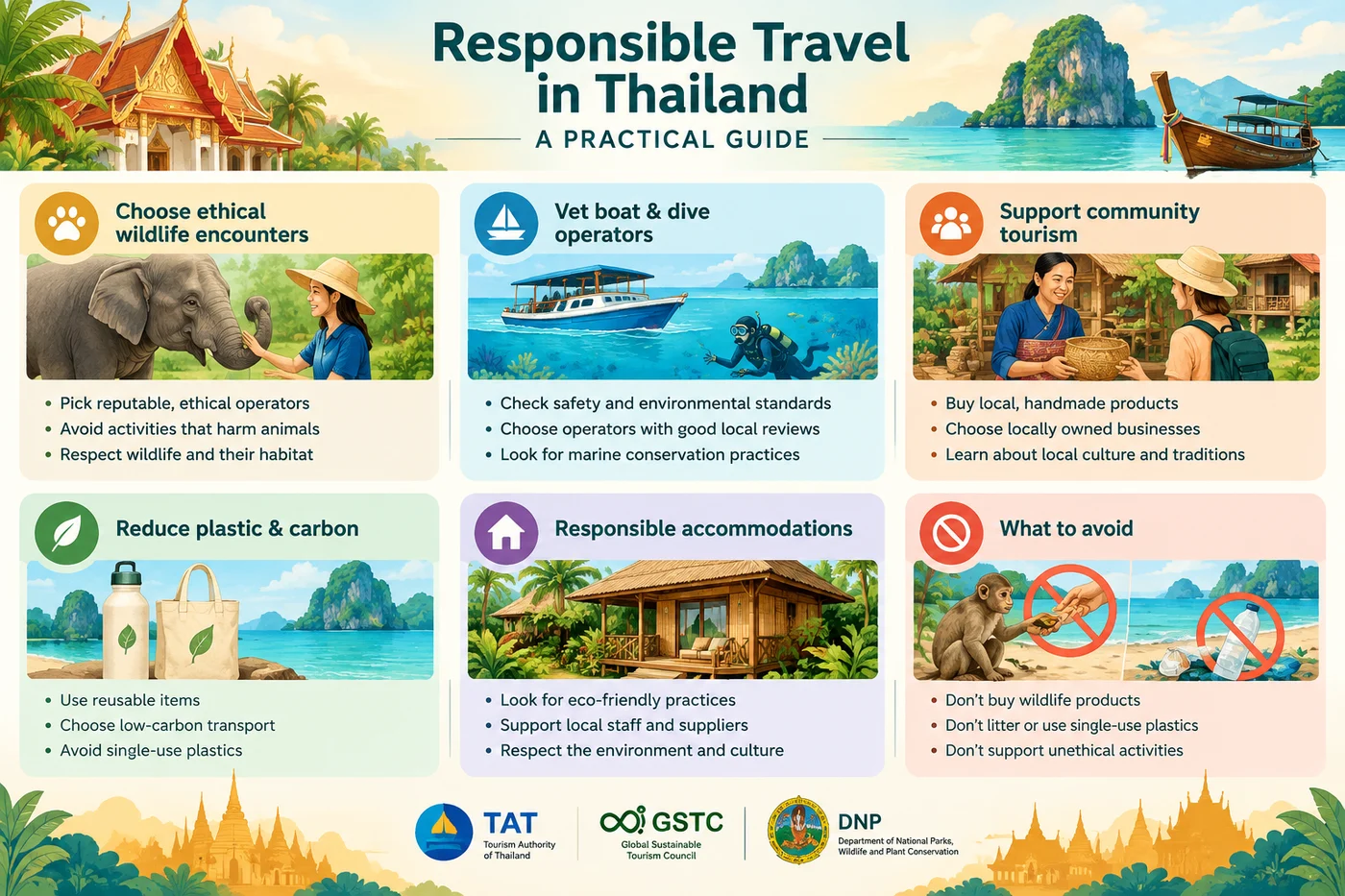
If you want to travel lightly and respectfully, this guide explains how to practise responsible travel Thailand from arrival to departure. It focuses on practical decisions—how to choose ethical wildlife experiences, vet dive and boat operators, support community-led tourism, avoid harmful voluntourism, reduce waste and carbon, and what to avoid.
Key Takeaways
- Prioritise observation-based wildlife encounters and verify animal-welfare claims with independent standards.
- Support community-based tourism and certified operators (GSTC, TAT Green Tourism) to channel benefits locally.
- Reduce single-use plastics, choose low-impact transport, and ask straightforward questions before you book.
Responsible travel Thailand: how to start
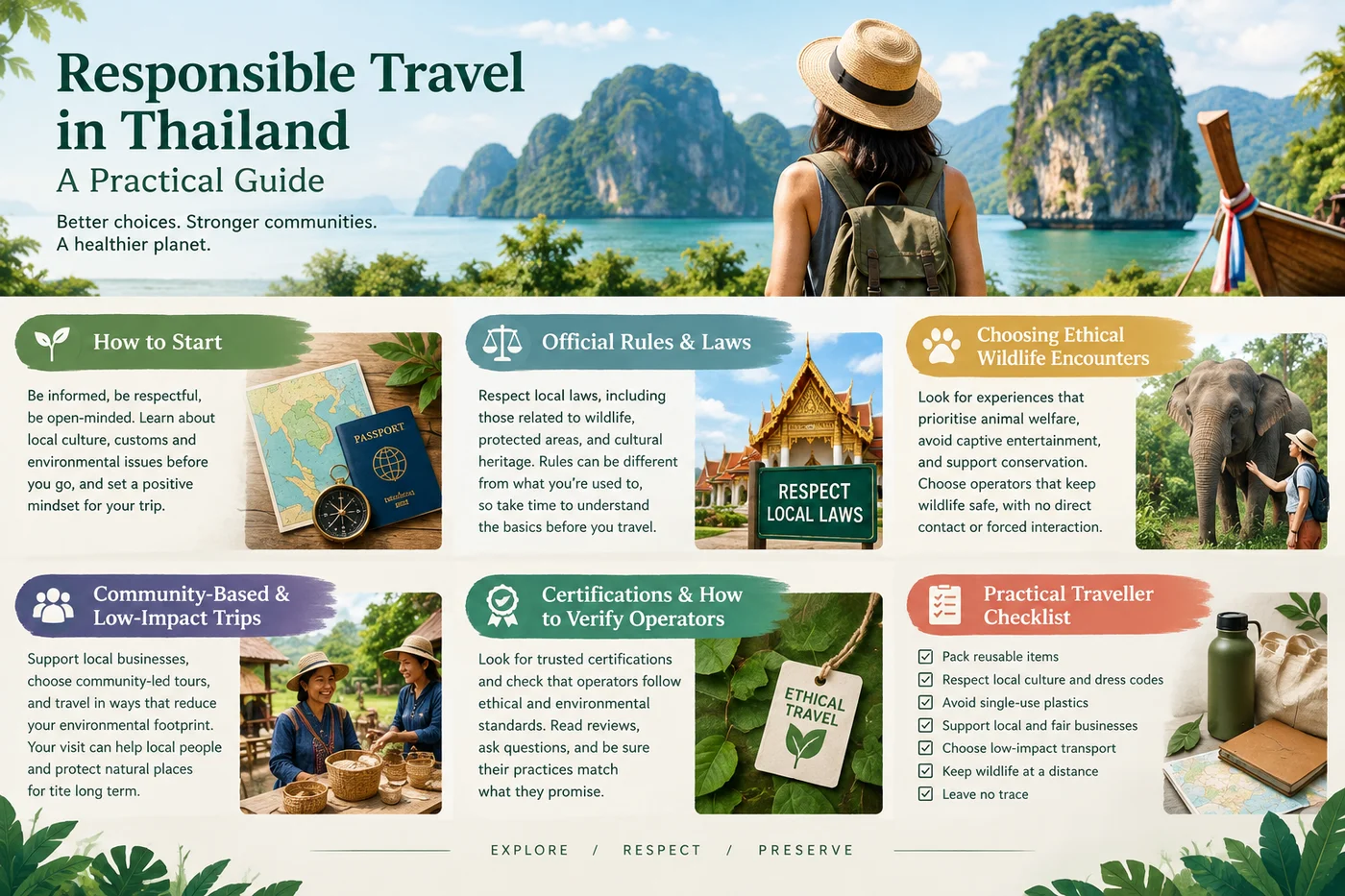
Start with research. Look for operators linked to recognised standards (the Global Sustainable Tourism Council/GSTC framework) and official Thai initiatives—TAT’s 'One for Nature' and Green Tourism Collections promote low-impact products and community links. Check that wildlife encounters align with national rules: Thailand’s Department of National Parks (DNP) requires visitors to follow park regulations (do not touch or feed wild animals; stay on routes) and the Wild Animal Reservation and Protection Act sets legal controls over protected species. Accept that labels such as 'sanctuary' or 'rescue' do not guarantee welfare—verify independently.
Official rules & laws to know
Respect Thailand’s protected-area rules and wildlife laws. National-park guidance (DNP) explicitly advises against feeding or touching wild animals and requires visitors to follow visitor rules. The Wild Animal Reservation and Protection Act (B.E. 2562 / 2019) regulates interactions with protected species and permits for handling animals. Operators should be able to show permits where required. If an activity seems to encourage close contact with wild animals, ask for the relevant DNP permit and an explanation of animal-care practices.
Choosing ethical wildlife encounters
Aim for observation-led experiences rather than direct contact. For elephants, tiger displays, primates or marine life, avoid rides, bathing, photo props or shows. Recent field assessments show many elephant venues still offer rides or close contact; observation-only and high-welfare alternatives are increasing but must be checked. Use this quick vetting checklist when evaluating a wildlife attraction:
- Does the venue prohibit riding, forced performances and close-contact photo ops?
- Is there transparent information about the animals’ origins, care and any breeding history?
- Can the operator show independent welfare assessments or partnerships with reputable NGOs?
- Are interactions supervised by qualified, local animal-care staff rather than entertainers?
If answers are unclear, choose a licensed national-park safari, boat-based marine-sighting trip, or a reputable NGO-run observation programme. Donate to vetted rescue organisations rather than paying for 'hands-on' access.
Community-based & low-impact trips
Choose trips that return value to local communities. Thai organisations such as TEATA and DASTA work to develop community-linked products—look for tours that hire local guides, use local homestays and have transparent revenue-sharing. Community-based tourism models should demonstrate local governance, clear incomes for families and cultural respect (no staged performances or pressure to sell). Short examples of good practice: homestays with guest limits, locally guided nature walks, cultural workshops run by community members, and listed experiences in TAT’s Green Tourism Collections. Ask operators how payments reach hosts and whether tours cap visitor numbers to avoid overuse.
Certifications & how to verify operators
Use credible standards to separate marketing from genuine practice. The Global Sustainable Tourism Council (GSTC) provides internationally recognised criteria; TAT’s Green Tourism Collections and the 'One for Nature' campaign are useful national signposts. When vetting hotels, dive shops or boat operators check for:
- GSTC recognition or equivalent hotel/tour-operator certification
- Written environmental policies (waste, energy, water) and recent audit results
- Evidence of reef-safe dive practices: mooring buoys, dive briefings on reef hygiene, and bans on harmful chemicals
- Clear anti-plastic measures and waste-management plans
Ask these questions before booking: 'Do you have independent sustainability certification?', 'Can you show your DNP permit (for wildlife activities)?', and 'How do you ensure reefs are not damaged by diving or anchoring?' Keep answers and receipts as proof if you plan to report issues.
Practical traveller checklist
Pack and act to reduce impact:
- Reusable water bottle, travel filter and refill plan (many hotels on HotelForU.net now offer refill stations).
- Reef-safe sunscreen (mineral-based) and reef-friendly toiletries.
- Lightweight first-aid kit and consider rabies pre-exposure advice if you'll be in contact with animals or remote areas.
- Bring reusable bags and refuse to buy single-use plastic when possible.
- Choose low-carbon transport where practical: trains, buses and shared transfers over private flights for short hops.
Before booking tours: ask for proof of permits, independent certifications and a written animal-welfare policy. Sample operator questions: 'Do you allow visitors to touch or feed wild animals?', 'Where do your animals come from and are they bred for tourism?', 'How are tour fees shared with host communities?'
Practical Tips
Be sceptical of emotional marketing—photos of close contact do not prove welfare. If you witness clear abuse, report to local park authorities (DNP) and keep documentable evidence. Use official resources (TAT, GSTC) to find vetted operators. Support local businesses directly—buy crafts from co-ops rather than street vendors who may source wildlife parts. Keep plastic out of the environment: carry a small rubbish bag for day trips.
Important Considerations
Labels like 'sanctuary' are not guarantees—verify independently. Volunteering with animals often does harm: avoid programmes that require paying to handle or train animals. Laws, certifications and venue conditions can change; re-check permits and recent audits before travel. Health risks exist when contacting wildlife—seek travel-health advice for rabies prevention if relevant.
Planning more of your trip? Browse our
Thailand Travel Guides
for more practical Thailand travel information.
Final Thoughts
Responsible travel in Thailand is both achievable and rewarding. With a little upfront research, simple questions and modest behaviour changes you can enjoy wildlife, islands and communities while limiting harm and amplifying benefits for local people. Use recognised standards (GSTC), follow DNP rules in protected areas and prioritise observation, transparency and local leadership when you book.
Sources & Further Reading
- Tourism Authority of Thailand (TAT) — One for Nature / Green Tourism
- Global Sustainable Tourism Council (GSTC) — About / Industry Criteria
- Department of National Parks, Wildlife and Plant Conservation — Wild Animal Reservation and Protection Act (official text)
- World Animal Protection — captive elephants and welfare report (2026)
Transport schedules, fares and operating rules can change. Always verify time-sensitive details with the official operator before travel.