HOTEL GUIDE
Thailand Ferries & Island Boats: The Complete Guide to Routes, Tickets, Safety and Transfers
Practical, up-to-date advice for international travellers on boat travel in Thailand: which vessels run which routes, how combined tickets work, safety basics and day-of-travel checklists.
This Thailand ferry guide explains how island and mainland–island boat travel actually works so you can plan transfers with confidence. Read this before you book: vessel types, main piers and routes, how combined bus+ferry tickets work, safety basics, weather risks and day-of-travel checklists.
Key Takeaways
- Choose vessel type to match luggage, comfort and sea conditions—fast catamarans for daytime passenger crossings, car ferries for vehicles, longtails/speedboats for short hops.
- Buy combined bus+ferry tickets on major mainland–island routes to protect connections and simplify transfers.
- Check weather (Thai Meteorological Department) and operator timetables on the day of travel—small boats are most likely to be cancelled in rough seas.
Thailand ferry guide: overview
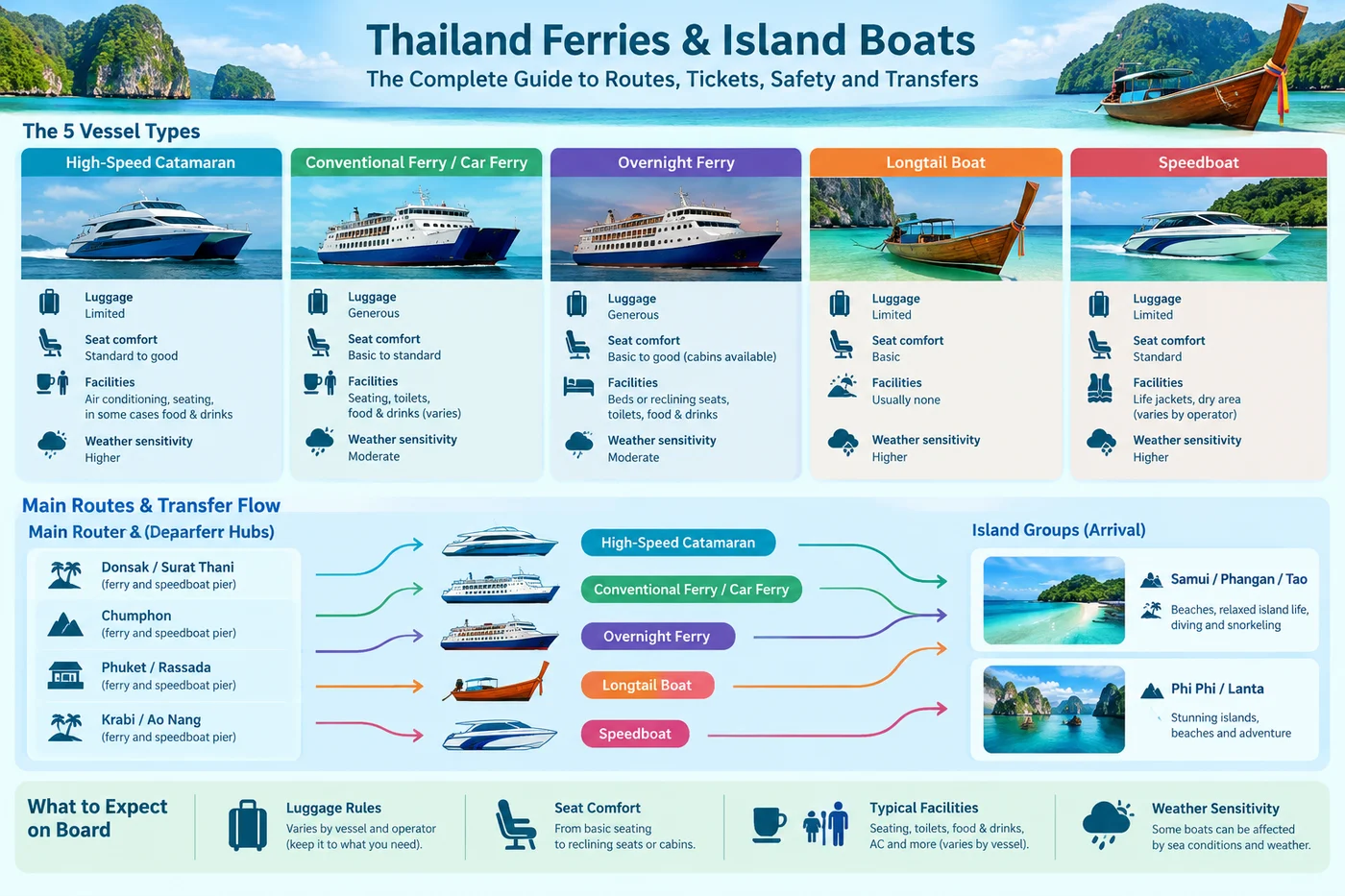
Thailand’s island network is split between the Gulf of Thailand (east) and the Andaman Sea (west). Each coast has different monsoon patterns, so route reliability changes by season. Three service types dominate: high-speed catamarans and fast ferries for daytime foot passengers; car-and-foot ferries for vehicles and luggage; and small speedboats or longtail boats for short hops and remote landings. Operators and piers vary by route—confirm the exact departure pier on your ticket.
Vessel types, typical routes and piers
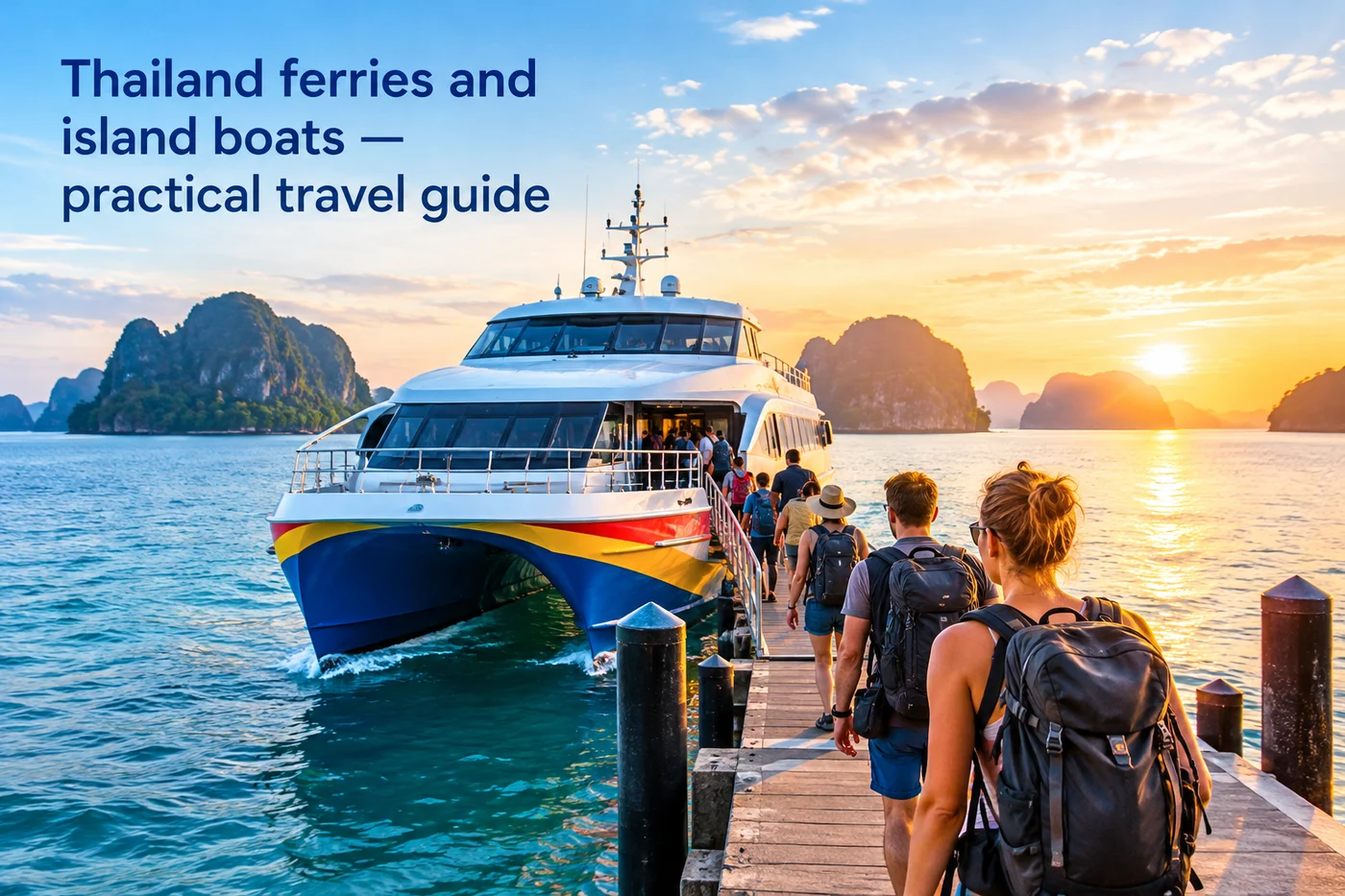
High-speed catamarans (day crossings): common on busy mainland–island links such as Surat Thani (Donsak) to Koh Samui/Koh Phangan and Chumphon to Koh Tao. They offer indoor seating and quicker crossings but can be bumpy in rough seas.
Conventional and car ferries: carry vehicles and foot passengers; usually larger and steadier, useful if you have bulky luggage or a rental car.
Speedboats & longtail boats: used for short island hops, remote beaches and day trips. These are most weather-sensitive and often suspend services during the monsoon.
Main piers to check (examples to confirm with your operator): Donsak/Surat Thani for Samui/Phangan, Chumphon/Thung Makham Noi for Koh Tao, Phuket/Rassada and Krabi/Ao Nang piers for Phi Phi and Lanta. Pier names matter—operators may use different landings on the same island.
Booking, combined tickets and transfers
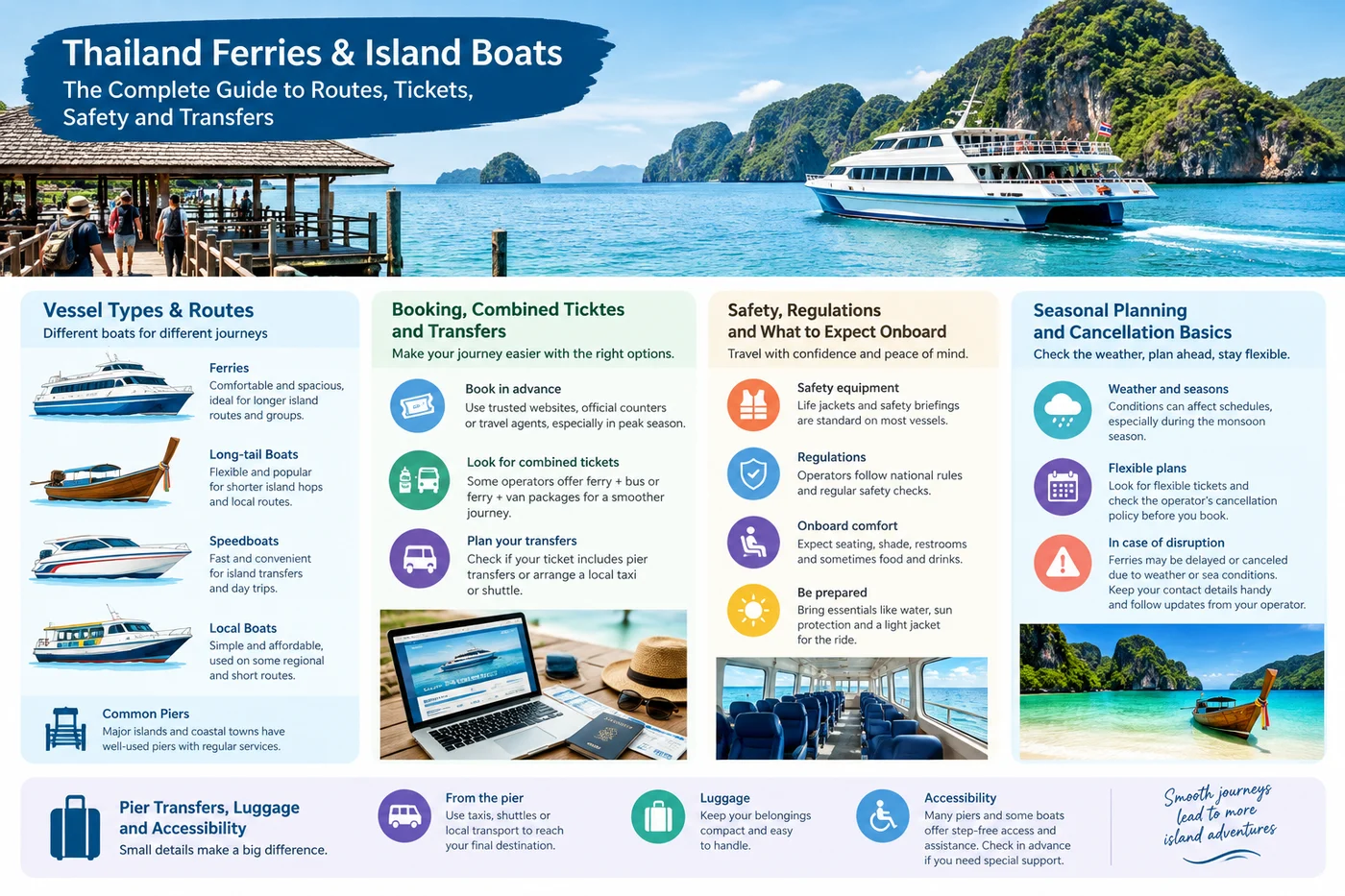
Combined bus+ferry tickets are widely available on major routes (for example mainland to Koh Samui/Phangan/Tao). They synchronise land and sea legs and offer protection if a connecting bus is delayed—operators and reputable agents will rebook you on the next service if the delay is their responsibility. Booking channels: official operator websites/ticket offices, trusted local agents and reputable aggregators. When possible, prefer the operator’s confirmation for pier names and boarding instructions, because third‑party listings sometimes show different departure points. Keep digital and printed confirmations; note any luggage or check‑in deadlines printed on the ticket.
Safety, regulations and what to expect onboard
Thailand’s Marine Department enforces passenger-safety regulations and requires vessels to carry lifejackets and safety equipment; official guidance urges passengers to wear lifejackets when instructed and follow crew directions (see Marine Department: md.go.th). Expect basic safety briefings on larger ferries; small boats may offer brief instructions only. Facilities vary: larger catamarans commonly have toilets and indoor seating; small speedboats and longtails are exposed and offer limited facilities. Keep essential medication and motion-sickness remedies in your hand luggage. Emergency hotlines published by government sources include the Marine Department hotline (1199) and medical emergency (1669).
Seasonal planning and cancellation basics
The Andaman coast’s rough season typically runs with the southwest monsoon (roughly mid‑May to mid‑October), while Gulf islands often see heavier rains around October–December—check the Thai Meteorological Department (tmd.go.th) for forecasts. Small-boat services and remote-landing speedboat legs are the most likely to be reduced or cancelled in rough weather; major operators may alter timetables at short notice. Cancellation and refund policies differ by operator and ticket type—always read the terms when you buy. If you hold a combined transfer ticket, the operator often manages rebooking; if you booked separate legs, you’ll need to coordinate refunds or rebookings yourself.
Pier transfers, luggage and accessibility
Plan last‑mile logistics: some piers are a short walk from town while others require a tuk‑tuk or hotel transfer. Confirm which pier your ticket uses (e.g., Nathon vs Bangrak on Koh Samui) because transfer time and cost can vary. Luggage rules depend on vessel type—fast ferries typically accept checked bags but longtails expect carry‑on only. For travellers with reduced mobility, ask the operator in advance; larger car ferries and major catamarans are likelier to have ramp access, but assistance standards vary and should be arranged ahead of time.
Practical Tips
Before you travel: 1) Verify the operator’s timetable and pier on the official website; 2) Buy combined bus+ferry tickets on major mainland–island routes to protect connections; 3) Pack motion-sickness meds, a small dry bag, ID and printed/digital tickets in your carry-on; 4) Arrive at the pier at least 30–60 minutes before check-in (check your ticket); 5) If weather looks bad, confirm morning sailings the night before.
Onboard etiquette: follow crew instructions, secure luggage, avoid crowding bow/stern, and wear a lifejacket if asked.
Important Considerations
Do not rely on secondary aggregators for exact piers—when in doubt, confirm with the operator. Avoid assuming year-round operation for small speedboats: many routes are seasonal. Never publish or rely on fixed fares or crossing times—these change by season and operator.
Planning more of your trip? Browse our
Thailand Travel Guides
for more practical Thailand travel information.
Final Thoughts
Use this Thailand ferry guide as a planning framework: choose the vessel that fits your luggage and comfort priorities, buy combined transfers where practical, and check weather and operator timetables on the day. For destination specifics and hotel transfers, see HotelForU.net’s island guides to match piers with resorts and onward transport.
Sources & Further Reading
- Thailand Marine Department (passenger safety guidance)
- Thai Meteorological Department (weather forecasts)
- Lomprayah high-speed ferry operator (route examples & combined tickets)
- Raja Ferry (car and foot ferry operator / piers)
Transport schedules, fares and operating rules can change. Always verify time-sensitive details with the official operator before travel.