HOTEL GUIDE
Halal Food in Thailand: A Practical Traveler’s Guide
Where to find halal food in Thailand, how certification works, safe menu choices, Thai phrases to ask about ingredients, and sensible tips for airports, street food and Ramadan.
Finding reliable halal food in Thailand is usually straightforward if you know where to look and how certification works. This guide explains how halal food in Thailand is certified, where Muslim-friendly choices are most common, what dishes and sauces are safe, the Thai phrases to use, and practical tips for airports, markets and Ramadan travel.
Key Takeaways
- Look for the official CICOT halal logo or a visible certificate; provincial Islamic committees also inspect local businesses.
- Halal options are widespread in southern provinces and major tourist hubs—verify meat handling and cross-contamination in mixed kitchens.
- Use simple Thai phrases, apps and CICOT’s online checker to confirm a restaurant or packaged product before you eat.
What 'halal' means in Thailand
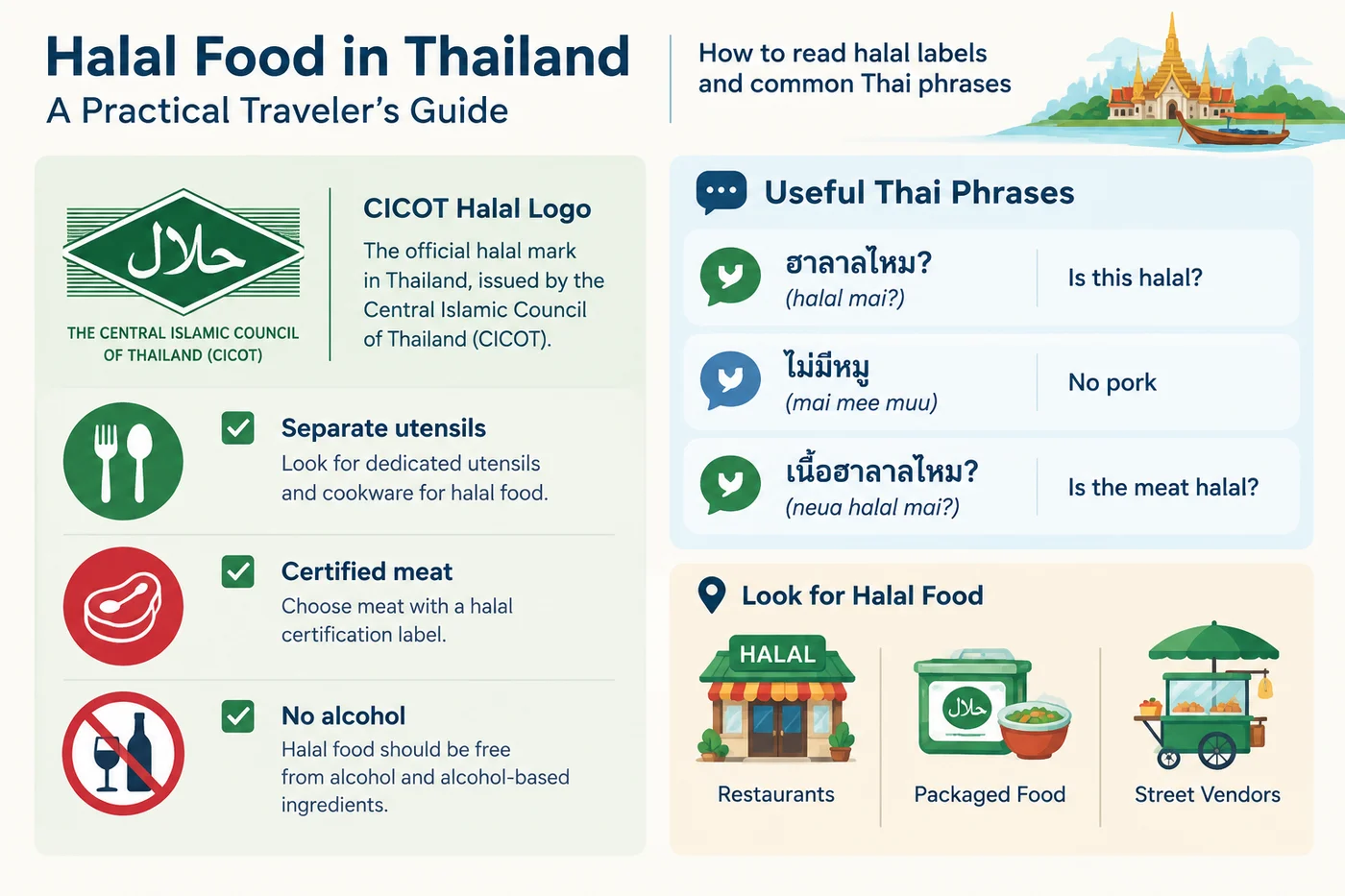
In Thailand the Central Islamic Council of Thailand (CICOT) is the national authority for halal certification. CICOT issues the official halal logo and works with provincial Islamic committees and technical labs such as Chulalongkorn University’s Halal Science Center for testing. A valid certificate indicates products or restaurants follow halal slaughter, ingredient rules and controls against cross-contamination—important details beyond simply being “no pork.”
How halal certification works
CICOT sets national rules and inspects or approves businesses; provincial Islamic committees handle much of the local work. The Halal Science Center provides laboratory testing used by certifiers (for example, porcine-DNA and alcohol testing). CICOT publishes official regulations and a list of recognized foreign certifiers, and maintains online tools to check the status of a business or product certificate. Certification lists and recognition of foreign bodies change over time, so verify a specific restaurant or packaged product using CICOT’s online resources before relying on a logo.
Where to find halal food in Thailand
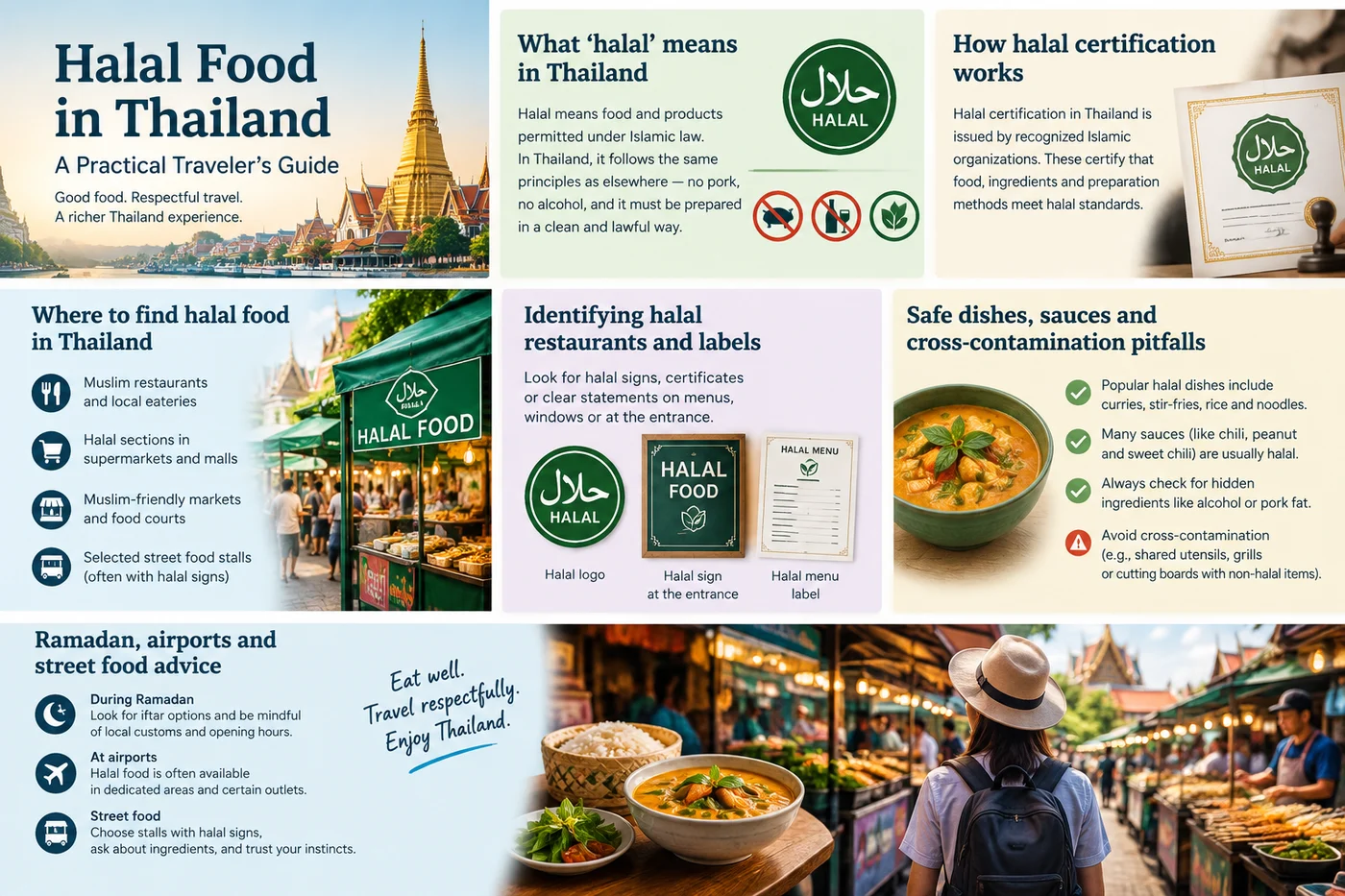
Halal food in Thailand is most common in the Muslim-majority southern provinces (Pattani, Yala, Narathiwat and parts of Songkhla and Satun). Major cities and tourist hubs—Bangkok, Phuket, Hat Yai, Pattaya and Chiang Mai—also have many halal restaurants, Muslim-owned eateries and halal-certified fast-food outlets. In tourist areas you’ll often find halal signs near popular attractions; in southern Thailand almost all local restaurants and markets cater to Muslim diets. For city-specific dining, see HotelForU’s Bangkok restaurant guides for halal listings and neighborhood suggestions.
Identifying halal restaurants and labels
The most reliable on-site indicator is a framed CICOT certificate or the official CICOT halal logo. Many packaged Thai brands also carry CICOT or recognized halal marks—check each product individually. Be cautious: some restaurants are Muslim-run and serve halal food without formal certification; asking about the source of meat and cooking practices is wise.
Useful Thai phrases to ask quickly:
– 'อาหารฮาลาลไหม? (ahaan halal mai?)' — Is the food halal?
– 'ไม่มีหมู (mai mee muu)' — No pork
– 'เนื้อฮาลาลไหม? (neua halal mai?)' — Is the meat halal?
– 'มีแอลกอฮอล์ไหม? (mee alcohol mai?)' — Any alcohol?
If you need to verify a certificate, check the CICOT online checker (official site listed below).
Safe dishes, sauces and cross-contamination pitfalls
Many classic Thai dishes can be halal-friendly if prepared correctly: tom yum (without fish sauce that contains non-halal ingredients in rare cases), som tam (ask for no dried shrimp or fish sauce), pad thai (confirm the protein and that shrimp paste isn’t used), and green or red curry with halal meat. Avoid dishes that commonly include pork, shellfish or fermented sauces unless verified.
Watch sauces and condiments: fish sauce and shrimp paste are common and acceptable for many Muslims but are not “halal meat” — confirm if that aligns with your practice. Cross-contamination is a common issue in mixed kitchens—ask if separate pans, oil and utensils are used for halal orders. If a vendor serves both pork and halal customers, insist on separate cooking areas or choose certified outlets.
Eating during Ramadan, airports and street food advice
During Ramadan, many mosques and Muslim-run restaurants offer iftar meals—southern Thailand and city mosques are good places to find community dining. Airports in Thailand increasingly offer halal-certified options; still, verify airport restaurant certification if you rely on halal meals for a long flight.
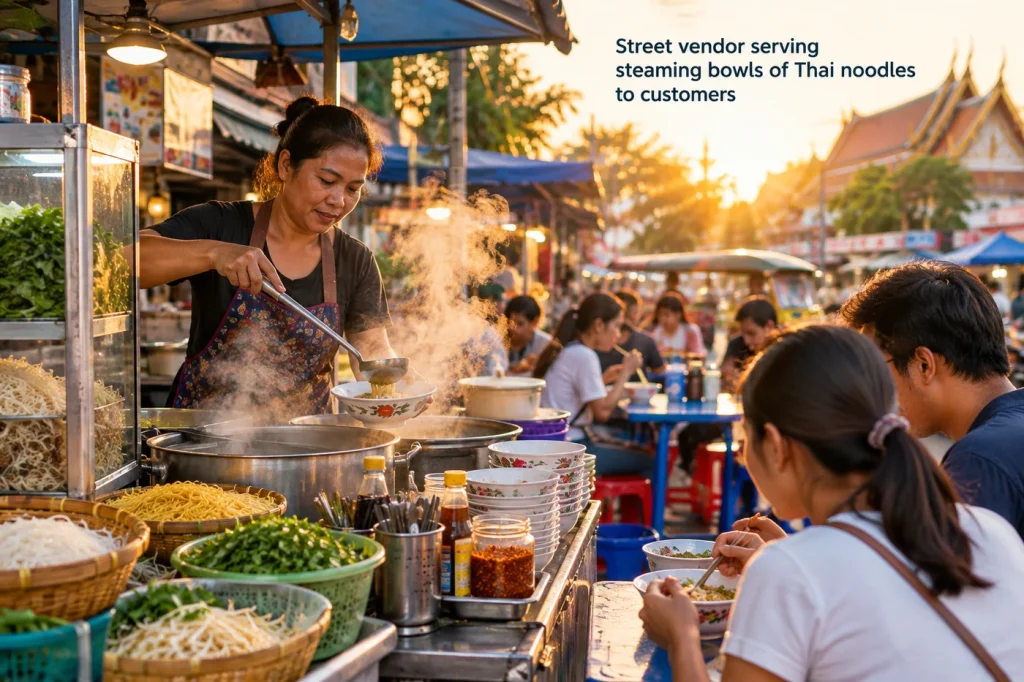
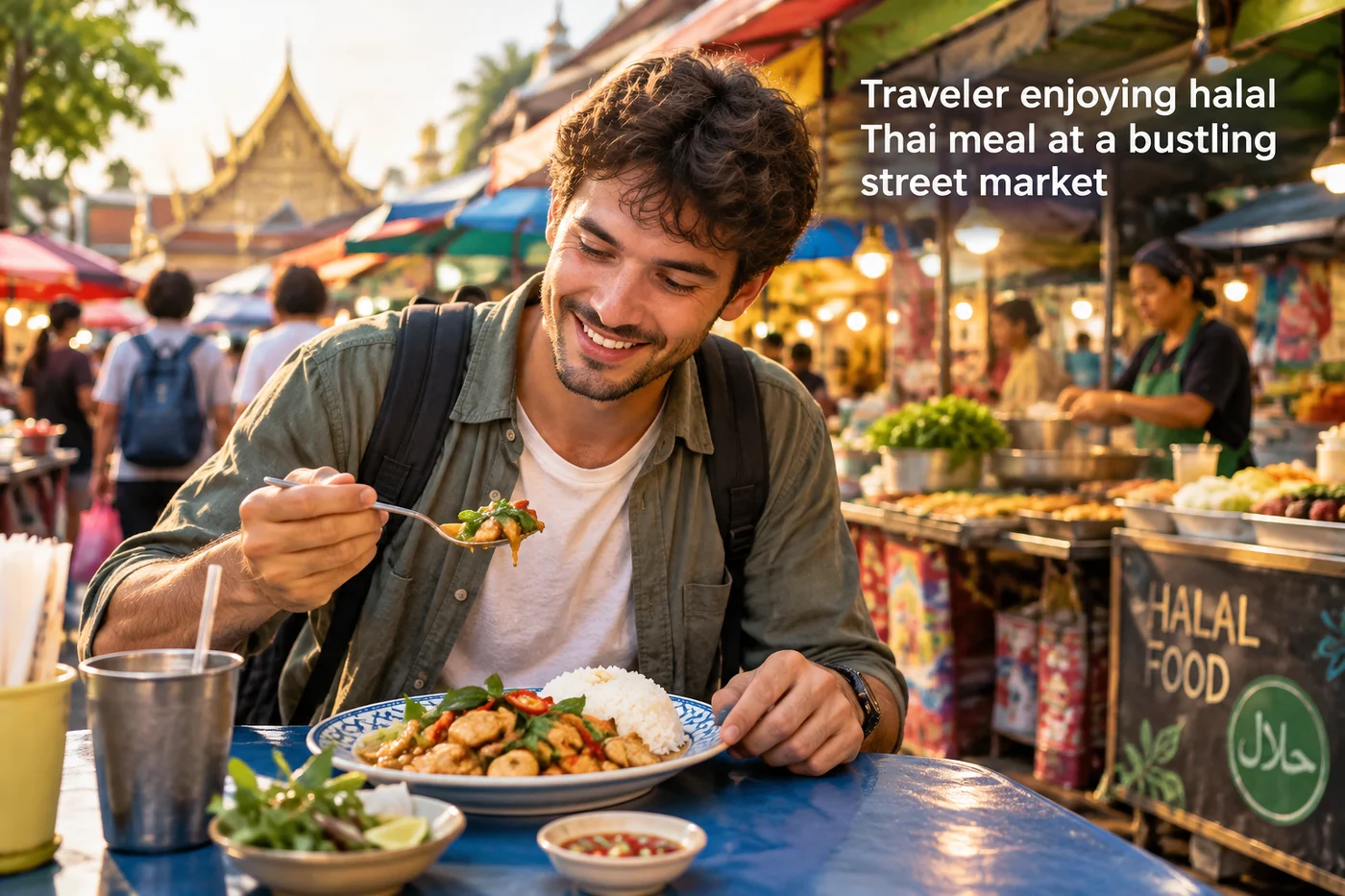
Street food: do look for Muslim vendors (many will display halal signs or be visibly Muslim-run) and prefer busy stalls with high turnover. Use apps and review sites to confirm recent halal reviews, but always ask onsite for specifics about meat source and cooking practices.
Practical Tips
• Check the CICOT logo or certificate; verify with CICOT’s online checker.
• Use short Thai phrases above and carry a screenshot of 'halal' in Thai to show vendors.
• Prefer certified restaurants, busy Muslim-run stalls, or packaged foods with CICOT marks.
• Ask about separate utensils, oil and pans to avoid cross-contamination.
• Re-check certification for packaged products and foreign certifiers—lists change over time.
Important Considerations
• Do not assume 'no pork' equals halal—proper slaughter and separation matter.
• Halal availability is uneven outside southern provinces and major tourist hubs; plan ahead.
• CICOT certifications and recognized foreign certifiers can change—verify current status via CICOT before you travel.
Planning more of your trip? Browse our
Thailand Food & Restaurant Guides
for more practical Thailand food and dining information.
Final Thoughts
Thailand offers many reliable halal options, especially in the south and major tourist centers. A little preparation—looking for CICOT certification, using simple Thai phrases, and checking for separate cooking—lets you dine confidently. When in doubt, verify the certificate online or choose clearly Muslim-owned establishments.
Sources & Further Reading
- Central Islamic Council of Thailand (CICOT) — Halal Thai (official)
- The Halal Science Center, Chulalongkorn University
- Visit-Thailand editorial: Vegetarian and Halal Food in Thailand (Tourism Authority)
Transport schedules, fares and operating rules can change. Always verify time-sensitive details with the official operator before travel.