HOTEL GUIDE
Is Street Food Safe in Thailand? A Practical Traveler’s Guide
Clear, evidence‑based advice on Thailand street food safety: how to choose clean vendors, which dishes are lower risk, water and ice cautions, and what to do if you fall ill.
Thailand street food safety is a top question for visitors. Street food brings unrivalled flavour and value, but like anywhere, foodborne illness is possible. This practical guide uses official guidance (CDC, WHO/FAO and Thailand’s Ministry of Public Health) to explain real risks and give clear steps to reduce them so you can enjoy local food with confidence.
Key Takeaways
- Choose stalls with visible cooking, busy turnover and hot food — that lowers risk significantly.
- Avoid raw/undercooked items, unpeeled fruit, and drinks with local ice; use hand hygiene and bottled or sealed beverages.
- If you get sick, start with rehydration and local clinics; seek urgent care for high fever, severe dehydration or blood in stool.
Thailand street food safety — Quick answer
Yes — many travellers eat street food safely in Thailand, but risk varies by vendor practices and local infrastructure. The U.S. CDC warns that street food is a common source of travelers’ diarrhea, yet also stresses risk reduction steps you can control: eating food cooked and served hot, avoiding raw/undercooked foods and cut fruit you didn’t peel, avoiding local ice, and practising hand hygiene (CDC). Thailand’s Ministry of Public Health runs vendor hygiene programmes, but visible certification and local services vary by area and are being updated (see sources).
How Thailand regulates street food
Thailand has long promoted vendor hygiene campaigns such as 'Clean Food Good Taste'. Recently the Ministry of Public Health began transitioning to a new SAN / SAN Plus sanitary framework (a time‑sensitive change), so you may see older stickers alongside new signage. Official schemes require basic food‑handler training, sanitation criteria and local inspections, but enforcement and resources vary by province. Use certificates as one signal, not the only proof — pair them with direct observation of hygiene.
Health risks to know
The main concern is travelers’ diarrhea caused by bacteria, viruses or parasites. Other risks include typhoid and hepatitis A in places with poor sanitation, although these are less common. High‑risk groups — pregnant people, infants, older adults, and immunocompromised travellers — should be especially cautious and may want to avoid street food altogether for certain items. The WHO/FAO and CDC both emphasise that simple vendor practices (temperature control, hand hygiene, safe water) reduce most risks.
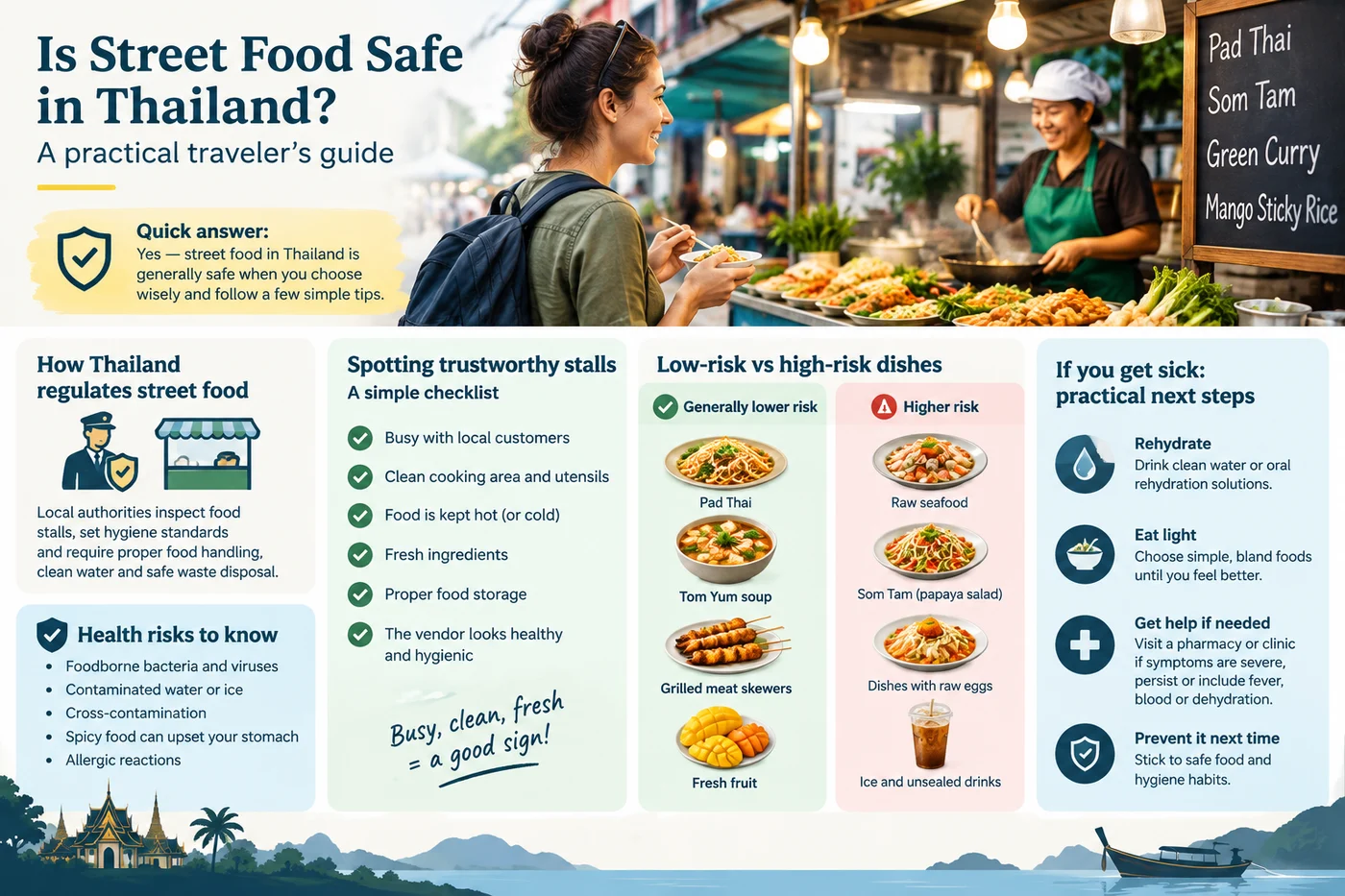
Spotting trustworthy stalls and a simple checklist
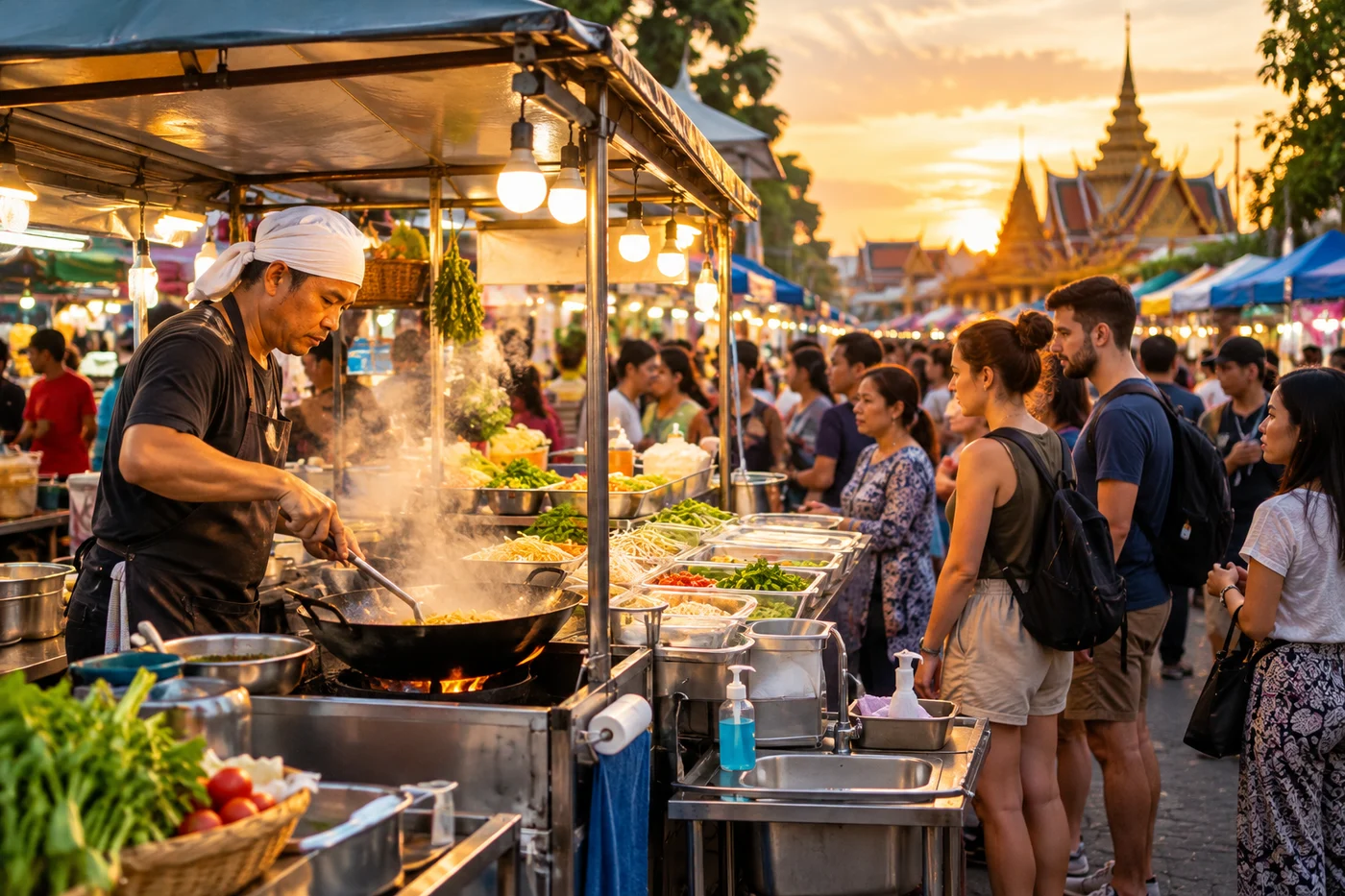
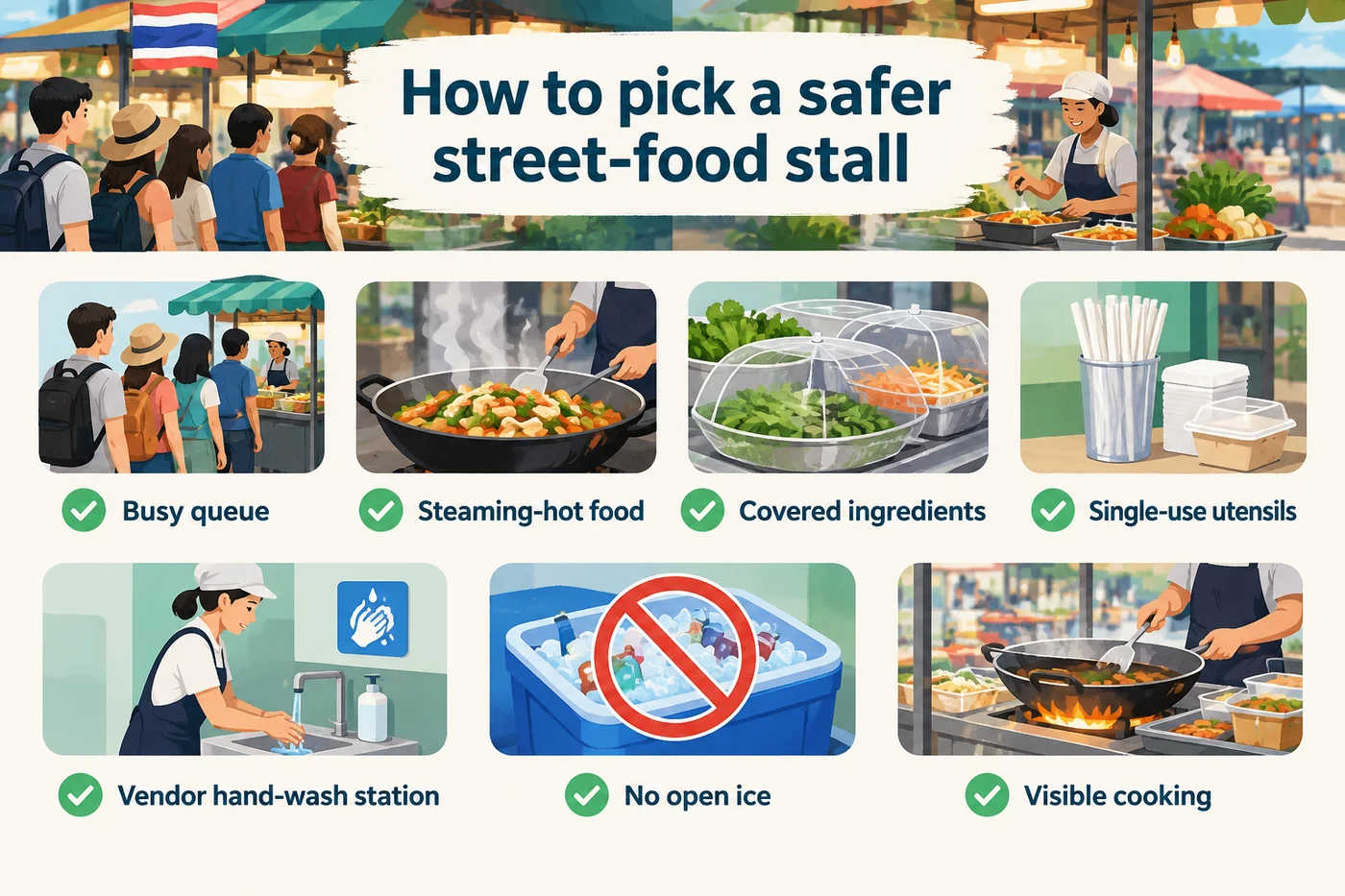
Look for signs a stall is lower risk: busy queue (high turnover), food cooked to order and served piping hot, covered ingredient trays and no open platters of raw items, staff using tongs or single‑use utensils, a visible hand‑wash station or hand sanitizer, and no use of local ice in drinks. Avoid stalls where food sits unrefrigerated for hours, where vendors handle cash and food without washing, or where seafood/shellfish looks slimy or sits at room temperature. When certified signs are present, note that the MOPH’s scheme is being updated — treat them as helpful but not absolute proof.
Low‑risk vs high‑risk dishes
Lower‑risk options: hot, freshly cooked dishes (pad thai, grilled meats, fried rice, noodle soups served steaming); fruits you peel yourself (bananas, mangosteen); factory‑sealed drinks. Higher‑risk items: raw or undercooked seafood (ceviche, raw oysters), undercooked meats, pre-cut salads or coleslaw that sit at ambient temperature, unpeeled fruit washed in local water, and drinks with ice from unknown sources. Favor stalls that cook in front of you and serve immediately.
If you get sick: practical next steps
Most mild cases can be managed with oral rehydration (ORS), rest and a simple diet (BRAT — bananas, rice, applesauce, toast) until symptoms ease. Over‑the‑counter loperamide can reduce diarrhea in adults (avoid if high fever or blood in stool). Seek medical attention for high fever, severe abdominal pain, persistent vomiting, signs of dehydration, or bloody diarrhoea. Local private clinics in major Thai cities are usually reliable; your travel insurance may require clinic/doctor reports for claims. If you’re unsure, contact your embassy or insurer for assistance. Keep digital photos of prescriptions and receipts.
Practical Tips
1) Always choose stalls where food is cooked and served hot; join queues. 2) Drink bottled or factory‑sealed beverages; decline local ice unless you can verify it’s from a sealed source. 3) Carry hand sanitizer and use it before eating; wash with soap when possible. 4) Avoid raw shellfish, undercooked meat and pre-cut salads. 5) If you have dietary restrictions or allergies, communicate clearly in writing (Thai translations help) and stick to simple dishes. 6) For long trips, consider routine travel vaccines and pack ORS, an antibiotic for severe travelers’ diarrhea (only if advised by a clinician), and anti‑diarrhoeal meds for adults.
Important Considerations
Certification logos (e.g., old 'Clean Food Good Taste') are useful but may be in transition to the SAN/SAN Plus scheme — don’t rely on a sticker alone. Water, ice and dishwashing practices are common sources of illness. Vulnerable travellers should take extra precautions or avoid risky street‑food items altogether. Local practice and inspection intensity vary across provinces and cities.
Planning more of your trip? Browse our
Thailand Food & Restaurant Guides
for more practical Thailand food and dining information.
Final Thoughts
Street food is central to Thailand’s food culture and, with common‑sense precautions grounded in official guidance, many travellers enjoy it safely. Focus on hot, freshly cooked food, visible hygiene, and safe drinks. When in doubt, follow the checklist above — and if illness occurs, prioritise rehydration and local medical care.
Sources & Further Reading
- CDC — Travelers' Health: Food and Water Safety / Thailand guidance
- Thailand Ministry of Public Health — FoodSan / SAN policy notices
- WHO & FAO — Food safety in street food vending (2022 guidance)
Transport schedules, fares and operating rules can change. Always verify time-sensitive details with the official operator before travel.