HOTEL GUIDE
Thailand Train Travel Guide: How to Ride, Book & Choose Sleepers
A concise, practical guide to Thailand train travel: how the network works, sleeper classes, booking options (official D‑Ticket, hotline, agents), plus boarding, luggage and common problems.
Thailand train travel is an affordable, scenic way to see the country—from Bangkok’s new long-distance hub to coastal and northern routes. This guide explains the rail network, sleeper types, how to book (official D‑Ticket, hotline 1690, station counters and third‑party agents), and practical tips for a smooth journey.
Key Takeaways
- Book sleepers early via SRT’s D‑Ticket (or reputable agents) and carry ID that matches the booking.
- Choose 1st‑class private cabins for privacy, 2nd‑class sleepers for value—check air‑con and berth layout before you pay.
- Use Krung Thep Aphiwat for most long‑distance departures; always confirm the station and train number before travel.
Overview: Thailand’s rail network and main stations
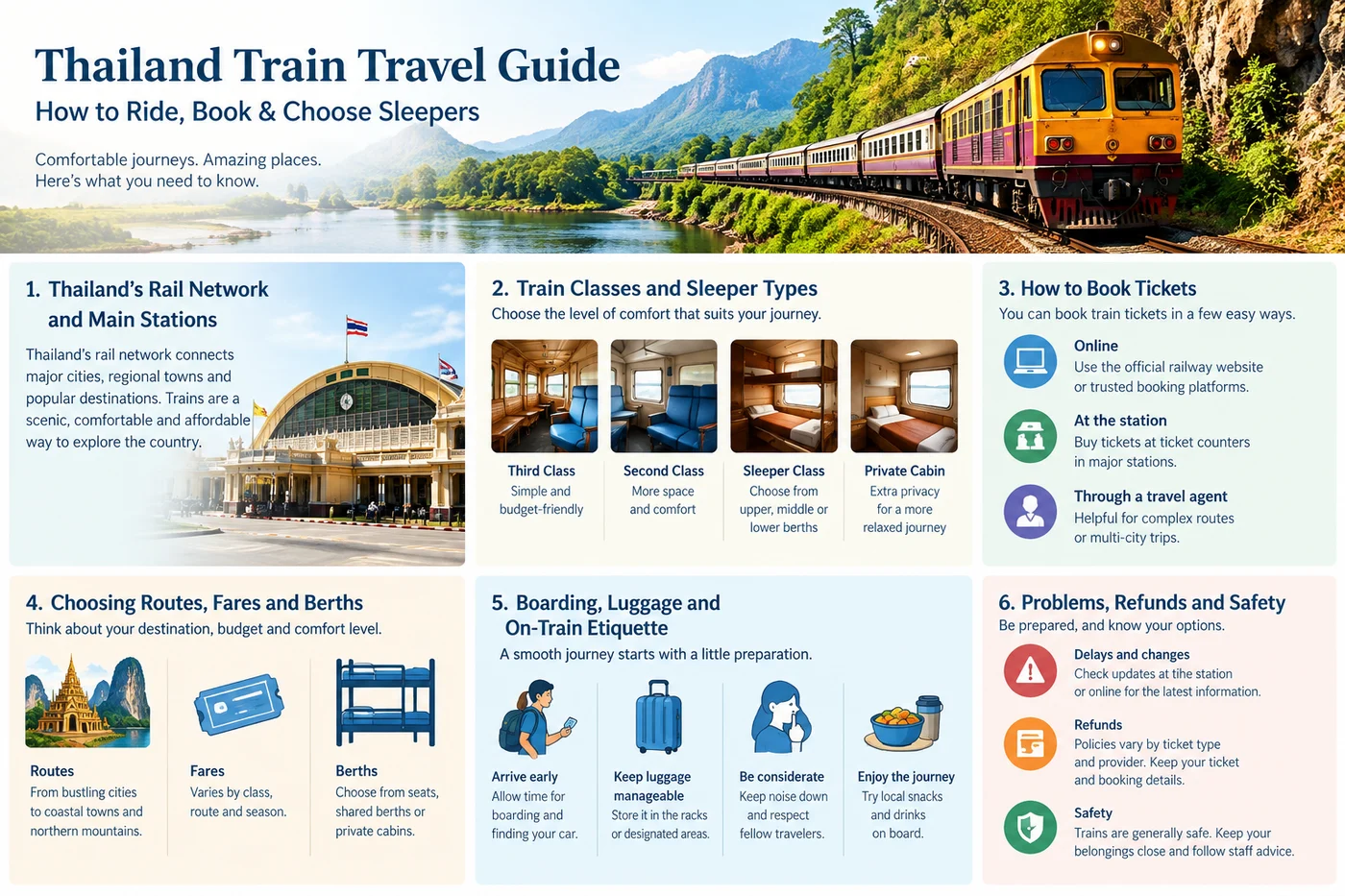
The State Railway of Thailand (SRT) runs the national rail network: Northern, Northeastern, Eastern and Southern lines radiate from Bangkok. Since 19 January 2023, many long‑distance and sleeper trains depart from Krung Thep Aphiwat Central Terminal (the new Bang Sue hub); Hua Lamphong still handles some local services and is convenient for central Bangkok. Major hubs on routes include Chiang Mai, Phitsanulok, Surat Thani, Hat Yai and Nong Khai.
Train classes and sleeper types
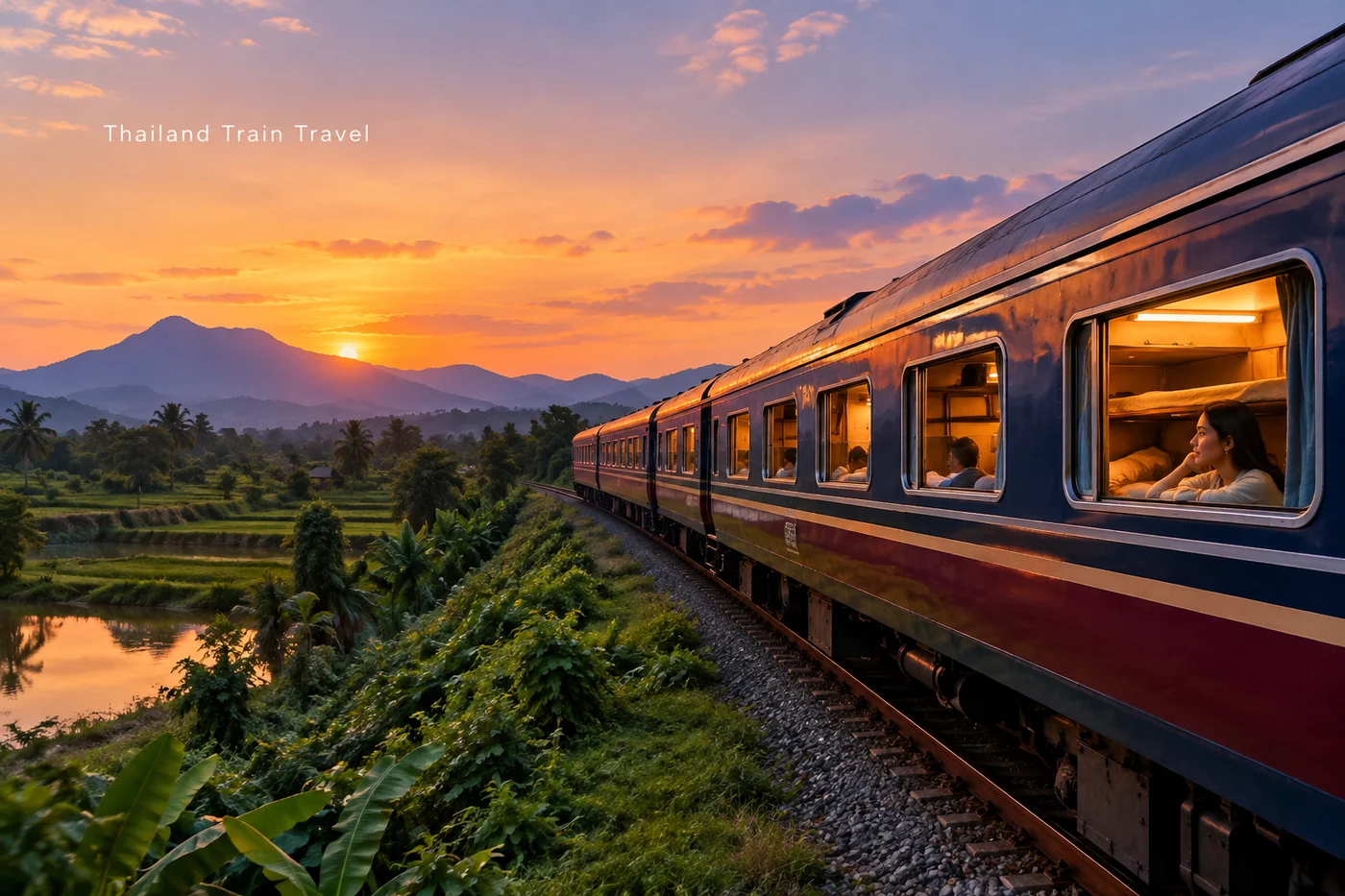
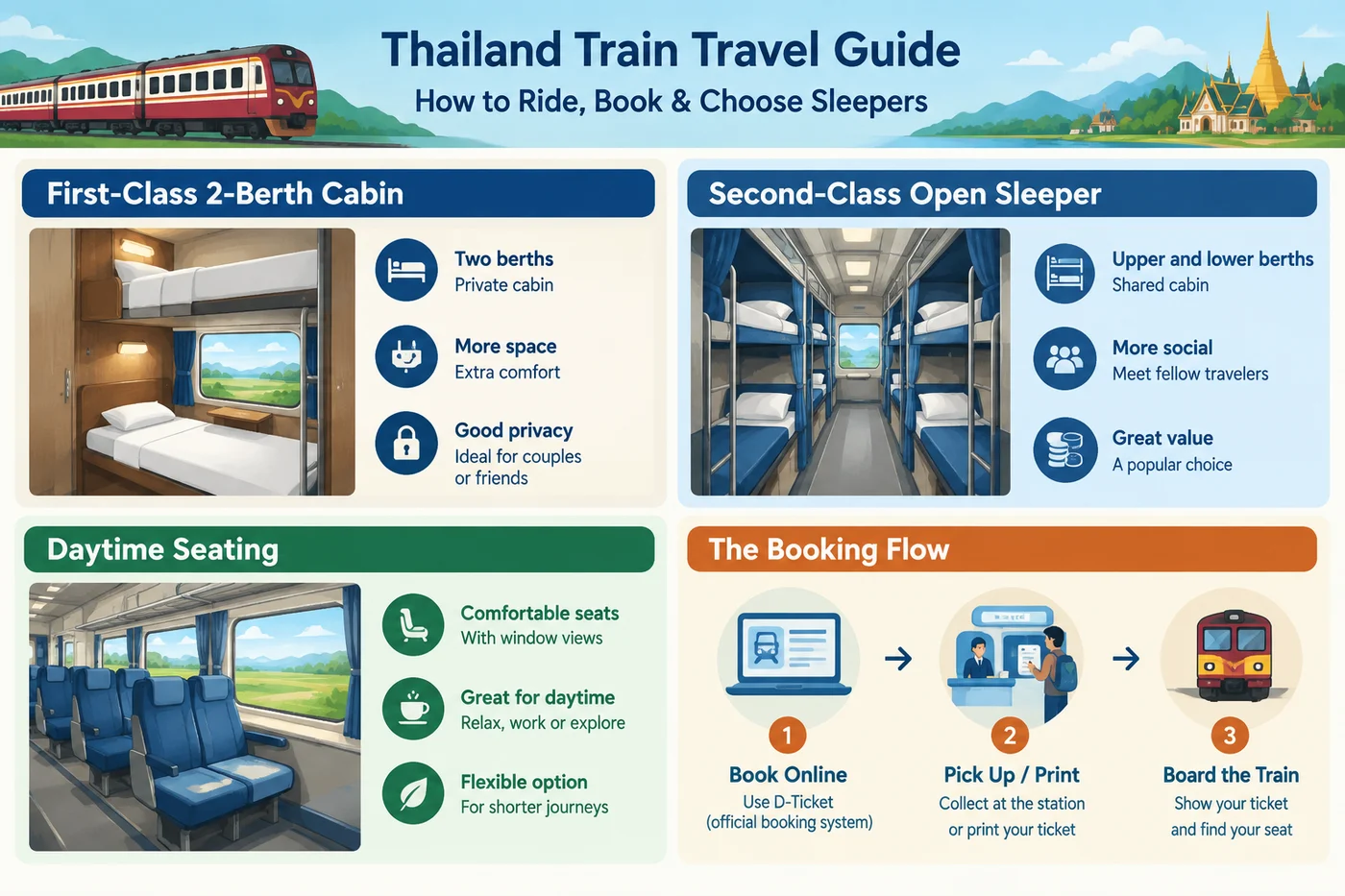
Trains offer daytime seating (3rd/2nd class seats) and overnight sleepers. First‑class sleepers are usually lockable 2‑berth air‑conditioned compartments—best for couples or solo travellers seeking privacy. Second‑class sleepers are open-plan coaches with upper and lower berths; both air‑conditioned and fan coaches exist. Most international travellers opt for 2nd‑class air‑con sleepers for value and sociability. Some trains have restaurant cars or trolleys; availability varies by train number and can change, so check the specific service before booking.
Thailand train travel: How to book tickets
Official booking: use SRT’s D‑Ticket platform (dticket.railway.co.th) for long‑distance reservations. D‑Ticket allows bookings from a few hours up to about 180 days before departure; you must supply passenger name(s) and national ID or passport details because tickets are tied to named travellers. Payment options on D‑Ticket include cards and local methods listed on the site; refund/change rules are handled through D‑Ticket or station counters and can vary by payment type—check the live terms before you book.
Other options: buy at station ticket offices (same‑day tickets may be available), call the SRT hotline 1690 from within Thailand (often requires ticket collection at a station) or use reputable third‑party agents (12Go Asia, Baolau). Agents are convenient for international payments but may add a service fee. Always confirm whether you need to print a ticket or present a QR/e‑ticket and carry the ID used at booking.
Choosing routes, fares and berths
Pick trains by departure time, travel duration and comfort. Popular long‑distance routes with sleeper options include Bangkok–Chiang Mai, Bangkok–Surat Thani (for Koh Samui/Koh Phangan links), and Bangkok–Hat Yai. When choosing berths: lower berths are easier to access and better for storage; upper berths are cheaper but harder to climb into. If privacy matters, reserve a 1st‑class cabin. During high seasons (Songkran, New Year) reserve as early as possible—sleeper berths sell out first.
Boarding, luggage and on‑train etiquette
Arrive at the station at least 30–60 minutes before departure for long‑distance trains; Krung Thep Aphiwat is large—allow extra time for transfers. Bring printed or digital tickets and passport/ID matching the booking name. Luggage can be stored in racks or under your berth; bulky items may need to be kept in the carriage vestibule. Be courteous: keep noise low, remove shoes in sleeper berths if others do, secure valuables, and respect cabin privacy. Food: carry snacks or buy from station vendors; some trains have trolleys or a restaurant car, but services vary by train.
Problems, refunds and safety
Delays and occasional cancellations occur—SRT publishes timetables and updates on D‑Ticket and station boards. For cancellations and refunds, use D‑Ticket or visit a station ticket counter; refunds are returned to the original payment method and processing times depend on banks and the SRT policy—always check current terms before booking. If a train is overbooked or cancelled, contact the station staff or SRT hotline 1690. For safety: keep passports and valuables on your person or in a secure bag, lock 1st‑class cabin doors, and avoid displaying large sums of cash. Night travel is generally safe but use common-sense precautions.
Practical Tips
1) Book sleeper berths via D‑Ticket up to several months ahead for peak dates; 2) Keep the passport used for booking handy—staff may check ID; 3) If arriving in Bangkok by plane then transferring to Krung Thep Aphiwat, allow extra transfer time and check which station your train departs from; 4) Consider a lower berth if you need easier access to luggage and toilets.
Important Considerations
Ticketing rules, payment options and refund terms change—always confirm current D‑Ticket terms at dticket.railway.co.th before you book. Third‑party agents charge fees and may have different collection rules. Specific amenities (restaurant car, showers) depend on train number and can change.
Planning more of your trip? Browse our
Thailand Travel Guides
for more practical Thailand travel information.
Final Thoughts
Thailand train travel is an efficient, scenic choice for many routes. Plan early for sleepers, confirm departure stations (Krung Thep Aphiwat vs Hua Lamphong), and use official D‑Ticket or trusted agents to secure berths. With basic preparation—matching ID, sensible luggage choices and modest expectations—you’ll enjoy relaxed cross‑country travel by rail.
Sources & Further Reading
- State Railway of Thailand — DTicket (official)
- Tourism Authority of Thailand — news on Bang Sue (Krung Thep Aphiwat)
- The Man in Seat 61 — Thailand train guide
- 12Go Asia — trains in Thailand (third‑party booking reference)
Transport schedules, fares and operating rules can change. Always verify time-sensitive details with the official operator before travel.