HOTEL GUIDE
Food Allergies in Thailand: A Practical Traveler’s Guide
A concise, practical guide for travellers with food allergies visiting Thailand: what to watch for, how to communicate in Thai, safer eating choices and emergency steps.
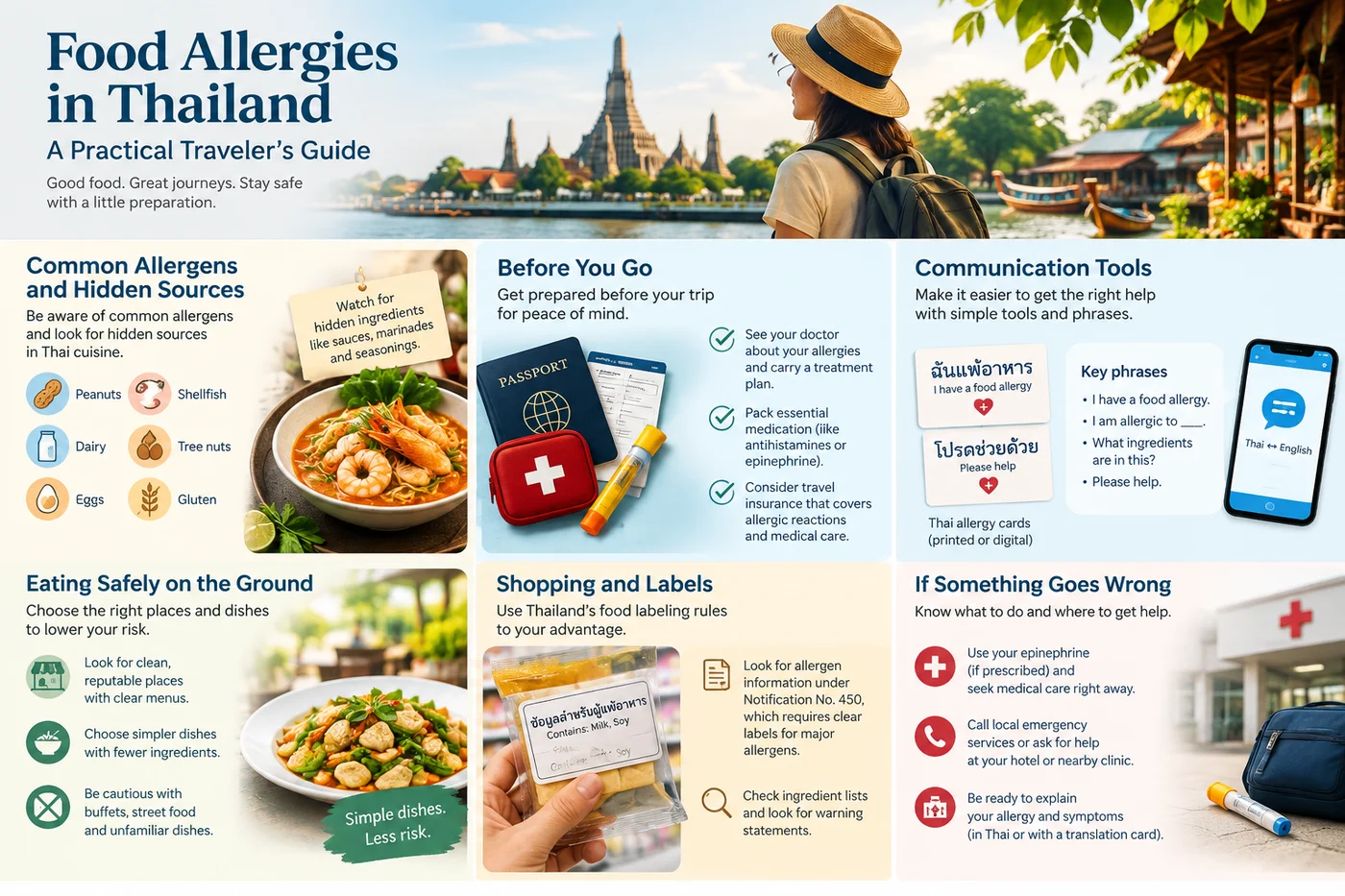
If you live with food allergies, food allergies in Thailand deserve preparation—not panic. Thai food is delicious but commonly hides allergens (fish sauce, shrimp paste, peanuts, soy, shellfish, eggs, gluten and dairy) inside pastes, sauces and shared cooking equipment. This guide gives step-by-step, practical advice for avoiding reactions, communicating needs to cooks, shopping safely and handling emergencies.
Key Takeaways
- Hidden ingredients and cross-contact are the main risks—always show a written Thai allergy card to the person who will cook.
- Bring medical documentation and at least two prescribed epinephrine auto‑injectors; replacements in Thailand can be limited.
- Choose controlled kitchens (hotel or allergy-aware restaurants) when risk is high; know emergency numbers (call 1669).
Food allergies in Thailand: common allergens and hidden sources
Thai cuisine frequently uses fish sauce (น้ำปลา, nam pla), shrimp paste (กะปิ, kapi) and dried seafood in curries, stir-fries and sauces. Peanuts appear in pad Thai and satay; soy and oyster sauces can include wheat; many soups and noodles can contain eggs. Shellfish (shrimp, crab, squid) is common on coasts and in southern dishes. These ingredients are often “hidden” inside curry pastes, dipping sauces, seasoning powders and the mortar-and-pestle mixes used at many stalls. Cross-contact is common where cooks use shared woks, oil and utensils—so avoid assuming a dish is safe unless confirmed.
Before you go: medical prep and travel insurance
See your allergist and get a written emergency action plan and prescriptions. Bring at least two epinephrine auto‑injectors (EAIs) in their original packaging plus a copy of the prescription and a short physician letter describing your allergy and weight-based dosing. Availability of branded EAIs in Thailand varies and often requires a prescription—plan to bring your own and keep spares (this is a time-sensitive, variable situation). Buy travel insurance that explicitly covers allergic reactions, ambulance transfer and hospital bills, and check international evacuation coverage if you are travelling to remote islands.
Communication tools: Thai allergy cards and key phrases
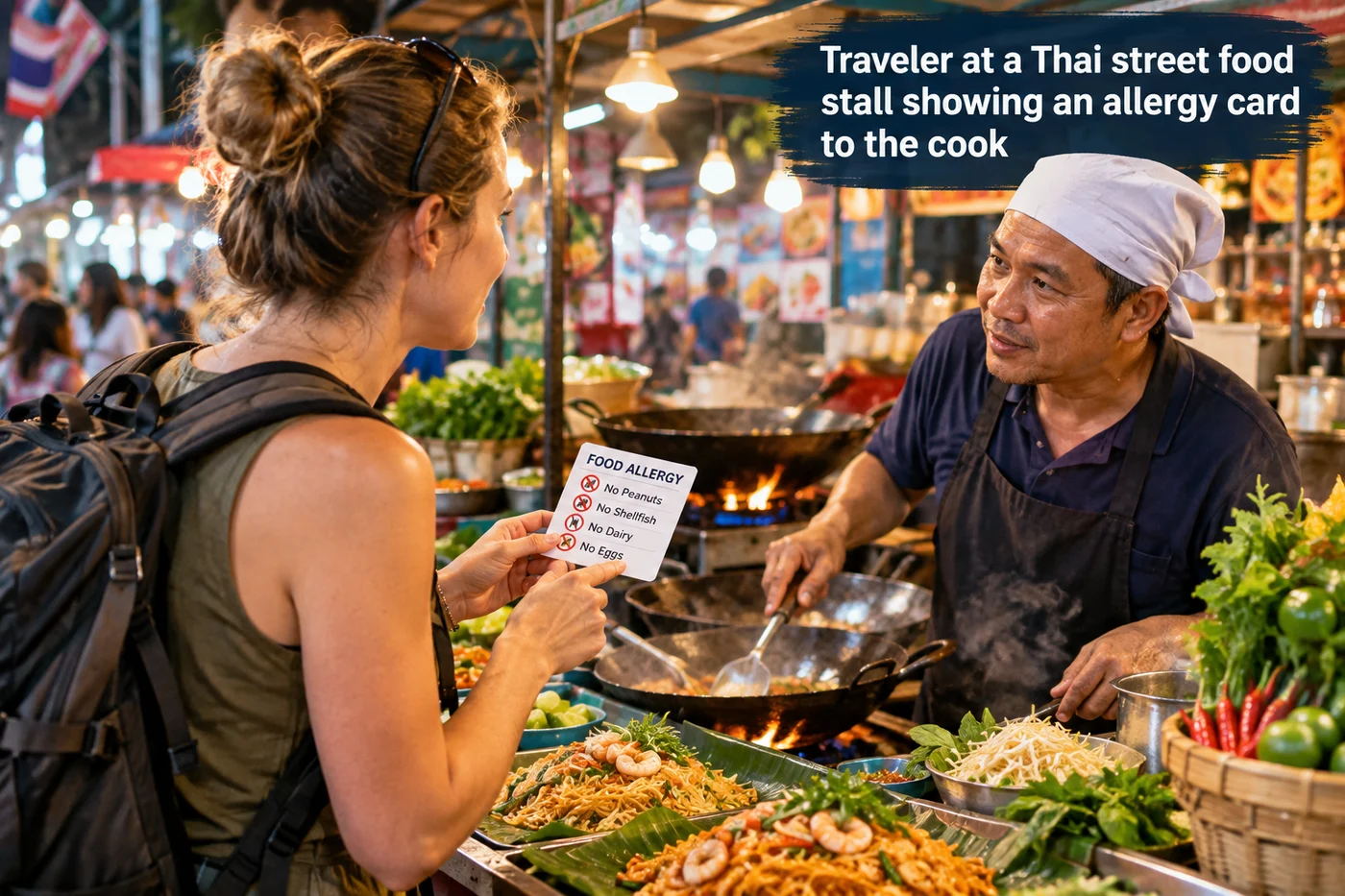
Always carry a short printed Thai allergy card and a longer version for serious cases; keep photos on your phone. Show the card to the person who will cook. Short card (show first):
– English: “I am allergic to: [PEANUTS / SHELLFISH / EGGS / MILK / WHEAT]. Severe—may be life‑threatening. Please do NOT use this ingredient.”
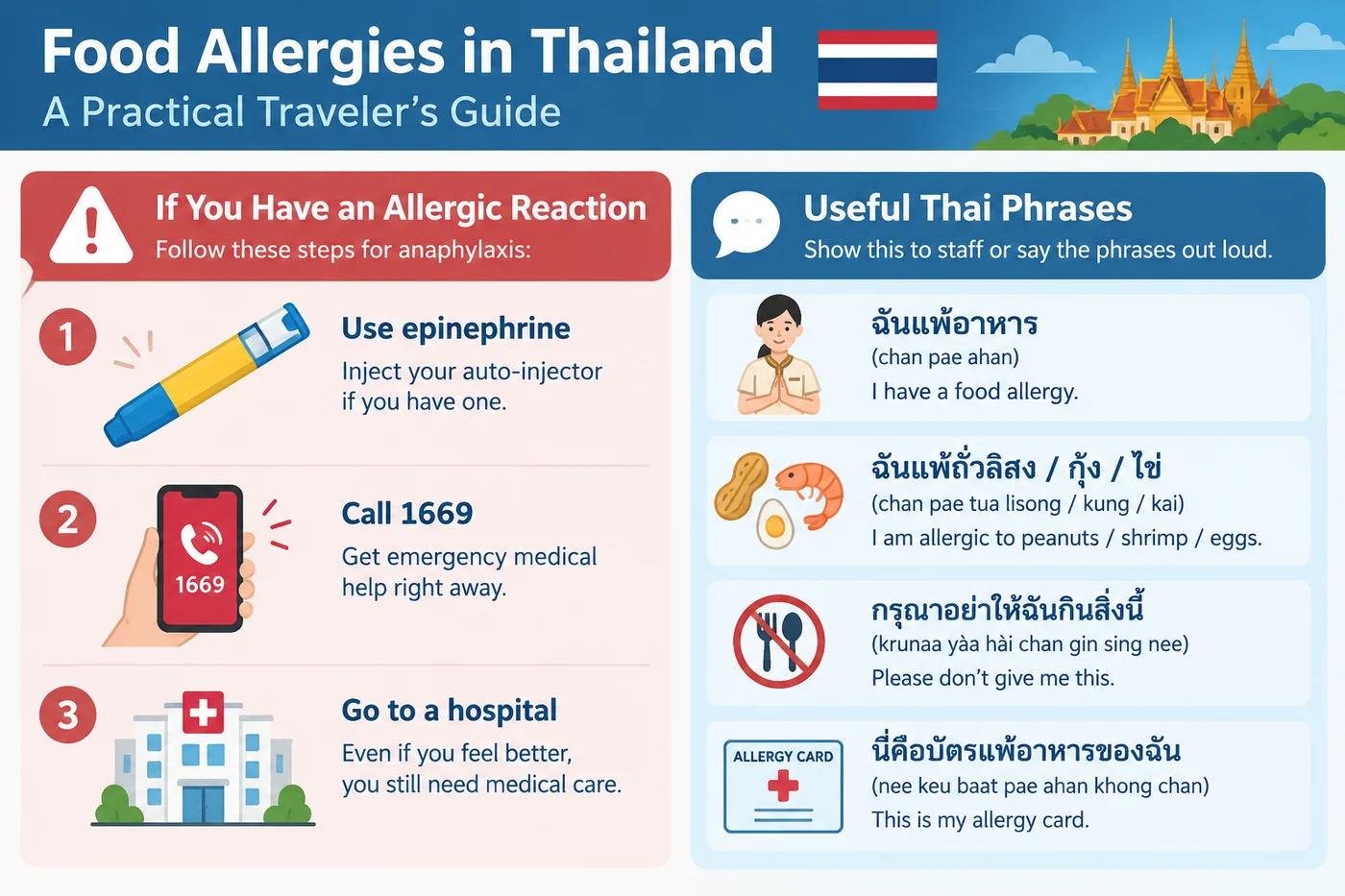
– Thai: “ฉันแพ้: [ถั่วลิสง / อาหารทะเล / ไข่ / นม / แป้งสาลี]. อาจเป็นอันตรายถึงชีวิต กรุณาอย่าใส่”
– Romanization: “Chan pae: [thua-lisong / aa-han thalay / khai / nom / paeng sa-lee]. Aat bpen an-than theung cheewit. Karuna yaa sai.”
Extended card to show manager/chef: include your emergency contact, medication list and “Please show this to the cook” (Thai: “ช่วยบอกผู้ปรุงด้วย” – Chuay bok phooprung duay). Key spoken phrases to hand or say: “No peanuts” = “ไม่ใส่ถั่วลิสง (Mai sai thua-lisong)”; “No shellfish” = “ไม่ใส่ของทะเล (Mai sai khong thalay)”. Keep phrases short and always show the written card in noisy markets.
Eating safely on the ground: where to eat and safer dishes
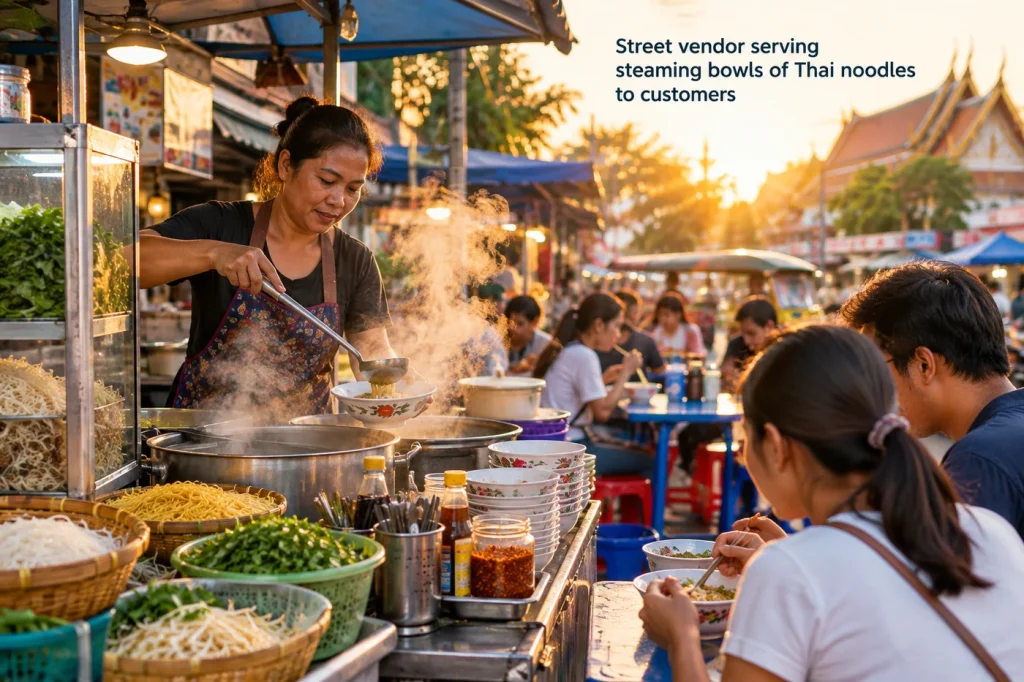
Safer choices: hotel kitchens, restaurants that advertise allergy awareness, and food courts where separate prep stations exist. High-risk situations include street stalls, night markets and very busy casual eateries where cooks reuse oil, woks and mortars. Prefer simple dishes cooked to order and visibly separate from seafood or peanut-containing items: plain grilled meats, steamed rice, som tum without peanuts (but check: som tum often contains dried shrimp), and clear soups you confirm contain no fish sauce or shrimp paste. Ask for sauces on the side and request separate utensils. Region notes: coastal areas and southern cuisine use more shellfish and fish paste; northern dishes rely more on herbs but still use fish sauce—local ingredients vary, so check each meal.
Shopping and labels: using Notification No. 450 to your advantage
Since 19 July 2024 the Thai FDA (Notification No. 450) requires prepackaged foods to list allergens in Thai; this applies only to packaged goods, not to restaurants or street vendors. Labels will most often be in Thai—use a translation app, compare brand ingredients, and stick with familiar international brands when possible. Learn key Thai ingredient words: peanuts = ถั่วลิสง (thua-lisong), shrimp = กุ้ง (goong), fish = ปลา (pla), fish sauce = น้ำปลา (nam pla), shrimp paste = กะปิ (kapi), soy = ถั่วเหลือง (thua-lueang), egg = ไข่ (khai), milk = นม (nom), wheat = แป้งสาลี (paeng sa-lee). Even with labeled packaged foods, cross-contact can occur in stores—inspect seals and ask staff if in doubt.
If something goes wrong: emergency steps and medical care
For suspected anaphylaxis: inject epinephrine immediately (self-injector), call emergency services (1669 for ambulance/medical), or call 1155 for Tourist Police if you need help finding English-speaking assistance; 191 is for police emergencies. After epinephrine, seek emergency care—major private hospitals (for example Bumrungrad) have English-speaking services and full emergency departments. Carry your insurance card, doctor’s letter and medication list. If you cannot self-inject and symptoms are severe, ask bystanders to call 1669 and take you to the nearest hospital. Note: replacement EAIs and branded auto‑injectors require a prescription in Thailand and availability varies—do not rely on finding one locally.
Practical Tips
1) Always show a printed Thai allergy card to the cook. 2) Pack two EAIs, antihistamine, and a prescription/doctor note. 3) Ask for sauces on the side and request separate utensils. 4) Favor hotel kitchens or allergy-aware restaurants for at least one meal per day. 5) Use translation apps for packaged labels and save local hospital numbers.
Important Considerations
Notification No. 450 covers packaged-food labels only—not restaurant menus or street vendors. Branded epinephrine auto‑injector availability in Thailand varies and often needs a prescription—bring your own EAIs and documentation. Cross-contact risk at street stalls is high; never assume a dish is safe without confirmation.
Planning more of your trip? Browse our
Thailand Food & Restaurant Guides
for more practical Thailand food and dining information.
Final Thoughts
Thailand is overwhelmingly welcoming to travellers, and with preparation you can enjoy most of its food safely. Carry clear Thai-language cards, bring medical documentation and EAIs, choose safer kitchens when needed and know the emergency steps. For restaurant and hotel options that are allergy-aware, see HotelForU’s Bangkok restaurant and hotel dining guides to find properties with controlled kitchens.
Sources & Further Reading
- Thai Food and Drug Administration — Notification No. 450 (packaged food allergen labelling)
- Tourism Authority of Thailand — Useful Call / emergency numbers
- Bumrungrad International Hospital — International patient services
Transport schedules, fares and operating rules can change. Always verify time-sensitive details with the official operator before travel.