HOTEL GUIDE
Vegetarian & Vegan Food in Thailand: A Practical Traveler’s Guide
How to find and order safe vegetarian and vegan food in Thailand: what 'jay' means, hidden ingredients, useful Thai phrases, and where to eat across major destinations.
Travelers seeking vegetarian food in Thailand will find it easy to eat well—if they know how Thai kitchens define ‘vegetarian’ and where to look. This guide explains jay vs mangsawirat, common hidden animal ingredients, safe dishes and useful Thai phrases so you can order confidently across cities and markets.
Key Takeaways
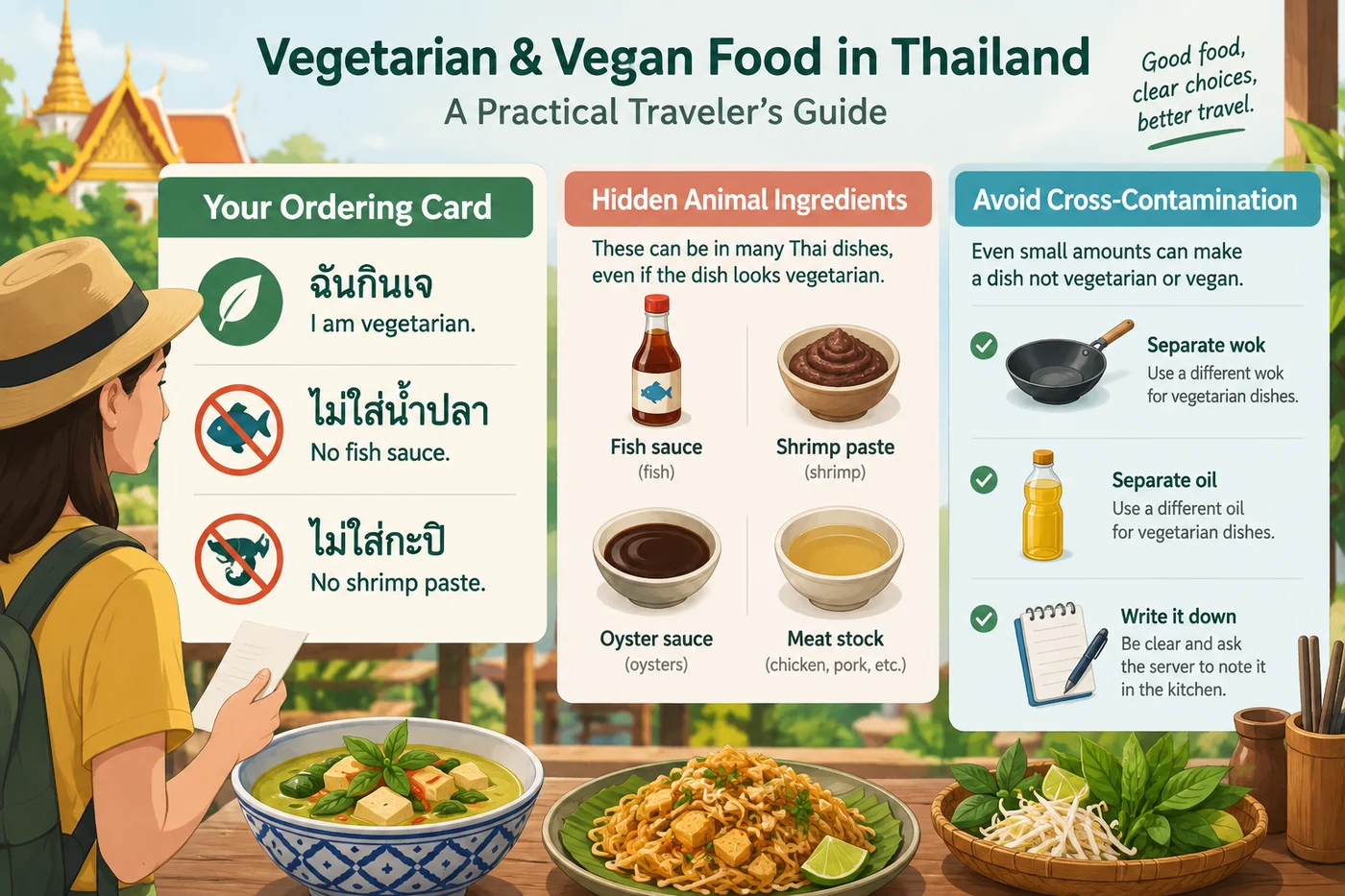
- Ask for 'jay' (เจ) or use clear Thai phrases—carry a written card—because many 'vegetarian' dishes still use fish sauce or shrimp paste.
- Watch for hidden animal ingredients (fish sauce, shrimp paste, oyster sauce, meat stock) and cross-contamination in shared woks and oil.
- Use jay stalls (yellow flag), Veg Thailand/HappyCow directories, and hotels or dedicated vegan kitchens for strict diets or allergies.
Vegetarian food in Thailand: jay vs mangsawirat — what to expect
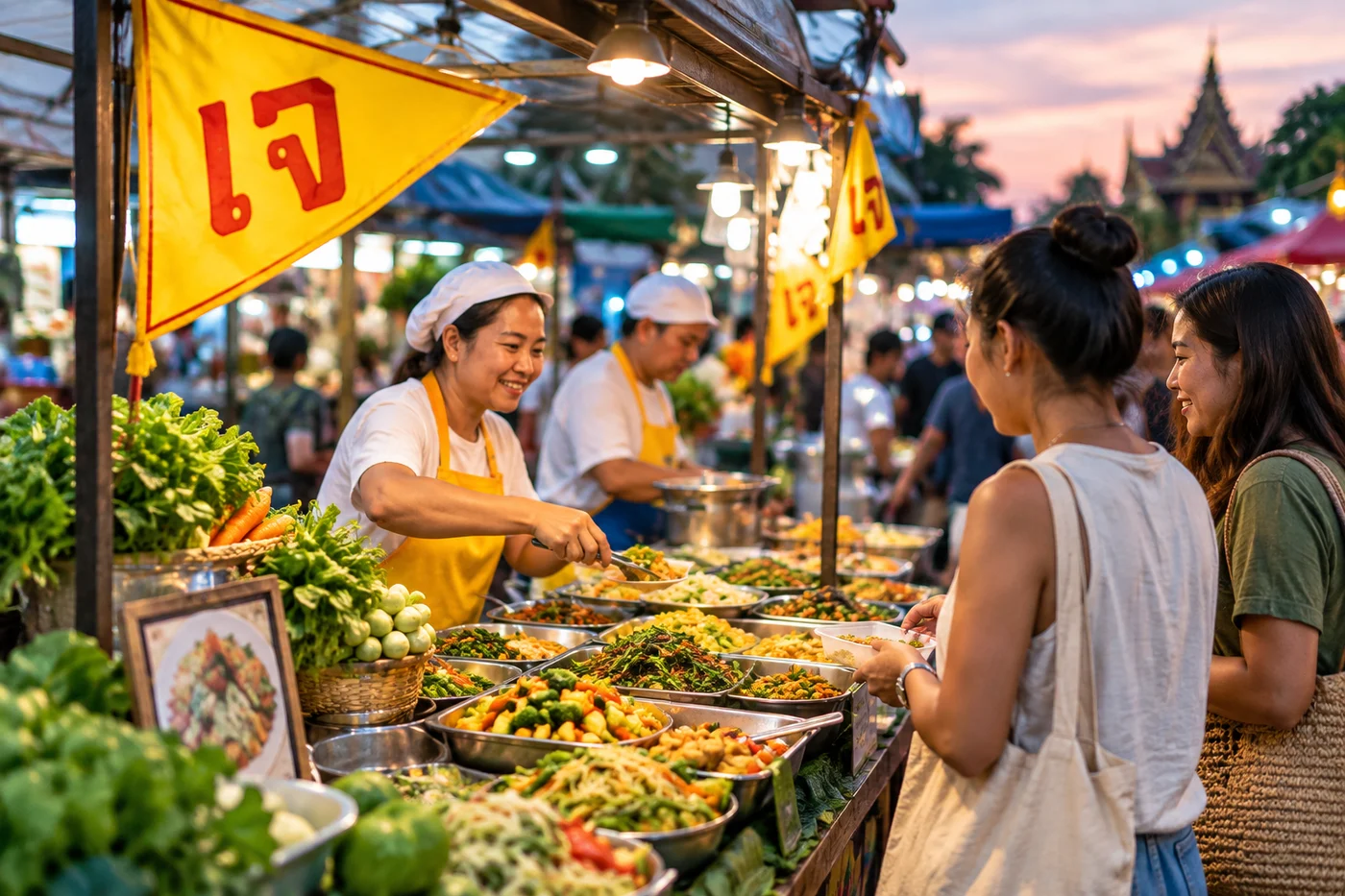
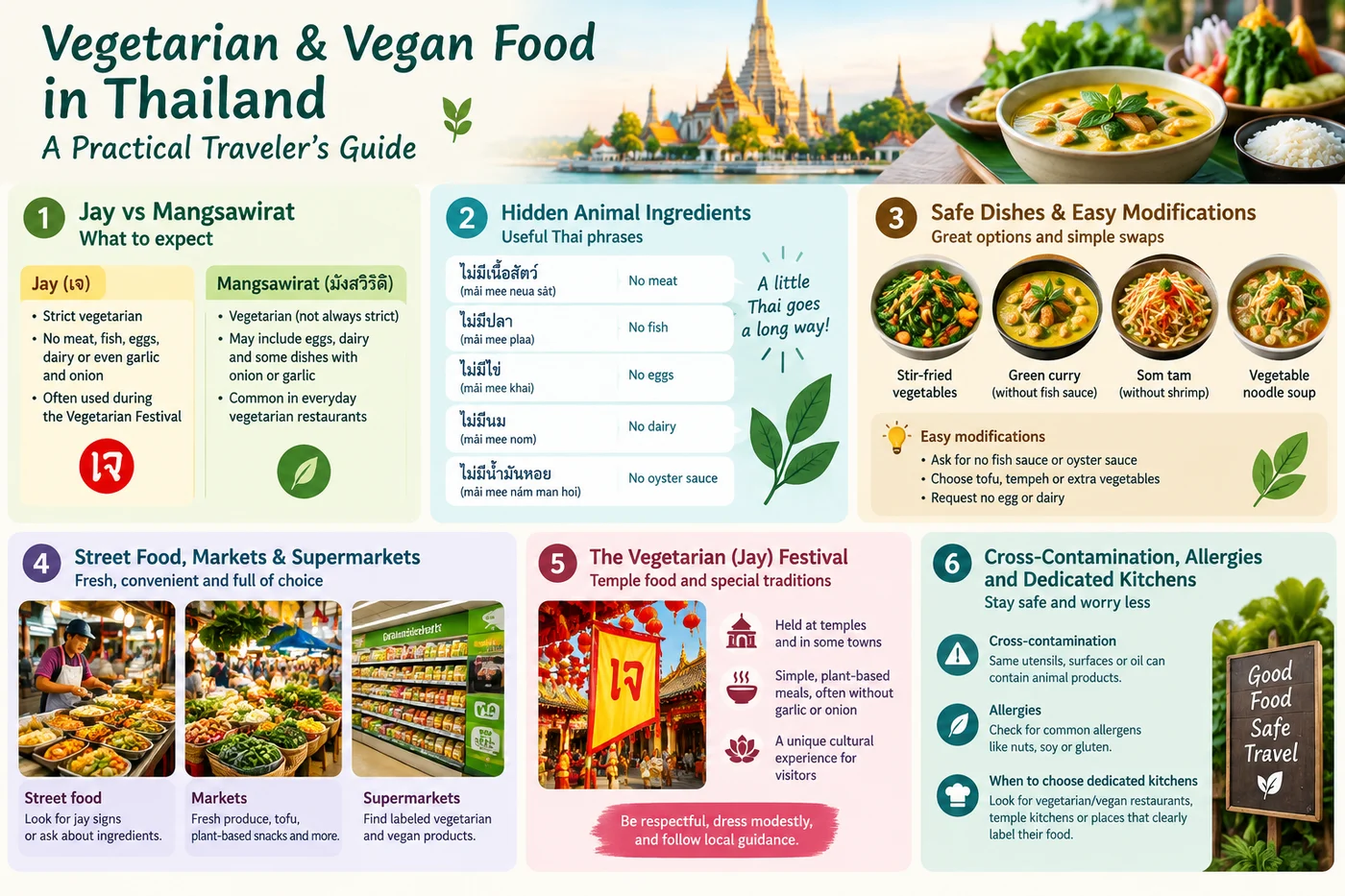
Two different terms matter. 'Jay' (เจ) is a strict Buddhist-style plant-based diet that excludes meat, fish, eggs and dairy and—often—pungent vegetables such as garlic and onion. Jay stalls are commonly marked with a yellow flag showing the red เจ character. 'Mangsawirat' (มังสวิรัติ) or the English 'vegetarian' is more flexible: cooks may still use fish sauce, oyster sauce, shrimp paste or eggs unless you explicitly request otherwise. For travelers, choosing a jay kitchen or clearly stating which ingredients you avoid reduces surprises.
Hidden animal ingredients and the exact Thai phrases to use
Many everyday Thai dishes include non-meat animal products. The common culprits are fish sauce (nam pla), shrimp paste (kapi), oyster sauce and meat-based stock. Useful Thai lines to show or say: • ฉันกินเจ / ผมกินเจ (chan/phom kin jay) — I eat jay (strict plant-based). • ไม่ใส่น้ำปลา (mai sai nam pla) — no fish sauce. • ไม่ใส่กะปิ (mai sai kapi) — no shrimp paste. • ไม่ใส่ไข่ (mai sai khai) — no egg. Carry a short printed card with these phrases and any allergies in Thai; it prevents misunderstandings and speeds service. Official tourism pages also recommend the same approach (see Visit Thailand).
Safe dishes and easy modifications
Many Thai favorites are easy to adapt: stir-fried vegetables (pad pak), fresh spring rolls, mango sticky rice (check buttery toppings), and coconut-based curries can be jay if made without fish sauce or shrimp paste. Ask for 'jay' or request 'mai sai nam pla, mai sai kapi' and confirm no meat stock. Tofu and vegetable-based soups are usually safe when prepared in dedicated pots. Note: jay food commonly omits garlic and onion, so flavors may be milder than you expect.
Street food, markets and supermarket options
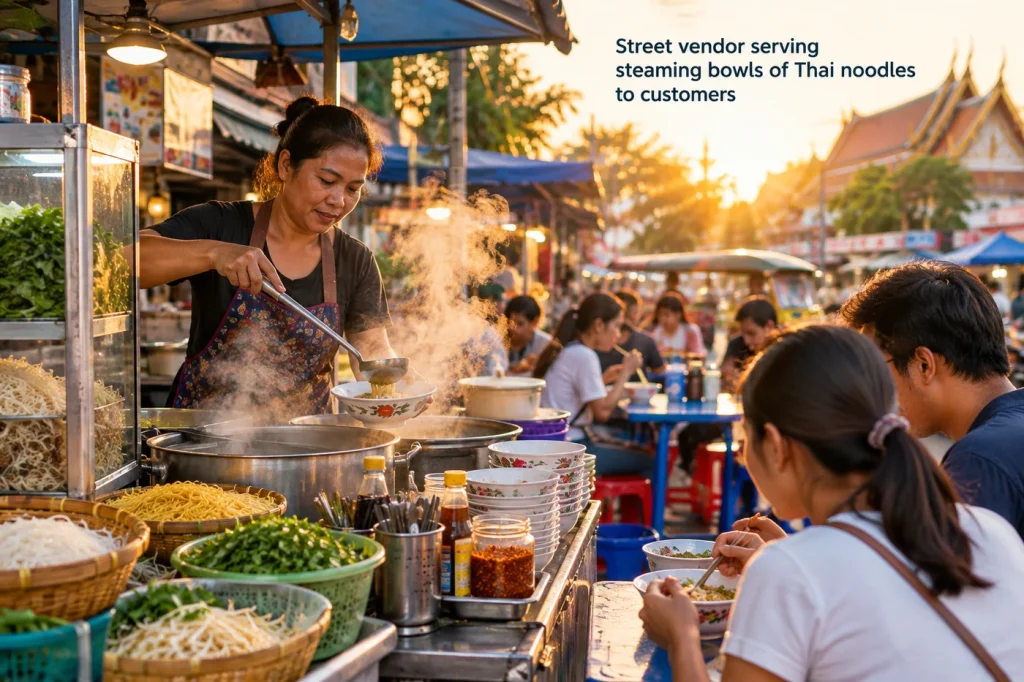
Street markets and food courts often have jay stalls—look for the yellow jay flag. During festival times and at larger jay events, vendors sometimes use separate cookware to avoid cross-contamination. When ordering street food, ask if items are fried in shared oil or cooked in the same wok as meat. In major cities you’ll also find vegan and vegetarian restaurants listed in community directories such as Veg Thailand and apps like HappyCow. Supermarkets and health‑food shops in cities stock plant-based staples and ready-made vegan products—use local directories or your hotel to locate them.
The Vegetarian (Jay) Festival and temple food — what travelers should know
The annual Vegetarian (Jay) Festival draws large jay-only markets and special menus—Phuket and several provincial hubs are famous for their celebrations. Festival dates vary each year (they follow the lunar calendar), so verify current dates via official Tourism Authority of Thailand (TAT) pages or festival portals before planning travel. During the festival, municipal quality-control efforts sometimes ensure stricter separation of utensils; temple food served for merit-making is often jay but always ask.
Cross-contamination, allergies and when to choose dedicated kitchens
If you have food allergies or require absolute separation for religious reasons, avoid mixed kitchens. Shared woks, ladles and frying oil are common and can transfer fish sauce or meat particles. Ask vendors if they can use a clean pan and separate utensils—and if in doubt, opt for a fully jay or vegan restaurant. Higher-end hotels and many mainstream restaurants increasingly offer plant-based menus and can pre-arrange jay dishes if you notify them in advance.
Practical Tips
Carry a printed Thai request card with: 'I am vegetarian/jay' and 'No fish sauce, no shrimp paste, no oyster sauce, no eggs' plus allergy details. Look for yellow jay flags at markets. Use Veg Thailand and HappyCow to find vetted kitchens; hotels can arrange jay menus. When ordering street food, ask about shared oil/wok and, if needed, request separate cookware in writing.
Important Considerations
Never assume 'vegetarian' equals vegan—always say 'mai sai nam pla' and 'mai sai kapi.' Festival dates change yearly—check TAT or official festival portals. Cross-contamination is common in non-jay kitchens; pick dedicated restaurants for strict requirements.
Planning more of your trip? Browse our
Thailand Food & Restaurant Guides
for more practical Thailand food and dining information.
Final Thoughts
Thailand is forgiving for plant-based travelers if you know the local terms and where to look. Learn the few Thai phrases, carry a written card, and use jay stalls, dedicated vegan restaurants or hotel kitchens for the safest meals. For regional recommendations, see HotelForU.net’s Bangkok dining guides and city food pages to plan ahead.
Sources & Further Reading
- Visit Thailand — Vegetarian & Halal food guidance
- Tourism Authority of Thailand — Jay Festival information
- Veg Thailand — Directory of strictly meat-free kitchens
- MICHELIN Guide — Phuket Vegetarian Festival and restaurant adaptations
Transport schedules, fares and operating rules can change. Always verify time-sensitive details with the official operator before travel.