
HOTEL GUIDE
Thailand beach safety: Practical guide for travellers
A practical, country-specific guide to spotting and avoiding rip currents, jellyfish, tides and other hazards on Thailand’s beaches — with first-aid and seasonal tips.
Thailand beach safety is essential for every visitor who plans to swim, snorkel or play at the shore. Thai beaches present familiar tropical pleasures — but also predictable sea hazards: rip currents, seasonal jellyfish, changing tides, coral and urchin injuries, boat traffic and strong swell. This guide gives country-specific, practical steps for spotting risks, handling emergencies and choosing safer beaches by season and region.
Key Takeaways
- Always check local flags, lifeguard zones and tide/sea forecasts before entering the water.
- If caught in a rip current: don’t fight it — float/conserve energy, swim parallel, then angle toward shore and signal for help.
- Know local jellyfish warnings and first aid (vinegar stations are common); seek urgent care for breathing or circulatory symptoms.
Quick safety checklist before you hit the sand
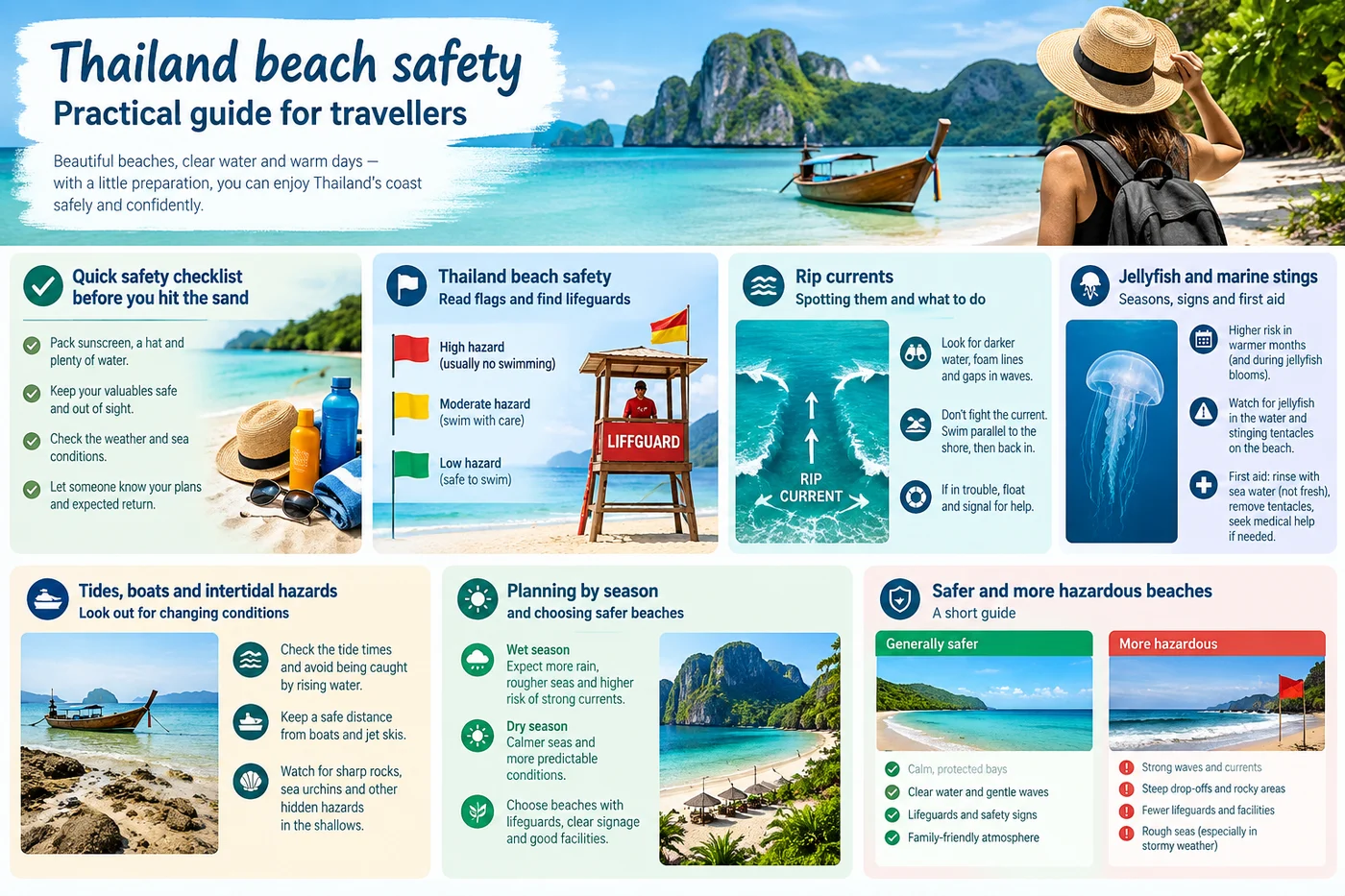
Before you swim: check the beach flags and read any posted notices, confirm lifeguard hours, look for vinegar/first‑aid stations, and check a local sea/tide forecast. Pack a basic beach kit: reef‑safe sunscreen, water shoes (for rocky or low‑tide shorelines), a whistle or signalling device, and a small first‑aid kit including sting treatment supplies if provided on the beach. Keep children and non‑swimmers close and use flotation aids when needed.
Thailand beach safety: Read flags and find lifeguards
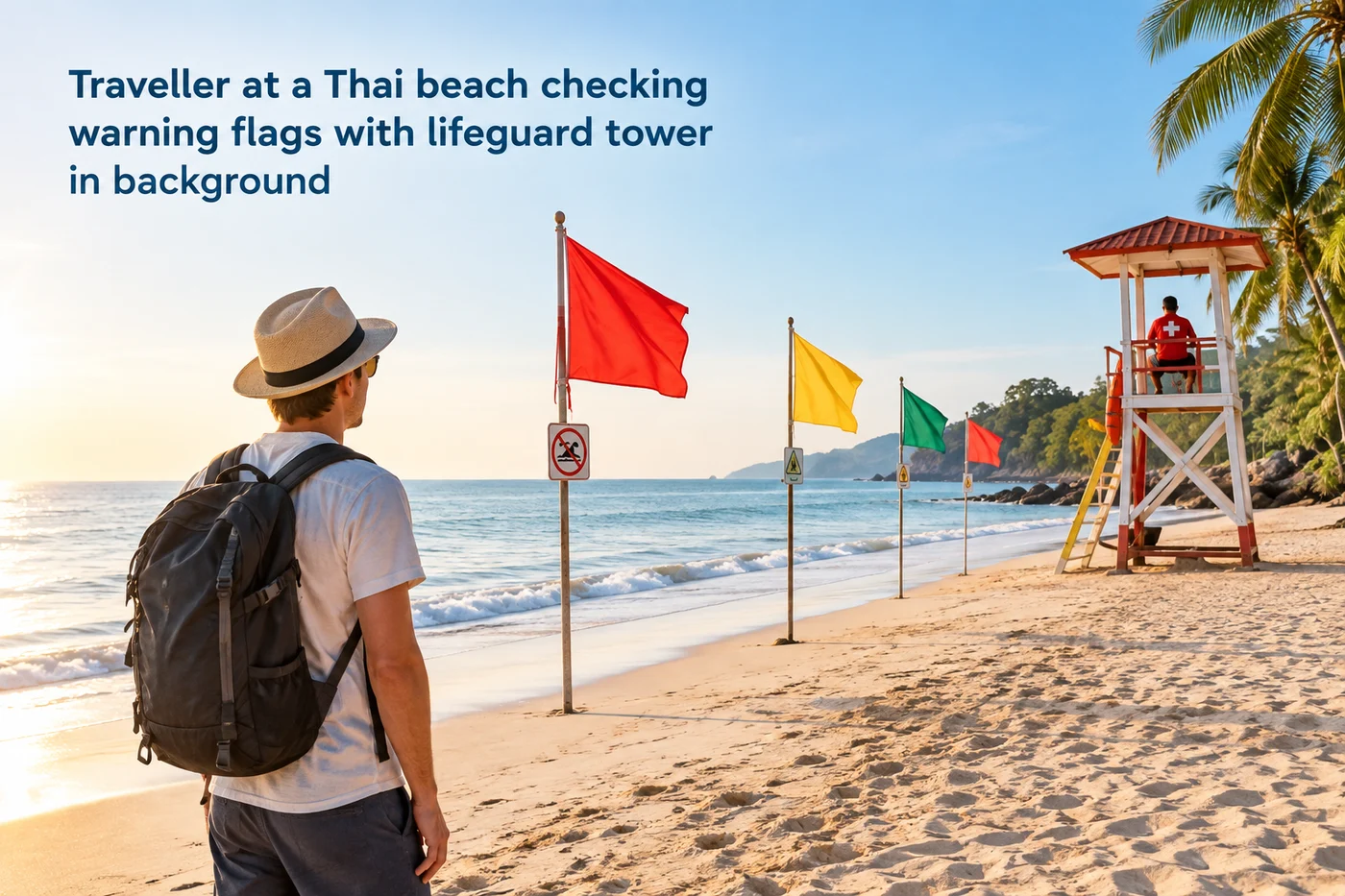
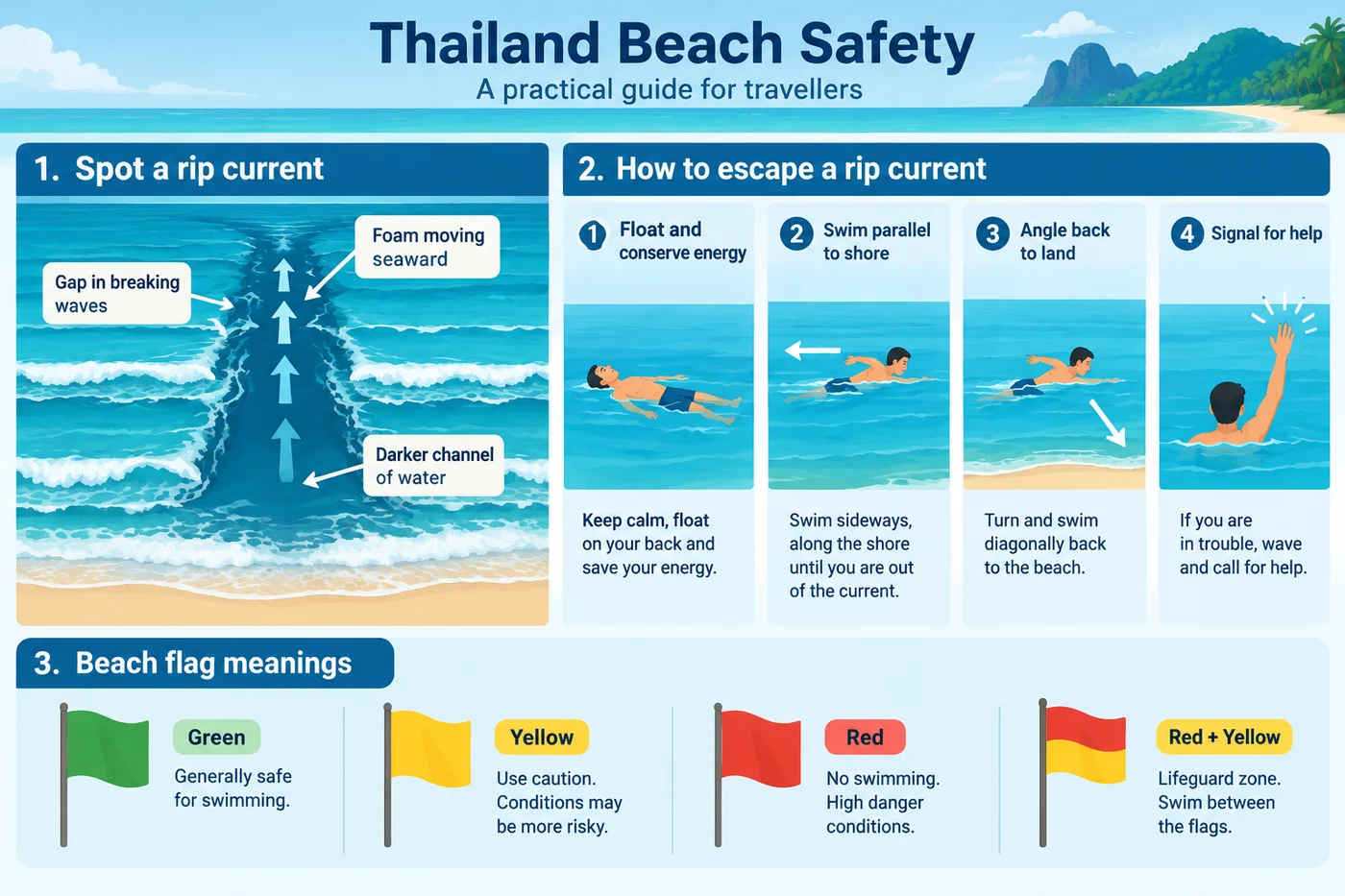
Flag systems vary by location, but common meanings used on many Thai beaches are: green = generally safe, yellow = exercise caution, red = do not swim, and a red+yellow or red/white marked flag often marks a lifeguard‑patrolled safe zone. Always swim between lifeguard flags where present. Lifeguard coverage can be seasonal — popular islands and tourist beaches are more likely to be patrolled in high season; quieter beaches may have no lifeguards at all. If you’re unsure, ask a lifeguard or local beach office and keep to shallow water.
Rip currents: spotting them and exactly what to do
Rip currents are common on open beaches and can form quickly. Signs to watch for: a visible channel of choppy, discoloured water heading offshore, a gap in the line of breaking waves, or foam and debris moving seaward. If you’re swept into a rip current: do not swim against it. Follow these steps — the same advice endorsed by international lifeguard agencies:
• Relax and float to conserve energy. Signal for help by waving and calling.
• Swim parallel to the shore until you are out of the current (this usually takes you beyond the narrow, fast channel).
• Once free, angle back to the beach at a slight diagonal.
• If you cannot escape, float or tread water and keep signalling; wait for rescue.
Do not attempt a solo rescue of someone caught in a rip current; throw a flotation device and call lifeguards or emergency services.
Jellyfish and marine stings: seasons, signs and first aid
Thailand’s Department of Marine and Coastal Resources (DMCR) monitors venomous jellyfish and posts warnings at affected beaches; nine venomous groups (including box jellyfish families) have been reported in Thai waters. Box jellyfish can cause severe, life‑threatening reactions. Many beaches now provide vinegar stations and warning signage.
First‑aid guidance used by Thai authorities typically advises: rinse the affected area with vinegar (do not rub), remove tentacle fragments carefully with a gloved hand or object, and seek urgent medical care for systemic symptoms (difficulty breathing, chest pain, fainting, widespread or severe pain). Note: first‑aid specifics can vary by species and location — follow local signs and medical advice. If in doubt or if symptoms are severe, call emergency services immediately.
Tides, boats and intertidal hazards
Tide patterns and coastal currents affect where and when it’s safe to swim. The Royal Thai Navy’s Hydrographic Department publishes tide tables and warnings for the Gulf and Andaman coasts; check them before planning long swims, snorkel trips or shore excursions. Low tide can expose sharp coral and urchins, while high tide may bring stronger currents and boat traffic. In busy areas watch for long‑tail boats and scuba/snorkel operations — wear visible swimwear or a safety sausage/floats when swimming beyond the breakers.
Planning by season and choosing safer beaches
Monsoon timing differs between the Andaman (west coast) and the Gulf of Thailand. The Andaman coast (Phuket, Krabi, Phi Phi) has its rainy season roughly May–October with higher swell and rip risks; the Gulf (Koh Samui, Koh Phangan) sees its main rainier months later in the year. Local patrols and flags often reflect seasonal demand: busier, family‑friendly beaches in tourist areas are more likely to be patrolled during peak months. When travelling with children or non‑swimmers, prefer sheltered bays, beaches with clear lifeguard flags, and low boat traffic.
Safer and more hazardous beaches (short guide)
Generally safer options: well‑patrolled, gently shelving beaches in tourist towns and national‑park bays during their high seasons — these are likelier to have lifeguards, clear flags and public facilities. More hazardous: open, exposed beaches and long stretches facing the open ocean (especially outside lifeguarded zones), rocky headlands, and remote islands without lifeguards. Conditions change by season — do not assume any beach is safe year‑round.
Practical Tips
Practical Tips:
– Swim between lifeguard flags and observe posted warnings.
– If unsure about marine life risk, ask lifeguards or local authorities before entering the water.
– Carry a small whistle, reef‑safe sunscreen, water shoes and a waterproof phone case.
– For families: assign a water watcher, use Coast Guard‑approved floatation for weak swimmers, and avoid swimming after heavy rain when currents and water quality can change.
– Know local emergency numbers and the nearest hospital; many beaches list contacts at their entrances.
Important Considerations
Important Considerations:
– Flag meanings and lifeguard coverage vary by beach and season — always verify locally.
– Vinegar is widely used at Thai beaches for box‑jellyfish stings, but first‑aid can vary by species and situation; follow local instructions and seek emergency care for severe signs.
– Tide tables from the Hydrographic Department are authoritative, but weather, storms or river discharge can alter local conditions on the day.
Planning more of your trip? Browse our
Thailand Travel Guides
for more practical Thailand travel information.
Final Thoughts
Thailand’s beaches are among the world’s finest, and a little preparation goes a long way. Use the local flags and lifeguards, respect seasonal warnings, learn to spot rip currents, and keep a plan for jellyfish and first aid. With simple precautions you can enjoy Thailand’s coast safely — and stay ready to signal for help if conditions change.
Sources & Further Reading
- Department of Marine and Coastal Resources (Thailand)
- Hydrographic Department, Royal Thai Navy
- U.S. National Weather Service (NOAA) — Rip Currents
- RNLI — How to get out of a rip current
- Phuket Expat Guide — Phuket beach safety and flags
Transport schedules, fares and operating rules can change. Always verify time-sensitive details with the official operator before travel.