HOTEL GUIDE
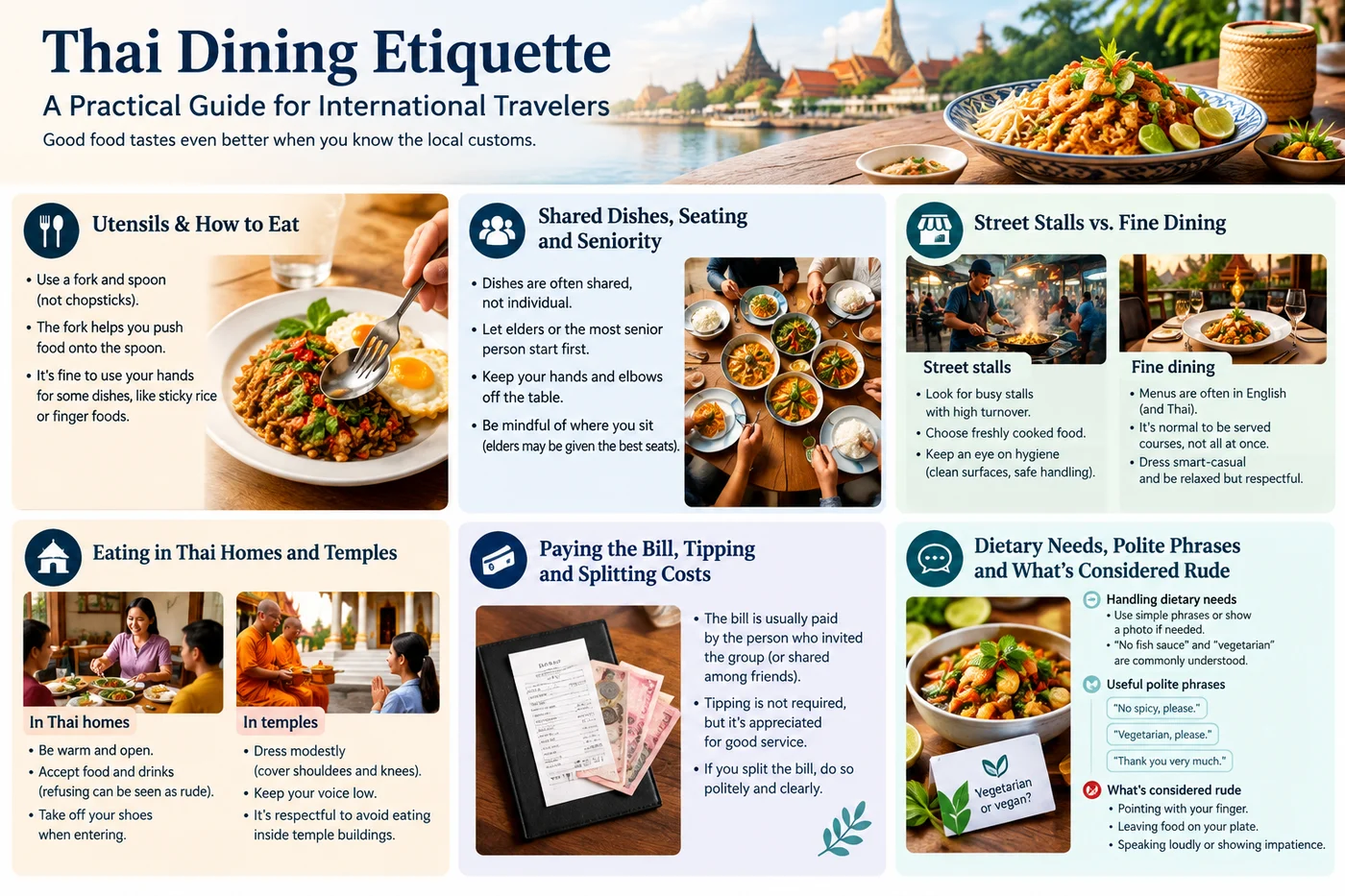
Thai Dining Etiquette: A Practical Guide for International Travelers
Clear, travel-tested guidance on how to eat politely in Thailand — from street stalls and homes to temples and fine dining. Covers utensils, sharing, seating, paying and brief phrases.
Thai dining etiquette matters more than many visitors expect. Whether you’re at a Bangkok rooftop, a busy night market or invited to a Thai home, knowing the basics — utensils, shared-dish manners, seating and simple polite phrases — helps you relax and show respect.
Key Takeaways
- Use a spoon (right hand) and fork (left) — chopsticks are mainly for noodles; sticky rice may be eaten by hand regionally.
- Meals are shared: take modest portions, show deference to elders, and remove shoes in homes and temples.
- Be polite and cautious with gestures (no touching heads, don’t point feet); ask about allergies with a written note or translation app.
Thai dining etiquette: utensils & how to eat
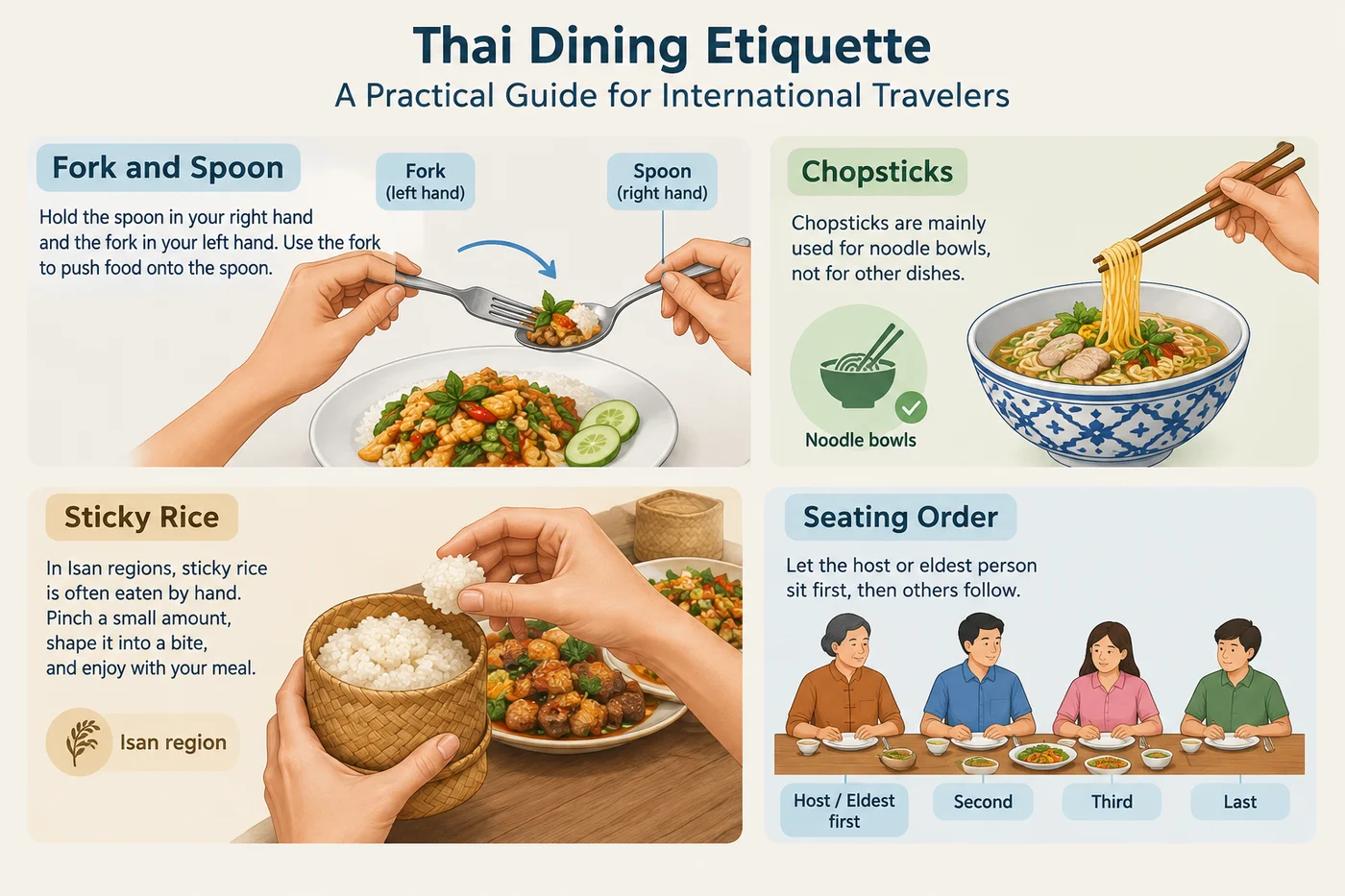
The most practical rule in Thailand is how to use utensils: hold the spoon in your right hand and the fork in your left. The fork is used to push food onto the spoon — the spoon then goes to your mouth. Chopsticks are supplied mainly for noodle dishes; you’ll rarely see them for curries or rice dishes. In northeastern Thailand (Isan) and at some rural meals, sticky (glutinous) rice is commonly eaten by hand — if you’re offered sticky rice, follow the host and use your fingers to take small portions.
Tip: eat at a relaxed pace. Meals are usually family-style, so take modest portions first and go back for seconds rather than filling your plate at once.
Shared dishes, seating and seniority
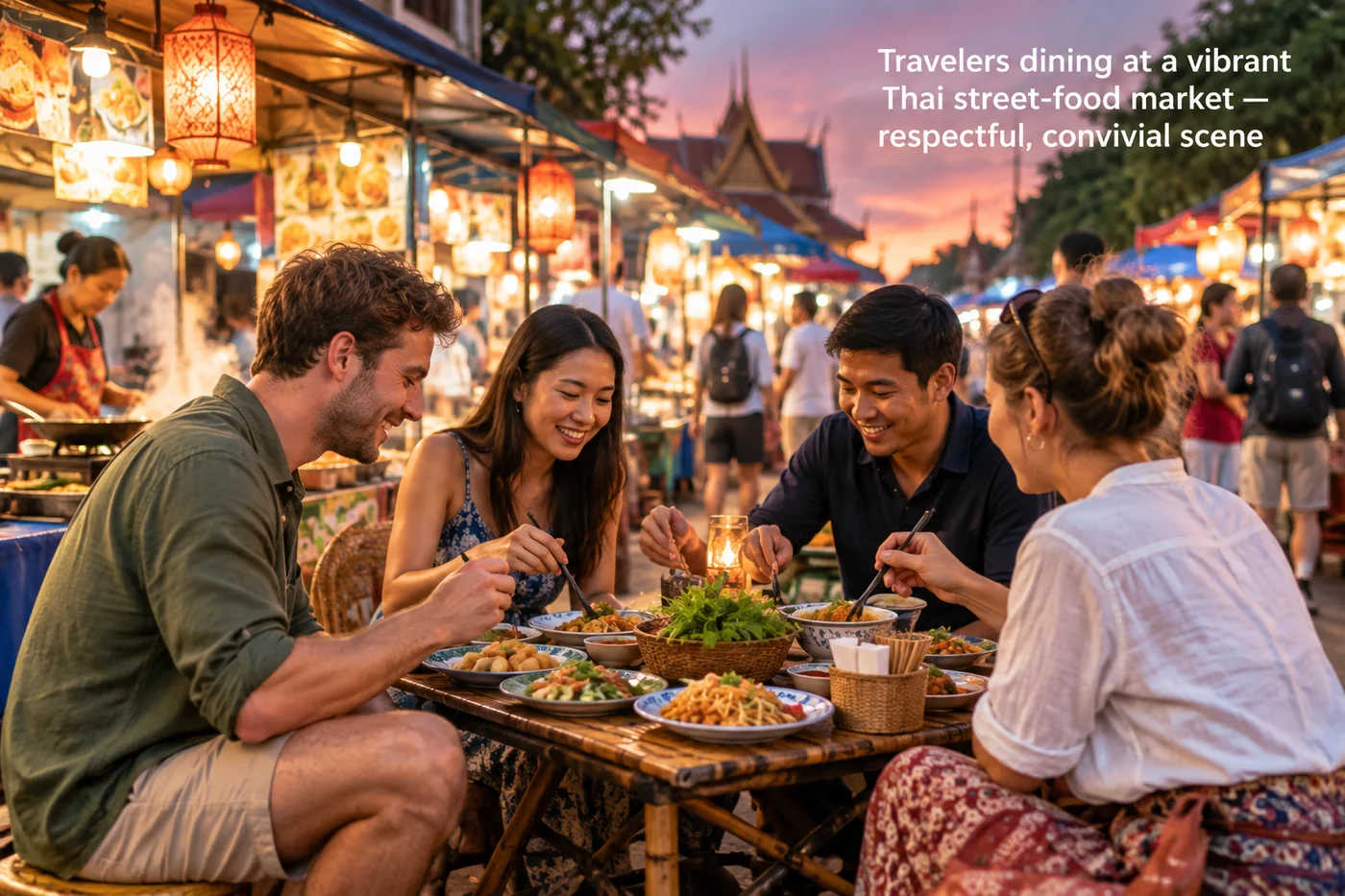
Thai meals are social. Dishes are placed in the centre and everyone helps themselves. Customs to keep in mind:
- Take small portions initially; reach back for more after others have had a turn. This shows consideration.
- Respect seniority: elders or the guest of honour may be offered food first and invited to start. If you’re unsure, wait briefly and let the host or eldest begin.
- When passing plates, use both hands if the item is important or heavy; otherwise a single hand is acceptable. Avoid pointing with your chopsticks or fork.
Small gestures of deference are appreciated: a slight wai (hands together, brief bow) when thanking the host or when introduced to elders is polite but not mandatory in casual restaurant settings.
Street stalls versus fine dining: ordering, hygiene and expectations
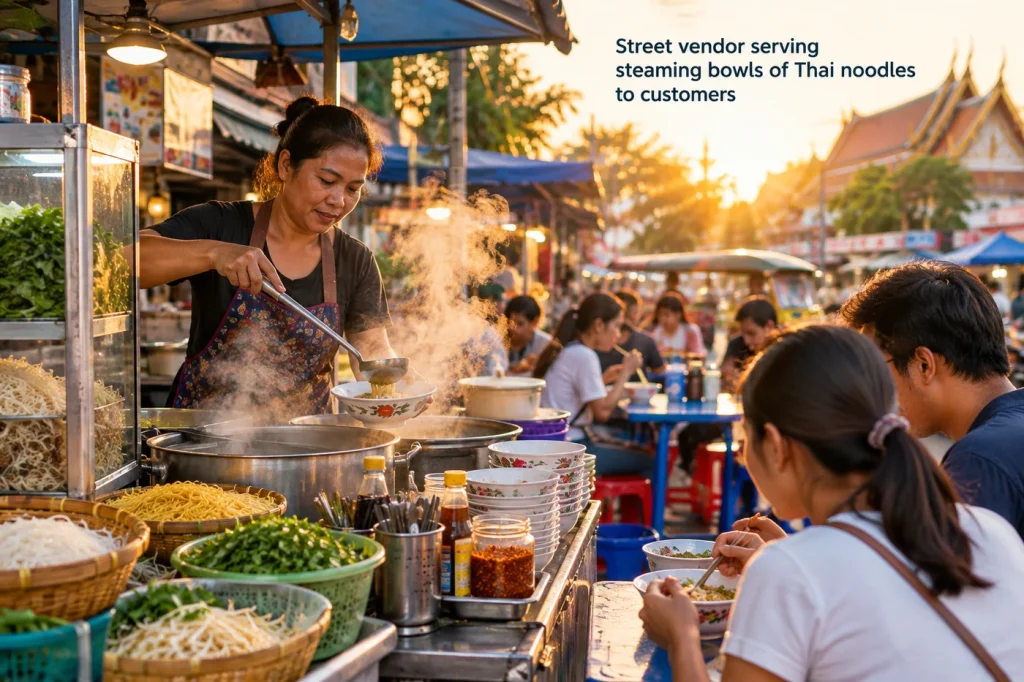
Expect big contrasts between a street stall and an upscale restaurant. At street stalls and casual markets you’ll often order at the counter, eat quickly and clear your own table. Choose busy stalls with high turnover for better freshness. Wash or sanitise your hands before eating and prefer foods cooked hot in front of you.
In mid-range or hotel restaurants, service is more formal: you may be seated by staff, menus and cutlery are provided, and a service charge is sometimes added. In fine-dining venues, dress smartly and follow the lead of the staff for courses and serving order. When in doubt, copy local diners' behaviour — Thais tend to be discreet and patient at meals.
Eating in Thai homes and temples
When invited to a Thai home, remove your shoes at the door, bring a small gift (fruit, sweets or flowers) and wait for the host to invite you to sit or begin. If people sit on the floor, avoid putting your feet where others face; do not sit with your feet pointing at elders or religious images.
Temple meals and offerings follow stricter rules: dress modestly (shoulders and knees covered), remove shoes at temple buildings, speak quietly and avoid public displays of affection. Women should not touch monks; hand donations or plates via a temple assistant if needed. Always follow on-site instructions — temple etiquette is more exacting than restaurant etiquette and rules vary by site.
Paying the bill, tipping and splitting costs
In Thailand the bill is often brought to the table when requested — ask for 'check please' in English or indicate you’re ready to pay. Group meals are commonly handled by the host or split informally. If you want a separate bill, ask politely when ordering or before the food arrives.
Tipping is not strictly required. Many hotels and tourist restaurants include a service charge; otherwise small cash tips or rounding up are appreciated. Practices vary, so avoid fixed rules — see our tipping guide for more details and local examples (internal link opportunity).
Handling dietary needs, polite phrases and what’s considered rude
If you have dietary restrictions or allergies, be clear and prepared: carry a written note in Thai describing your allergies or dietary needs and show it to the cook or server — a translation app or a restaurant card is invaluable. Politely ask if dishes contain fish sauce, oyster sauce, or shrimp paste, common in many Thai recipes.
Basic polite phrases to use: thank you — 'khop khun' (add 'krab' if you are male, 'ka' if you are female for extra politeness). If you don’t know local language, a smile and brief wai often suffice.
Avoid these actions: touching someone’s head, pointing feet at people or Buddha images, loudly criticising food or service, and gesturing aggressively. Finishing everything on your plate isn’t a universal signal — don’t assume it always means you’re still hungry.
Practical Tips
Carry hand sanitiser or wet wipes before eating street food. Keep a small card in Thai that lists allergies/dietary restrictions. When unsure, watch the host and follow their lead. For tipping practice, check the menu for a service charge and consider small cash tips otherwise.
Important Considerations
Customs vary by region and setting — Bangkok restaurants differ from Isan homes. Temple rules are stricter than restaurant etiquette; treat the monarchy and political topics with care and avoid public criticism. Tipping norms can change, so look for service-charge notes on bills.
Planning more of your trip? Browse our
Thailand Food & Restaurant Guides
for more practical Thailand food and dining information.
Final Thoughts
Respectful behaviour at meals opens doors in Thailand: people appreciate effort and humility more than perfect knowledge of every rule. Use the spoon-and-fork method, share modestly, defer to elders, and keep a polite attitude. With a few simple preparations — a written allergy note, a translation app and the right phrases — you’ll eat confidently across street markets, homes and upscale restaurants.
Sources & Further Reading
- Visit Thailand Today — Famous Thai Dishes (how to eat & street food guidance)
- Thailand Foundation — Thailand in Brief (Thai values, temple etiquette)
- Centers for Disease Control and Prevention — Thailand travel health
Transport schedules, fares and operating rules can change. Always verify time-sensitive details with the official operator before travel.