HOTEL GUIDE
Thailand Night Markets: The Practical Guide to Where to Go, What to Buy and How to Bargain
A practical traveller’s guide to Thailand night markets: top markets by region, what to buy, bargaining etiquette, money and safety tips, transport and quick itineraries.
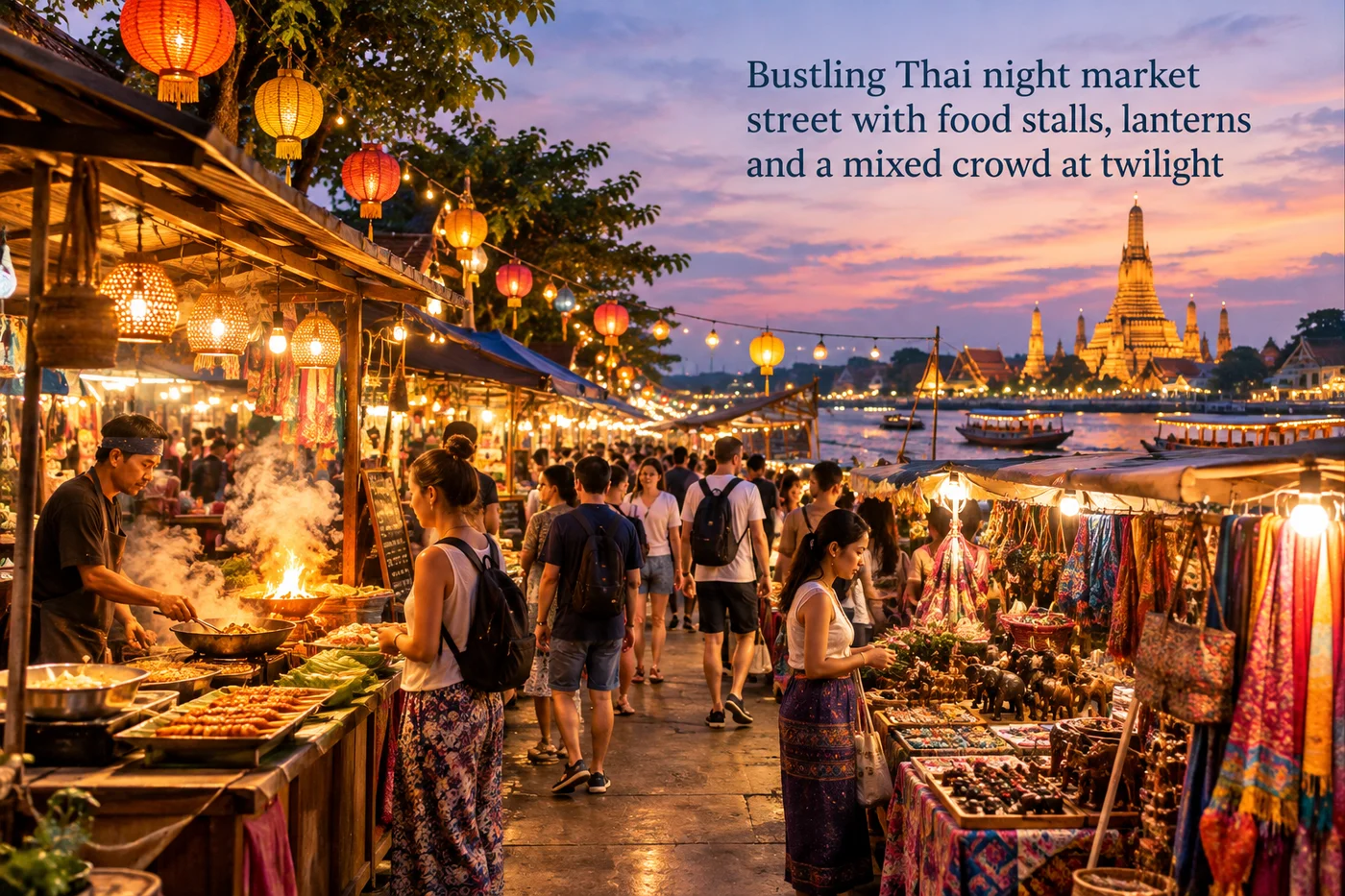
Thailand night markets are a core part of any visit to the country: lively outdoor bazaars where street food, clothing, handicrafts and nightlife mix in neighbourhoods and tourist hubs. This practical guide explains where to go in Bangkok, Chiang Mai, Phuket and beyond, what to buy, how to bargain politely and how to stay safe so you can plan a successful market evening.
Key Takeaways
- Night markets vary: daily bazaars, weekend walking streets and branded night-market complexes—check official pages before you go.
- Bargain politely for non-food goods; use cash but expect growing PromptPay/QR options.
- Prioritise simple safety: secure valuables, carry minimal cash and save Tourist Police 1155.
Overview: What a night market means in Thailand
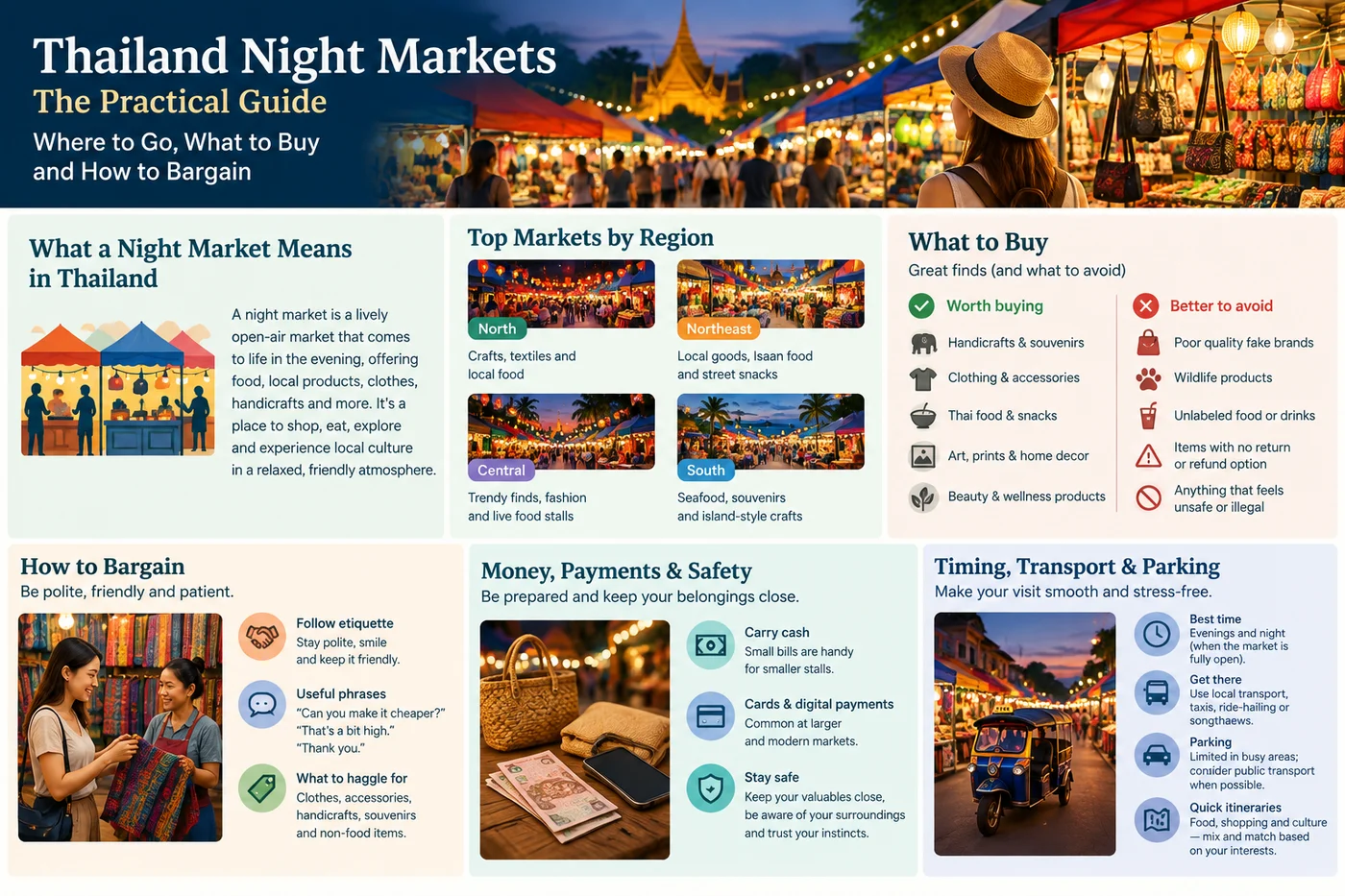
Night markets in Thailand are not a single system but a mix of municipal markets, private operators and community events. Expect live entertainment, food streets, clothing and handicraft stalls, vintage vendors and small bars. Some are daily (night bazaars), while others are weekend walking streets or seasonal markets. Because operators and opening patterns change, always confirm the current status on official market pages or local tourism sites before you travel.
Thailand night markets: Top markets by region
Bangkok — For a tourist‑friendly riverside option, Asiatique The Riverfront blends stalls with restaurants and shows and typically runs late into the evening; for lively local scenes look for rotating night bazaars and Train/Rot Fai market branches (names and locations have changed over time, so verify current sites). Chiang Mai — The Sunday Walking Street (Ratchadamnoen) and Saturday Wualai walking market are weekend highlights; the Night Bazaar operates most evenings with northern crafts and food. Phuket & islands — Weekend markets like Phuket Naka and local night bazaars focus on seafood snacks and souvenirs. Other regional favourites include Hua Hin’s Cicada Market (art and handmade goods, often Fri–Sun) and many community markets on weekend evenings. These examples are representative; markets can move, rebrand or close, so check official pages or municipal listings.
What to buy: by category (and what to avoid)
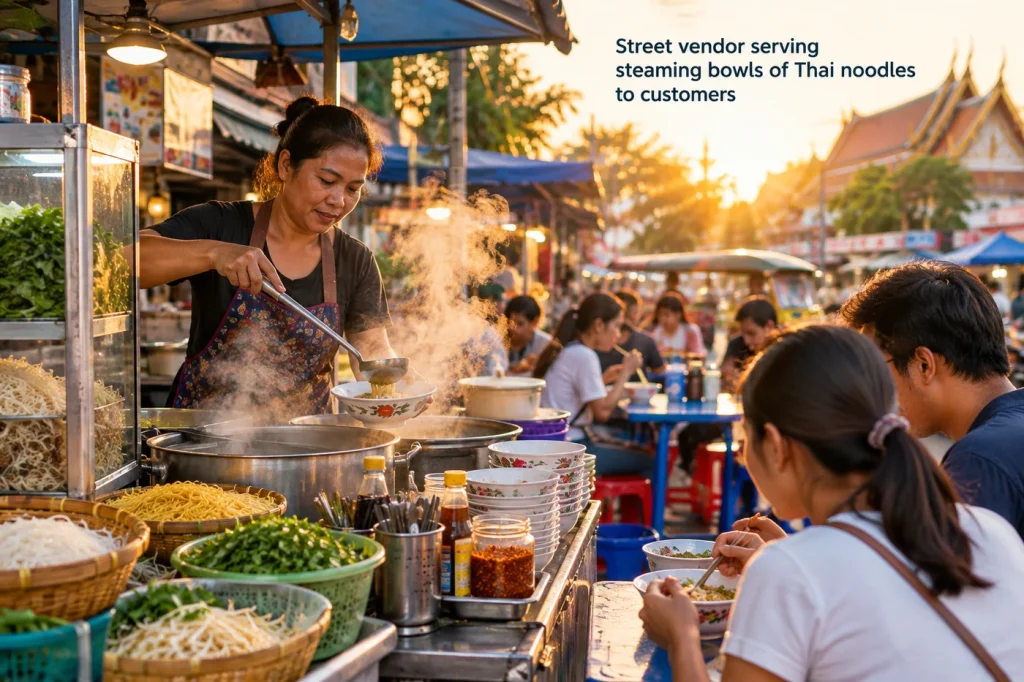
Food: Night markets are best for tasting local street food—grilled skewers, noodles, desserts and drinks. Use visual cues: busy stalls and hot cooking are safer signs. Clothing & textiles: Cheap fashion, T‑shirts and local textiles abound—inspect stitching and fabric. Handicrafts & souvenirs: Look for locally made crafts in Chiang Mai and artisanal stalls at markets like Cicada. Vintage & antiques: Some Rot Fai/Train markets specialise in retro finds; shop carefully and check authenticity. What to avoid: counterfeit branded goods (can have customs/legal consequences at home), poorly made electronics and unsealed cosmetics. If you plan to bring food or plant products home, check customs rules.
How to bargain: etiquette, useful phrases and what to haggle for
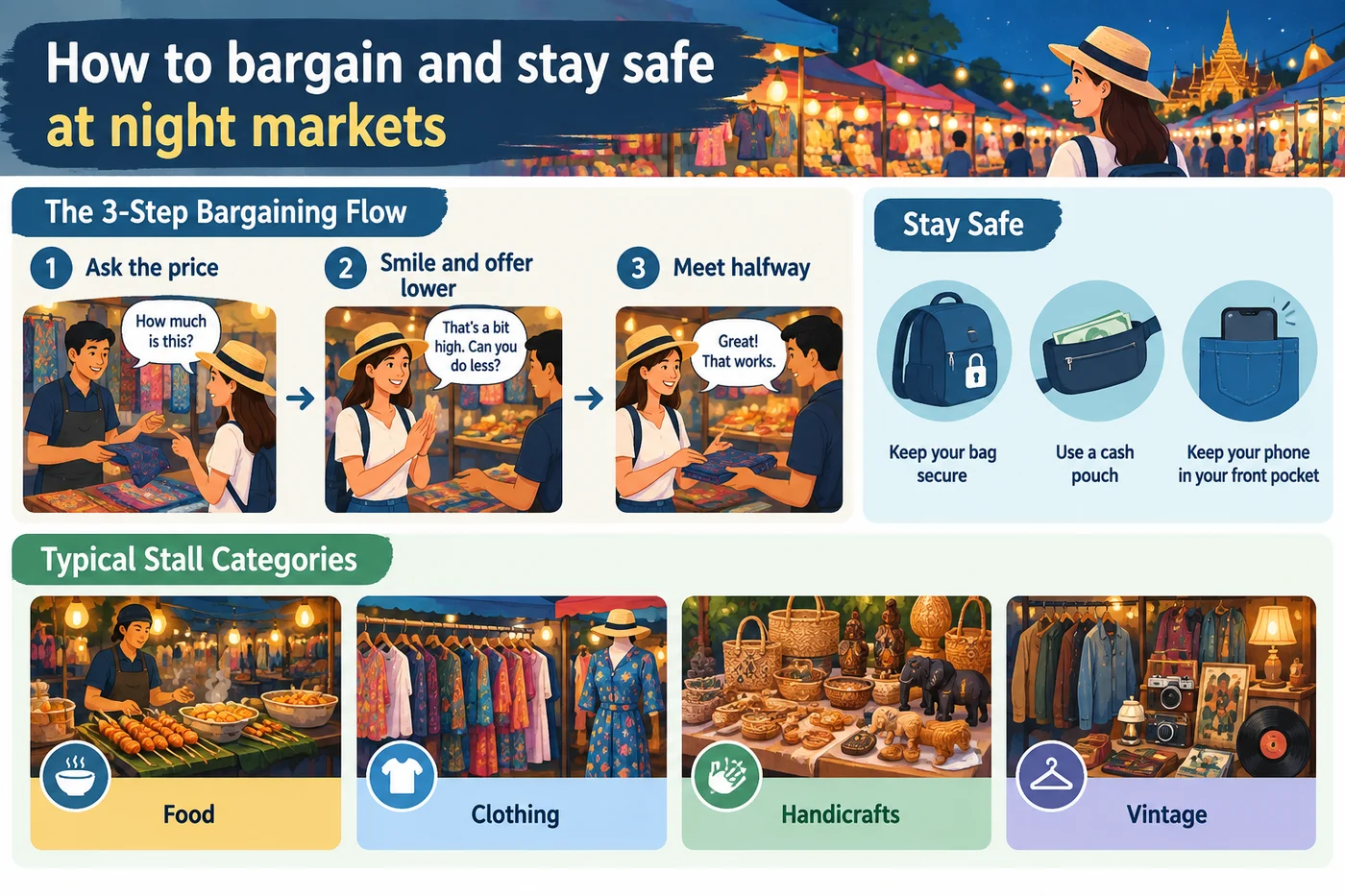
Bargaining is normal for non‑food stalls but not for food or fixed‑price shops. Keep it friendly and light-hearted—smiles and patience work better than confrontation. Start by asking the price instead of assuming a discount and offer a lower, reasonable counter‑price. Useful Thai phrases: “Tao rai?” (How much?), “Lot noi dai mai?” (Can you lower the price a little?), and finish with “Khop khun khrab/ka” (Thank you—male/female polite particle). Avoid aggressive haggling; if a price feels unfair, simply walk away—vendors often call you back with a better offer. Don’t pressure small artisans into unsustainable low prices.
Money, payments and safety at markets
Cash is still king at most stalls; carry small notes and coins for easy change. QR/PromptPay payments and TAT visitor options (TAGTHAi) are increasingly accepted at larger markets but availability varies by vendor. Use ATMs wisely—prefer bank ATMs and avoid obvious skimmers. For safety: keep valuables in a front pocket or inside a zipped bag, watch for distraction scams in crowded areas and travel with a copy of your passport rather than the original when possible. Save emergency numbers: Tourist Police 1155 and your embassy contact. Note that crowded markets are common pickpocket targets—stay alert.
Timing, transport, parking and quick itineraries
Most markets set up around late afternoon and wind down by around 22:00–23:00, but hours vary by market and season—check official sites. Transport: in cities use public metro/BTS where available, trusted taxis or ride‑apps (Grab). Tuk‑tuks can be fun for short hops but agree price beforehand. If you drive, many larger markets offer paid parking nearby; at smaller walking streets parking may be limited—plan to walk from a public lot or hotel. Sample two‑hour evening: start with street‑food starters, browse clothing/handicraft stalls, bargain for a souvenir, then finish at a café or riverside bar. Pair market visits with nearby hotels—see HotelForU’s Bangkok and Chiang Mai hotel guides for convenient stays.
Practical Tips
1) Check a market’s official social page or municipal tourism site the day before you go. 2) Carry small notes and use a discreet money pouch. 3) Photograph prices or items you like before bargaining so you can compare. 4) When eating, pick busy stalls where food is cooked to order.
Important Considerations
Market names, locations and opening patterns change frequently—confirm times with official sources. Avoid buying counterfeit goods that could cause customs trouble. Be mindful of festival days, public holidays and local rules that may alter hours or alcohol service.
Planning more of your trip? Browse our
Thailand Travel Guides
for more practical Thailand travel information.
Final Thoughts
Thailand night markets are practical, sensory highlights of any trip—if you plan with a few simple safety and bargaining rules you’ll enjoy great food, local crafts and memorable evening culture. Double‑check market pages before you go, carry minimal valuables and embrace the relaxed, friendly bargaining spirit.
Sources & Further Reading
- Tourism Authority of Thailand – Markets and Experiences
- Visit‑Thailand.org – Chiang Mai night markets guide
- Asiatique The Riverfront listing via VisitThailandToday
- GOV.UK – Foreign travel advice: Thailand (safety and security)
Transport schedules, fares and operating rules can change. Always verify time-sensitive details with the official operator before travel.