HOTEL GUIDE
Traditional Thai Cooking Techniques: Stir‑Frying, Pounding, Grilling, Steaming and More
A concise traveler’s guide to the core Thai cooking techniques, how each method shapes flavor and texture, regional variations, menu words to watch for, and safe ways to experience them.
Thai cooking techniques shape the balance of sweet, sour, salty and spicy—and the textures Thai food is famous for. This guide explains the core methods you’ll see in markets, restaurants and cooking classes, how each creates specific aromas and mouthfeel, and how travelers can recognise and safely seek authentic experiences.
Key Takeaways
- Techniques — from high‑heat wok‑frying to mortar pounding — directly create Thai flavours and textures you taste in signature dishes.
- Look for menu verbs (ผัด phat, ตำ tam/tum, ย่าง yang, นึ่ง neung) and trust hot, well‑cooked street dishes for safety.
- Choose dishes and classes that emphasise traditional tools (mortar, charcoal grill, banana‑leaf steamer) for the most authentic experience.
Thai cooking techniques: Core methods and their effects
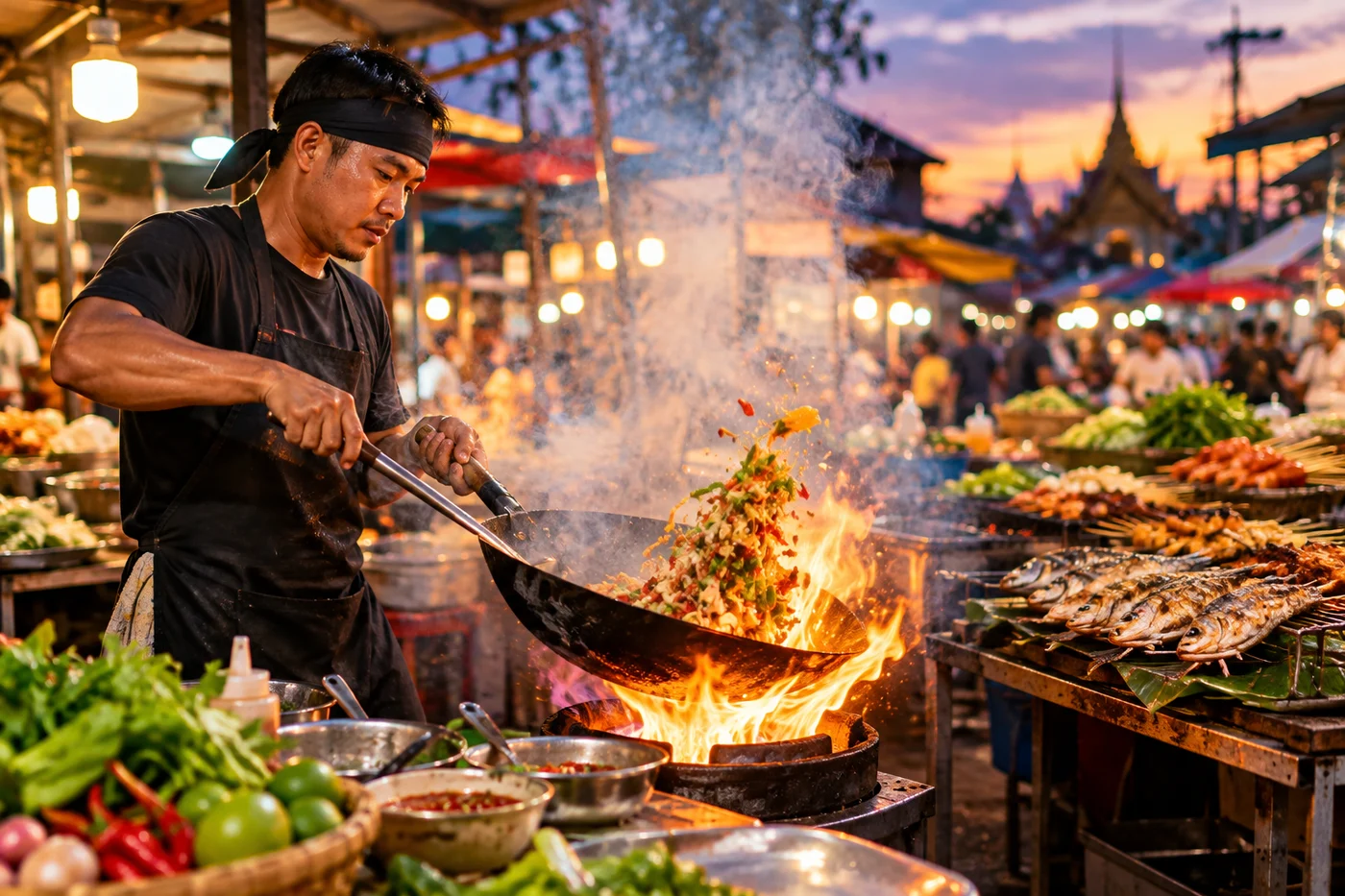
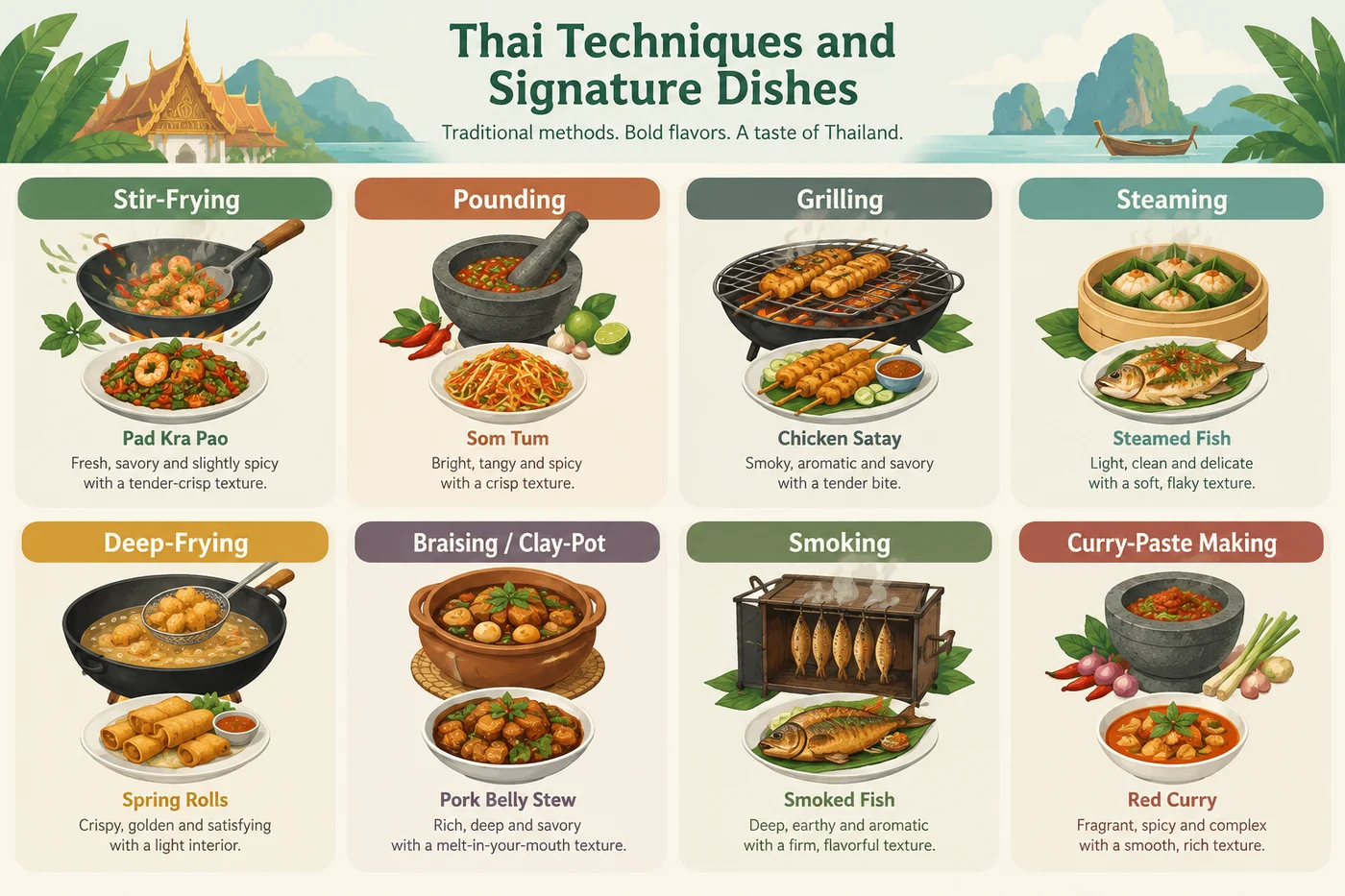
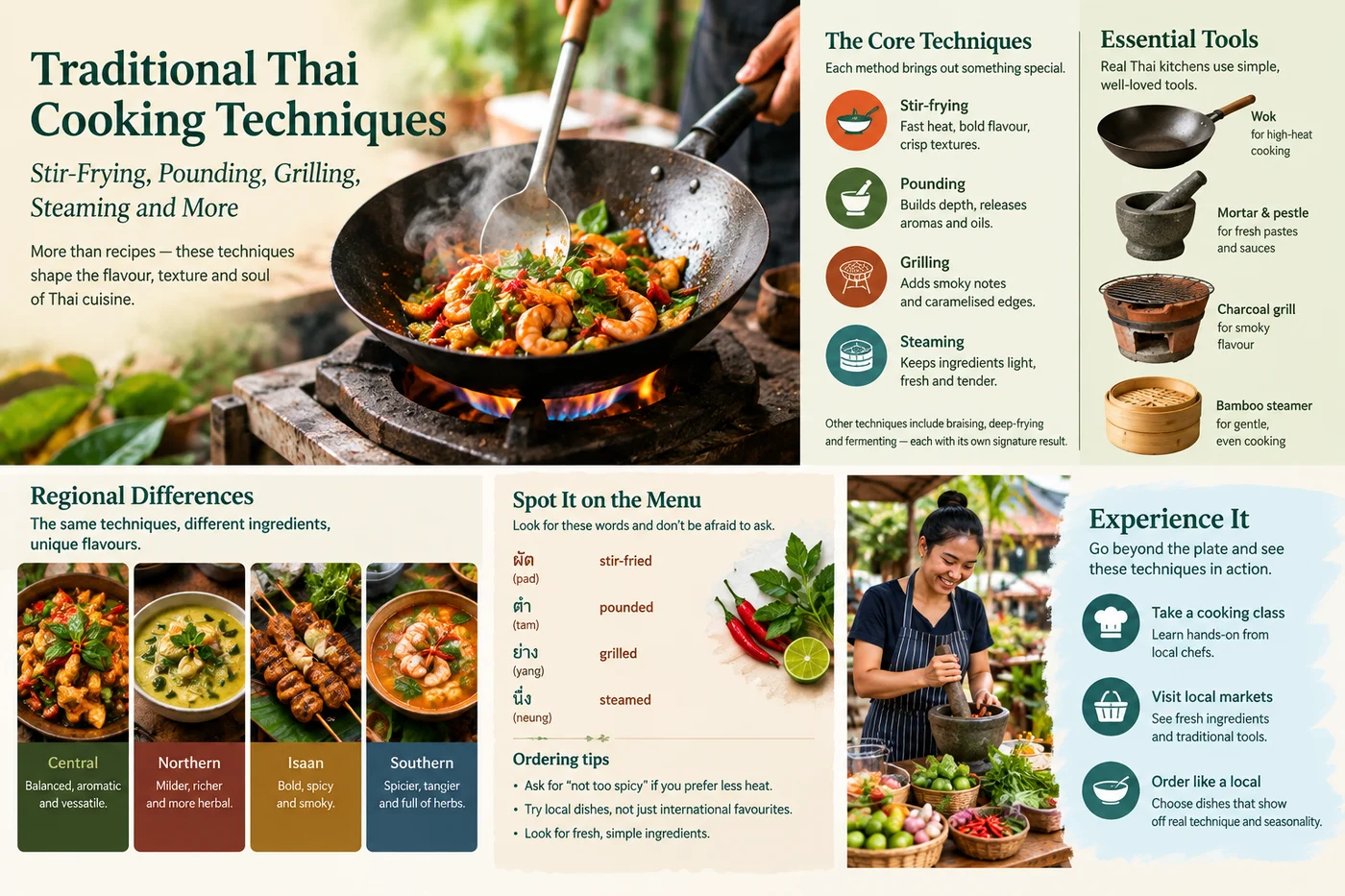
Stir‑frying (ผัด phat): High‑heat wok work sears proteins and vegetables, producing bright textures and the sought‑after smoky 'wok‑hei'. Representative dishes: Pad Kra Pao (stir‑fried holy basil), Pad Thai.
Pounding in a mortar (ตำ tam / using krok & sak): Pounding bruises herbs and releases essential oils differently than chopping; crucial for green and red curry pastes and salads like Som Tam (green papaya salad). Expect more aromatic, slightly rustic textures.
Charcoal grilling (ย่าง yang): Direct charcoal heat gives caramelisation and a smoky layer—try Gai Yang (grilled chicken), Muu Yang (grilled pork) and Pla Pao (salt‑crusted grilled fish).
Steaming (นึ่ง neung; ห่อหมก hor mok parcels): Gentle cooking preserves delicate textures and moisture—Hor Mok (steamed curry custard) and sticky rice in bamboo are classic results.
Deep‑frying and dry‑frying (ทอด tod): Creates crisp textures and golden flavours—tod man pla (fish cakes) and crispy sun‑dried pork. Dry‑frying (no oil or little oil) is used for some spice pastes to intensify aroma.
Braising and clay‑pot simmering: Slow, moist heat builds depth and tender textures—examples include kaeng hung lay (northern pork curry) and simmered curries.
Smoking and preservation: Regional smoking and fermenting methods (pla ra, nam pla) add strong umami and character—expect assertive flavours in Isaan and some southern dishes.
Curry‑paste making: Traditionally pounded in a mortar, pastes gain a texture and aromatic lift many cooks argue cannot be duplicated perfectly by a blender.
Essential tools — what they tell you about authenticity
Mortar and pestle: Two common types — a heavy shallow stone mortar for pastes and a deep wooden or clay mortar for salads — indicate dishes made the traditional way.
Wok and high heat: Restaurant woks over powerful burners produce the characteristic sear; small stalls may use charcoal woks for extra smokiness.
Charcoal grills and banana‑leaf steamers: Visible charcoal grills on food carts signal true yang flavour. Banana leaves or bamboo steamers are a sign that hor mok or sticky rice was steamed in the classic manner.
Clay pots: If you see dishes served or cooked in clay pots, expect slow‑cooked, concentrated flavours.
When booking a market cooking class, ask whether they use mortar and pestle, charcoal grills or banana‑leaf steaming if you want traditional technique exposure.
Regional differences: where techniques change the menu
Isaan (Northeast): Expect pounding (som tam) and strong fermented and grilled flavours (pla ra, grilled meats).
Central Thailand: A wide range of techniques—stir‑fries, curries and soups dominate; you’ll often see high‑heat wok cooking.
Northern Thailand: Lighter use of coconut milk; roasting, slow braises and herb blends define texture and taste (e.g., kaeng hung lay).
Southern Thailand: Coconut, curry pastes pounded with roasted spices, and charcoal grilling of fish and seafood are common.
Travellers should avoid broad 'authenticity' claims; each region adapts techniques to local ingredients and climate.
How to recognise and seek out these techniques (menu words and ordering tips)
Common verbs and menu words (Thai script — romanization — meaning):
– ผัด (phat / pad) — stir‑fried
– ตำ (tam/tum) — pounded (Som Tam)
– ย่าง (yang) — grilled
– นึ่ง (neung) — steamed
– ทอด (tod) — fried
– ต้ม (tom) — boiled/simmered
– แกง (kaeng) — curry/simmered dish
Practical ordering tips:
– Look for the verbs above on menus or stall boards.
– Choose hot, steaming or freshly charred items from busy stalls — turnover matters for freshness.
– If you want mortar‑pounded flavours, ask whether curry paste or salads are made by hand.
Food safety notes:
– Prefer fully cooked dishes (grilled, steamed, fried).
– For raw or lightly dressed dishes (some salads or shellfish), pick popular vendors with visible hygiene and turnover.
– When sampling street food, choose crowded stalls and watch how food is handled and stored.
Experience it: classes, markets and what to order
Take a market‑plus‑kitchen class that demonstrates pounding pastes, wok technique and grilling over charcoal if you want a hands‑on overview. Ask whether the class uses traditional tools.
Dishes to try for each method:
– Stir‑fry: Pad Kra Pao, Pad Pak (stir‑fried greens)
– Pounding: Som Tam, freshly pounded red or green curry paste
– Grilling: Gai Yang, Muu Ping skewers, Pla Pao
– Steaming: Hor Mok, sticky rice in banana leaf
– Deep‑frying: Tod Man Pla (fish cakes), crispy pork belly
– Braising: Kaeng Hung Lay, massaman curry (slow simmer)
– Smoking: Smoked fish dishes in northern or Isaan eateries
For restaurant choices, check HotelForU restaurant guides for curated spots that emphasise traditional techniques.
Practical Tips
Ask vendors which techniques they use and watch cooking so you can judge freshness. For authentic fragrance and texture, choose dishes made with a mortar and pestle, grilled over charcoal, or steamed in banana leaf. In markets, select busy stalls and prefer hot‑served food. If you have food allergies, explain in simple Thai or show a translated card; many classes will accommodate dietary needs.
Important Considerations
Techniques vary by region; modern kitchens often use blenders or electric stoves—this is not ‘less authentic,’ just different. Equipment limits (home burners vs. restaurant burners) affect results like wok‑hei. Avoid assuming one dish is the single 'most authentic' Thai plate.
Planning more of your trip? Browse our
Thailand Food & Restaurant Guides
for more practical Thailand food and dining information.
Final Thoughts
Understanding Thai cooking techniques helps you taste why dishes feel and smell the way they do—whether it's the oily roast aroma from a charcoal grill or the bright lift from a freshly pounded paste. Seek out markets, classes and restaurants that show their methods; the tools and verbs you see on menus will tell you what to expect. Taste widely, stay safe, and let the technique guide your choices.
Sources & Further Reading
- Tourism Authority of Thailand – local food overview
- David Thompson – notes on Thai techniques (The Guardian)
- J. Kenji López‑Alt — The Wok (technique context)
- Leela Punyaratabandhu (SheSimmers) — mortar and paste discussion
Transport schedules, fares and operating rules can change. Always verify time-sensitive details with the official operator before travel.