HOTEL GUIDE
Where to Find Authentic Regional Thai Food: A Traveler’s Guide
Practical, city-by-city advice for travellers who want to eat true regional Thai specialties — where to go, what to order, how to spot authentic vs. tourist versions, and quick ordering tips.
Thailand’s food is often grouped into four regional traditions — Isan (Northeast), Northern (Lanna), Central (Bangkok/central plains) and Southern — and travellers commonly ask where to try authentic regional Thai food. This guide skips long history and gives city-by-city, practical directions: where to eat each region’s true specialties, which dishes to order, how to spot authentic vs. tourist-adapted versions, and simple ordering tips when you don’t speak Thai.
Key Takeaways
- Seek markets, single-dish stalls and neighbourhood eateries for the most authentic regional flavours.
- Look for regional signals (sticky rice and mortar-prepared som tam in Isan; khao soi shops and sai ua in the North; coconut-rich curries and seafood in the South).
- Bring a short allergy/diet card in Thai and use neighbourhood markets or specialist restaurants to find true local versions.
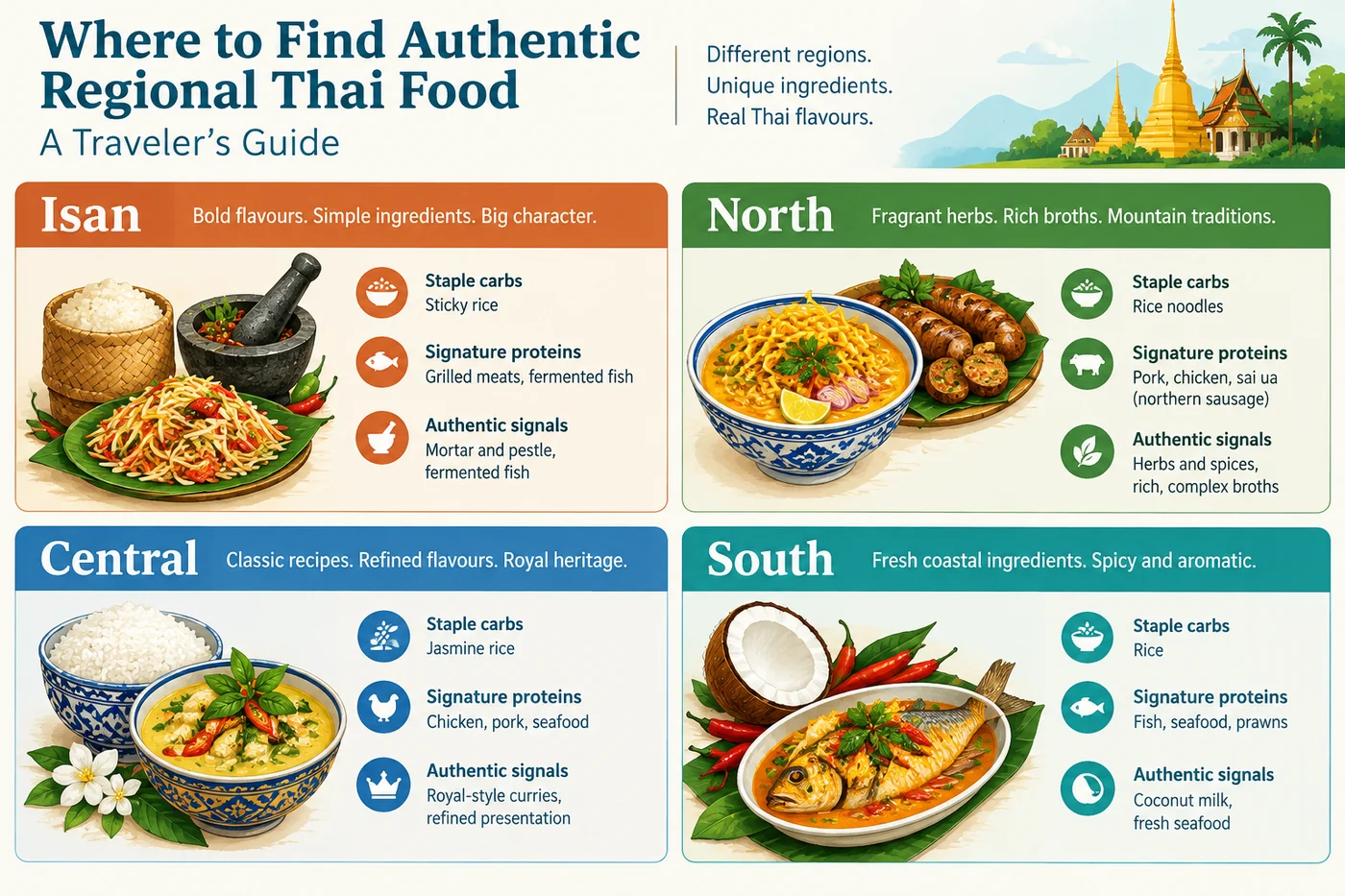
Authentic regional Thai food — city-by-city where to eat
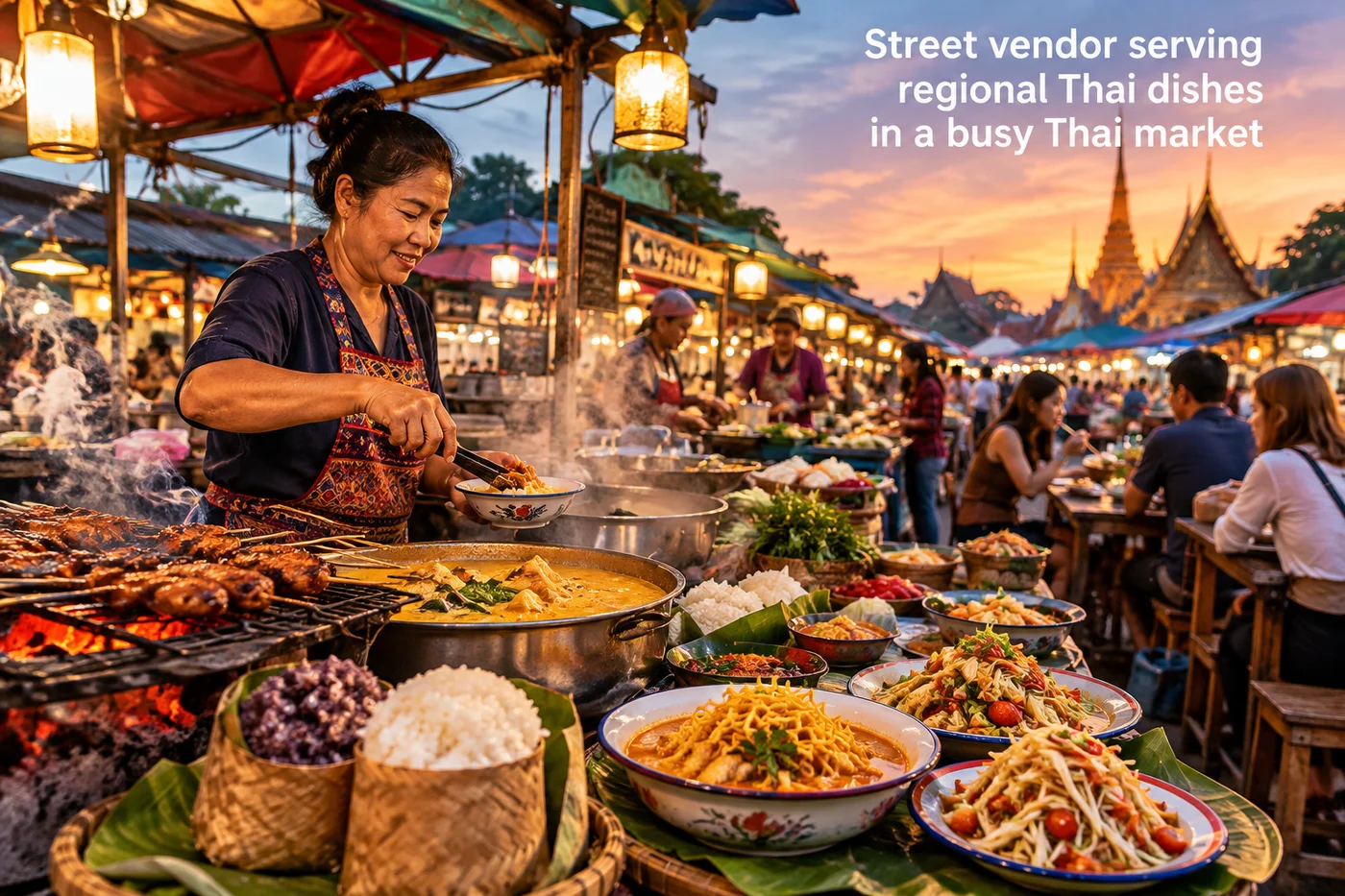
This section lists practical places and venue types in major destinations. Focus on markets, specialist single-dish shops, night bazaars and family-run neighbourhood restaurants rather than tourist dining rooms. When in doubt, follow the locals: long queues and plates of sticky rice or bowls of khao soi are reliable signals.
Isan (Northeast): Khon Kaen, Ubon, and Isan in Bangkok
What to expect: Isan cooking centres on sticky (glutinous) rice, grilled meats, fiery salads and fermented condiments such as pla ra. Where to eat: in Isan cities like Khon Kaen and Ubon, seek morning and evening markets, roadside kai yang (grilled chicken) stalls, and open-air larb counters. In Bangkok neighbourhoods — Ekkamai, Phra Khanong and around Victory Monument — look for Isan-style clusters of eateries advertising som tam, larb and sticky rice. What to order: som tam (green papaya salad), larb (spicy minced meat salad), kai yang and sticky rice. Telltale signs of authenticity: mortar-and-pestle preparation, visible sticky‑rice baskets and the presence of pla ra or fermented fish on condiment tables. Dietary notes: Isan is meat-forward; request no fish sauce or reduced spice, and carry a Thai-language dietary card for allergies.
Northern (Lanna): Chiang Mai, Chiang Rai and market single-dish shops
What to expect: Northern food uses fragrant herbs, pork, and less coconut milk and sugar than central dishes. Chiang Mai’s night markets, neighbourhood khao soi shops and morning wet markets are where you’ll find authentic Lanna cooking. Where to eat: Chiang Mai’s old city and Warorot Market for sai ua (Northern sausage), nam prik dips and khao soi shops; Chiang Rai’s markets offer regional variations. What to order: khao soi (curry noodle), sai ua, nam prik ong (tomato-pork dip) and sticky rice sides. Authentic signals: clear local ingredients (fresh herbs, pork sausages), single-dish stalls specialising in one Northern item, and simple market seating. Vegetarian options exist but ask whether broths include fish sauce or pork stock.
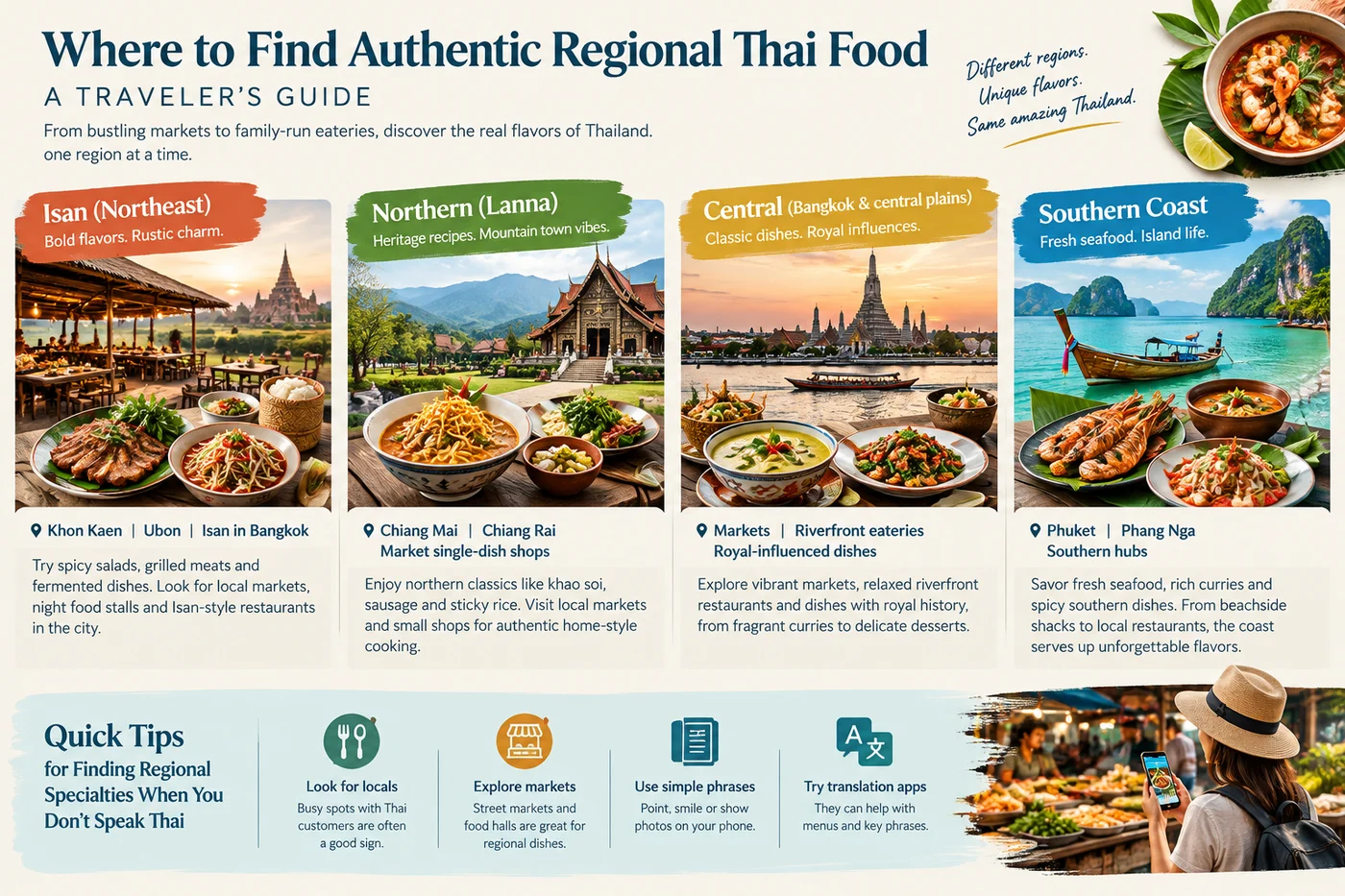
Central (Bangkok & central plains): markets, riverfront eateries and royal-influenced dishes
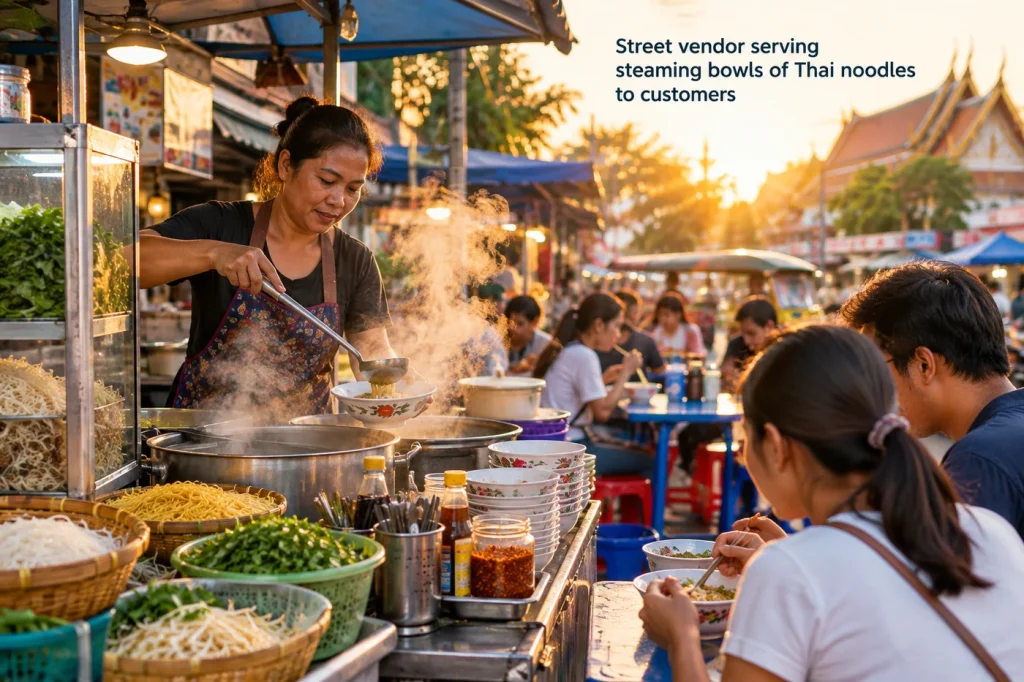
What to expect: Central Thai cooking underpins many internationally known dishes and reflects royal‑court refinement and trade influences. Where to eat: Bangkok’s street-food lanes, Chinatown (Yaowarat) for seafood and noodles, Banglampoo/Banglamphu for classic street plates, and large markets like Or Tor Kor for local produce and single-dish vendors. What to order: phat thai (try a humble market stall rather than a touristy restaurant), tom yum, green curry and jasmine‑rice meals. How to spot authentic vs. tourist versions: authentic stalls balance sweet, salty, sour and spicy without overly sweet shortcuts; watch for mortar-and-pestle preparation and modest, busy counters. Internal link opportunity: link to our HotelForU Bangkok restaurant and street-food guide for neighbourhood recommendations and maps.
Southern coast: Phuket, Phang Nga and southern hubs
What to expect: southern cuisine is coconut-rich, spicier and influenced by Malay and Muslim ingredients — coastal markets, fish-based curries and halal food are common. Where to eat: Phuket and Phang Nga night markets, fishing-boat harbourside stalls and Muslim-run restaurants for dishes like massaman (noting its debated origins), gaeng tai pla and kua kling. What to order: spicy coconut curries, fresh seafood plates and curries that name strong local ingredients (tai pla). Authentic signals: coconut cream visibly used, whole-fish preparations in coastal settings, and presence of halal certificates where relevant. Dietary notes: many southern dishes are naturally halal; ask about shrimp paste or fish sauce for vegetarian needs.
Quick tips for finding regional specialties when you don’t speak Thai
Use simple local cues: point at dishes on display, follow crowds, and look for translators on food carts. Carry a short Thai card stating allergies or 'no pork' / 'no shellfish' and the phrase mai pet (not spicy) or peu pet (less spicy). Learn a few dish names in Thai (e.g., som tam, khao soi, larb, gaeng) to speed ordering. Markets and single-dish shops are friendlier for non-Thai speakers than formal restaurants; use mobile maps to find top-rated local markets and ask hotel staff for the nearest reputable market stall.
Practical Tips
Bring a printed allergy/diet card in Thai; favour morning/early-evening markets and specialist single-dish stalls; watch for local queues; ask for 'ped nit noi' (a little spicy) if you want milder food. For halal options in the South, look for Muslim-run shops and halal signage. Use HotelForU’s Bangkok street-food guide to match neighbourhoods to dishes.
Important Considerations
‘Authentic’ covers many local variants — don’t expect a single definitive recipe. Some regional items use fermented fish or undercooked elements; travellers with sensitive stomachs or allergies should exercise caution. Seasonal specialties may be unavailable outside their season; check locally.
Planning more of your trip? Browse our
Thailand Food & Restaurant Guides
for more practical Thailand food and dining information.
Final Thoughts
Eating regionally in Thailand is most rewarding when you focus on place and vendor type rather than chasing a single 'authentic' plate. Markets, night bazaars and family-run stalls are your best bet for true regional flavours. With a few Thai phrases or a printed dietary card, you can explore Isan grills, Lanna noodle shops, central-market classics and southern coconut-curry kitchens with confidence.
Sources & Further Reading
- Tourism Authority of Thailand — Discover Thai cuisine through its famous four regions
- Thailand Foundation — Central Thai cuisine overview
- AsiaByLocals — Khao soi Chiang Mai food guide
Transport schedules, fares and operating rules can change. Always verify time-sensitive details with the official operator before travel.