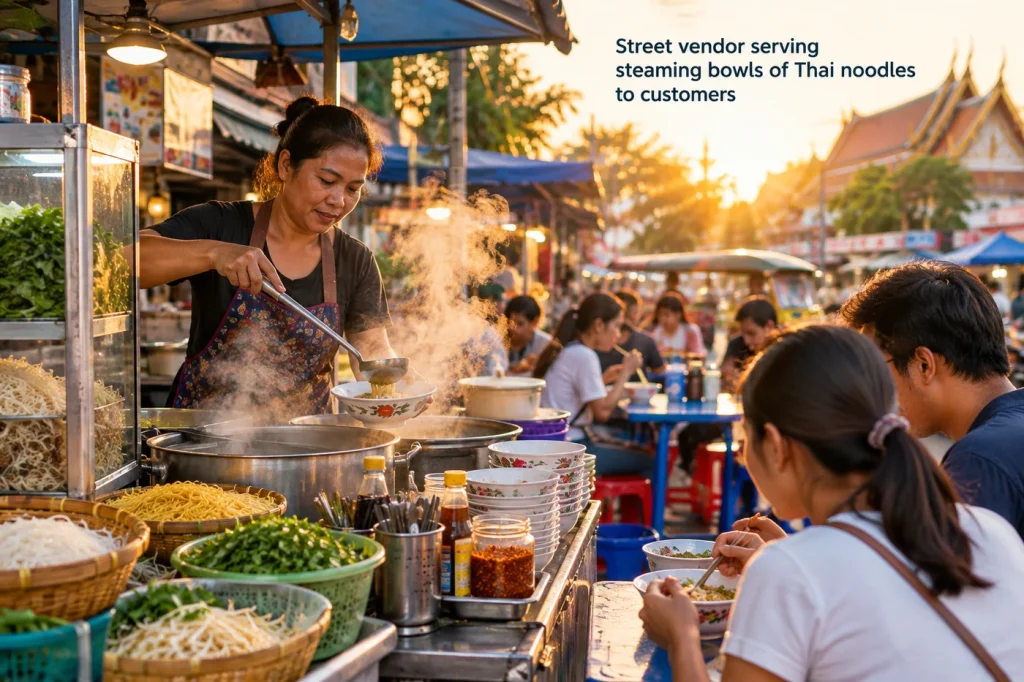
HOTEL GUIDE
The Traveler’s Guide to Thai Sauces and Condiments
Understand the bottles and bowls on Thai tables. Learn what each sauce tastes like, how to use it with street food and restaurant dishes, which contain fish or nuts, and simple DIY mixes.
If you’ve ever stared at the little bottles and bowls on a Thai table, this guide is for you. This practical primer explains the most common Thai sauces and condiments you’ll see in restaurants and street stalls: what they taste like, how Thai diners use them, which contain fish or nuts, and how to ask for or leave them out.
Key Takeaways
- Most Thai dishes are finished at the table; taste first, then adjust with salty (fish sauce), sour (vinegar/lime), sweet (sugar), and spicy condiments.
- Fish-based condiments (nam pla, shrimp paste, many nam phrik) are very common; peanuts and soy are frequent allergens—ask before you eat.
- Learn a few Thai phrases (e.g., 'khaw mai sai nam pla') and simple DIY mixes to customize street-food flavors safely.
Quick primer: Thai taste balance
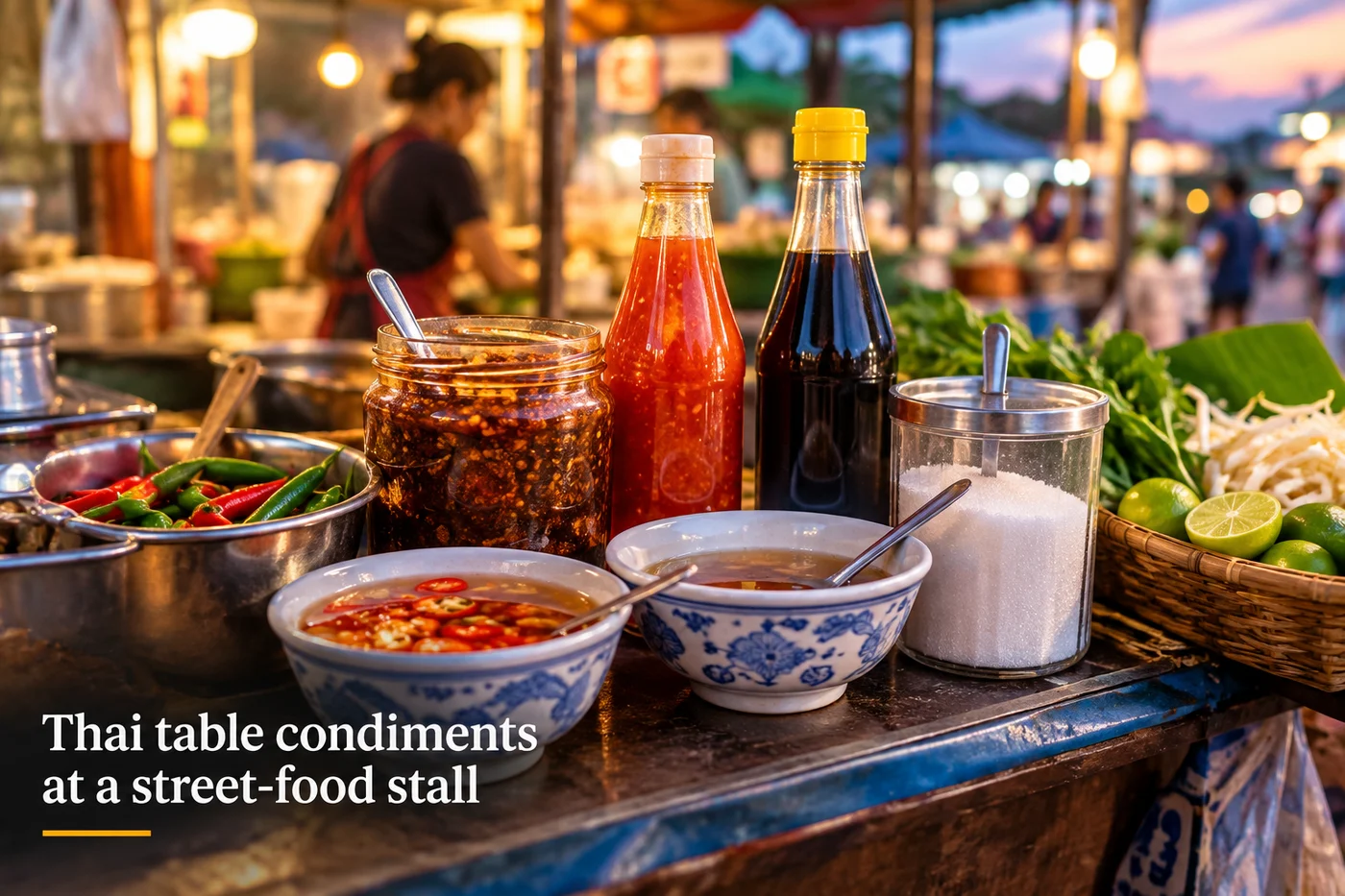
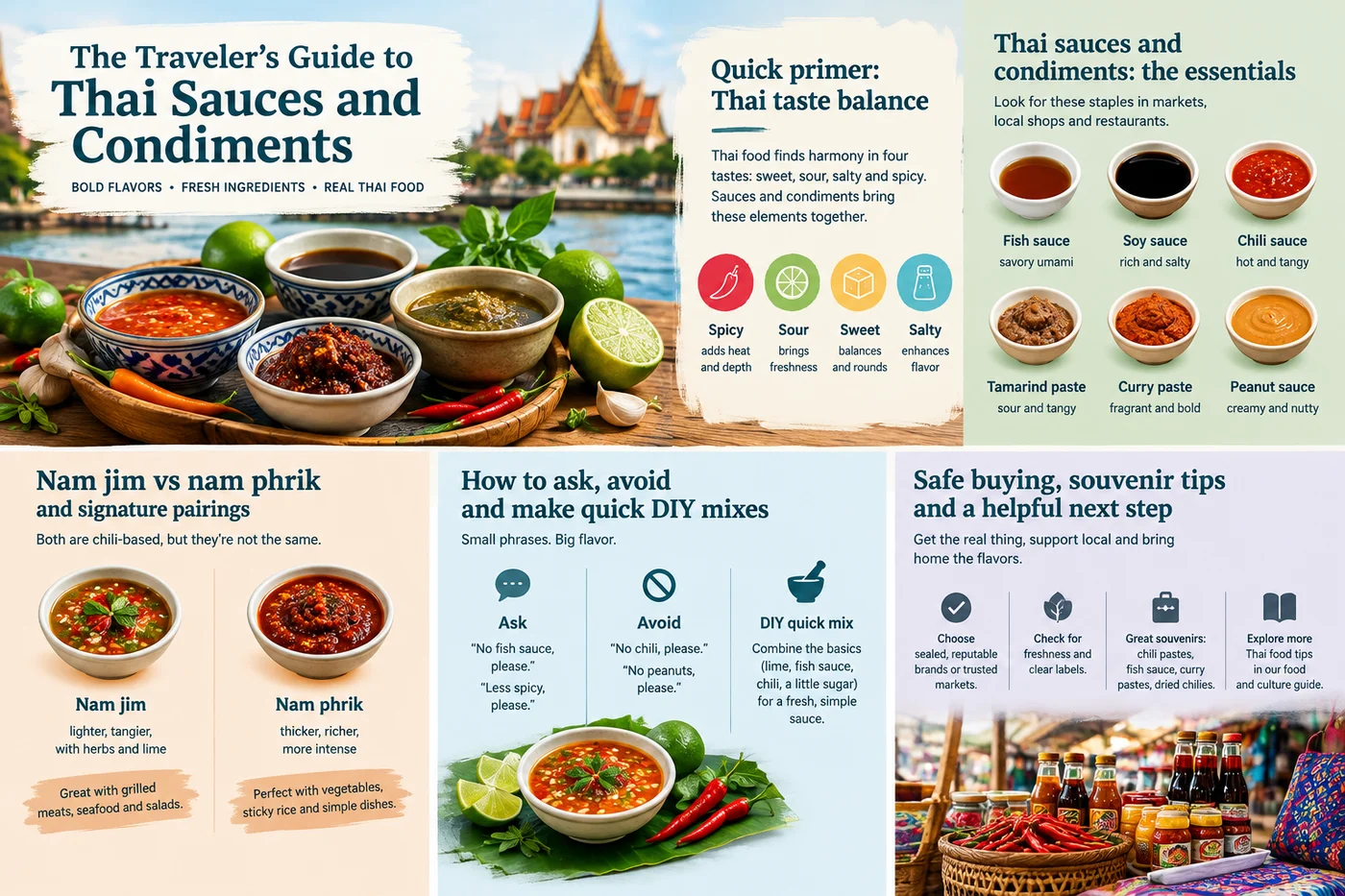
Thai cooking favors a balance of salty, sour, sweet and spicy plus umami. Condiments are not just garnish: they let you tune that balance. Many eateries provide a small condiment tray—sliced chilies in fish sauce, chili flakes, sugar and vinegar—so you can make your plate sweeter, hotter, tangier or saltier to taste.
Thai sauces and condiments: the essentials
Here are the must-know condiments you’ll meet. Use the short notes to decide when to add them.
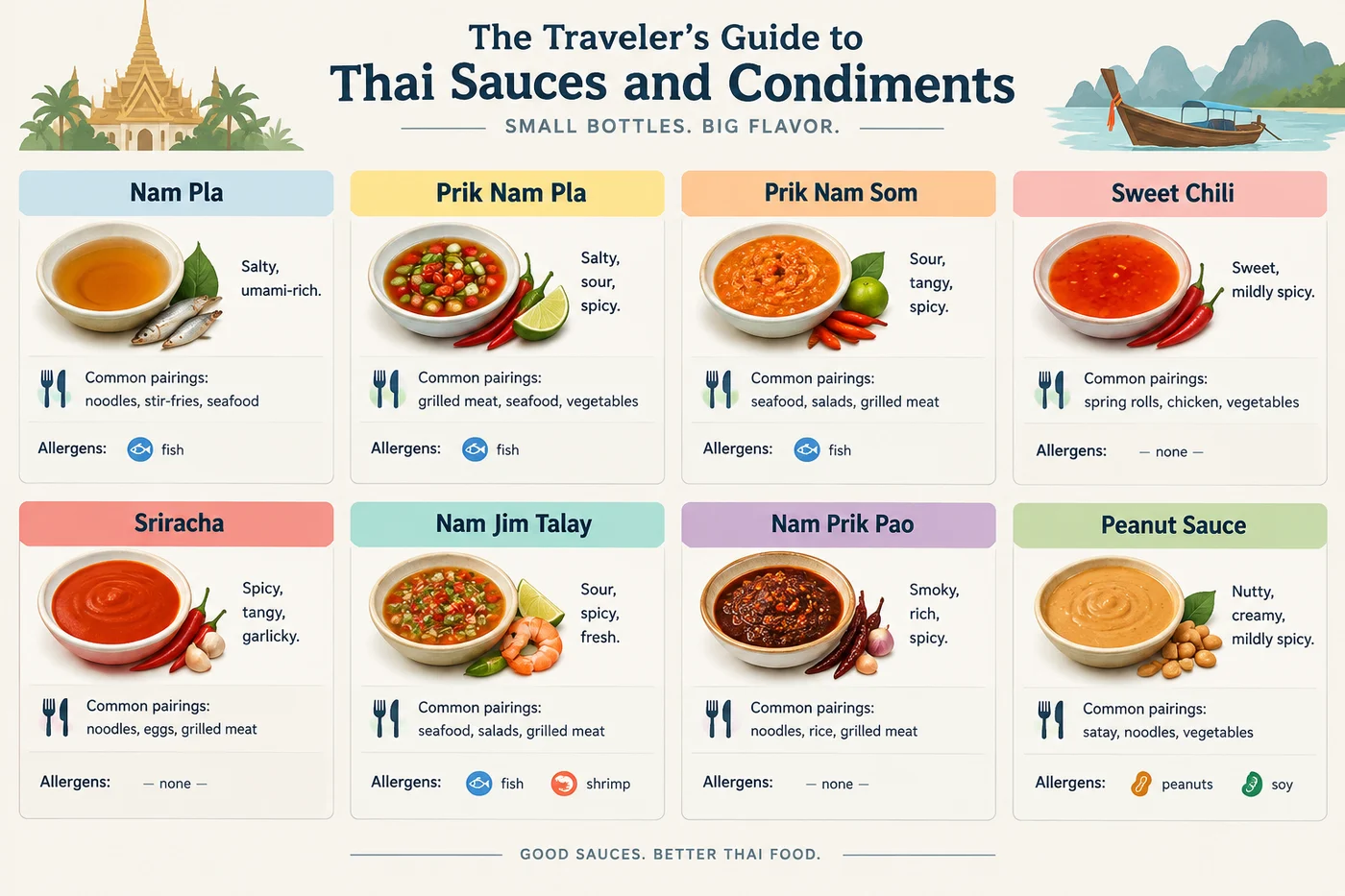
- Nam pla (น้ำปลา / fish sauce): The principal liquid seasoning and table condiment. Salty, rich in umami; splash on rice, soups or stir-fries sparingly. (Source: JIRCAS.)
- Prik nam pla (พริกน้ำปลา / chilies in fish sauce): Sliced bird’s-eye chilies in fish sauce (often with lime and garlic). Adds salt and heat—perfect for noodles, steamed fish and rice.
- Prik nam som: Chiles in vinegar; bright and sour. Good with fried snacks and noodle dishes when you want acidity instead of salt.
- Sweet chili (nam chim kai): Thick, sweet-spicy dip often served with fried chicken and spring rolls. Many commercial versions are free of fish—but check if you need vegetarian/halal.
- Sriracha: A thicker, garlicky chili sauce used as a table sauce and in cooking. Thai Si Racha–style sauces differ from the U.S. Huy Fong “Rooster” product; expect differences in sweetness and texture.
- Nam prik pao (roasted chili paste): Smoky-sweet paste used in soups (tom yam), as a spread or dip. Can include shrimp paste—ask if avoiding seafood.
- Nam jim (น้ำจิ้ม / general dipping sauces): Fresh lime, fish sauce, chilies, garlic and sugar—bright, tangy, and for grilled seafood and meats. Variants include nam jim talay (seafood dip).
- Nam jim jaew (น้ําจิ้มแจ่ว): Northeastern (Isaan) dipping sauce with toasted rice, fish sauce or fermented fish, lime and chilies—smoky and tangy; ideal for grilled meats and sticky rice.
- Nam phrik (chili pastes): A broad category of regional chili dips—e.g., nam prik num (northern roasted-chili dip) that may be vegetarian or include fish/fermented products.
- Peanut sauce: Often found with satay or cold salads; contains peanuts (allergen) and sometimes coconut milk or fish sauce—assume it has nuts unless labelled otherwise.
- Shrimp paste (kapi) and fermented fish (pla‑ra): Powerful umami ingredients used in pastes and some sauces—common in regional specialties, especially Isaan.
Nam jim vs nam phrik and signature pairings
Think of nam jim as a fresh dipping sauce and nam phrik as a thicker chili paste. Typical pairings:
- Noodles (boat noodles, pad Thai): prik nam pla or a squeeze of nam pla, chili flakes and sugar.
- Seafood: nam jim talay (lime, fish sauce, chillies) and prik nam som for acidity.
- Grilled meats: nam jim jaew (Isaan) or sweet chili; peanut sauce with satay.
- Salads: limey nam jim or a splash of fish sauce; avoid peanut sauce if you need nut-free.
Regional tip: northern and Isaan condiments tend to be smokier, saltier and sometimes fermented; coastal and central styles lean toward seafood-based dips. Expect different trays on tables across regions.
How to ask, avoid and make quick DIY mixes
Common Thai phrases (polite and useful):
- “ขอไม่ใส่น้ำปลา” (khǎaw mâi sài nám-plaa) — Please don’t add fish sauce.
- “ฉันแพ้ถั่วลิสง” (chǎn phæ̂ tháua lí-song) — I’m allergic to peanuts.
- “ขอไม่ใส่ถั่วลิสง” (khǎaw mâi sài tháua lí-song) — Please don’t add peanuts.
- “มีอาหารฮาลาลไหม” (mii aa-hǎan halal mái?) — Do you have halal food?
Simple DIY table mixes:
- Table-side nam jim: 1 tbsp fish sauce, 1 tsp sugar, 1 tbsp lime juice, sliced chilies – stir and taste.
- Quick sweet-sour dip (no fish): 1 tbsp sweet chili sauce + lime + a dash of soy.
- Nut-free grilled-meat dip: roasted chili flakes + lime + a pinch of sugar + salt.
If you need no fish or no peanuts, state it clearly before ordering. When in doubt, ask whether a sauce contains shrimp paste (kapi) or fish sauce (nam pla).
Safe buying, souvenir tips and internal link idea
Want to buy sauces to take home? Choose sealed commercial jars from reputable brands, check ingredient labels for fish/shrimp/peanuts, and prefer pasteurized or shelf-stable items. Avoid unlabeled open jars from unknown vendors unless you plan to consume them quickly and refrigerate.
Travel-friendly souvenirs: small bottles of branded fish sauce or sealed nam prik pao make good gifts; declare liquids if flying. If you’d like recommendations on where to try these condiments in Bangkok or Chiang Mai, see our street-food and regional guides on HotelForU.net for dish suggestions and vendor tips.
Practical Tips
Taste first, then add: a few drops of nam pla go a long way. If you have allergies, say “ฉันแพ้ถั่วลิสง” (I’m allergic to peanuts) and “ขอไม่ใส่น้ำปลา” (don’t add fish sauce). Watch for fermented ingredients in regional dips (pla‑ra, kapi). Carry a small protein/peanut allergy card in Thai if you’re highly sensitive.
Important Considerations
Fish sauce is a major sodium source; use sparingly if you watch salt. Homemade or very old fermented condiments may vary in safety—prefer commercial jars for souvenirs. Regional names overlap: ask about ingredients rather than assuming a sauce is safe.
Planning more of your trip? Browse our
Thailand Food & Restaurant Guides
for more practical Thailand food and dining information.
Final Thoughts
Mastering a few condiments and phrases transforms Thai eating from puzzling to playful. Use the table tray, taste carefully, and don’t be afraid to ask vendors what’s inside. With these basics you can confidently enjoy noodles, seafood and grilled meat across Thailand while keeping dietary needs in check.
Sources & Further Reading
- JIRCAS — Nam-plaa (fish sauce) database
- Thaigle — Bangkok cooking deep-dive (condiment tray)
- PubMed — Fermented fish sauce (Nam Pla-Ra) physicochemical study
Transport schedules, fares and operating rules can change. Always verify time-sensitive details with the official operator before travel.