HOTEL GUIDE
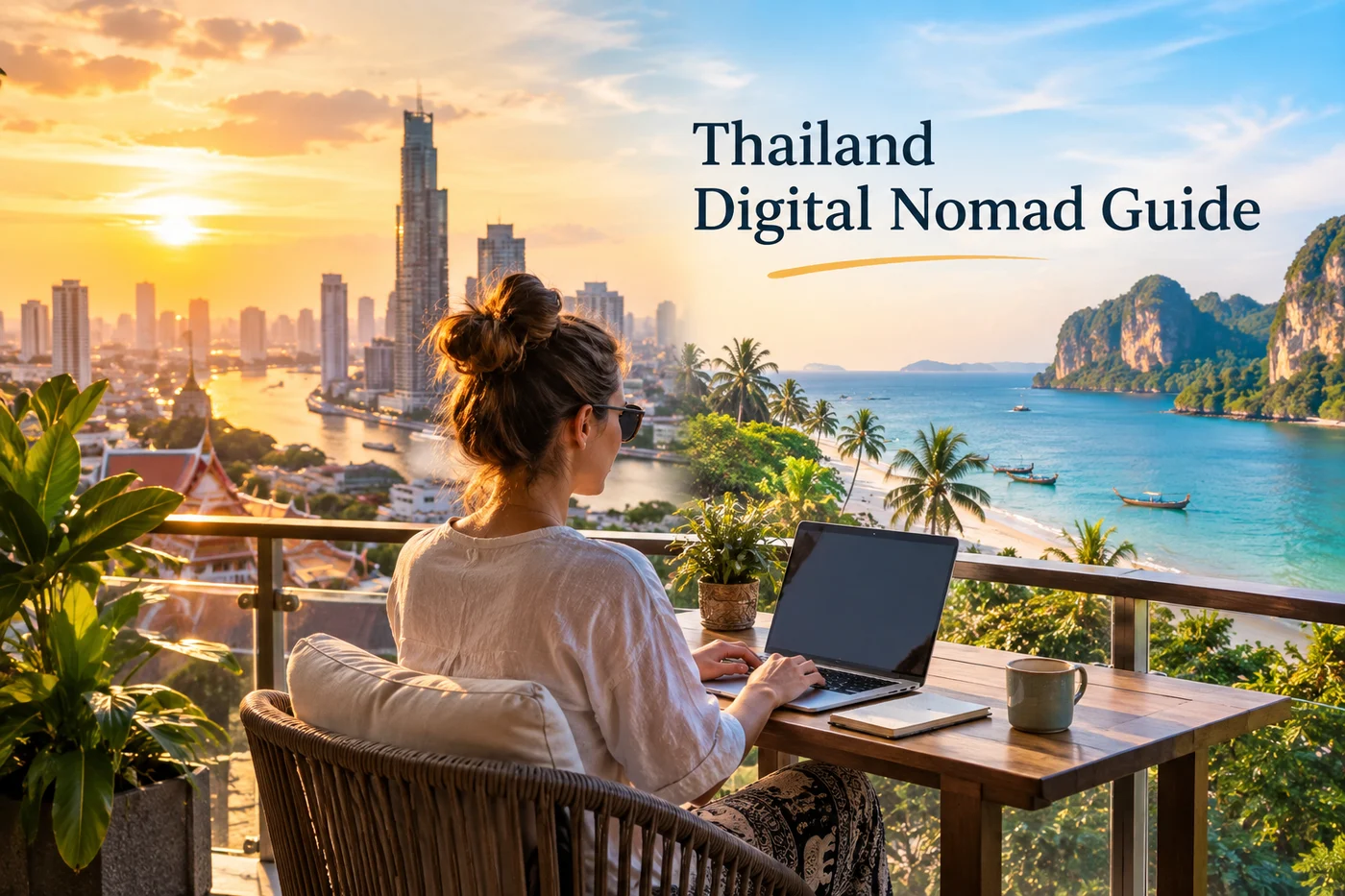
Thailand Digital Nomad Guide: Visas, Best Cities & Practicalities
Practical, evergreen advice for remote workers planning a long stay in Thailand: legal routes, where to live, budgeting pointers, coworking, connectivity, insurance and a move checklist.
If you’re weighing whether Thailand is right for remote work, this Thailand digital nomad guide gives practical, up‑to‑date pathways for reasonably long stays and everyday life. Read official visa options, where nomads live, how to budget and the key practicalities—connectivity, insurance, banking and taxes—so you can plan a responsible move.
Key Takeaways
- Thailand offers multiple long‑stay visa routes for remote workers (check official sites for exact eligibility and documents).
- Choose your base by prioritising cost, healthcare and community—Bangkok and Chiang Mai are the most established hubs; islands suit beach lifestyles.
- Plan legal status, health insurance and taxes before you arrive; verify rules with Thai government sources and your embassy.
Thailand digital nomad guide: Visas & legal routes
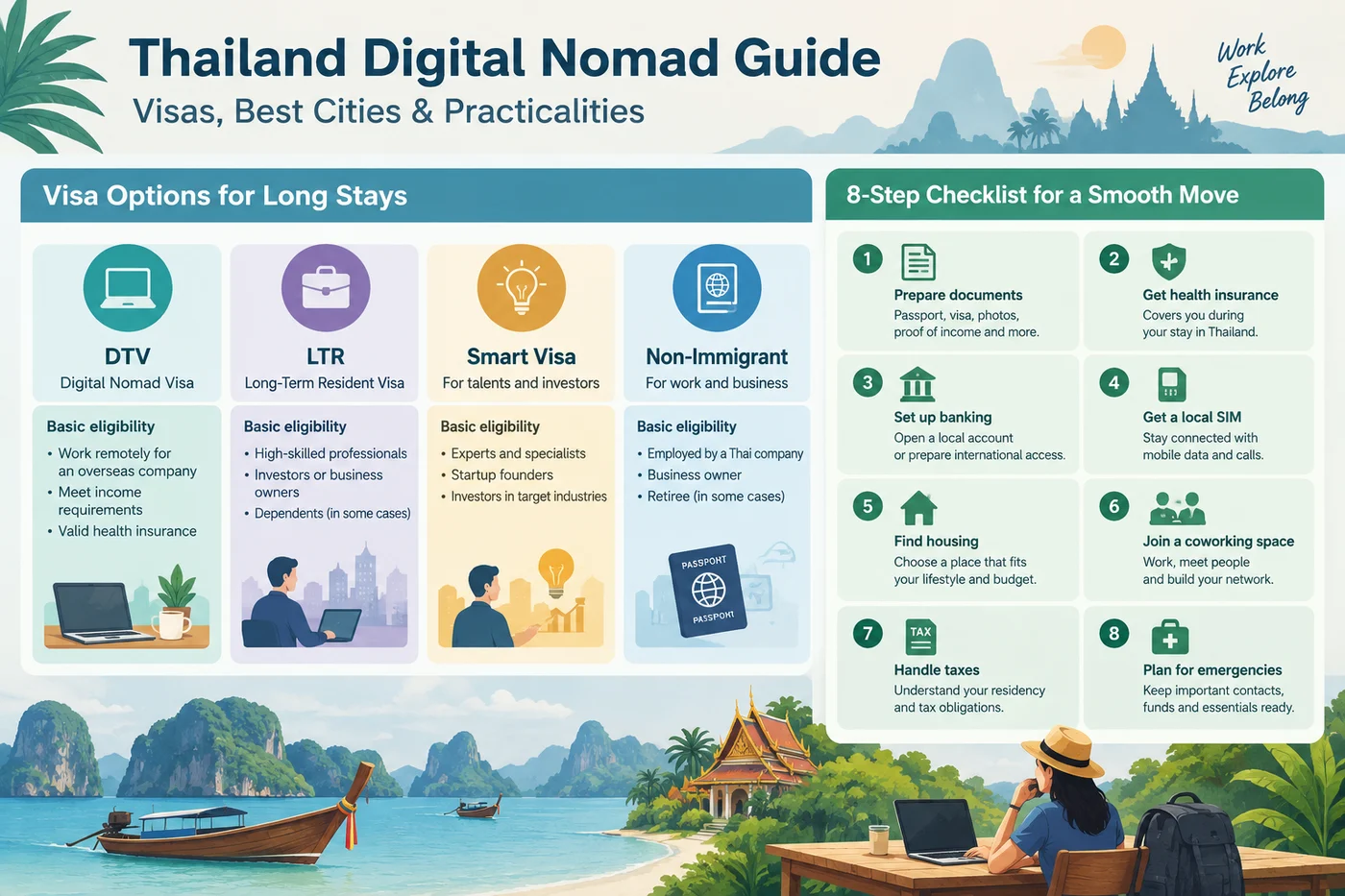
There are several legal pathways for long stays in Thailand, but rules and eligibility vary and change. Two notable official streams are the Destination Thailand Visa (DTV), which includes a multi‑year remote‑worker category (DTV documents typically require passport details, address, proof of funds and proof of employment/portfolio) and the Long‑Term Resident (LTR) visa administered by the Board of Investment aimed at professionals and remote workers (LTR offers up to a 10‑year stay for eligible applicants with specific financial, insurance and documentation requirements). Both are time‑sensitive: always confirm current criteria and application steps with the issuing visa pages or Thai embassies. Useful official pages: Thailand Public Relations Department on the DTV (thailand.go.th) and the BOI LTR documentation (ltr.boi.go.th).
Choosing your base: cities and neighbourhood tradeoffs
Pick a base that matches your work needs and lifestyle. Bangkok: top infrastructure, best international hospitals, and fastest domestic transport—suits those needing business services and frequent flights. Chiang Mai: lower day‑to‑day friction, big nomad community and many coworking/coliving options—preferred for quieter life and lower prices. Phuket, Krabi region, Koh Samui and Koh Phangan: island alternatives with beach lifestyle and growing coworking scenes, but expect more seasonal fluctuation and variable in‑unit internet. Hua Hin and smaller towns offer tranquilly and good access to Bangkok. For neighbourhood picks, prioritise proximity to coworking, good mobile towers and quality supermarkets; check local Facebook groups and HotelForU city guides for up‑to‑date neighbourhood tips.
Costs & budgeting: what to plan for
Costs vary widely by city, neighbourhood and personal standards. Major monthly expenses to plan are rent, utilities and air‑con, health insurance, coworking or cafes, food and transport. Rather than fixed totals, use live data sources and local rental listings to build a realistic budget for your chosen city and season—crowd‑sourced cost sites and local property portals are useful for current rent ranges. Always budget a buffer for visa fees, return flights, emergency healthcare and short‑term co‑living when you first arrive.
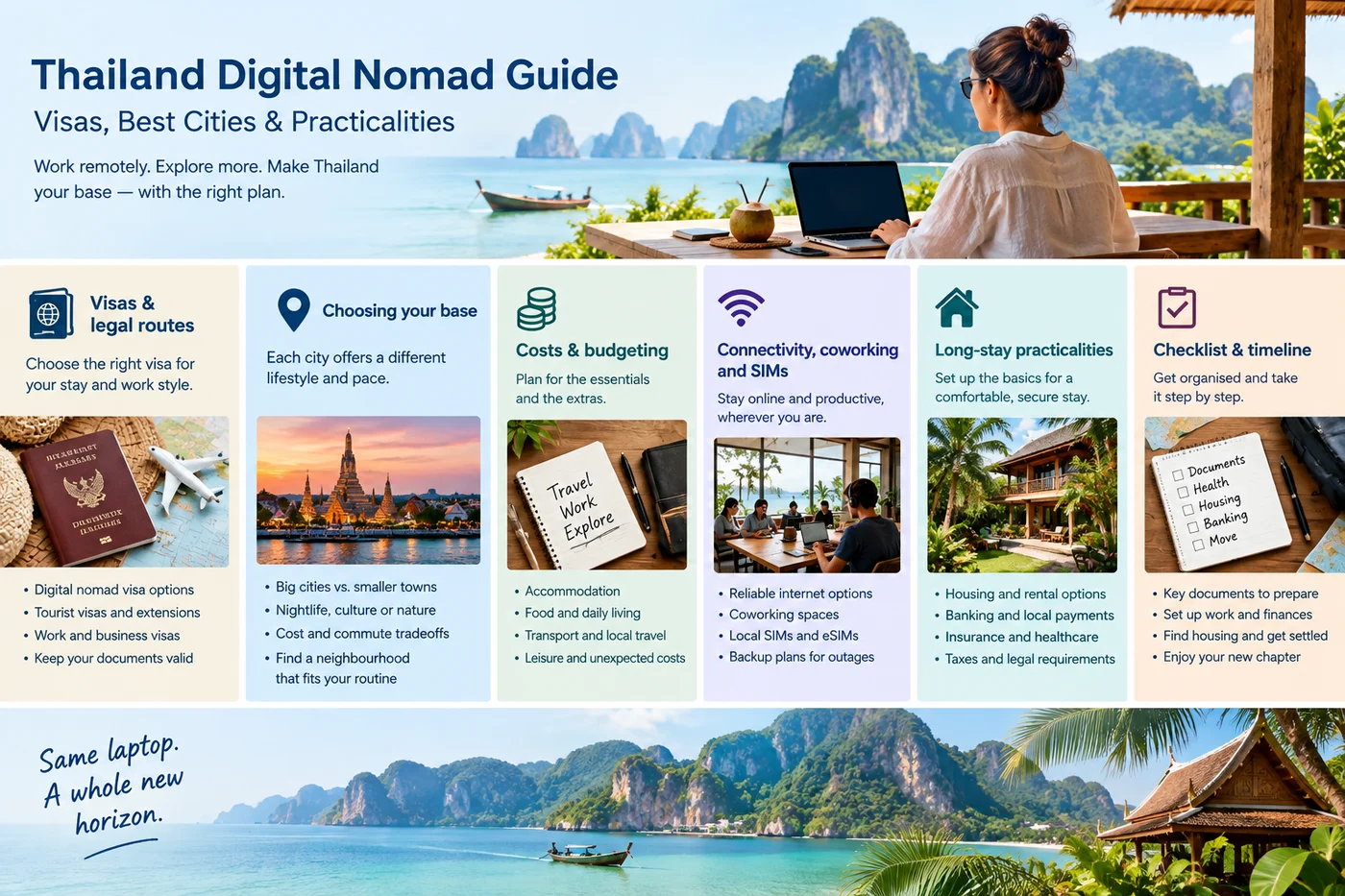
Connectivity, coworking and SIMs
Thailand’s urban fixed‑broadband is strong by global measures, making video calls and heavy work feasible in most major centres; however, in‑unit performance varies by building. Test the apartment or coworking space during your usual work hours before signing a long lease. Coworking networks are well established in Bangkok and Chiang Mai and growing on the islands—use directories (e.g., Coworker) and local community groups to compare spaces and day‑pass options. For mobile internet, buy a local SIM or eSIM from Thailand’s main operators on arrival; keep a data‑only backup plan for island work or power outages.
Long‑stay practicalities: housing, banking, insurance and taxes
Housing: short‑term stays commonly start with serviced apartments or coliving; for longer terms look for 6–12 month leases and confirm maintenance, internet and electricity billing practices. Banking and payments: many nomads combine international fintech accounts with a Thai bank account for local bill paying—requirements for opening accounts can include proof of address and visa status. Health insurance: obtain international or Thai local plans that cover inpatient and evacuation; some long‑stay visas mandate specific coverage limits. Taxes: long‑stay visas and residency can carry tax implications and some visa categories reference tax incentives; consult the Thai Revenue Department or a tax professional to determine filing obligations before you commit to a lengthy stay.
Checklist & simple timeline for a move
Basic move timeline (4–12 weeks before departure):
– Verify visa eligibility and application deadlines with the relevant Thai embassy/visa portal.
– Obtain required documents: passport photos, proof of funds, employment or portfolio evidence, and insurance certificates.
– Book an initial short stay (2–4 weeks serviced apartment or coliving) to scout housing and test internet.
– Arrange health insurance and international payment methods; prepare copies of key documents.
– Join local expat/digital‑nomad communities and coworking groups for on‑the‑ground advice.
– On arrival, register your address if required by your visa, set up a local SIM and open banking as needed.
Keep digital and paper copies of visa approvals and insurance; confirm emergency contacts at your consulate.
Practical Tips
1) Always verify visa rules with the issuing authority—embassy/consulate, thaievisa sites or BOI LTR pages—because thresholds and lists change. 2) Test apartment internet at your working hours; carry a mobile hotspot or eSIM as backup. 3) Join local Facebook groups and coworking communities before moving for neighbourhood and housing leads.
Important Considerations
Visa rules and exemption lists are time‑sensitive—confirm dates and document lists with official sources. Northern Thailand has an annual smoke season that affects air quality; plan around it if you have health concerns. If you expect to earn significant income or stay multiple tax years, seek professional tax advice.
Planning more of your trip? Browse our
Thailand Travel Guides
for more practical Thailand travel information.
Final Thoughts
Thailand remains a compelling option for remote workers thanks to its infrastructure, lifestyle and established nomad ecosystems—but a successful long stay depends on getting your visa and insurance right, choosing the city that fits your work and life balance, and verifying up‑to‑date rules with official sources.
Sources & Further Reading
- Thailand Public Relations Department — Destination Thailand Visa (DTV)
- LTR (BOI) — Work‑From‑Thailand required documents
- Thailand Government Public Relations / visa‑exemption updates
- Speedtest Global Index — fixed broadband performance
Transport schedules, fares and operating rules can change. Always verify time-sensitive details with the official operator before travel.