HOTEL GUIDE
How Spicy Is Thai Food? 7 Things Travelers Should Know
Thai food ranges from mild to very hot depending on region, dish and vendor. Learn chili types, regional heat cues, Thai phrases to request mild food, and quick fixes.
If you’re asking "how spicy is Thai food" the short answer is: it depends. Thai cuisine covers a wide heat spectrum—some dishes are mild or sweet-balanced, while others (especially in Isan and the south) are intentionally fiery. Read on for clear, practical guidance: what chilies are used, which dishes and regions are hottest, how to ask for milder food in Thai, and what to do if a meal burns too hot.
Key Takeaways
- Thai food varies regionally: Central is balanced, Isan and much of the south tend to be hotter.
- Ask politely with 'mai phet' or 'phet nit noi' and adjust heat at the table using condiments.
- If a dish is too hot, eat plain rice, sip dairy (milk or yogurt), or add coconut milk/sugar to calm heat.
Why Thai food often tastes spicy
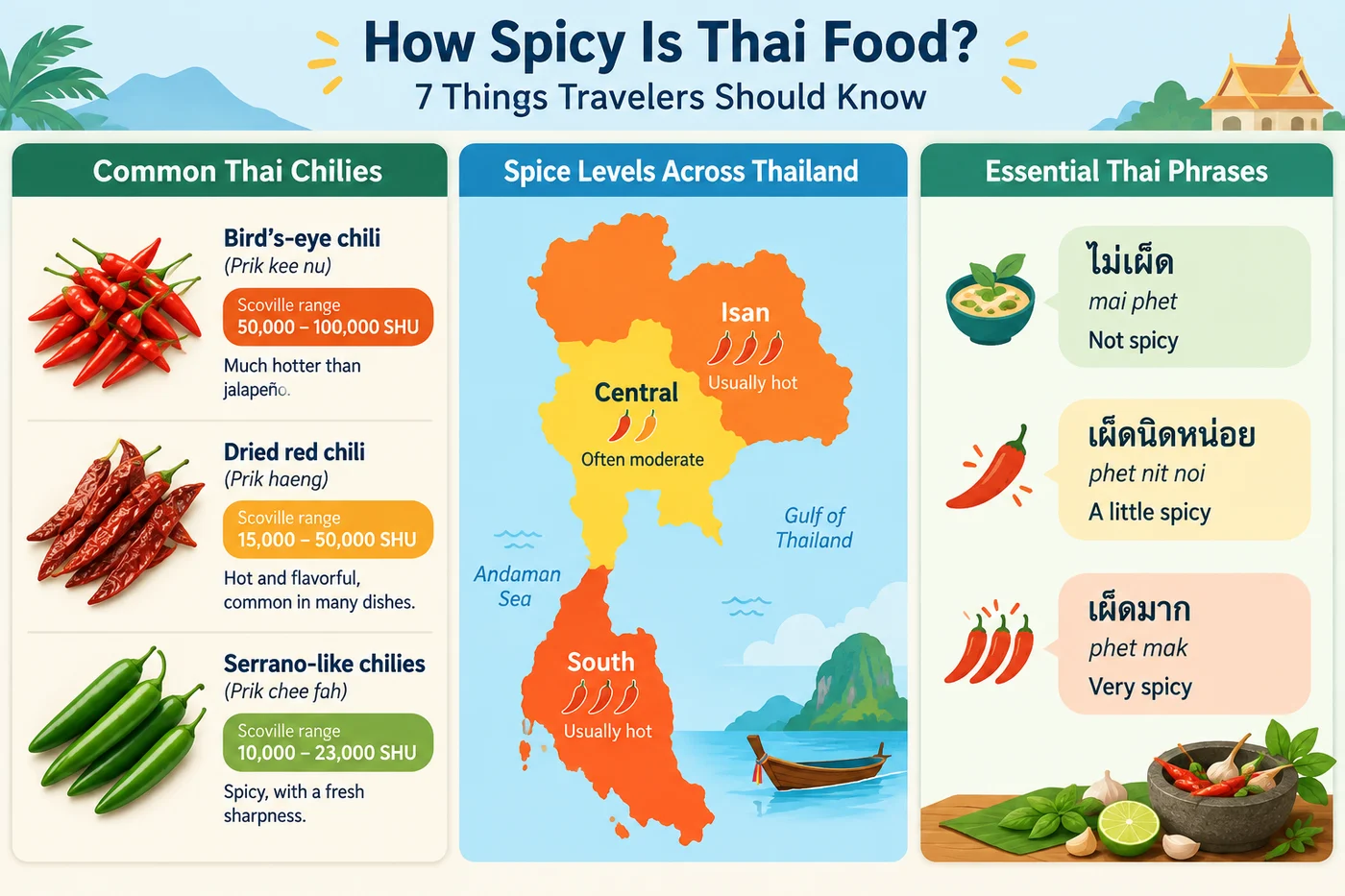
Spice in Thailand comes not only from fresh chilies but also from chili pastes, dried flakes and condiments that build heat into a dish. Thai cooking balances heat with sour, sweet and salty elements, so heat is part of the flavour profile rather than a single dominant sensation. Commonly used small “bird’s‑eye” chilies (prik kee nu) are sharp — typical Scoville ranges are often cited around 50,000–100,000 SHU — much hotter than a jalapeño. That potency, plus concentrated pastes (nam prik, curry pastes) explains why some dishes can feel unexpectedly intense to visitors.
how spicy is Thai food? Regional differences
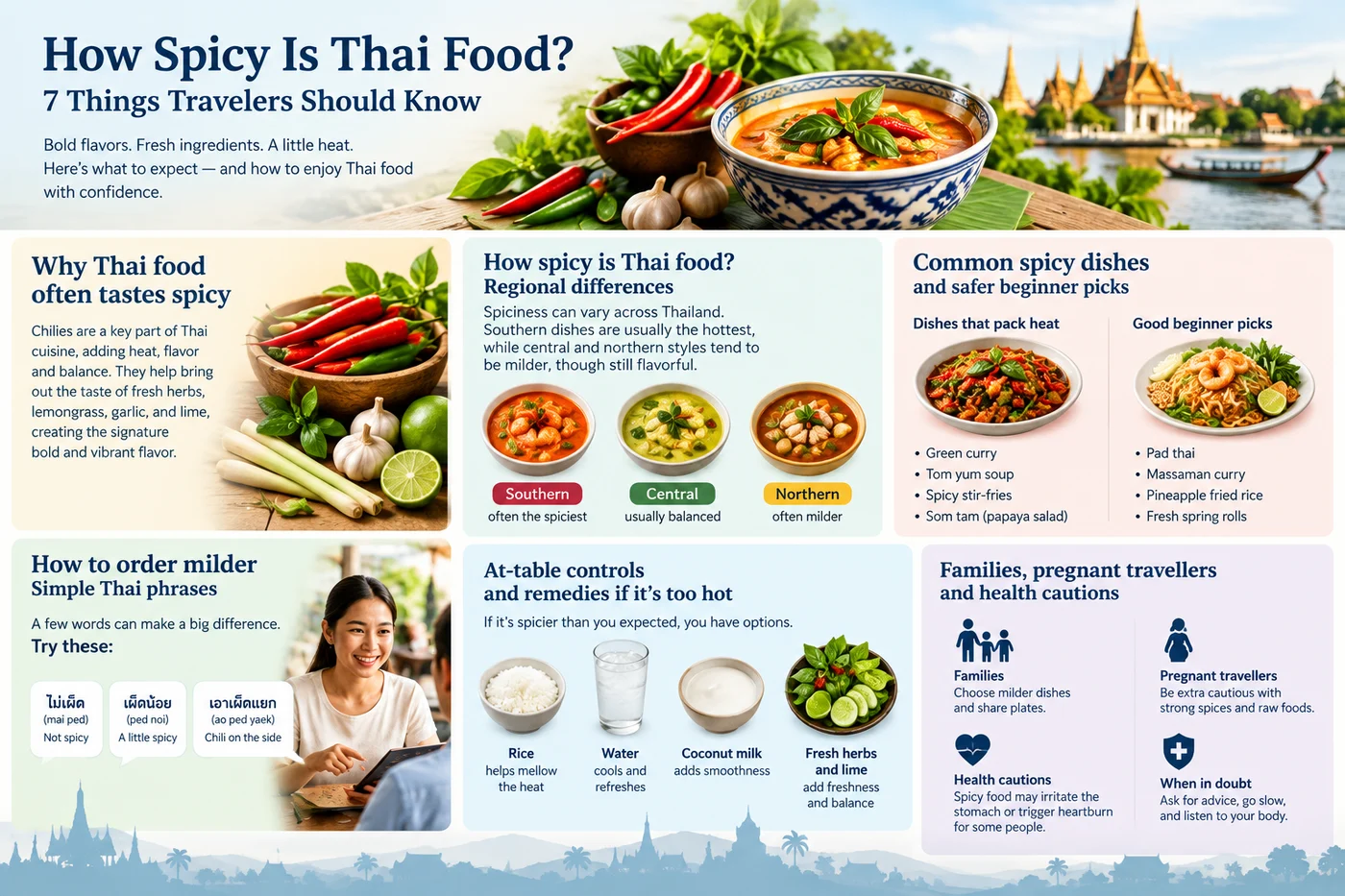
Heat varies by region. Central/Bangkok cuisine is generally balanced: many city restaurants serve toned‑down versions for tourists. Northern Thai food is often milder and herb‑forward. Isan (northeast) dishes like som tam Lao and larb are typically the hottest — locals favour lots of fresh chilies. Southern Thai food also uses heavy chilies and coconut milk, producing curries that are both spicy and rich. Expect city tourist spots to moderate heat; neighborhood stalls and Isan vendors often serve the full heat level unless you ask otherwise.
Common spicy dishes and safer beginner picks
Dishes that commonly run hot: som tam (green papaya salad, especially som tam Lao), larb (spicy minced salads), many Isan soups, southern curry pastes, and some tom yum versions. Safer beginner dishes: pad thai (can be mild), khao pad (fried rice), tom kha gai (coconut soup is usually milder than tom yum), milder curries when requested ( ask for less paste), and simple grilled prawns or chicken with a non‑spicy dipping sauce. Remember: vendors usually provide chili condiments so you can add heat yourself.
How to order milder: simple Thai phrases
Short, effective phrases: – "mai phet" (ไม่เผ็ด) = not spicy – "phet nit noi" (เผ็ดนิดหน่อย) = a little spicy – "mai phet loei" (ไม่เผ็ดเลย) = not spicy at all Add polite particles: "kha" (female speaker) or "khrap" (male speaker). Sample full orders: – "Som tam, mai phet, kha" (Som tam, not spicy, please). – "Gaeng keow wan phet nit noi, khrap" (Green curry, a little spicy, please). Keep requests short and friendly; most cooks will understand and accommodate, but interpretation varies.
At‑table controls and remedies if it’s too hot
Most Thai eateries set out condiments (dried chili flakes, prik nam pla – chopped chilies in fish sauce, vinegar with chilies) so you can control heat. If a dish is too spicy: – Eat plain jasmine rice to dilute capsaicin on the tongue. – Consume dairy (milk, yogurt, or ice cream) where available — casein binds capsaicin and relieves burning. – Coconut milk or a spoonful of sugar can help with Thai curries. – Avoid drinking plain water — it spreads the oil‑based heat. For persistent severe burn or breathing difficulty, seek medical help. Travelers with lactose intolerance can try plain rice or coconut milk instead.
Families, pregnant travellers and health cautions
If you’re pregnant, have ulcers, GERD or a sensitive digestive tract, be cautious: capsaicin can aggravate reflux and stomach upset. Ask for very mild preparations and avoid raw or heavily fermented condiments if your stomach is sensitive. For severe food allergies (peanuts, shellfish), do not rely only on verbal requests — carry a written allergy card in Thai and confirm ingredients; many sauces and pastes contain fish, shrimp paste or peanuts. When traveling with children, choose bland staples (rice, grilled meats, mild soups) and add condiments at the table yourself.
Practical Tips
Learn two phrases: "mai phet" and "phet nit noi" with the polite ending (kha/khrap). Start with milder dishes and add chili from the table. If ordering curries, ask for 'less paste' or 'more coconut milk.' Carry a small dairy snack if you’re sensitive to heat. For allergies, carry a printed Thai allergy card. Link opportunity: read HotelForU’s Bangkok street‑food guide for vendor tips and photographed menu clues.
Important Considerations
Asking for 'no spice' reduces heat in most places but doesn’t guarantee zero chilies—kitchens interpret requests differently. 'Thai chili' covers several cultivars with variable heat; never assume Scoville numbers are exact. If you have serious health concerns, consult a doctor before travel and use a written allergy card in Thai.
Planning more of your trip? Browse our
Thailand Food & Restaurant Guides
for more practical Thailand food and dining information.
Final Thoughts
Thai cuisine is flexible: heat is often a choice rather than a rule. With a few phrases, basic menu knowledge and simple remedies you can enjoy authentic flavours without tears. Taste boldly but sensibly—Thai cooks are used to accommodating requests, and most places make it easy to dial heat up or down at the table.
Sources & Further Reading
- Tourism Authority of Thailand — Explore Thai Taste (TAT)
- Iowa State University Extension — Growing Peppers & Scoville comparisons
- Asia Undiscovered — Bangkok Street Food Guide
- ScienceDirect — Capsaicin and sensory relief (food science study)
Transport schedules, fares and operating rules can change. Always verify time-sensitive details with the official operator before travel.