HOTEL GUIDE
The Traveler’s Guide to Thai Soups: Tom Yum, Tom Kha, Boat Noodles, Jok and More
Clear, creamy, fiery or comforting: a practical guide to Thailand’s essential soups—what they taste like, what’s in them, where to find authentic versions and how to order safely.
Thai soups are a core part of daily eating in Thailand—bright, layered broths built from lemongrass, galangal, kaffir lime leaves, fish sauce, lime and fresh chillies. This guide to Thai soups explains what each popular bowl tastes like, what goes into it, where to find authentic versions, and how to order or adapt them for spice, allergies or dietary needs.
Key Takeaways
- Thai soups range from sour-and-spicy (tom yum) to coconut-rich (tom kha) and comforting rice porridges (jok); key aromatics define the regional flavors.
- Street stalls, morning markets and specialist noodle shops are the best places to try authentic versions—ask about spice and ingredient substitutions.
- Be mindful of common allergens (shellfish, fish sauce, nuts) and traditions (raw egg in jok, historical use of blood in boat noodles); ask vendors how dishes are prepared.
What makes a Thai soup?
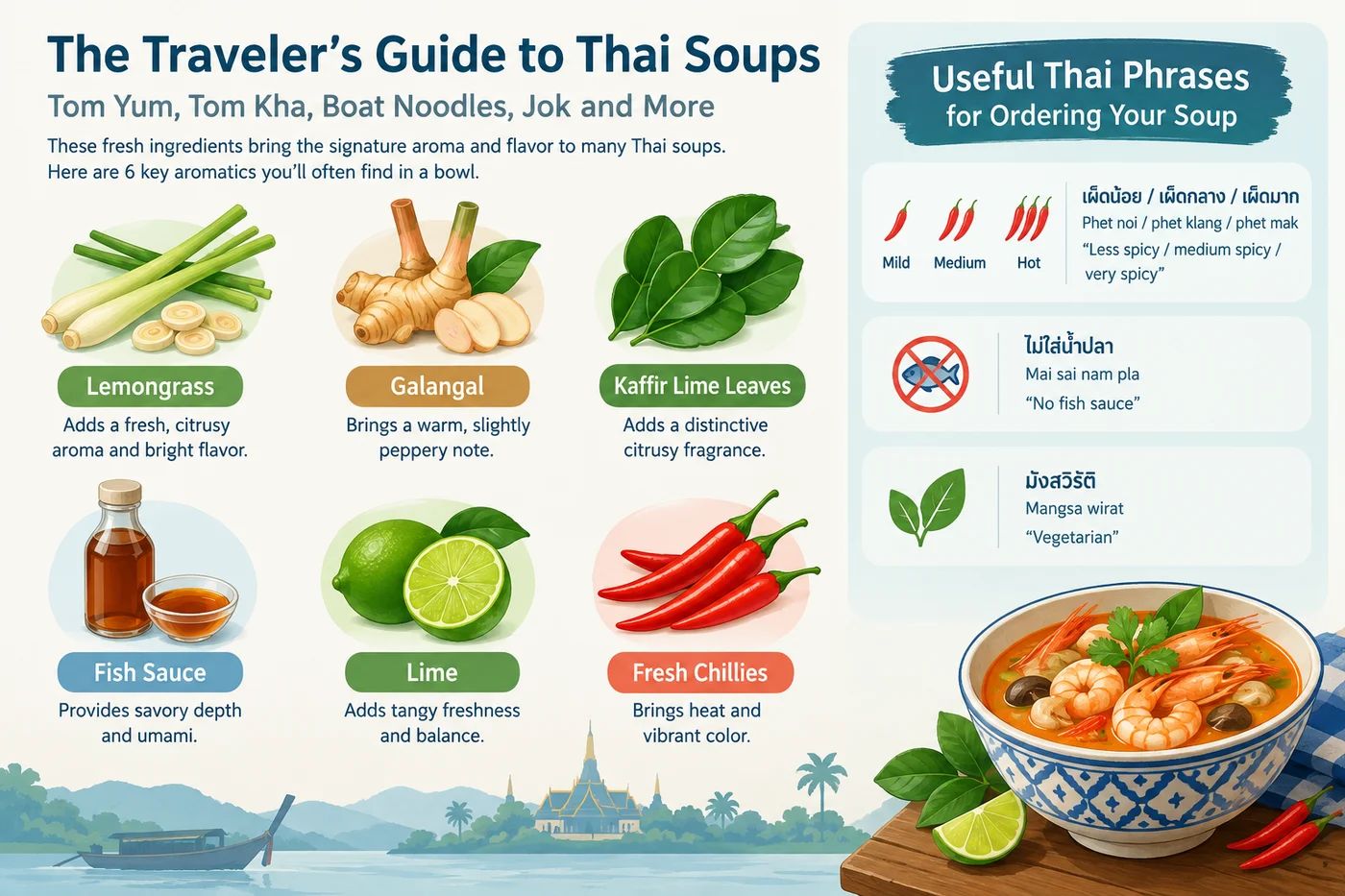
Most classic Thai soups are built from a compact set of fresh aromatics and seasonings: lemongrass, galangal, kaffir (makrut) lime leaves, fresh chillies, fish sauce and lime juice. Those elements create the distinctive Thai balance of sour, salty, sweet and hot. Soups range from clear, light broths to coconut-milk–based ones and thick rice porridges. Regional and vendor variation is normal—expect differences in heat, sweetness and protein choices depending on where you eat.
Signature Thai soups: Tom Yum and Tom Kha
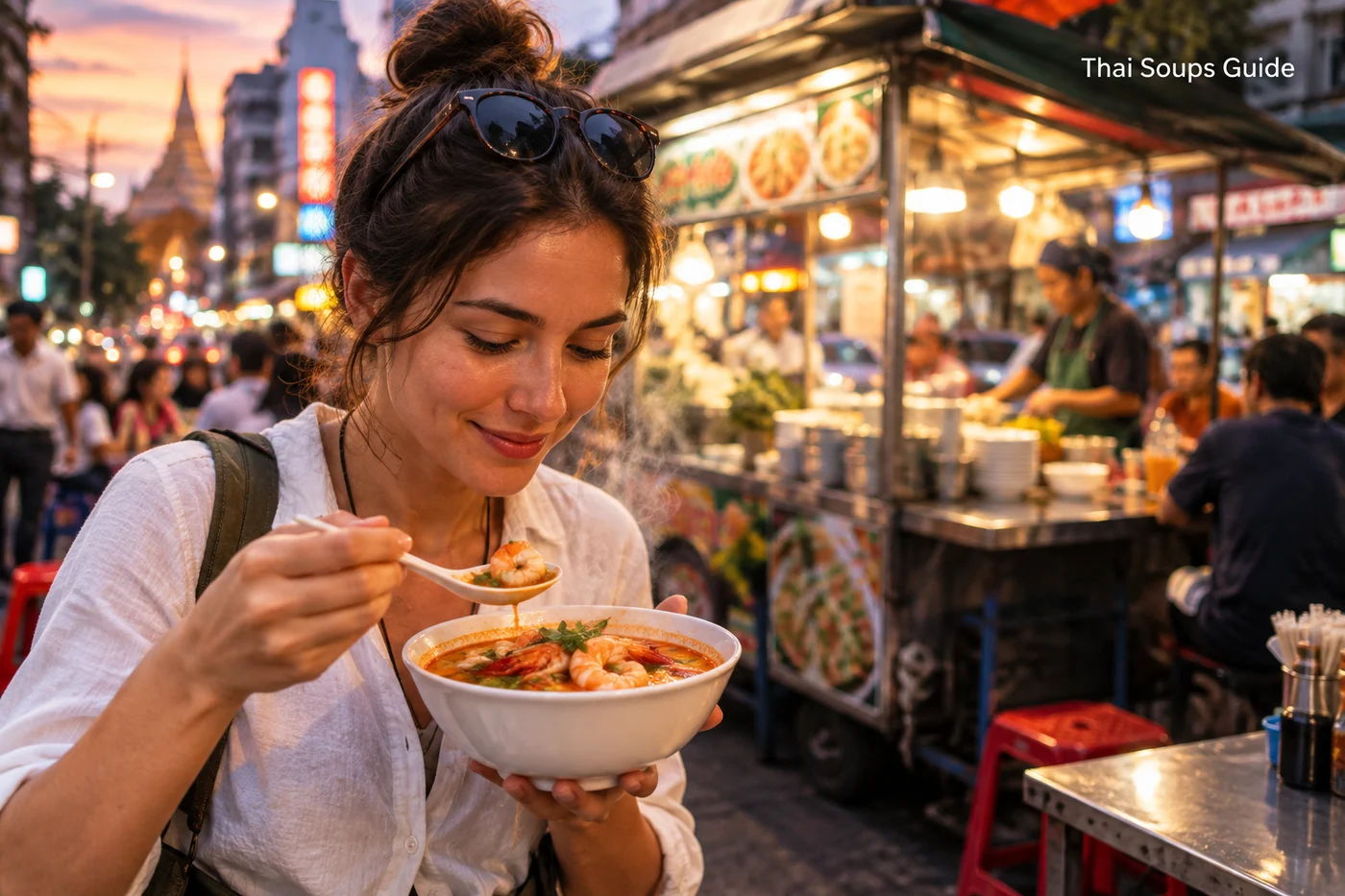
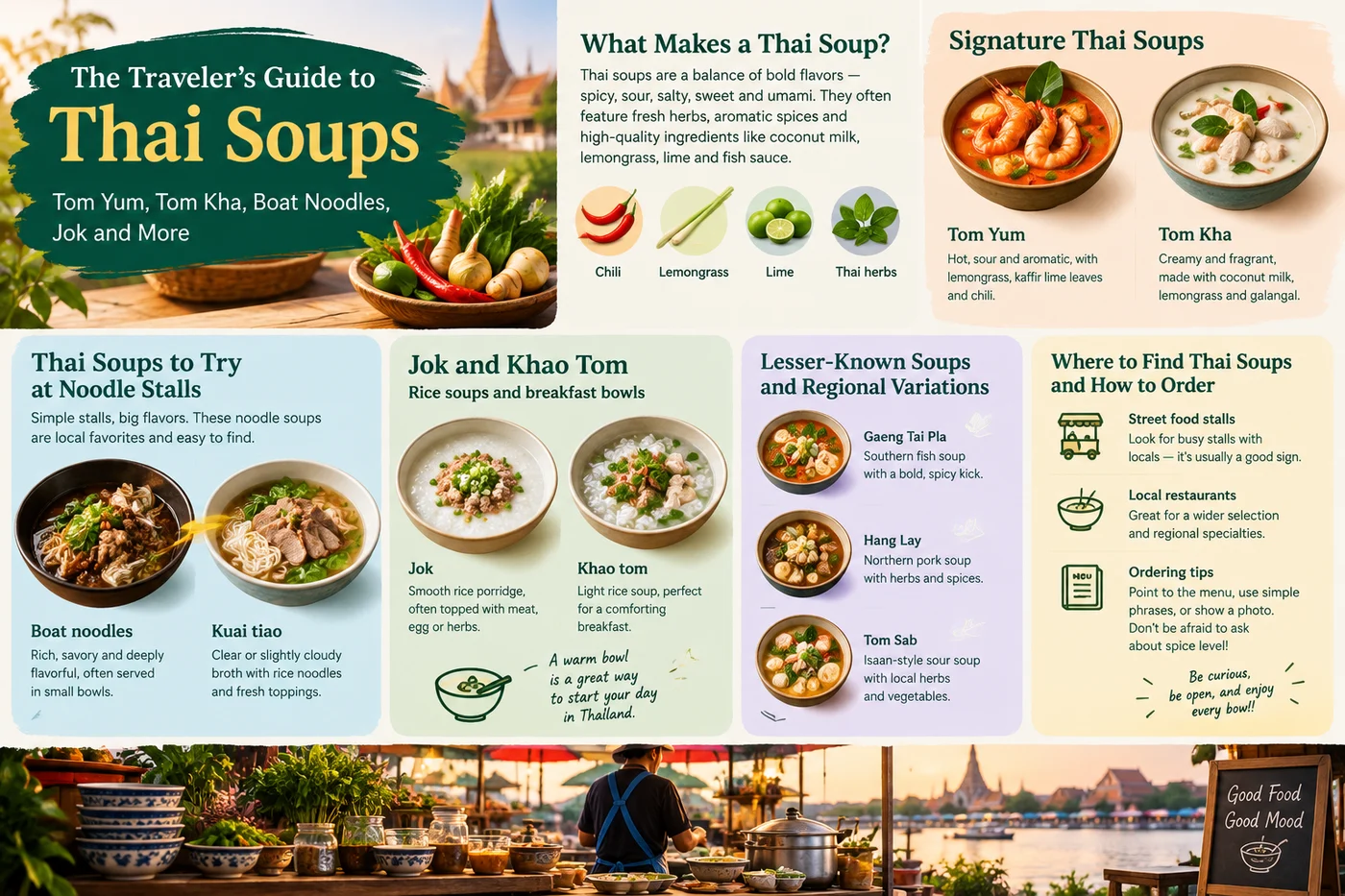
Tom Yum (tom yam) is Thailand’s famous hot-and-sour soup, with lemongrass, kaffir leaves and lime at the front. Varieties include tom yum nam sai (clear) and tom yum nam khon (creamier, sometimes with added chilli paste). Notably, Tom Yum Kung was inscribed on UNESCO’s Representative List of the Intangible Cultural Heritage of Humanity on 3 December 2024 — a recognition of its cultural importance (Thai government / UNESCO). Typical proteins: prawns (kung), chicken or mixed seafood.
Tom Kha (commonly tom kha gai) is coconut-milk–based and galangal-forward. It’s milder and creamier than tom yum; lime and fish sauce still sharpen the bowl. Tom kha is a good option if you want aromatic Thai flavors with less fiery heat—ask for less chilli or request it without chilies if you prefer.
Thai soups to try at noodle stalls: Boat noodles & kuai tiao
Boat noodles (kuai tiao reua or gway tiew reua) began as small-portioned bowls sold from boats. Expect intensely seasoned, dark broths traditionally enriched with spices and, in some historic recipes, a touch of pork or beef blood for texture. Many modern vendors omit blood for safety or preference—always ask if this concerns you. Boat‑noodle shops often serve tiny bowls so diners can order several flavors.
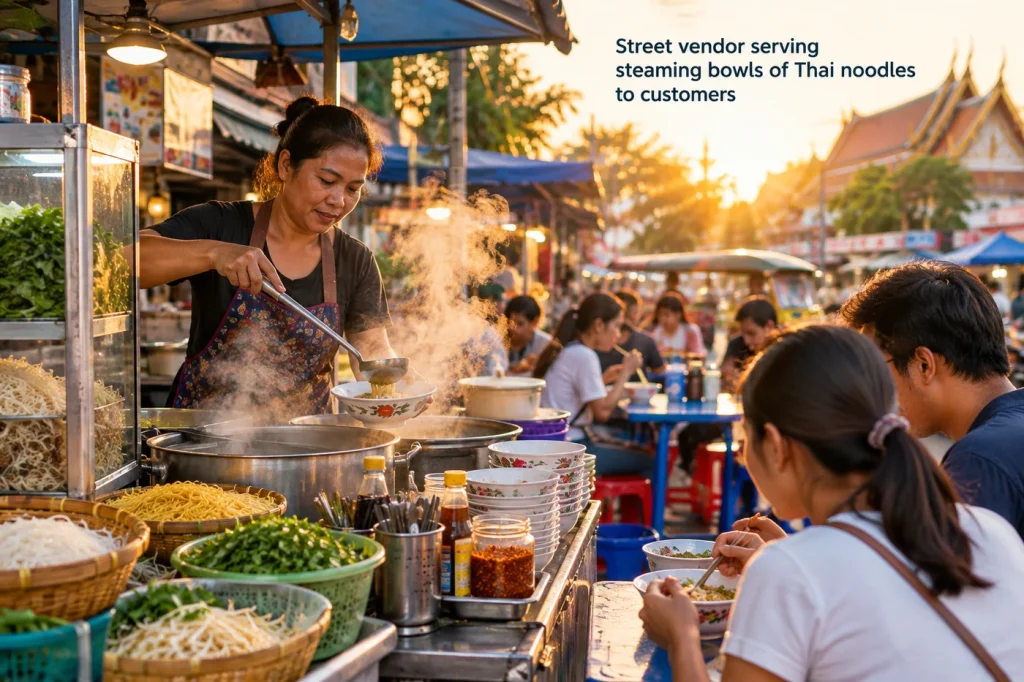
Other kuai tiao (noodle soups) are widely available with clear broths or richer stocks, and with rice noodles, egg noodles or glass noodles. These are street-food staples—eat where locals queue, and you’ll often get perfectly balanced, affordable bowls.
Jok and khao tom: rice soups and breakfast bowls
Jok is Thai congee: rice cooked down to a silky porridge, usually served for breakfast with minced pork, a soft egg, grated ginger and fried garlic. Khao tom (rice soup) is a lighter version with whole grains still intact and often eaten as a supper or breakfast dish.
Both are comfort food—easy on the stomach and widely available at morning markets, street stalls and 24-hour eateries. Be aware that jok may be topped with a raw or partially cooked egg; if you want the egg fully cooked, request it 'khai sai' (well-done egg) or 'mai ao khai' (no egg).
Lesser-known soups and regional variations
Thailand’s regional diversity shows up in soups. Tom saap is an Isan (northeastern) hot-and-sour soup with bold, herbaceous flavours and often spicier heat. Gaeng juet (gaeng jued) refers to clear, mild soups commonly served with vegetables and tofu—good for those preferring less spice. Northern dishes like khao soi (a curry noodle soup) are soupy but distinct: curry‑based, coconut-rich and often served with crispy noodles on top.
Remember that 'authenticity' is fluid: recipes and presentation vary by vendor and household, and many modern stalls adapt ingredients for supply, safety or customer preference.
Where to find Thai soups and how to order
Best places to try Thai soups:
– Morning markets for jok and khao tom; stalls open early.
– Street-food alleys and night markets for tom yum, tom kha and kuai tiao.
– Specialist noodle shops or 'boat‑noodle' restaurants for small, intensely flavoured bowls.
Ordering tips:
– Ask for spice level: 'phet nit noi' (a little chili), 'phet noi' (mild), or 'mai phet' (no chili).
– To avoid fish sauce say 'mai sai nam pla' or request 'jim jeud' (vegetarian) options—note vendors interpret vegetarian differently, so confirm absence of fish sauce, oyster sauce or shrimp paste.
– To avoid raw egg or blood, say 'mai ao khai dao' (no soft egg) or ask 'mai sai lek' about blood in boat noodles.
A good local signal: follow stalls where locals queue and don’t hesitate to ask vendors how a dish is prepared. For city-specific recommendations, check our Bangkok street-food guides on HotelForU.net.
Practical Tips
Common allergens: shellfish, fish sauce, soy and peanuts. Tell vendors about allergies in simple Thai or show a translated card. For street food, pick busy stalls with fresh steam, visible cooking and hot food served piping hot. If you have a sensitive stomach, choose coconut-milk soups (tom kha) or gaeng juet over raw-ingredient bowls. Carry basic antacid or rehydration sachets on long food tours.
Important Considerations
Boat‑noodle recipes historically used fresh blood; many modern vendors omit it—ask if this concerns you. Jok can include raw or partially cooked eggs—request fully cooked if needed. UNESCO status for Tom Yum Kung (inscribed 3 Dec 2024) is time-sensitive recognition—vendor-level recipes and availability can change, so verify details before relying on specific local claims.
Planning more of your trip? Browse our
Thailand Food & Restaurant Guides
for more practical Thailand food and dining information.
Final Thoughts
Thai soups are an excellent doorway into Thai food culture: fast and comforting breakfasts, theatrical street bowls, and layered restaurant broths. A little curiosity and a few Thai phrases will let you explore a wide range of tastes safely. Start with a milder tom kha or a reassuring jok if you’re nervous, then graduate to tom yum and boat noodles as your palate adapts.
Sources & Further Reading
- Thailand Government — Tom Yum Kung UNESCO inscription
- THAILEX — Thai food lexicon (soup ingredients and terms)
- ThailandKnowledge — Boat noodles history
Transport schedules, fares and operating rules can change. Always verify time-sensitive details with the official operator before travel.