HOTEL GUIDE
The Traveler’s Guide to Drinks in Thailand: Thai Tea, Coffee & More
Practical guide to Thailand’s most popular drinks—cha yen, oliang, fruit shakes, fresh coconut, beers and local spirits—where to find them, how to order, safety and dietary notes.
This Thai drinks guide helps travellers navigate Thailand’s most popular beverages — from cha yen (Thai iced tea) and oliang (Thai coffee) to fruit shakes, fresh coconut and local beers or spirits. You’ll learn where to find each drink, how to order (including ice and sweetness tweaks), safety tips about ice and water, legal and dietary notes, plus a short must-try list by region.
Key Takeaways
- Try a mix of street drinks (cha yen, fruit shakes, coconut) and café coffee — ask for 'waan noi' for less sugar.
- Ice and water safety varies: choose bottled or freshly prepared drinks without ice if you have a sensitive stomach.
- Alcohol is widely available but rules and hours can vary—drink responsibly and check local restrictions.
How to order drinks in Thailand — quick phrases and safety
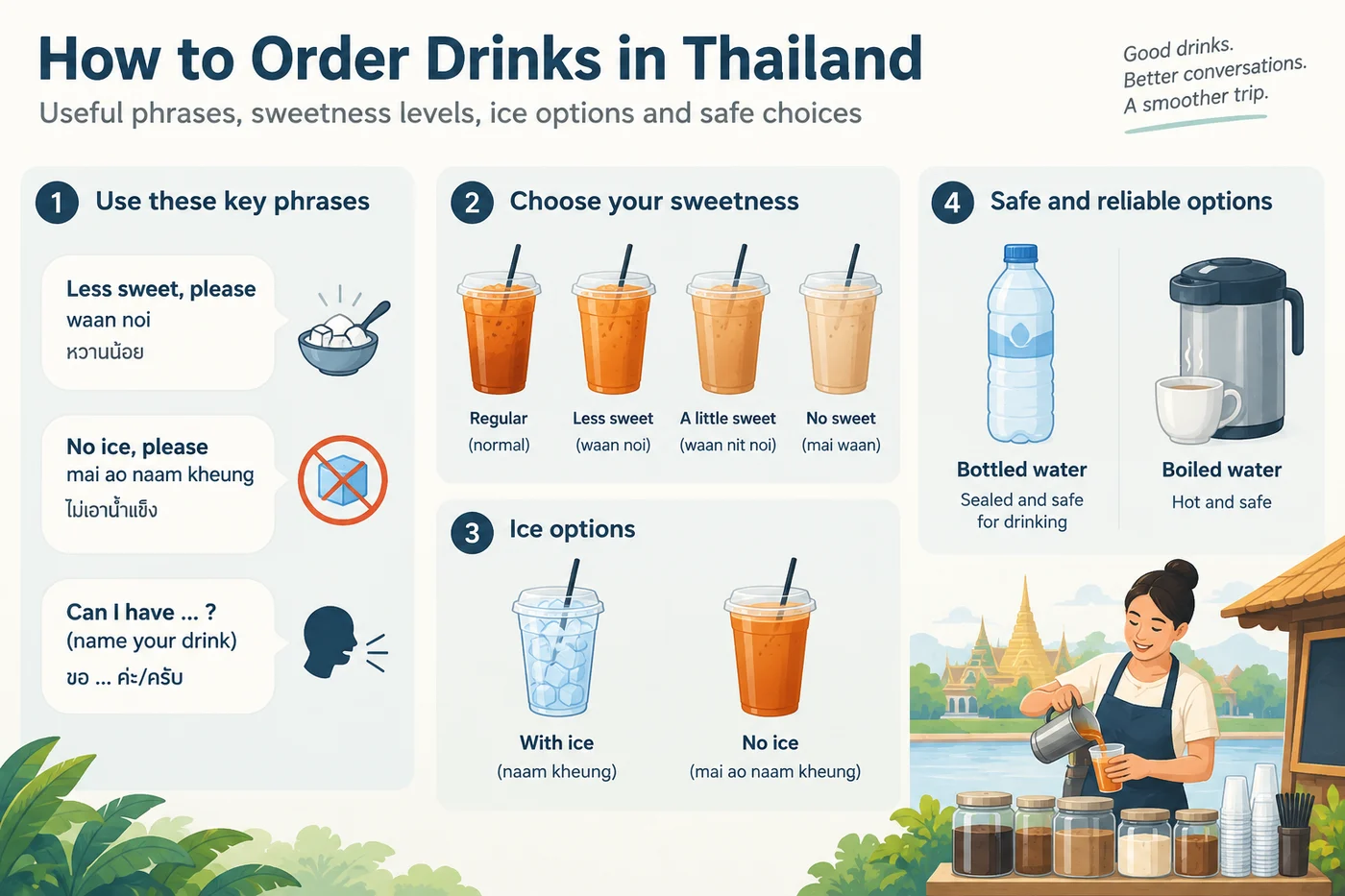
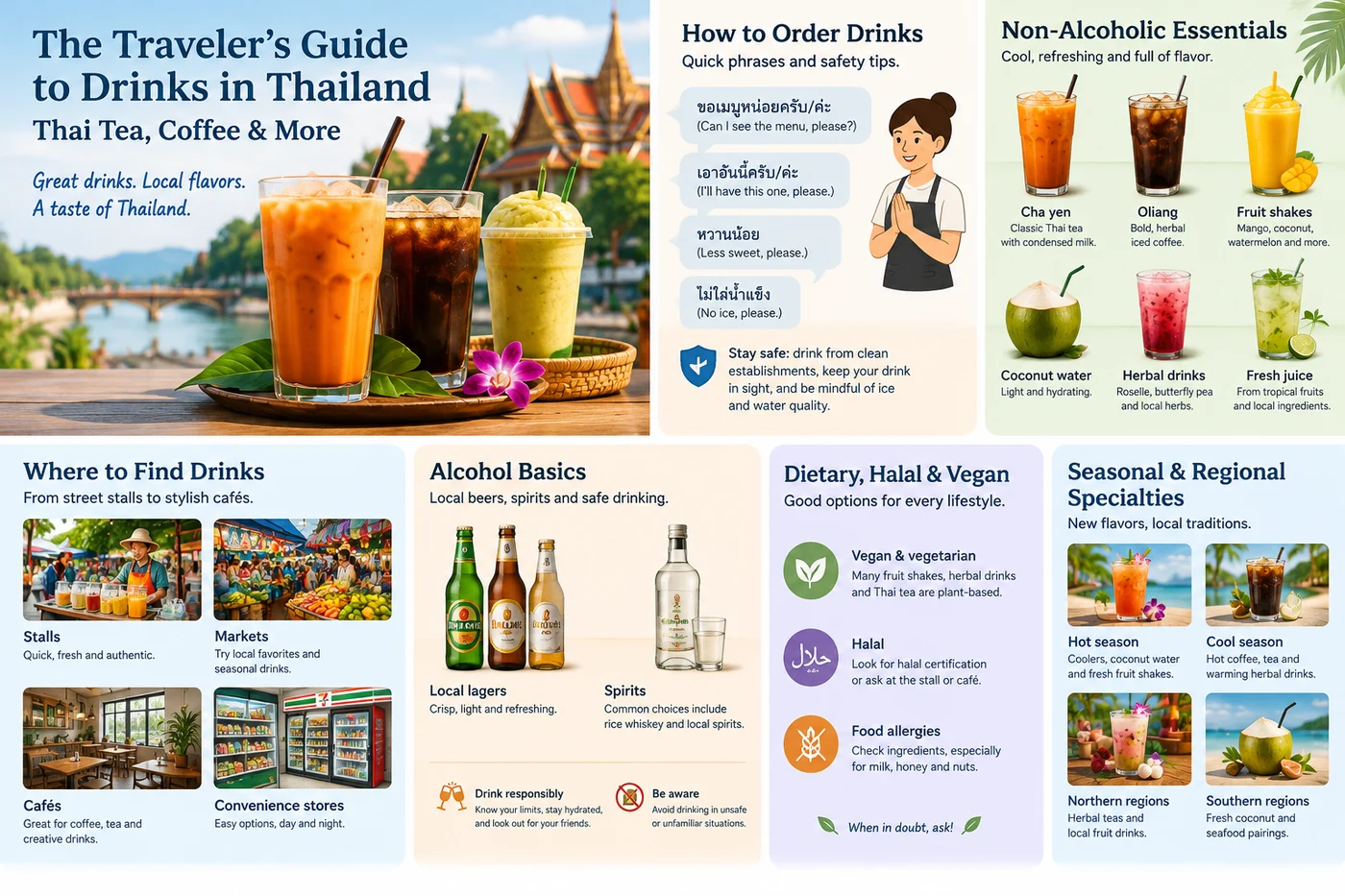
Simple Thai phrases make ordering easier: 'cha yen' (Thai iced tea), 'oliang' (Thai iced coffee), 'naam máe pûak' (fruit shake) or ask for 'waan noi' for less sweet. To avoid ice-related stomach upset, say 'mai ao nam kaeng' (no ice) or request 'nam bong' (fewer ice cubes). If you prefer bottled water, say 'nam plaw' or look for sealed bottles. Street vendors usually accept polite gestures — point to the drink, hold up fingers for sweetness (e.g., 'waan 2' for medium sweet).
Non-alcoholic essentials: cha yen, oliang, fruit shakes and more
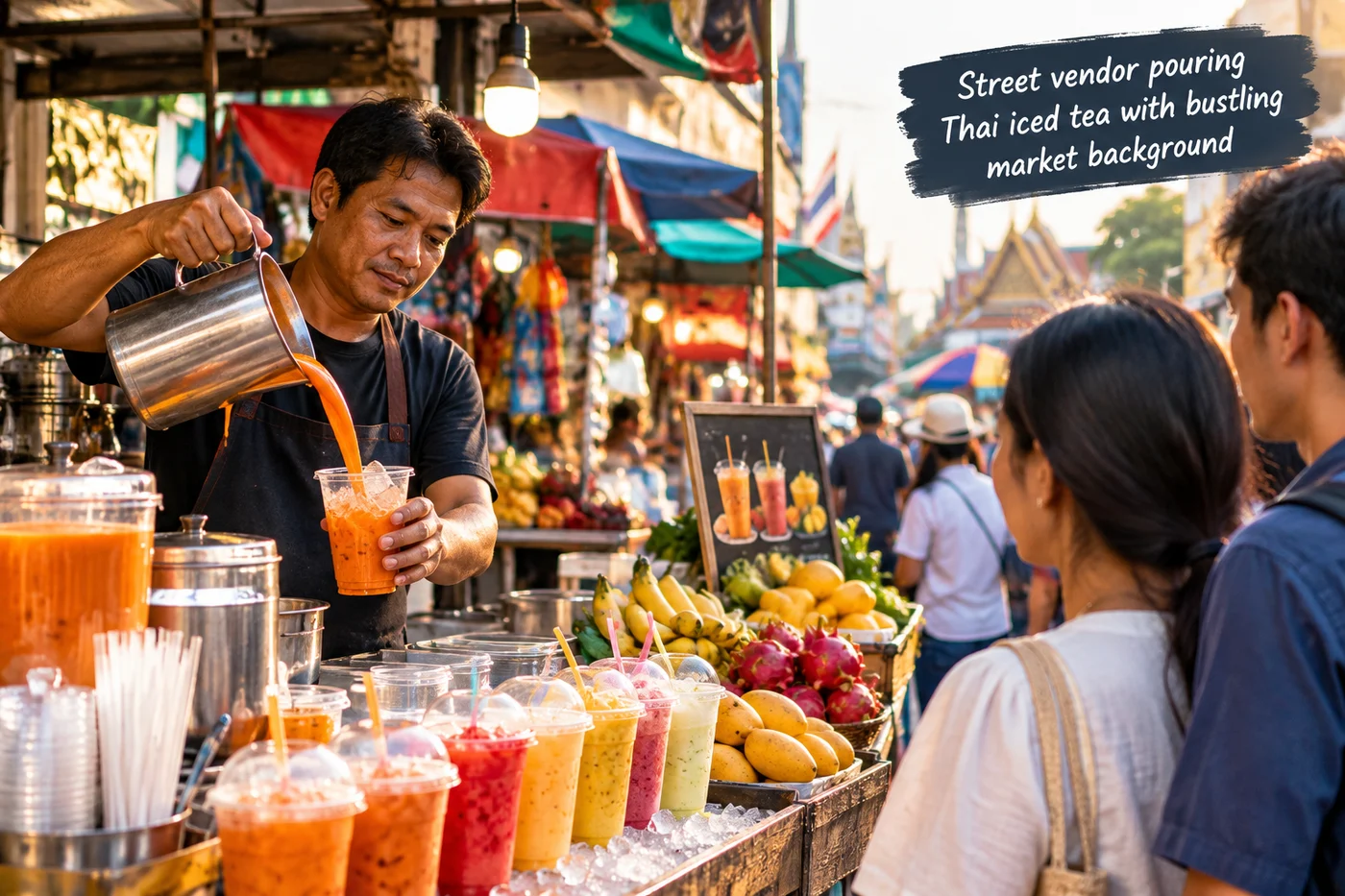
Cha yen (Thai iced tea) is a strong black-tea brew sweetened with condensed or evaporated milk; many commercial mixes include spices (star anise, vanilla) and bright orange colouring, so ask if you want dye-free versions. Oliang is the traditional dark-roast Thai coffee, often brewed through a cloth filter and served iced, black or sweetened with condensed milk. Fresh fruit shakes — mango, watermelon, pineapple and banana — are blended with ice and a little syrup and are sold everywhere from markets to beaches. Young coconut water is sold straight from the husk; it’s hydrating and mineral-rich but not a medical rehydration solution. Other options include nom yen (sweet pink milk), herbal tonics and bubble tea in cities.
Where to find drinks: stalls, markets, cafés and convenience stores
Street stalls and markets are the primary source for cha yen, oliang and fruit shakes; cafés and specialty coffee shops offer modern brews and air-conditioned seating. Fresh coconuts are common at beaches, night markets and roadside stalls. Convenience stores (7‑Eleven, FamilyMart) stock bottled iced coffee, packaged coconut water and mainstream beers, useful for late-night purchases. For a cleaner water/ice option, buy sealed bottled drinks or order from reputable cafés and restaurants where ice is likely made from filtered water.
Alcohol basics: local lagers, spirits and safe drinking
Domestic lagers such as Singha and Chang are widely available; they’re often served very cold and sometimes poured over ice in casual settings. Major Thai spirits include Mekhong and SangSom, commonly used in cocktails or with mixers. Keep in mind that alcohol sale rules, licensing and opening hours can change by municipality or holidays — check local notices. The legal drinking age is 20 in Thailand; always carry ID if requested and drink responsibly.
Dietary, halal and vegan concerns
Many sweet drinks use condensed milk or evaporated milk — request 'mai sai nom' or 'no milk' to make beverages vegan. Cha yen and oliang are often sweetened with condensed milk by default, so ask for 'nom thong noi' or specify plant-based milk at cafés. For halal concerns, street vendors may not display certification; seek Muslim-owned stalls or halal-certified restaurants in areas like Bangkok’s Chinatown or smaller Muslim neighbourhoods. Ask about ingredients if you have allergies or dietary restrictions.
Seasonal and regional specialties + pairing ideas
In hot months, fruit shakes and young coconut are especially refreshing; during cooler northern season in Chiang Mai, local coffee shops roast regional beans and serve richer specialty coffee. In Isan (northeast), spicy food pairs well with sweet, cooling cha yen or fruit shakes. On beaches in Phuket, enjoy coconut water or iced coffee with seafood. Pair heavy or spicy dishes with lightly sweet drinks and reserve spirits for late evenings.
Practical Tips
Ask for 'waan noi' to cut sugar, request 'mai ao naam kheung' (no ice) if worried about hygiene, and choose bottled or café-made drinks over street ice if you have a sensitive stomach. Carry ID for alcohol purchases (legal age 20). When in doubt about dyes in cha yen, ask the vendor or pick tea from cafés that list ingredients.
Important Considerations
Many commercial Thai‑tea mixes may contain synthetic food colouring; travellers with sensitivities should ask or choose dye‑free options. Fresh coconut water is high in potassium but is not a medical ORS. Alcohol sale times and licensing vary by location and dates—confirm locally. Street hygiene varies; preferring bottled water or freshly boiled water reduces stomach‑illness risk.
Planning more of your trip? Browse our
Thailand Food & Restaurant Guides
for more practical Thailand food and dining information.
Final Thoughts
Thailand’s drink scene is as varied as its food — from bold street cha yen and oliang to fresh fruit shakes and local beers. Use simple phrases, watch ice and sugar levels, and sample both street and café offerings. For tailored plans, pair local drinks with HotelForU city guides and hotel picks to find recommended vendors near your stay.
Sources & Further Reading
- TeaDelight — Guide on Thai Tea
- Harney & Sons — Thai Iced Tea explanation
- Singha Corporation — About Singha
- CBI — Coconut water market information
Transport schedules, fares and operating rules can change. Always verify time-sensitive details with the official operator before travel.