HOTEL GUIDE
Thailand Money Guide: Cash, ATMs, Cards, Exchange & Tipping
Practical, up‑to‑date advice on withdrawing baht, using cards and QR payments, avoiding fees and DCC, where to exchange money, tipping norms and safety for travellers to Thailand.
This Thailand money guide explains how to get and use baht, where cards work, what fees to expect and everyday tipping customs. Read this before you travel so you know when to use cash, how to avoid poor exchange rates and what to do if a card is lost or skimmed.
Key Takeaways
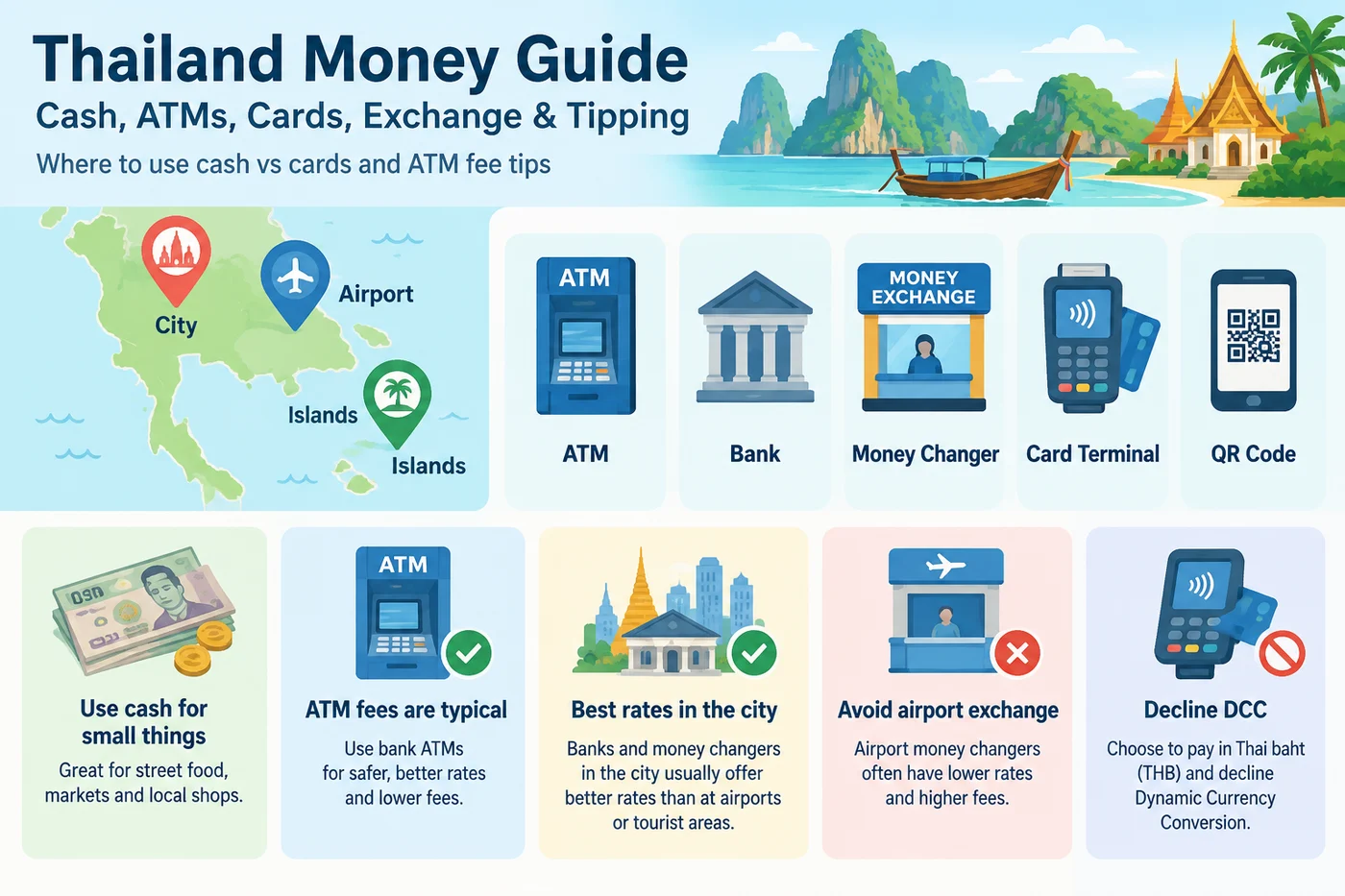
- Carry some cash (local markets, taxis, islands) but rely on cards in cities; withdraw larger sums at city ATMs with lower spreads.
- Decline DCC (choose THB), compare rates (city changers like SuperRich typically beat airport counters) and expect per‑withdrawal ATM fees.
- Tipping is optional but appreciated: round up small bills, 20–50 THB for casual service, ~10% in higher‑end restaurants if no service charge.
Thailand money guide: ATMs and withdrawing cash
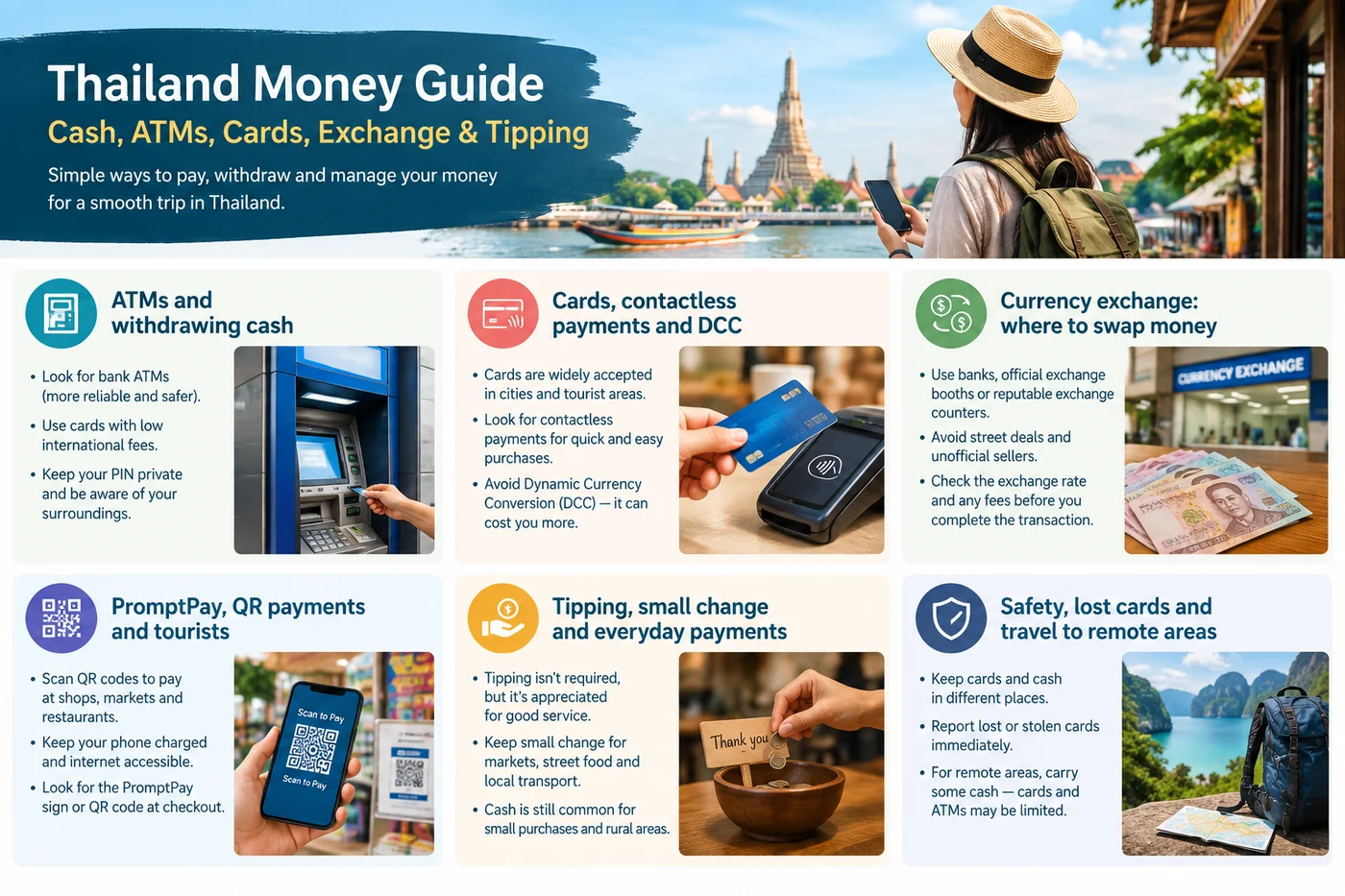
ATMs are abundant in Bangkok, Chiang Mai and popular beach towns; foreign Visa/Mastercard/Debit cards are widely accepted and many machines also handle China UnionPay and JCB in tourist areas. Expect a per‑withdrawal access fee charged by the Thai ATM operator — many banks display an on‑screen notice and published tariffs commonly fall in the neighbourhood of 220–250 THB, though fees vary by bank and may change. Your home bank may add its own fee and a currency conversion margin.
How to minimise fees and problems:
– Withdraw larger amounts less often to reduce fixed per‑withdrawal charges. Check your card daily withdrawal limits before travel.
– Use ATMs inside bank branches, major hotel lobbies or shopping malls when possible — machines there are usually maintained and safer.
– Read on‑screen fee notices before confirming and, if offered, decline the option to be charged in your home currency (DCC) — choose THB instead.
– Keep your PIN private; cover the keypad and inspect the ATM for skimming devices.
Cards, contactless payments and DCC
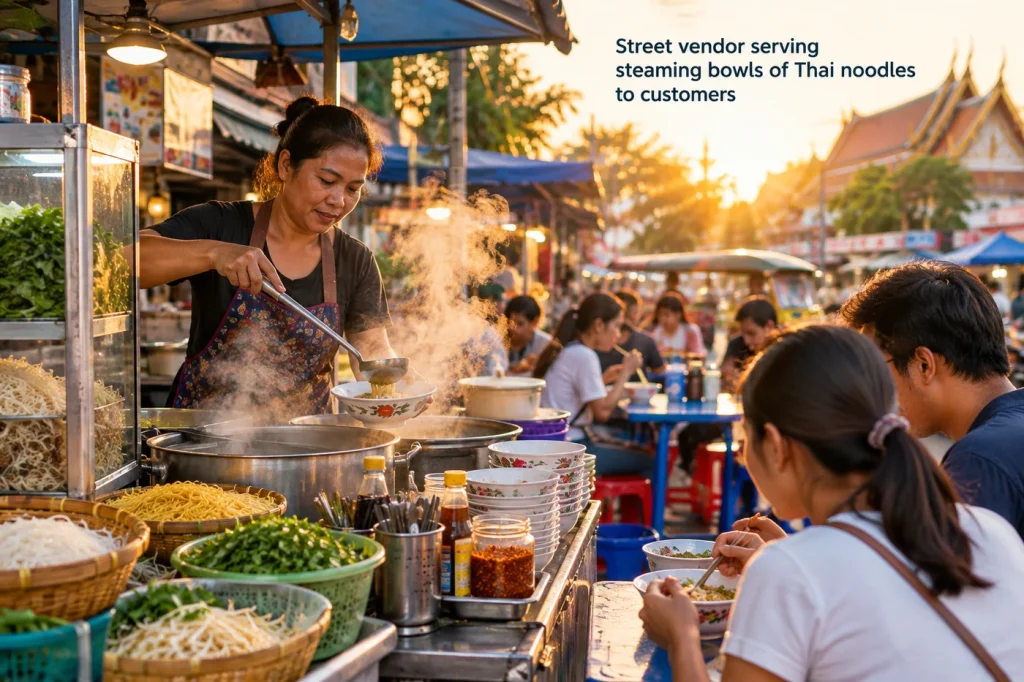
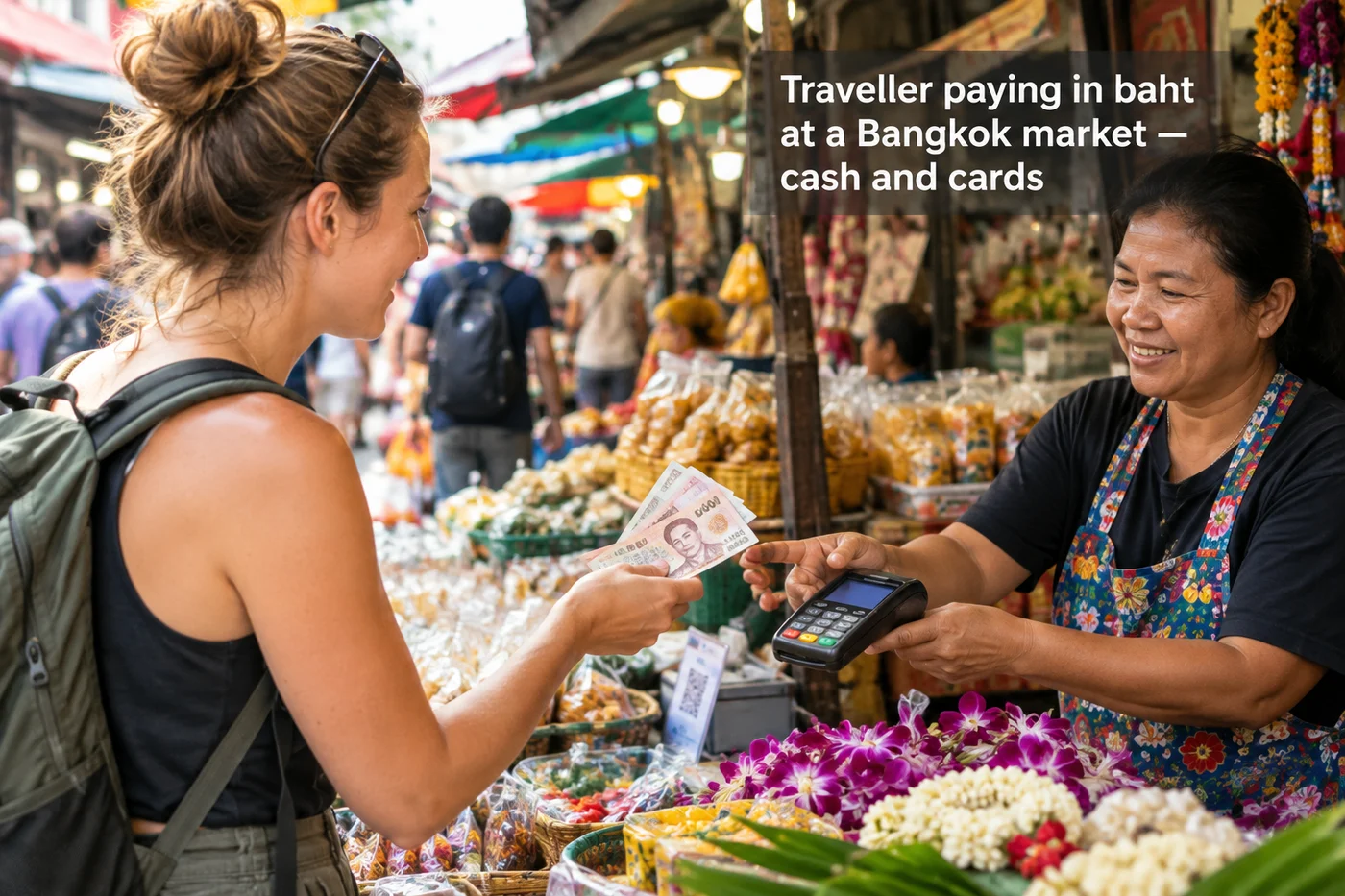
Credit and debit cards are accepted at international hotels, department stores, higher‑end restaurants and many tour operators. Smaller vendors, street food, markets, local taxis and many island businesses are often cash‑only.
Bring a mix: one chip‑and‑PIN debit card and one major credit card (Visa or Mastercard). Contactless and mobile wallets work in urban areas and chains but aren’t universal outside tourist hubs. Always carry some cash for transfers, local taxis and ferry tickets.
Dynamic currency conversion (DCC): If a terminal asks to charge you in your home currency, decline it. DCC often uses a marked‑up rate; letting your card issuer perform the conversion (charge in THB) is usually cheaper and safer.
Currency exchange: where to swap money
The official currency is the Thai baht (THB). Airport exchange counters and hotel desks are convenient but typically offer worse rates. Specialist city money‑changers (for example, well‑known Bangkok outlets like SuperRich and other reputable booths) usually provide tighter spreads for major currencies.
Practical exchange tips:
– Exchange a small amount at the airport to cover immediate costs (taxi, SIM), then compare city rates for larger sums.
– For USD/EUR/GBP, city changers and some bank branches generally beat airport rates.
– Avoid changing large amounts with unbranded street sellers; use licensed booths or banks.
– Bring crisp, undamaged notes for the best rates; some changers prefer newer US dollar notes.
PromptPay, QR payments and tourists
Thailand’s PromptPay and Thai QR payments are nationwide and very convenient for locals, allowing transfers via phone number or QR code. However, registering for PromptPay normally requires a Thai bank account or national ID, so tourists usually cannot rely on native PromptPay services.
Alternatives for visitors:
– Some larger merchants accept international QR wallets or cards charged via a point‑of‑sale app.
– Prepaid travel cards and multi‑currency e‑wallets (issued in your home country) can be useful but check merchant acceptance.
– For long stays consider opening a Thai bank account if you meet local requirements — banks require documentation and policies differ.
Tipping, small change and everyday payments
Tipping isn’t mandatory in Thailand but is appreciated in tourist areas. Typical amounts:
– Street food and small purchases: round up to the nearest 5–20 THB.
– Taxis: round up or add 20–50 THB for a longer ride.
– Restaurants: check the bill for a service charge (often 10%); if none, leaving around 10% in mid‑range or higher establishments is common.
– Guides and drivers: 100–300 THB per day is a helpful gesture depending on service and group size.
Carry small notes and coins for tips and transport — 20, 50 and 100 THB notes are widely used for this purpose.
Safety, lost cards and travel to remote areas
Plan ahead for remote islands and border areas where ATMs may be scarce or unreliable. Bring extra cash for transfers, accommodation and supplies when you’ll be off the beaten track.
If a card is lost or stolen:
– Contact your bank to block the card immediately and request emergency replacement or cash services.
– Report serious fraud to local police and keep a copy of the report for your bank and embassy.
– For non‑urgent help, Thai tourist police and your country’s embassy can assist — note down relevant numbers before travel.
Keep copies of card numbers, emergency contact details and one backup payment method stored separately from your primary wallet.
Practical Tips
1) Withdraw larger sums at city ATMs and keep receipts. 2) Always choose to be charged in THB (decline DCC). 3) Use licensed money‑changers in the city for the best cash rates. 4) Carry small notes (20/50/100 THB) for tips and taxis. 5) Notify your bank of travel dates to avoid blocks.
Important Considerations
ATM operator fees, exchange rates and bank policies change frequently — check on‑screen ATM notices and your bank’s fees before travel. PromptPay services typically require a Thai bank account. Avoid accepting DCC and don’t assume cards are accepted in remote locations.
Planning more of your trip? Browse our
Thailand Travel Guides
for more practical Thailand travel information.
Final Thoughts
A sensible mix of cash and cards makes travel in Thailand easy: keep enough baht for day‑to‑day cash purchases and island transfers, use cards for hotels and big purchases, and protect yourself by declining DCC and watching ATM fees. For more destination planning and region-specific money tips see our other HotelForU travel pages (e.g. /travel/money).
Sources & Further Reading
- Bank of Thailand — Banknotes & PromptPay
- Krung Thai bank — fee schedule (example tariff)
- SuperRich Thailand (money changer)
- TravelCurrencyGuide — DCC and ATM guidance
Transport schedules, fares and operating rules can change. Always verify time-sensitive details with the official operator before travel.