HOTEL GUIDE
Essential Thai Ingredients: A Traveler’s Guide
A compact, travel-ready handbook to the herbs, spices, sauces and pantry staples at the heart of Thai cooking—what they taste like, how to buy and pack them, and safe substitutes.
This Thai ingredients guide gives travelers a compact map to the herbs, spices, sauces and pantry staples you’ll see on menus and at markets across Thailand. Learn what each ingredient tastes like, how to buy and store it while travelling, safe vegetarian/halal alternatives and quick home substitutes so you can recognise flavours and shop confidently in Bangkok, Chiang Mai or Phuket.
Key Takeaways
- Focus on a compact pantry of recurring items—fish sauce, shrimp paste, palm sugar, tamarind, coconut milk, aromatics and Thai chiles—to understand Thai flavours.
- Buy sealed packaged pastes and dried goods for travel; fresh roots and leaves are best used locally (and often restricted by customs).
- Use clear-label checks for allergens and accept that substitutes (e.g., soy for fish sauce or ginger for galangal) change the dish’s character.
Thai ingredients guide: Key pantry essentials
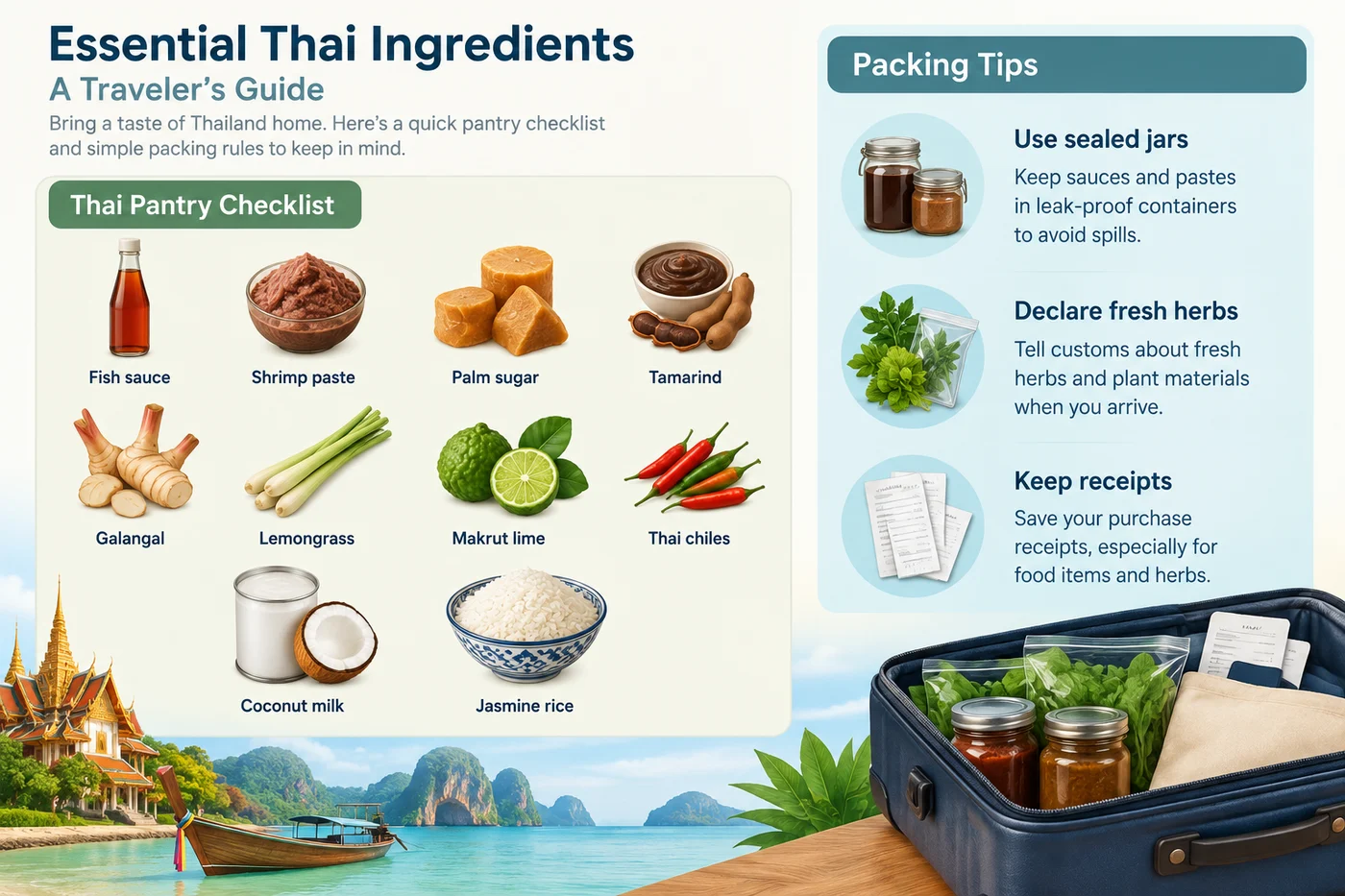
Below are the core items you’ll encounter, with pronunciation, flavour profile, uses, buying and storage notes.
- Fish sauce (nam pla, nam-plah): salty, umami-rich liquid made from fermented anchovies. Use in stir-fries, soups and dipping sauces. Buying tip: look for short ingredient lists and 'first press' or higher protein (quality indicator). Allergens: fish. Substitute: light soy + a little seaweed for vegans (not identical). Pack: sealed bottle in checked luggage.
- Shrimp paste (kapi): concentrated, funky umami used sparingly in curry pastes and som tam. Buy small sealed tubs; substitute cautiously with miso/fermented soybean for vegetarian versions (flavour differs). Allergy: shellfish.
- Palm sugar (nam tan peep): caramel-like sweetness sold in blocks or granules. Keeps well; substitute light brown sugar or coconut sugar in a pinch.
- Tamarind (makham): souring agent—paste or tamarind pulp used in pad Thai, soups and dipping sauces. Buy paste tubs for travel; substitute with lime + brown sugar if needed.
- Galangal (kha): woody, piney relative of ginger—essential in many soups and curry pastes. If fresh is unavailable use frozen slices or galangal paste; ginger works in a pinch but will change the aroma.
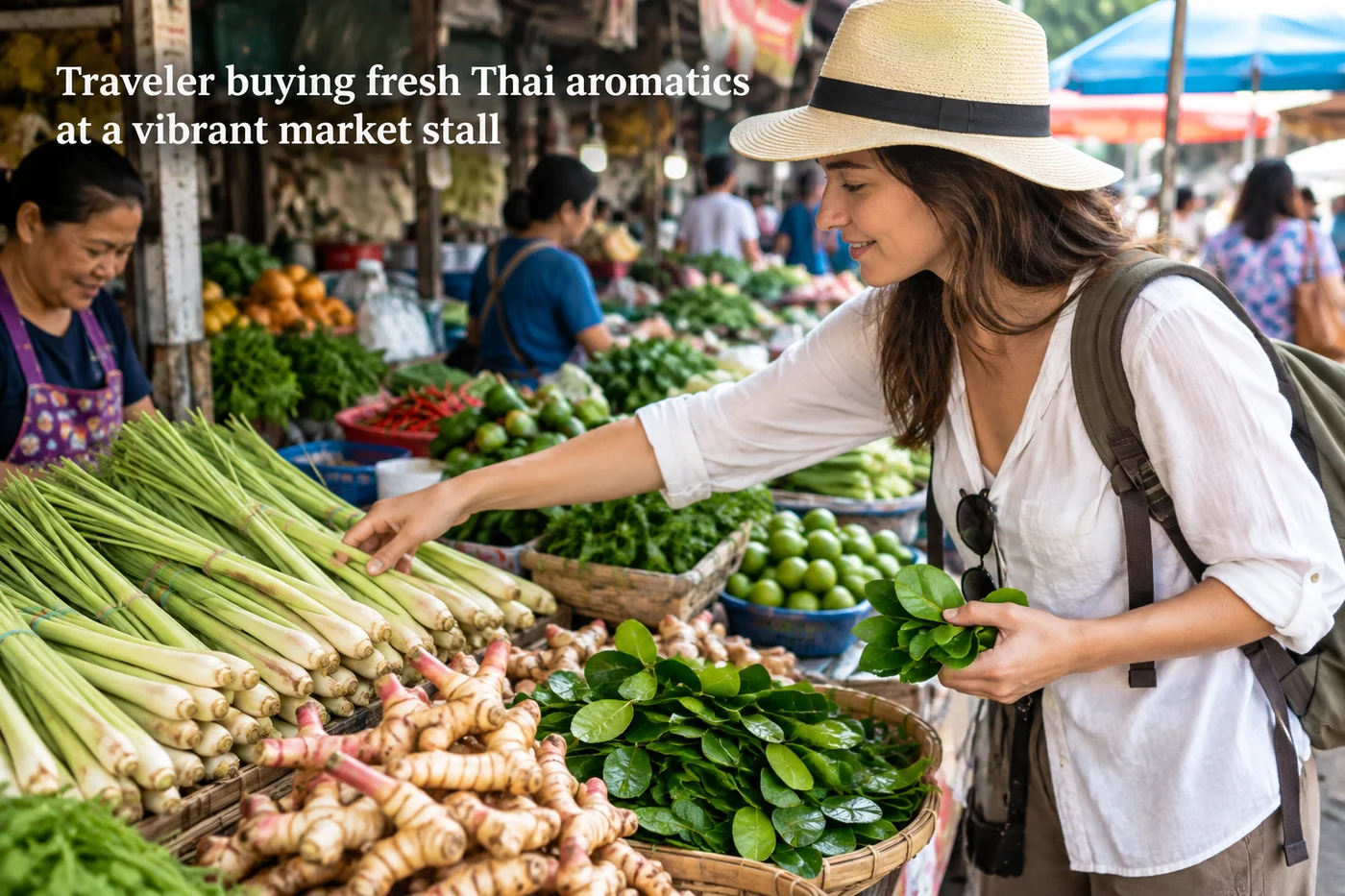
- Lemongrass (takrai) and makrut (kaffir) lime leaves: citrus aromatics for soups and curries. Markets sell 'soup herb bundles' with these. Pack as frozen or dried/packed leaves—fresh plant material may be restricted for export.
- Thai chiles (bird’s eye/ prik kee noo): short, potent; used fresh or dried. Buy in small amounts to keep them fresh.
- Coconut milk, Thai basils, jasmine rice: pantry mainstays—buy canned/boxed coconut milk and sealed rice for travel.
Where and how to buy in Thailand
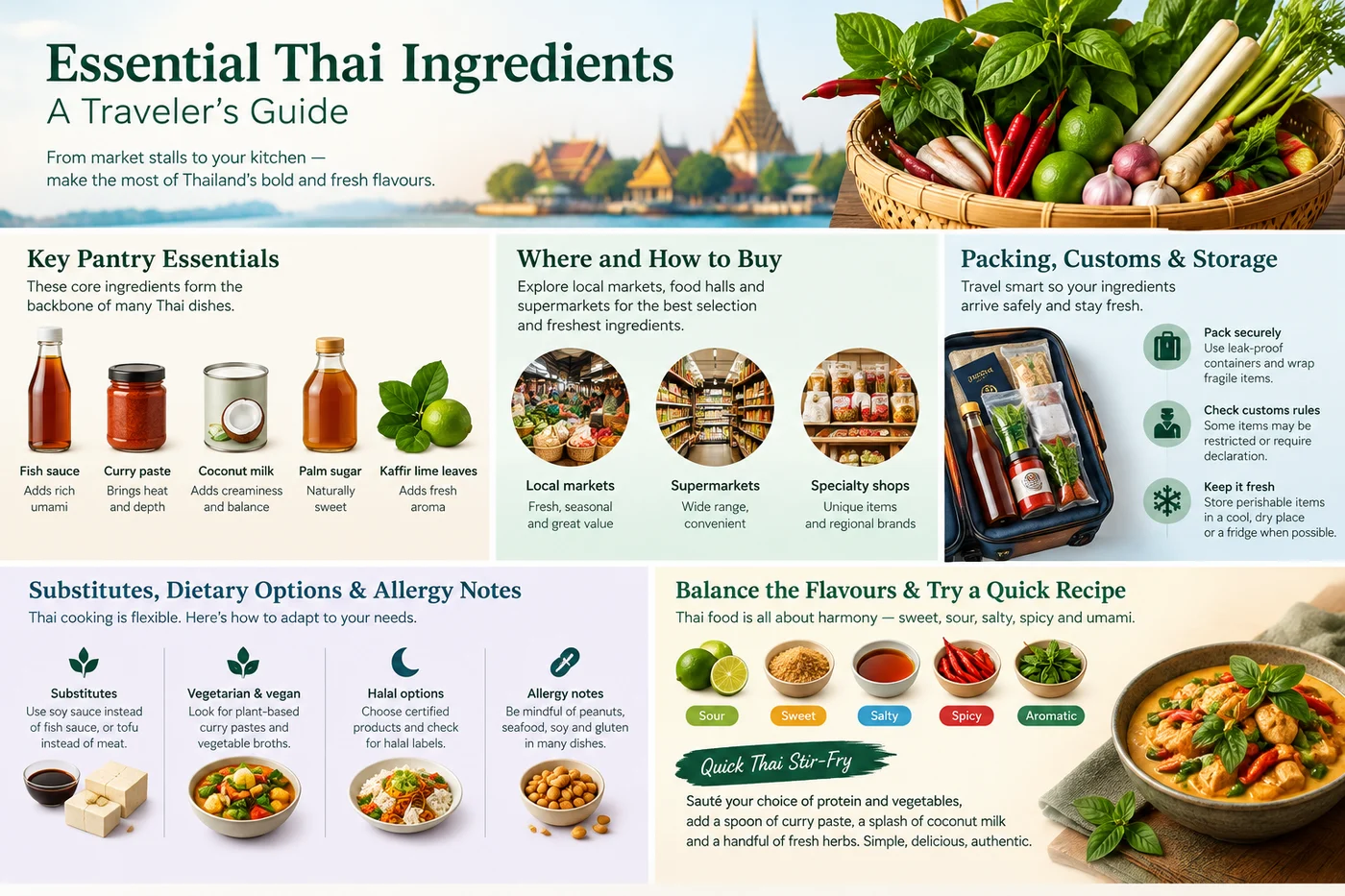
Choose wet markets for freshest aromatics and supermarkets for sealed goods. Markets often sell bundled herbs (lemongrass, galangal, makrut leaves) and small tubs of pastes; look for busy stalls and ask vendors to show sealed packaging for pastes. Notable Bangkok markets include Or Tor Kor (higher-end produce), Khlong Toei (wholesale) and Chatuchak (weekend) where ingredient stalls are common—check local market hours and availability before you go (market details may change). For sealed products and consistent labelling, buy from major supermarkets like Tops or Big C.
Packing, customs and storage for travel
Shelf-stable sealed items travel best: tamarind paste, canned coconut milk, dried chilies, packaged curry pastes and bottled fish sauce. Always keep commercial packaging and receipts. Fresh herbs, roots and plant material are restricted by many countries—declare all agricultural items at customs. U.S. travellers should consult USDA APHIS guidance for the latest rules and permit requirements before packing fresh produce. For airline packing: seal jars in plastic bags, pad bottles in checked baggage, and consider couriering allowed goods home if uncertain.
Substitutes, vegetarian/halal options and allergy notes
Substitutes are practical but not identical—present them as compromises.
- Fish sauce: swap with mushroom soy sauce, tamari plus a bit of seaweed stock or commercial vegan fish sauce for vegetarian/halal diets.
- Shrimp paste: miso or fermented soybean pastes add umami but lack the marine note of kapi.
- Galangal: ginger is acceptable for heat and zest but loses the piney character.
- Tamarind: lime juice + brown sugar works for acidity and sweetness if paste is unavailable.
Allergy vigilance: commercial pastes and sauces often contain shrimp, fish, peanuts or traces of shellfish—read labels carefully and ask vendors. For halal needs, seek products certified or clearly labelled; many supermarkets stock halal-labeled sauces.
Balancing flavours and quick recipe cues
Thai cookery balances salt/umami, sweet, sour, heat and aromatics. Knowing a few flavour signatures helps you recognise dishes in restaurants and markets:
- Nam jim (dipping sauce): fish sauce + lime + palm sugar + chilli + garlic—bright, salty, sweet and hot. Vegetarian swap: soy + lime + sugar + chilli.
- Tom yum base: galangal, lemongrass, makrut lime, fish sauce and lime—hot, sour, herbal.
- Pad krapow (basil stir-fry): fish sauce, palm sugar, Thai chiles and holy basil—savory, spicy and herbaceous.
Tasting with purpose: order small plates to isolate flavours (e.g., ask for a spoon of sauce or a simple soup) and compare with ingredients you’ve purchased.
Practical Tips
Buy sealed pastes and canned goods for travelling. Carry small resealable bags for opened jars. Ask vendors to show ingredient labels for allergens. Use frozen or paste forms of galangal and lemongrass if you can’t find fresh.
Important Considerations
Declare all agricultural items at customs; import rules change—check official APHIS/CBP guidance. Substitutes alter the authentic taste—present them as compromises, not exact matches. Wet-market perishables are best used locally.
Planning more of your trip? Browse our
Thailand Food & Restaurant Guides
for more practical Thailand food and dining information.
Final Thoughts
A short, travel-friendly pantry and the confidence to recognise five flavour building blocks will transform how you eat and shop in Thailand. Start with a sealed bottle of good fish sauce, a jar of tamarind paste, palm sugar and a packet of dried chiles—learn the aromas, and the rest will fall into place. For market maps and neighbourhood tips, see our Bangkok food guide on HotelForU.net.
Sources & Further Reading
- Hot Thai Kitchen — Ultimate Guide to Essential Thai Ingredients
- Hot Thai Kitchen — Fish Sauce: How to Choose, Use, Store & Substitute
- USDA APHIS — Traveling with agricultural products (traveler guidance)
- Thaigle — Bangkok ingredient and market guide
Transport schedules, fares and operating rules can change. Always verify time-sensitive details with the official operator before travel.