HOTEL GUIDE
When Is the Best Time to Visit Thailand? Month-by-Month Guide
Practical, region-by-region month-by-month planning to pick the best time to visit Thailand for beaches, trekking, festivals or city sightseeing. Packed with seasonal tips and festival timing advice.
If you’re trying to decide the best time to visit Thailand, the short answer is: aim for the cool, dry months (roughly November–March) — but the ideal month depends on region and priorities. This guide gives a practical, month-by-month and region-by-region view so you can pick dates for beaches, trekking, festivals or quieter travel (see HotelForU.net’s Bangkok hotels guide for city stays).
Key Takeaways
- November–March is the safest bet for most regions: cooler, drier and festival-rich.
- Andaman and Gulf coasts have different monsoon timings — pick coast by month, not just season.
- Plan around festivals (Songkran in April, Loy Krathong in November) and check local schedules before booking.
When is the best time to visit Thailand? Quick answer by travel style
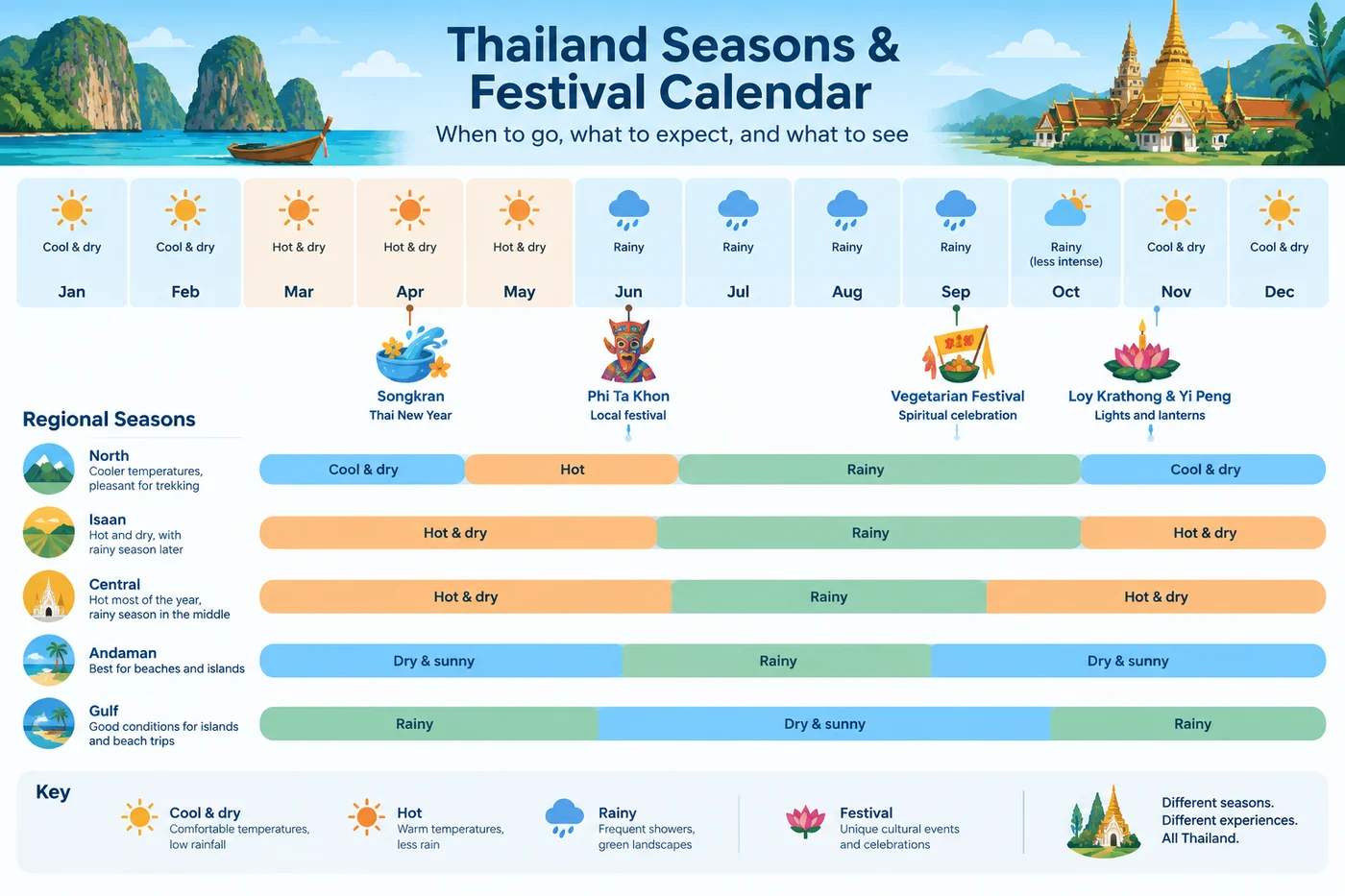
Best time to visit Thailand depends on what you want: beaches — pick the dry season for the coast you plan to visit; trekking — November–February for the north; festivals — April (Songkran) and November (Loy Krathong) are peak cultural windows. If you must travel in the rainy months, May–October can mean fewer crowds and lower prices, but expect heavier rain and occasional ferry/sea disruptions.
How Thailand’s seasons work (simple regional map)
The Thai Meteorological Department describes three broad seasons: cool/dry (mid‑Oct to mid‑Feb), hot (mid‑Feb to mid‑May) and rainy/southwest monsoon (mid‑May to mid‑Oct). Regional quirks matter: the Andaman coast (Phuket, Krabi) sees most rain May–October; the Gulf coast (Koh Samui, Koh Phangan, Koh Tao) often has its wettest months around October–January. Northern Thailand (Chiang Mai) shares the three-season pattern but also suffers seasonal agricultural haze (roughly Jan–Apr). Always cross‑check short‑term TMD forecasts before travel.
Month-by-month guide by region
January — North: cool, dry and good for trekking; Central: pleasant in Bangkok; Andaman/Gulf: excellent beach weather on most coasts.
February — Much like January; haze can start in the north late in the month some years.
March — Hotter, especially inland; trekking still possible early in the month; heat peaks later.
April — Hottest month and Songkran (Thai New Year, commonly Apr 13–15): great cultural spectacle but expect crowds and water fights; plan early bookings in major cities.
May — Start of the southwest monsoon for many areas; Andaman coast sees increasing rain; Gulf islands often stay drier in early May.
June — Rain becomes frequent on the Andaman coast; islands remain visitable but sea conditions can be rough; Phi Ta Khon (Dan Sai) and other regional events sometimes occur in June (dates vary).
July–August — Heavy showers possible, especially July–September; lower prices and quieter resorts, but boat services can be disrupted.
September — Often the wettest month on the Andaman coast; east coast (Gulf) begins to recover late in the month.
October — Transition month: Gulf coast can be wet (Oct–Jan peaks there), while Andaman begins to clear late October; festival dates (Vegetarian Festival in Phuket) fall in lunar Sept/Oct — check local announcements.
November — Generally the start of the cool, dry season; Loy Krathong and Yi Peng (lanterns) usually fall this month — great for northern and central travel.
December — Peak season: cool, dry, busy and more expensive across most of Thailand; book early for islands and Christmas/New Year.
Notes: Full Moon Party on Koh Phangan is monthly around each full moon—expect big crowds and sold‑out accommodation during the event; verify all festival dates (Songkran, Loy Krathong, Vegetarian Festival, Phi Ta Khon) each year as organisers publish dates late.
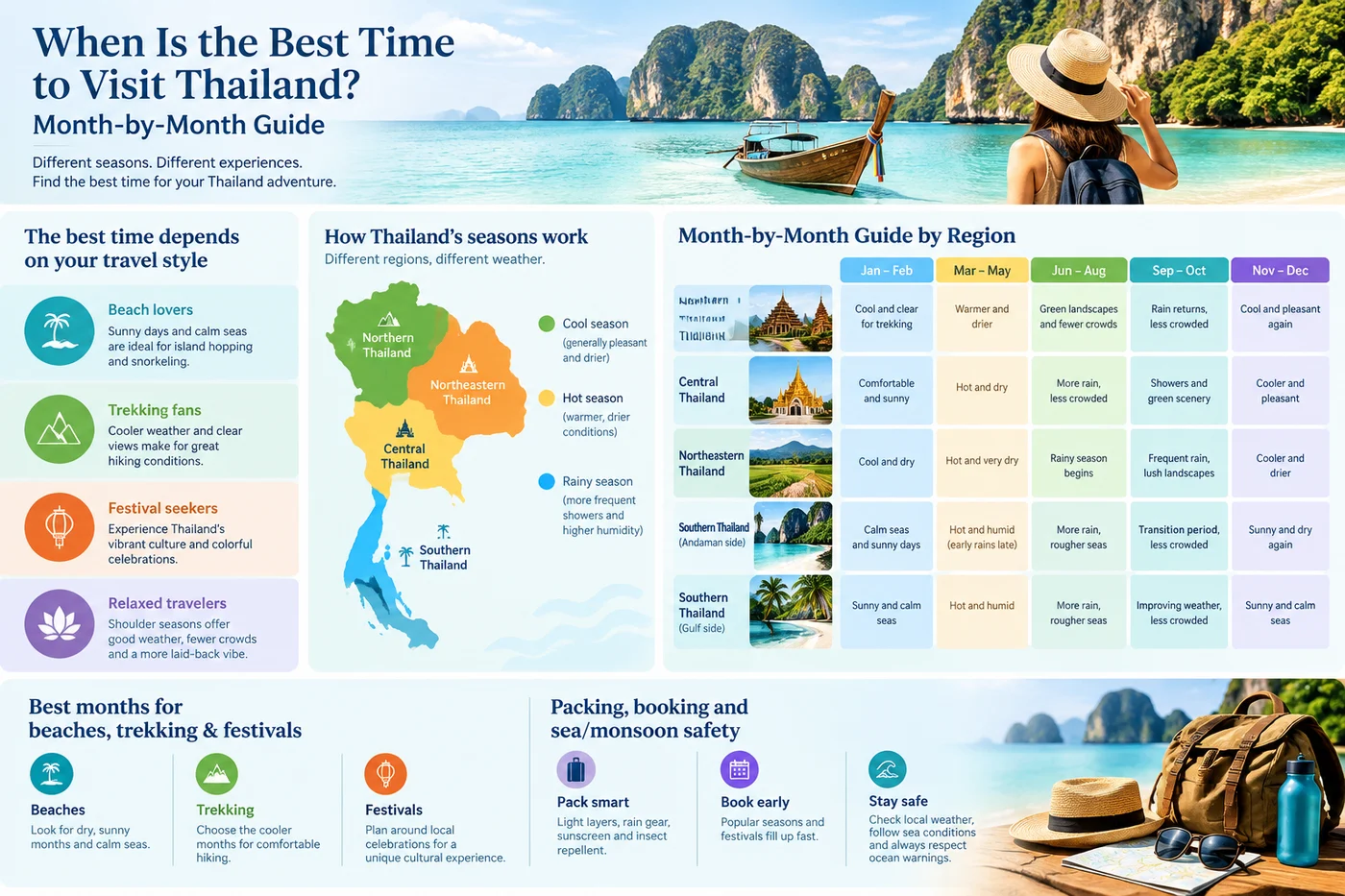
Best months for beaches, trekking & festivals
Beaches — Andaman coast (Phuket, Krabi): November–March; Gulf coast (Koh Samui/Phangan/Tao): January–September with a good window January–August but expect variable October–January rainfall.
Trekking & hill country — November–February: cooler nights and clearer air (avoid northern burning season if sensitive to haze: Jan–Apr can have elevated PM2.5).
City sightseeing (Bangkok/central plains) — November–March for lower humidity and manageable heat.
Festivals — Songkran (mid‑April) for water celebrations; Loy Krathong/Yi Peng (full moon in the 12th lunar month, usually November) for lanterns and floating candles. For regional spectacles (Phuket Vegetarian Festival, Phi Ta Khon), check local provincial announcements.
Packing, booking and sea/monsoon safety
Pack layers for the north in cool months, lightweight breathable clothing for hot months, and a compact rain shell for monsoon travel. If visiting during the haze season, bring an N95 mask and monitor Air4Thai/PCD air‑quality forecasts. Book popular dates (Songkran, Loy Krathong, December–January, full‑moon parties) well in advance; during monsoon months book flexible fares and travel insurance that covers weather disruptions. Expect occasional ferry cancellations and rough seas in peak monsoon months—check local port notices and TMD advisories before boat travel.
Practical Tips
1) Choose a coast deliberately: pick Andaman (Nov–Mar) or Gulf (Jan–Aug) based on your island list. 2) For festivals: check TAT and local provincial sites for confirmed dates; avoid assuming fixed calendar dates for lunar festivals. 3) If on a tight budget, travel in the shoulder months (May, Sep–Oct) for lower prices but accept wetter weather. 4) For northern trekking, avoid Feb–Mar if you are highly sensitive to air pollution; use live Air4Thai data to decide.
Important Considerations
Festival dates, short-range weather and sea conditions change yearly—always verify with the Tourism Authority of Thailand (TAT), the Thai Meteorological Department (TMD) and local organisers before booking. Northern haze and tropical cyclone activity are seasonal risks; consult Air4Thai/PCD and TMD forecasts close to departure.
Planning more of your trip? Browse our
Thailand Travel Guides
for more practical Thailand travel information.
Final Thoughts
There’s no single best time to visit Thailand for everyone. Use the month-by-month region notes above to match your priorities—beaches, trekking or festivals—and verify festival dates and live weather/air‑quality forecasts before you book. When in doubt, November–March is the most reliable window for most travellers.
Sources & Further Reading
- Thai Meteorological Department (TMD) — seasonal climate information
- Tourism Authority of Thailand (TAT) — Songkran and event announcements
- Air4Thai / Pollution Control Department — live air quality monitoring
- TravelThailand.org — regional climate guide
Transport schedules, fares and operating rules can change. Always verify time-sensitive details with the official operator before travel.