HOTEL GUIDE
The Traveler’s Guide to Thai Desserts: What to Try, Where to Find Them, and How They’re Made
A concise travel guide to Thailand’s most iconic sweets—what to try, where to taste authentic versions, how they’re made, seasonal notes and allergy tips.
Khanom—Thailand’s umbrella word for sweets, snacks and desserts—opens a tasty door into Thai culture. This guide to Thai desserts introduces international travellers to the classics (mango sticky rice, khanom krok, foi thong, khanom buang and more), explains how they’re made, and shows where to find authentic versions across Thailand’s major destinations.
Key Takeaways
- Start with mango sticky rice in mango season (roughly March–June) and sample street-stall classics like khanom krok at night markets.
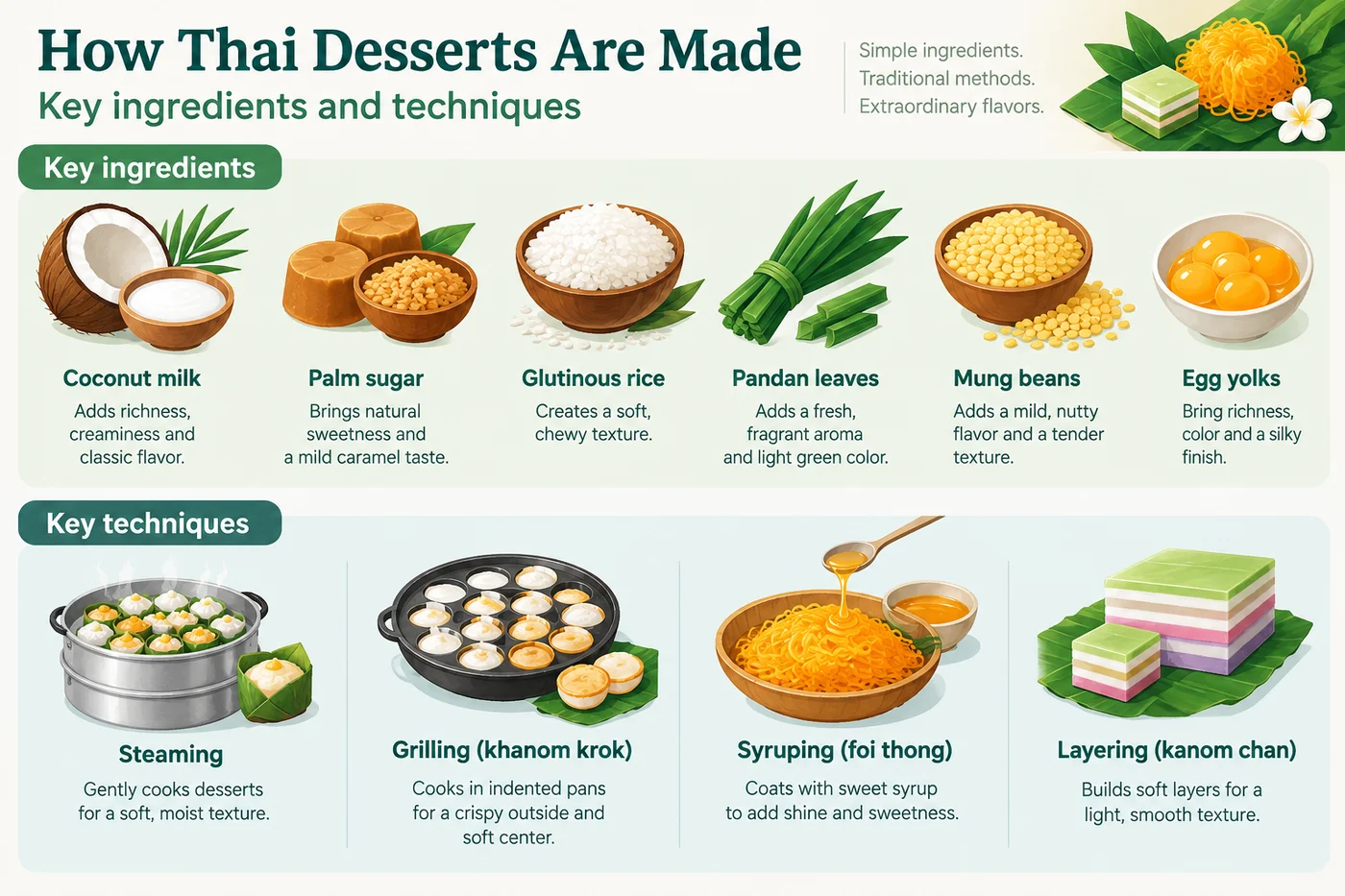
- Most traditional sweets rely on coconut milk, palm sugar and glutinous rice—ask about eggs or coconut if you have allergies.
- Find desserts everywhere: street stalls, night markets, Chinatown, specialty cafés and regional fairs—timing and seasonality matter.
Signature Desserts to Try
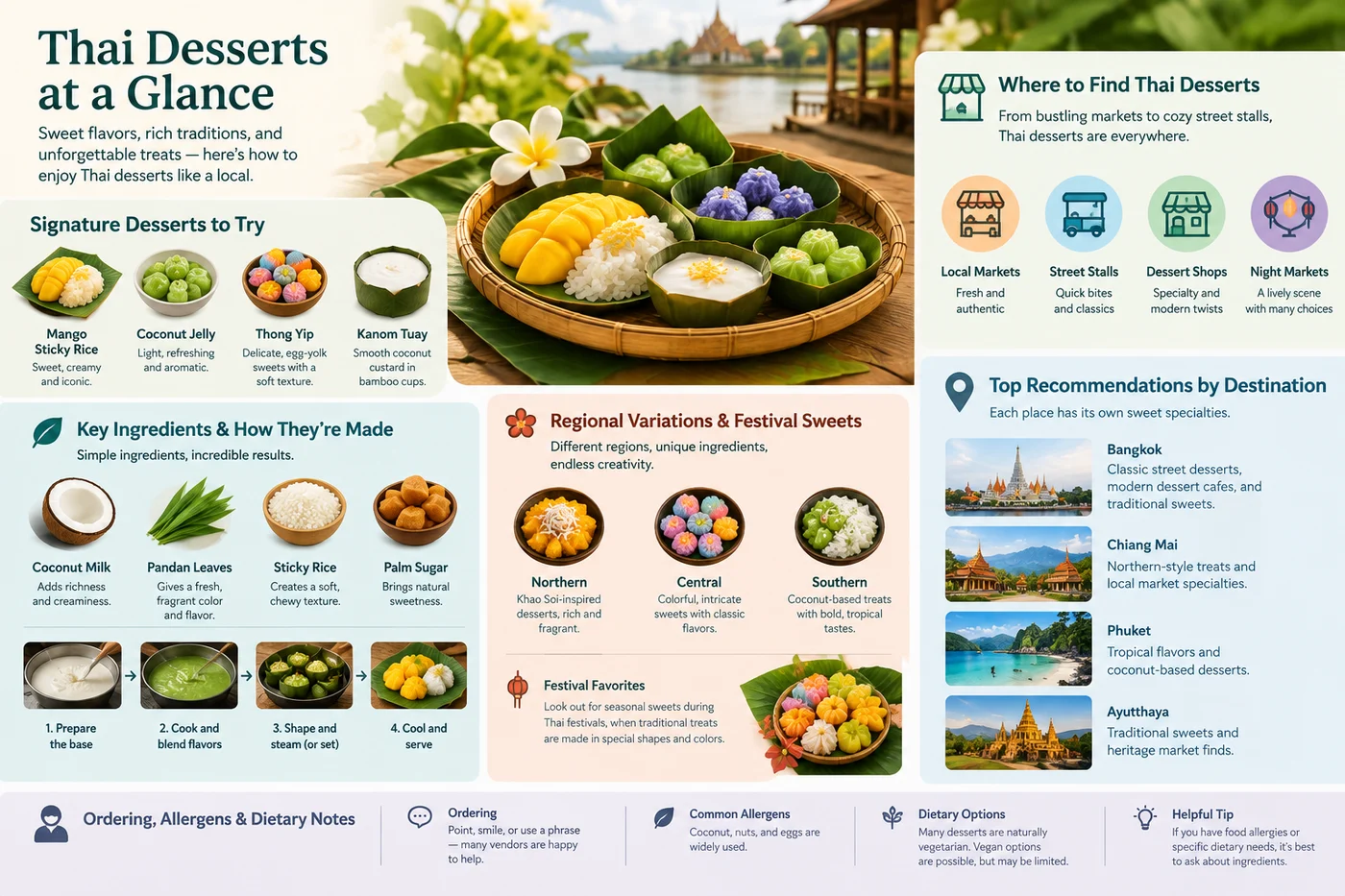
A short list of dessert types you should taste, with quick descriptions:
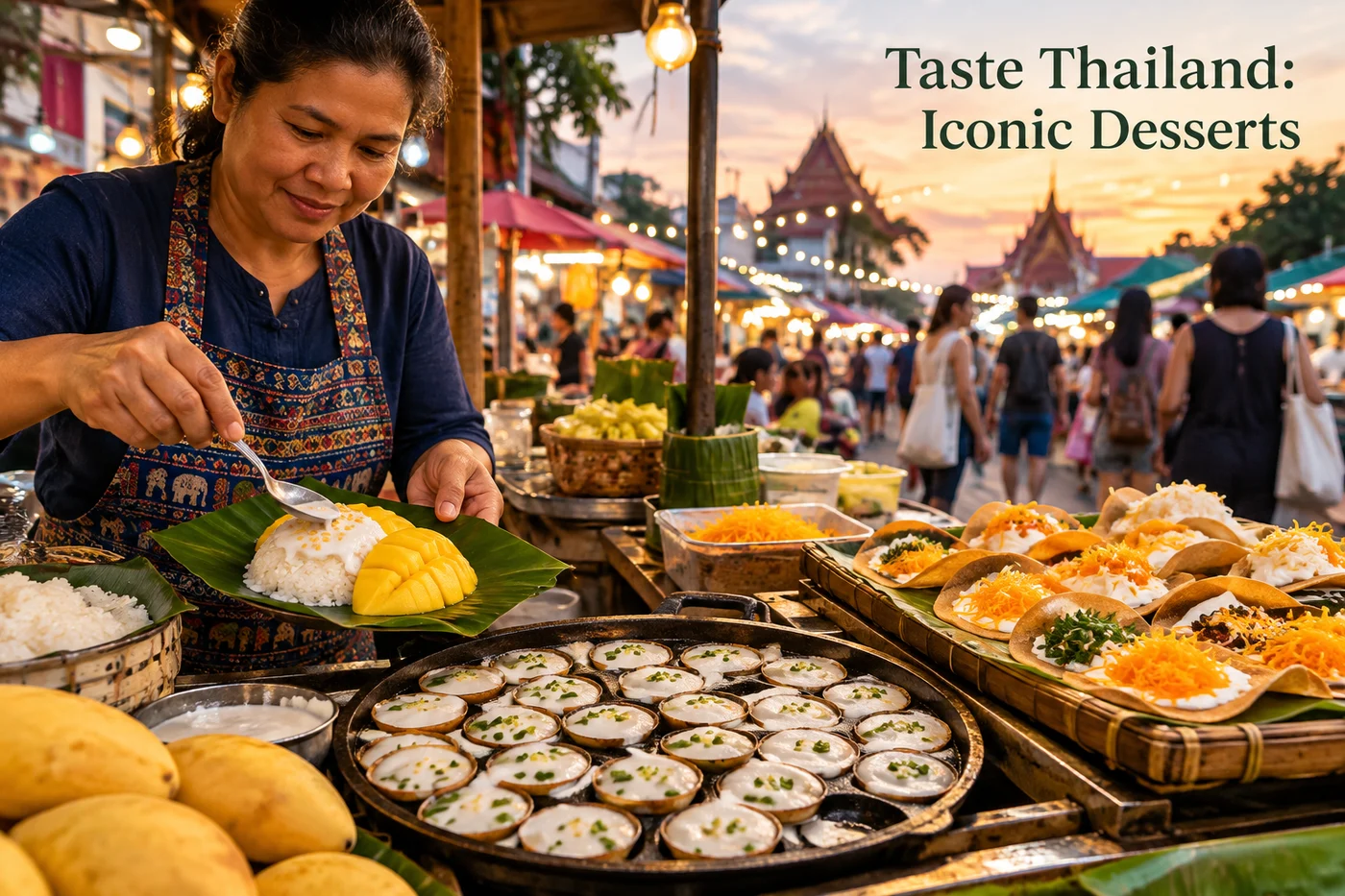
– Mango sticky rice (khao niao mamuang): Steamed glutinous rice sweetened with coconut cream, paired with ripe Thai mango. Best in peak mango season (roughly March–June).
– Khanom krok: Small coconut–rice griddle pancakes—crispy at the edges, soft and creamy inside—sold from cast-iron pans at street stalls.
– Khanom buang: Thin, crispy crepes filled with sweet or savory toppings; look for shredded egg yolk threads or coconut cream.
– Foi thong and thong yod: Delicate egg-yolk–and-sugar sweets with Portuguese influences—part of the royal and festive repertoire (present these origin stories as influences rather than uncontested facts).
– Bua loy: Little rice flour dumplings in warm sweetened coconut milk; comforting and common at markets.
– Kanom chan: Layered steamed cake (often pandan-scented) with a chewy, slightly jellied texture—served at ceremonies and celebrations.
– Khao lam: Sticky rice cooked in bamboo with coconut and beans, a rustic snack often sold by street vendors and in provincial markets.
Where to Find Thai Desserts
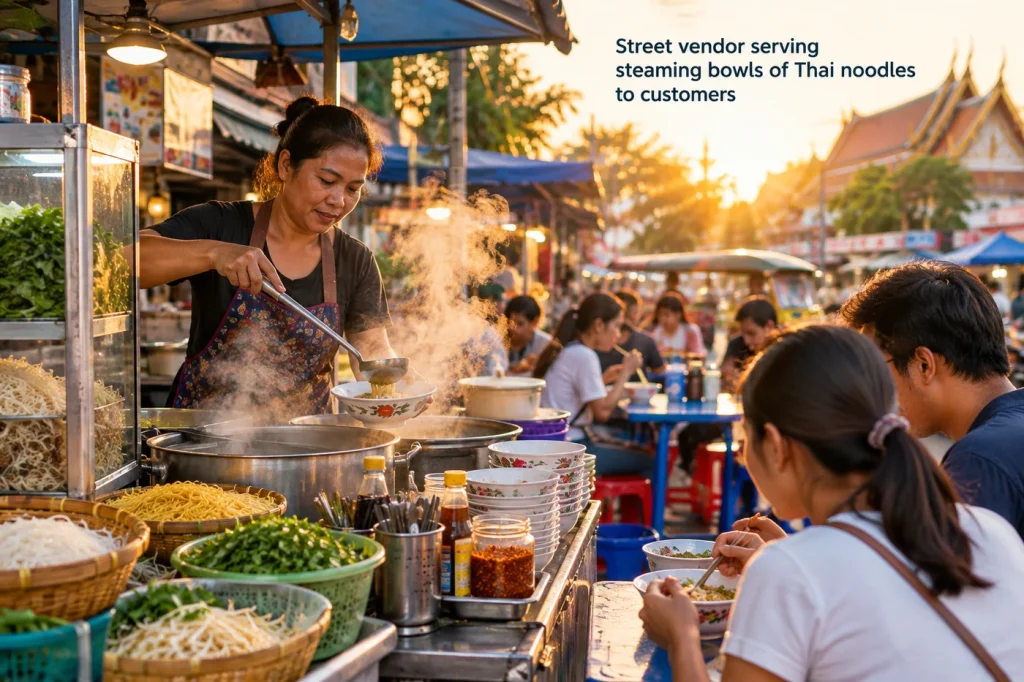
Dessert culture in Thailand is public and varied. For the most authentic street experience, head to night markets and fresh-food markets—Chinatown (Yaowarat) in Bangkok and Or Tor Kor market are dessert-rich. Night markets across Chiang Mai, Phuket and provincial towns showcase local variations. Temple fairs, weekend markets and seasonal fruit stalls are excellent for regional sweets like durian treats in the south or grilled coconut snacks in Isan. Specialty dessert cafés and modern patisseries offer plated, air-conditioned versions if you prefer a sit-down experience. For planning, consult local HotelForU city or Bangkok restaurant guides to pair dessert stops with sightseeing.
Key Ingredients & How They’re Made
Most traditional Thai desserts are built around a few core ingredients: coconut milk, palm (toddy) sugar, glutinous (sticky) rice, pandan and rice flours. Typical techniques: steaming (kanom chan, bua loy), grilling in indented pans (khanom krok), frying or crepe-making (khanom buang), and making thread-like egg sweets by drizzling egg yolk into sugar syrup (foi thong). The balance is usually sweet, fragrant and textural—chewy, custardy or syrupy rather than buttery. When you watch vendors, note the simple tools: banana leaves, cast-iron griddles, bamboo tubes and steaming baskets. These produce the textures that define khanom.
Regional Variations & Festival Sweets
Thailand’s regions emphasize different ingredients and festival traditions. Northern markets may include sticky rice sweets and layered cakes for Lanna festivals; Isan (northeast) markets use roasted rice and local palm sugars; southern provinces highlight coconut-rich sweets and tropical fruits. Many ceremonial desserts are part of the ‘nine auspicious desserts’ tradition at weddings and religious events. Fruit-based sweets—especially mango-specific dishes—are seasonal and at their best during domestic harvest months; other festive sweets appear around Songkran and local temple fairs. Availability can change year to year and by vendor.
Top Recommendations by Destination
Bangkok: Try mango sticky rice and khanom buang in Chinatown, and visit Or Tor Kor for high-quality fruit and desserts. Chiang Mai: Night markets and Sunday Walking Street are ideal for khanom krok and bua loy. Phuket and the South: Look for coconut-rich treats and khao lam at local markets and beachside stalls. Isan (Northeast): Explore provincial markets for grilled sweets and palm-sugar confections. Wherever you go, seek stalls with a steady stream of local customers—freshness and turnover matter more than glossy presentation. (See our HotelForU guides for dining and neighbourhood suggestions.)
Ordering, Allergens & Dietary Notes
Ask before you order if you have allergies—coconut milk and egg are common. Many khanom are naturally dairy-free, but egg-based sweets (foi thong, thong yod) are not vegan. Rice- and tapioca-based items are usually gluten-free, but some snacks may include wheat-based elements—check with the vendor. If you need vegan options, ask for sweets made with coconut milk and without egg; stall vendors often understand simple requests. For street-hygiene concerns, choose busy stalls with high turnover, and prefer freshly made items served hot or freshly plated.
Practical Tips
• Visit night markets after dinner for the freshest street desserts.
• For mango sticky rice, aim for March–June when domestic mangoes peak.
• Watch vendors prepare items to check ingredients and freshness.
• Carry small cash—many stalls don’t accept cards—and a napkin or wet wipe.
• If you have food allergies, learn or carry the Thai words for 'coconut' (มะพร้าว), 'egg' (ไข่), and 'peanut' (ถั่วลิสง).
Important Considerations
• The Portuguese origin story for some egg-yolk sweets is influential but debated—present it as an origin story, not settled fact.
• Availability and ‘best’ lists are time-sensitive; vendor openings, fruit seasons and market popularity change.
• Do not assume all khanom are vegan, dairy-free or gluten-free—ask each vendor.
Planning more of your trip? Browse our
Thailand Food & Restaurant Guides
for more practical Thailand food and dining information.
Final Thoughts
Sampling Thai desserts is a low-cost, high-reward way to explore regional flavours and culinary history. Start with a market crawl—try one familiar item (mango sticky rice in season) and one unfamiliar local sweet—so you leave room to discover textures and tastes unique to Thailand.
Sources & Further Reading
- Tourism Authority of Thailand — Mango sticky rice feature
- Thailand Foundation — Nine Auspicious Thai Desserts
- Government Public Relations Department — TasteAtlas 2026 / khanom krok mention
Transport schedules, fares and operating rules can change. Always verify time-sensitive details with the official operator before travel.