HOTEL GUIDE
Thailand Etiquette: Essential Cultural Rules and Practical Tips for Travelers
A practical guide to Thailand etiquette: clear dos and don'ts for temples, greetings, dress, dining, markets, photography, monks and the monarchy—plus useful phrases.
Understanding Thailand etiquette helps you travel with confidence and respect. This practical guide covers what to do and what to avoid—temples, greetings, dress, dining, markets, photography, monks and the monarchy—so you can navigate social situations without unintentionally offending people.
Key Takeaways
- Use the wai, dress modestly at temples, and avoid touching heads or pointing feet.
- Respect monks and royal imagery—women should not touch monks and avoid social‑media posts about the monarchy.
- When in doubt follow local cues, obey posted rules at sites like the Grand Palace, and check official sources before travel.
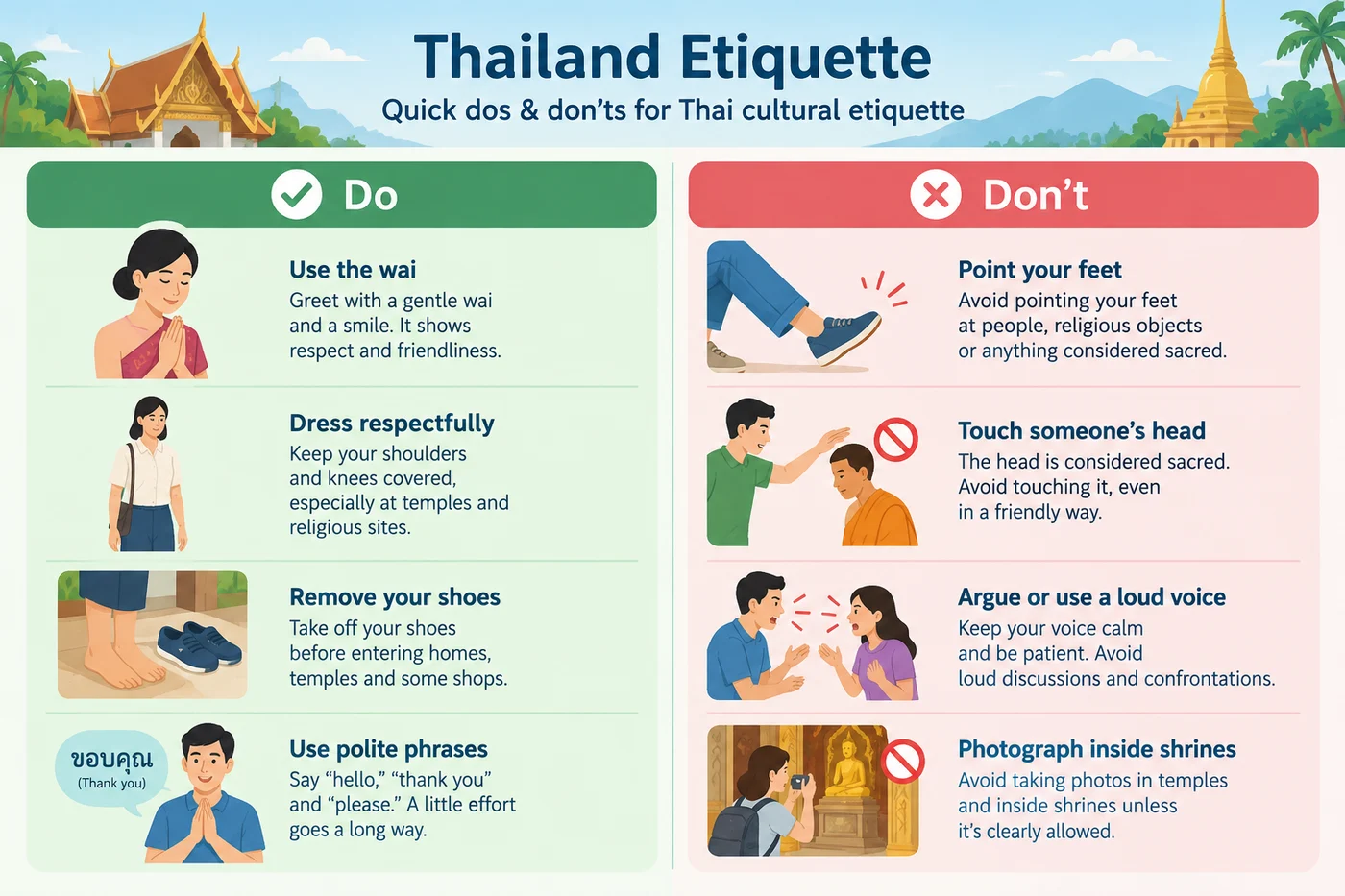
Thailand etiquette: Quick dos & don'ts
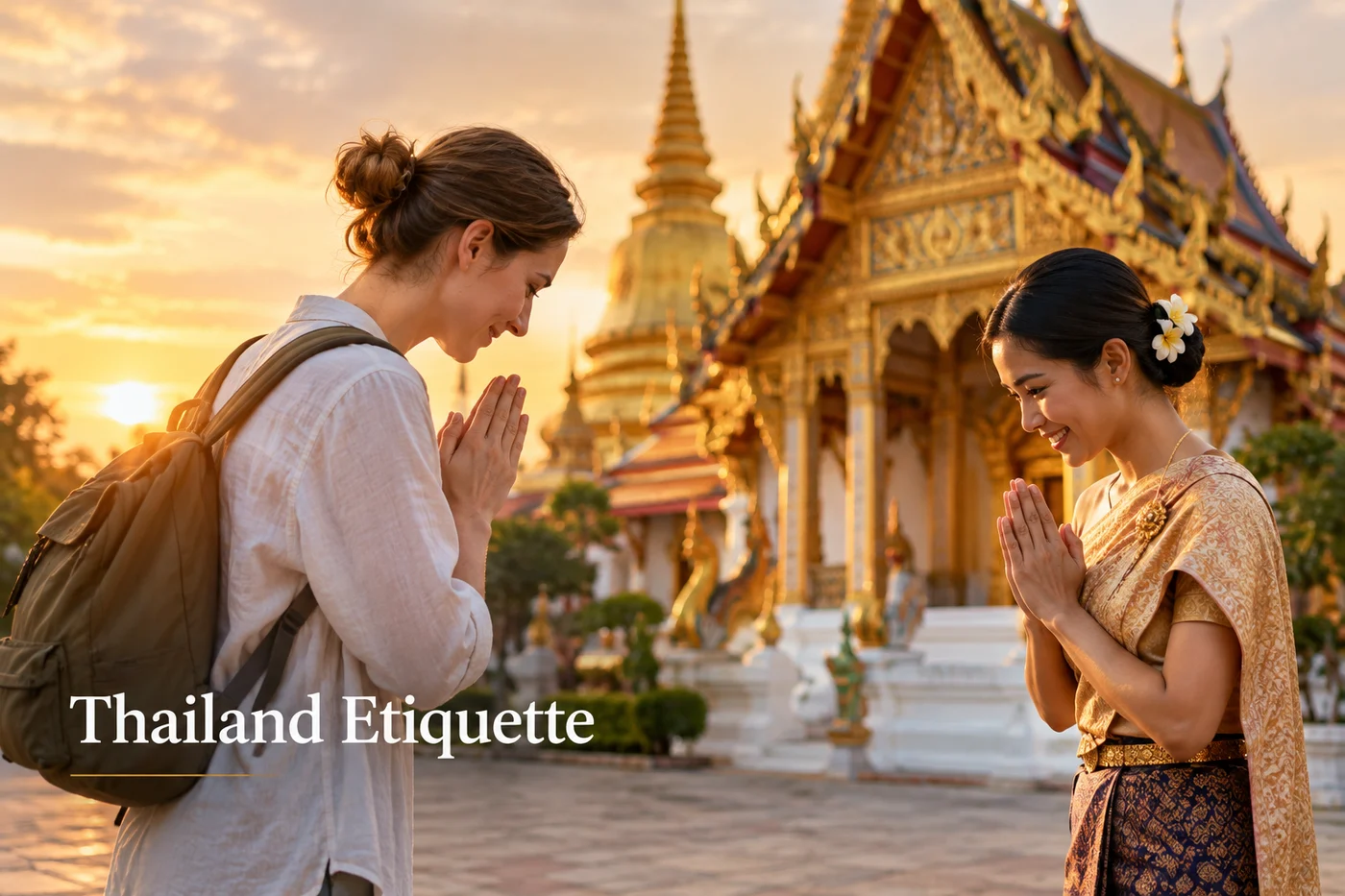
Do: Return a wai (palms together, small bow) when offered, cover shoulders and knees at major temples, remove shoes before entering ordination halls, speak softly in public, and use polite particles ('khrap' for men, 'ka' for women). Do place items within reach rather than handing them directly to a monk if you're a woman.
Don't: Touch a stranger's head, point your feet at people or Buddha images, shout or lose your temper in public, photograph where signs forbid (many temple interiors), or post content that could be construed as insulting the royal family. Follow posted dress rules at large sites such as the Grand Palace—these are enforced strictly at major attractions.
Greetings, body language and social norms
The wai is the traditional Thai greeting. Return it when offered; if you cannot, a friendly nod and smile are acceptable. Use titles and first names (Mr/Ms + name or simply first name) and add 'khrap' or 'ka' to sound polite.
Remember head and feet protocol: the head is the most respected part of the body—never touch it. Feet are the lowest—avoid pointing them, placing them on furniture or stepping over people sitting on the floor. Public displays of anger cause 'loss of face' and are best avoided—keep interactions calm and polite.
Temple & religious etiquette
Dress modestly—shoulders and knees covered at major royal and temple sites. Shoes must be removed before entering ordination halls and many indoor shrine areas. Photography is often allowed around temple grounds but is commonly banned inside main ordination halls (for example, rules at the Grand Palace forbid photos inside the Emerald Buddha hall); check signs and staff guidance.
Interaction with monks: monks receive a high degree of respect. Women should not touch monks or hand items directly to them—place objects nearby or hand via a male intermediary. Avoid sitting with your feet pointing toward a monk or a Buddha image. If you wish to donate, use the temple’s donation boxes or follow local procedures shown on site.
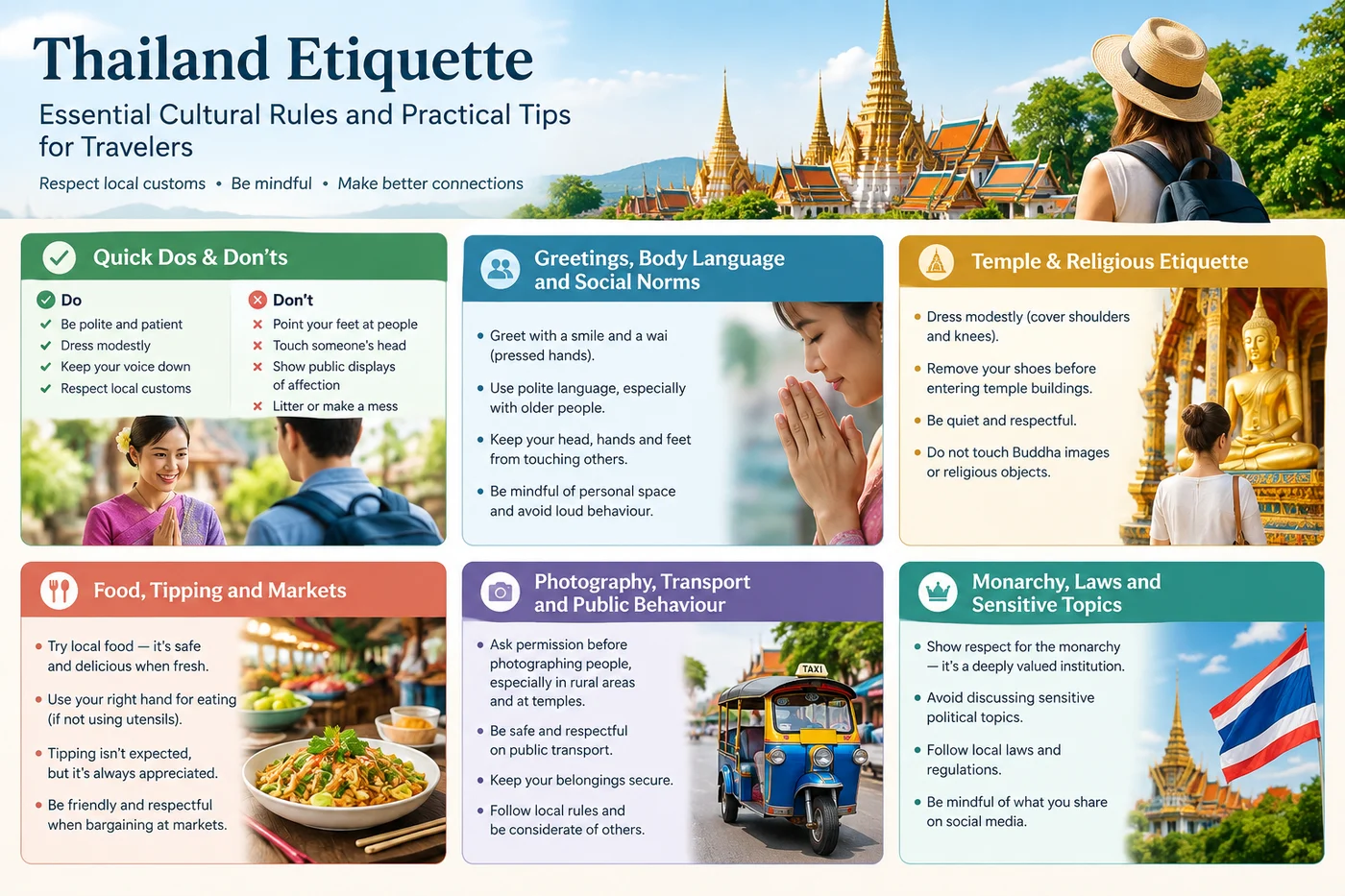
Food, tipping and markets
Eating is casual in many places but show respect at shared meals: wait for an invitation to start in formal settings and avoid making a scene over food. Tipping is not compulsory nationwide; small tips are appreciated for guides, drivers and good restaurant service—use your judgement and note if a service charge is already included.
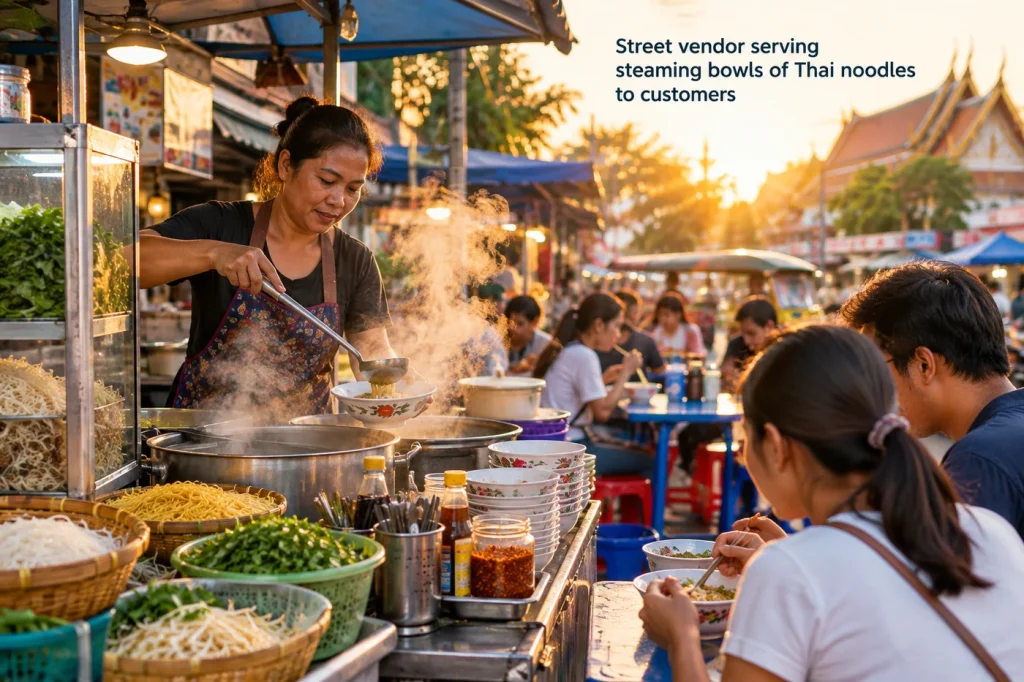
At markets, bargaining is normal for souvenirs but keep it friendly. Start with a polite smile, offer a reasonable counterprice and accept that very low offers can offend sellers. If bargaining makes you uncomfortable, buy at a fixed price stall instead.
Photography, transport and public behaviour
Always look for ‘no photography’ signs and ask permission before photographing people—many Thais appreciate being asked first. In public transport and on crowded sidewalks, keep belongings secure and avoid loud phone conversations. When the national or royal anthem plays (commonly in some public spaces and cinemas), many people stand—observe local practice and follow suit if convenient.
On trains, buses and boats show courtesy—offer seats to older passengers, remove shoes where required, and refrain from eating messy foods that could inconvenience others.
Monarchy, laws and sensitive topics
Thailand’s lese‑majesté law criminalizes insulting the monarchy; penalties are severe under Thai law and apply to everyone in the country. Avoid jokes, comments or social‑media posts about the royal family and do not deface royal images. Be cautious discussing sensitive political topics in public. For legal clarity and current enforcement guidance consult official government or embassy advisories before travel.
Practical Tips
Pack a lightweight scarf or sarong to cover shoulders and knees; have a pair of slip‑on shoes for easy removal at temples. Learn a few polite Thai phrases: 'sawasdee' (hello), 'khop khun' (thank you), and add 'khrap' or 'ka' to be polite. Carry a small amount of cash for donations and market purchases. Check specific temple visitor pages (the Grand Palace site is a primary source for rules) and your embassy’s travel advice for up‑to‑date legal cautions.
Important Considerations
Time‑sensitive details such as ticket prices, opening hours and specific legal interpretations change—always verify with official sites (e.g., the Royal Grand Palace) and your country’s embassy before travel. Not all temples offer sarongs or rent cover‑ups—follow posted rules at each site. Official English translations of Thai laws can be informative but may not be definitive; rely on official Thai publications for legal precision.
Planning more of your trip? Browse our
Thailand Travel Guides
for more practical Thailand travel information.
Final Thoughts
Respect and a few simple habits will go a long way in Thailand. Use the wai, mind head and feet, be modest in reverence and dress, and avoid public confrontations or careless social‑media posts. Observing local cues, asking politely and checking official site rules will keep you on the right side of Thai etiquette and make your trip smoother and more rewarding.
Sources & Further Reading
- The Grand Palace — Practical Information / Visitor rules
- United States Department of State — Country Reports (legal context)
- Rough Guides — Thailand travel tips
Transport schedules, fares and operating rules can change. Always verify time-sensitive details with the official operator before travel.