HOTEL GUIDE
The Complete Guide to Thai Curries: Types, Flavors, Ingredients and Where to Try Them
A traveler-focused guide to Thailand’s most common curries — what they taste like, key ingredients and allergens, how to order them safely, and where to try authentic versions.
Understanding the types of Thai curry is the fastest way to order confidently in Thailand. The Thai word for curry—kaeng (แกง)—covers a wide range of dishes, from coconut-rich stews to bright, sour broths and fiery non-coconut “jungle” curries. This guide explains what each curry tastes like, common ingredients and allergens, regional variations, how to adapt dishes for diet or spice tolerance, and where to seek authentic versions while you travel.
Key Takeaways
- Thai 'curries' (kaeng) fall into regional families: coconut-based, sour/tamarind, non-coconut jungle, and northern/Lanna styles.
- Common allergens include shrimp paste, fish sauce, shellfish and peanuts—ask cooks directly and use ‘jay’ (vegetarian) or ‘mai nit noi phet’ (less spicy) to adapt dishes.
- Seek classics where they originate: khao soi in Chiang Mai, massaman in southern-influenced kitchens, kaeng som in coastal provinces, and green/red/panang across central Thailand and Bangkok.
Types of Thai curry: Regional overview
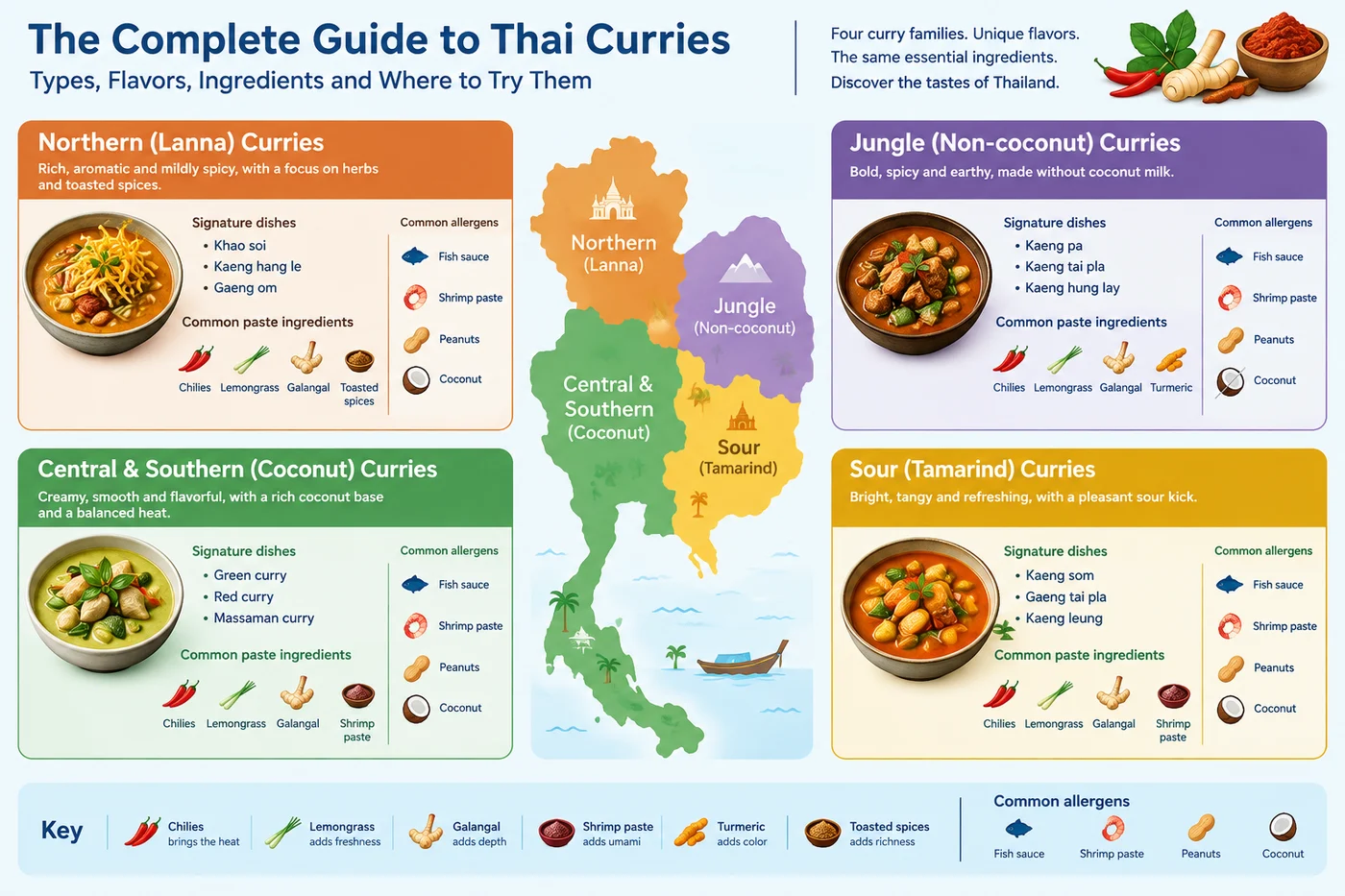
Thai curries are best understood by region and method. Central and southern curries typically use coconut milk and roasted or fresh-chile pastes (green, red, panang, massaman, yellow). Sour/tamarind-based curries (kaeng som or kaeng lueang) are bright and tangy—common along the Gulf and in the south. Northern or Lanna curries (khao soi, gaeng hang lay) show Burmese and regional influences and sometimes use less coconut or different spice profiles. Kaeng pa, the ‘jungle curry,’ traditionally contains no coconut and is herb-forward and very spicy. Remember: names and recipes vary locally; the same name can mean different preparations across provinces.
Signature curries — what to expect
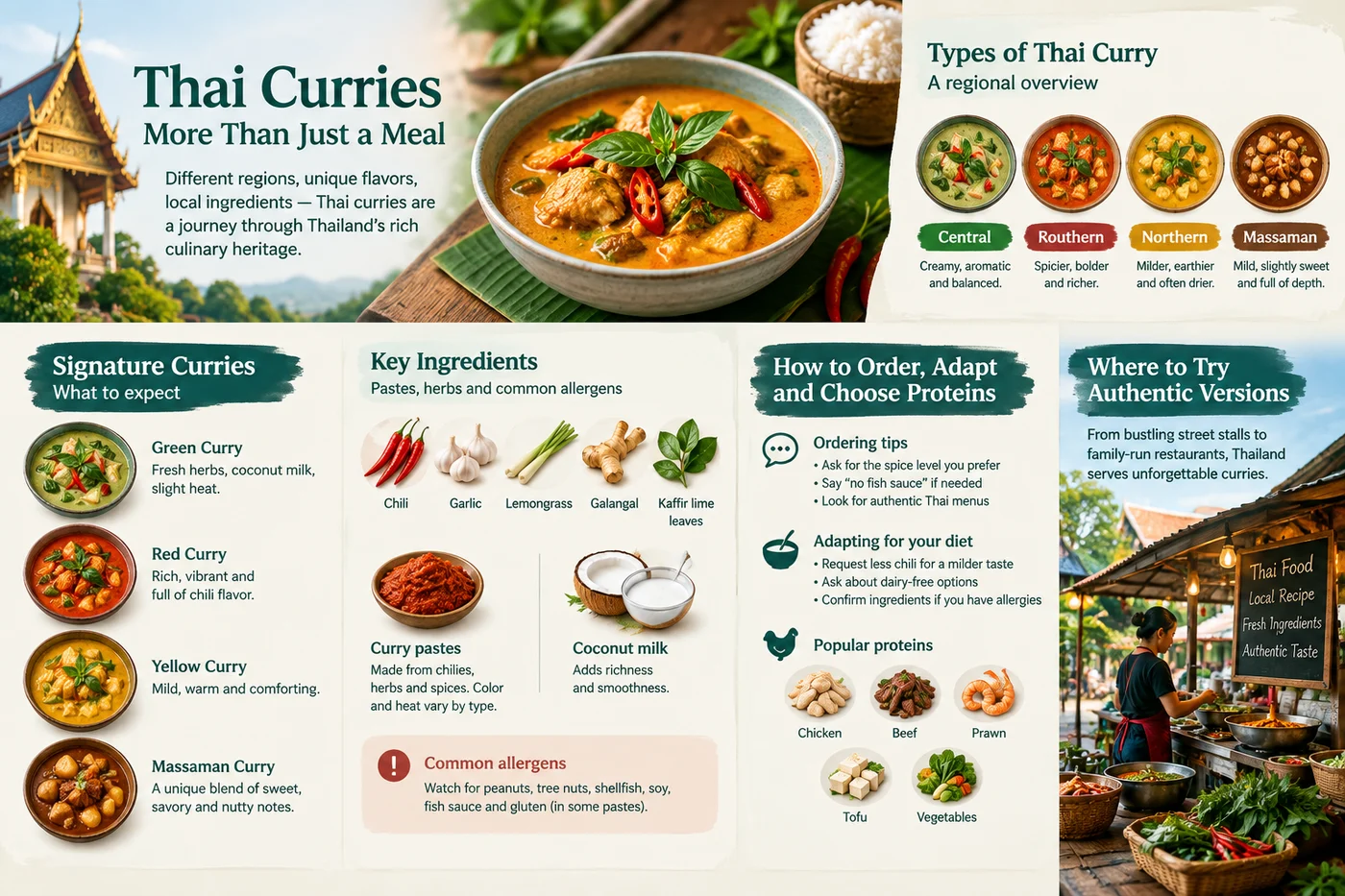
Green curry (kaeng khiao wan): Vibrant and aromatic from fresh green chilies, cilantro, kaffir lime and basil. Coconut-rich and often immediately spicy, green curry pairs well with chicken, pork or tofu.
Red curry (kaeng phet): Made with dried red chilies and roasted spices; it’s robust, slightly smoky and usually less herby than green curry.
Panang: A thicker, slightly sweeter coconut curry with ground peanuts or peanut notes and a citrusy kaffir-lime finish; milder than red or green in many restaurants.
Massaman: A mellow curry influenced by Persian/Indian/Malay spices (cinnamon, cardamom, cumin) and often cooked with potatoes and peanuts. Its history is debated, but its spice mix is distinct.
Yellow (kaeng kari): The Thai take on curry powder with turmeric and cumin; sweeter and milder—think gentle, curry-powder flavors in coconut milk.
Kaeng som: A sour, tamarind-driven curry with fish or shrimp, vegetables and bright acidity; southern versions add fresh turmeric.
Kaeng pa (jungle curry): No coconut; very spicy and herbaceous, with wild vegetables and a lean broth seasoned by fish sauce and shrimp paste.
Khao soi: Northern Lanna noodle curry—coconut-enriched broth, flat egg noodles plus a crispy noodle garnish; best known in Chiang Mai.
Gaeng hang lay: Northern pork curry with ginger, tamarind and warm spices—less coconut, richer meatiness.
Ingredients, pastes and common allergens
Traditional curry pastes combine aromatics pounded together: chilies (fresh or dried), lemongrass, galangal, kaffir-lime zest, coriander root, garlic, shallot and shrimp paste (kapi). Massaman and yellow incorporate toasted whole spices like cumin and turmeric. Important allergen notes: shrimp paste and fish sauce contain shellfish/fish; massaman or panang may include peanuts; khao soi uses egg noodles; coconut is prominent in many central/southern curries (not an allergen for most but a dietary concern). Always ask about shrimp paste, fish sauce and peanuts if you have allergies.
How to order, adapt and choose proteins
Basic Thai ordering tips: ask for spice level with phrases like mai pet (not spicy), phet nit noi (a little spicy), or phet mak (very spicy). To remove animal-derived seasonings, request 'jay' (vegetarian) and specify no fish sauce and no shrimp paste—some cooks will substitute soy sauce or salt. For halal or Muslim-friendly options, choose restaurants with halal certification or request curries cooked without pork and without shrimp paste/fish sauce; massaman is sometimes available in Muslim-run kitchens. Common proteins: chicken, pork, beef, fish, prawns, and tofu. For milder, creamier curries choose panang or massaman; for bolder, go for red or kaeng som.
Where to try authentic versions
Seek a curry in the region that developed it: khao soi in Chiang Mai and northern towns; kaeng som along the southern seaboard; massaman and panang in southern-influenced kitchens and central Thailand; green and red curry across Bangkok and central provinces. Bangkok is great for a broad sampler—look for family-run restaurants and market food stalls for less-sweet, more traditional versions. Use local review sites and ask hotel staff for current favorites; menus and specialties change, so check before you go. For more on Bangkok dining scenes, see our Bangkok restaurant guide for linking opportunities.
Practical Tips
Always describe allergies in Thai (e.g., 'mai sai kapi' = no shrimp paste; 'mai sai nam pla' = no fish sauce). When you want less heat say 'phet nit noi.' Try curries with steamed jasmine rice or roti (for massaman). Market stalls and specialty houses usually serve more authentic, less-sweet versions than tourist restaurants.
Important Considerations
Recipes vary regionally and by household—avoid declaring any single ‘authentic’ recipe. Spice levels and ingredient use aren’t standardized. For restaurant recommendations verify current menus and opening times before visiting.
Planning more of your trip? Browse our
Thailand Food & Restaurant Guides
for more practical Thailand food and dining information.
Final Thoughts
Learning the types of Thai curry makes dining in Thailand more rewarding. Start with milder, coconut-based curries if you’re unsure, taste your way toward spicier, sour or jungle-style dishes, and always check for shrimp paste, fish sauce or peanuts if you have allergies. Exploring curries by region—Chiang Mai for khao soi, southern coasts for kaeng som, Bangkok for panang and green—will give you the richest perspective on Thailand’s culinary diversity.
Sources & Further Reading
- THAILEX (Thailand Travel Encyclopedia) — entry for 'k' (kaeng)
- Northern Thai Information Center (Chiang Mai University) — Lanna food entries
- National Geographic — feature on Massaman curry
- TasteAtlas — Kaeng Som overview
Transport schedules, fares and operating rules can change. Always verify time-sensitive details with the official operator before travel.