HOTEL GUIDE
Motorbike & Scooter Rental in Thailand: Legal Requirements, Safety Advice and a Pre-Ride Checklist
Everything international travellers need to know before renting and riding a scooter in Thailand: legal documents, insurance reality, a pre-ride inspection checklist, common scams and clear steps after a crash.
If you plan to rent a scooter, this motorbike rental Thailand guide tells you what police and rental shops will expect, how insurance actually works, how to do a quick but thorough pre‑ride inspection and what to do if something goes wrong. Read this before you hand over any ID or sign a rental contract.
Key Takeaways
- You must carry evidence of motorcycle entitlement (home licence + IDP where applicable) and wear an approved helmet—enforcement varies by province.
- The compulsory Thai vehicle policy (Por Ror Bor) covers third‑party injury only; rental ‘insurance included’ often does not cover bike damage or rider medical evacuation.
- Document the bike with video/photos, refuse to hand over your original passport, and walk away from shops that block test rides or refuse a pre‑handover inspection.
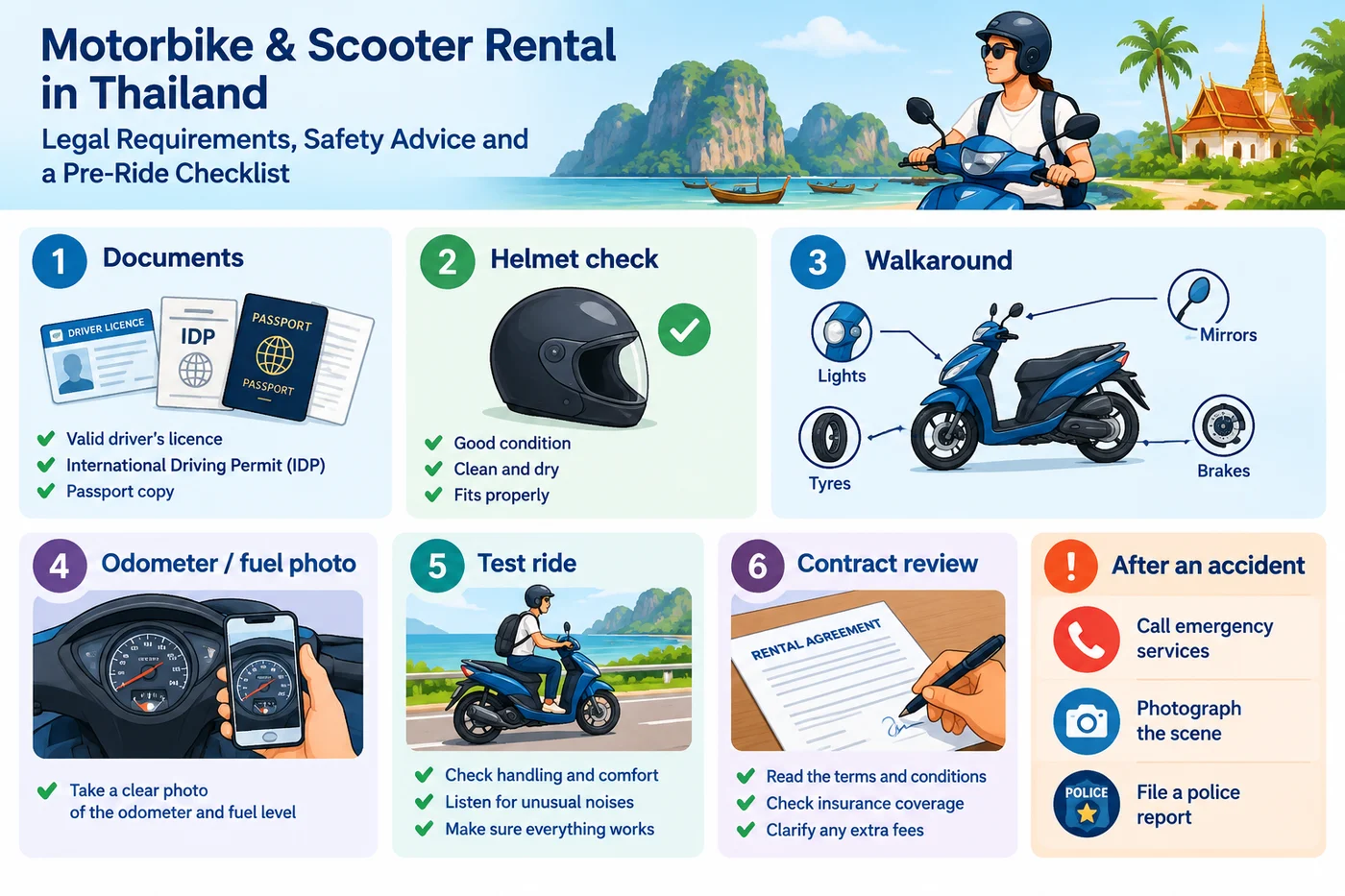
Legal overview: helmets, Por Ror Bor and enforcement
Thai law requires motorcycle riders and passengers to wear helmets. Enforcement has tightened at times, and local traffic campaigns can change policing intensity—check current local advice before you ride. Every registered vehicle must carry the compulsory third‑party policy commonly called Por Ror Bor; it primarily covers third‑party bodily injury or death and does not function as comprehensive cover for the rental bike or rider medical evacuation. For authoritative detail see the Department of Land Transport and the World Health Organization legal review linked below.
Motorbike rental Thailand — licences & documents
Police and rental operators expect to see proof that you are entitled to ride a motorcycle. That normally means your home‑country motorcycle licence plus an International Driving Permit (IDP) that includes the motorcycle category. Procedures for temporary Thai licences vary by province and can be handled at a Land Transport Office; do not rely on a shop to ‘sort’ your licence for you. Always carry: a passport copy (not the original if you can avoid it), your motorcycle licence, IDP (if you have one), and the rental contract and the bike’s registration or Por Ror Bor certificate. Missing paperwork can invalidate rental waivers and travel insurance—confirm what police will expect in the area you ride.
Insurance explained: what’s standard and what you still need
Many rentals advertise ‘insurance included’—but that often refers only to the vehicle’s compulsory Por Ror Bor. Shops commonly offer damage waivers (CDW) or excess-reduction top‑ups at the counter; read those terms and get them in writing. Travel insurance that explicitly covers motorcycling (and medical evacuation) is essential because the compulsory policy will not cover your medical bills or helicopter evacuation. Before you ride, ask for the exact insurance wording and a copy of the certificate. If a shop cannot or will not supply clear policy details, assume you are under‑insured.
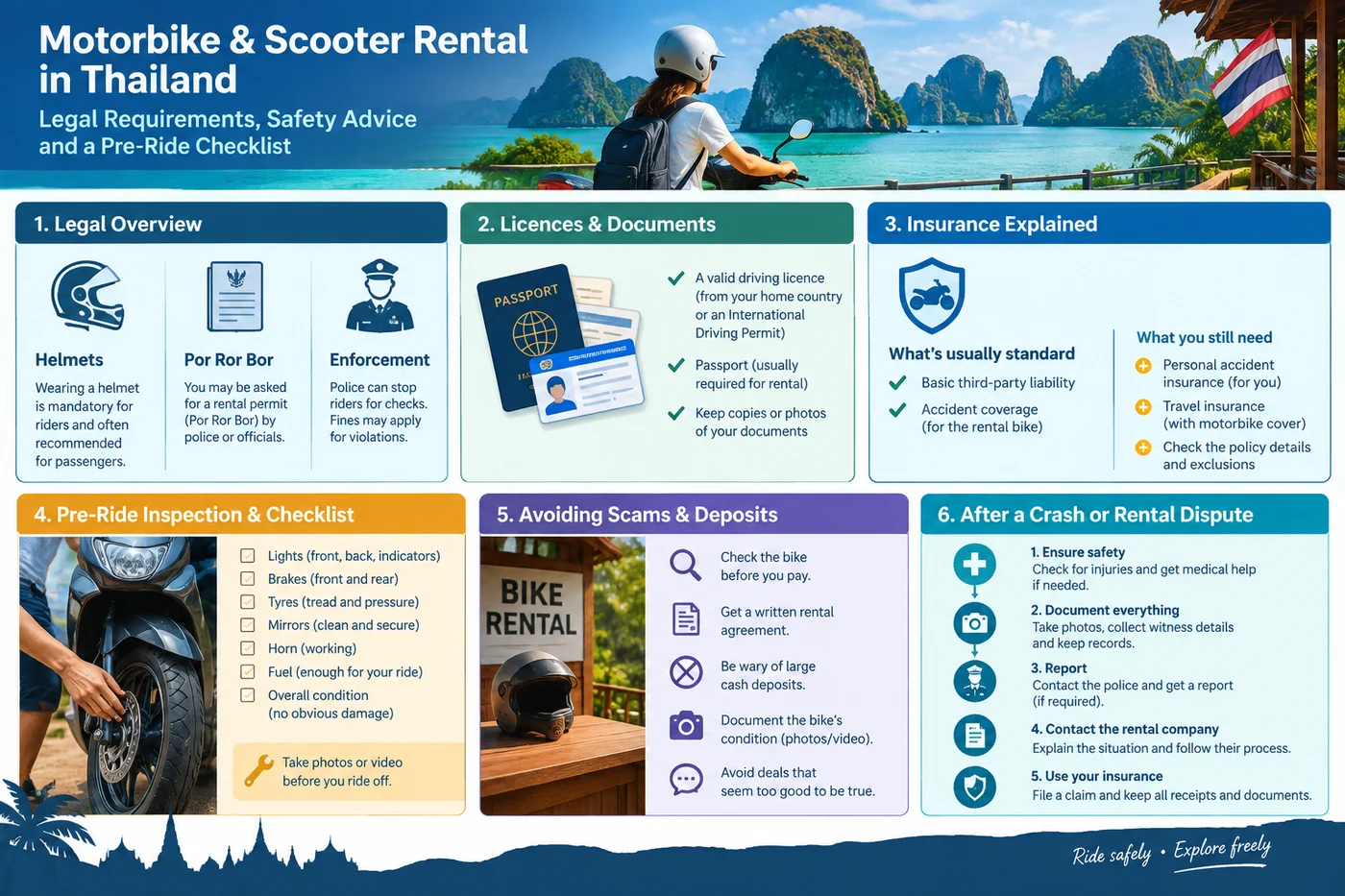
Pre‑ride inspection & printable checklist
Do a short but thorough handover: take a timestamped video walking around the bike, and photograph the odometer and fuel gauge. Quick checklist to print or screenshot: 1) Documents: licence + IDP, passport copy, rental contract; 2) Helmet: fit, strap, visible standard markings; 3) Lights & indicators: front, rear, brake; 4) Tyres: tread and sidewalls, correct pressure; 5) Brakes: front and rear feel; 6) Mirrors: secure and clean; 7) Fluids: visible oil or coolant leaks; 8) Locks & ignition: work smoothly; 9) VIN/registration plate: matches the contract; 10) Test ride: 200–300m to feel brakes, handling and gears. If the shop refuses a video, test ride or producing registration/Por Ror Bor, do not rent.
Avoiding scams & deposits
Common scams include demanding the original passport as collateral, staged ‘return damage’ claims, hidden insurance exclusions and fake‑police shakedowns. Never hand over your original passport; provide a clear photocopy plus a credit‑card hold or reasonable cash deposit instead. Record the bike condition on video at handover and again at return; keep receipts for fuel and any top‑up waivers. Choose established, well‑reviewed shops—look for physical addresses, recent reviews and transparent contract terms. If a draft contract is in Thai only, ask for an English summary or a translator before signing.
After a crash or rental dispute: step‑by‑step actions
If you are involved in a crash: 1) Prioritise safety and call emergency services if anyone is seriously injured (local numbers vary—check them before you ride). 2) Photograph the scene, all vehicles, injuries and any road signage. 3) Exchange details with other parties and witnesses. 4) Contact the local police and insist on a written police report—this is usually required for insurance claims. 5) Notify the rental shop and request their insurance details in writing. 6) Contact your travel insurer and follow their claim process; keep originals of all receipts and medical notes. 7) If pressured by anyone asking for cash before a police report, refuse and seek consular advice. Your embassy or consulate can help with lost‑document support and navigating legal steps.
Practical Tips
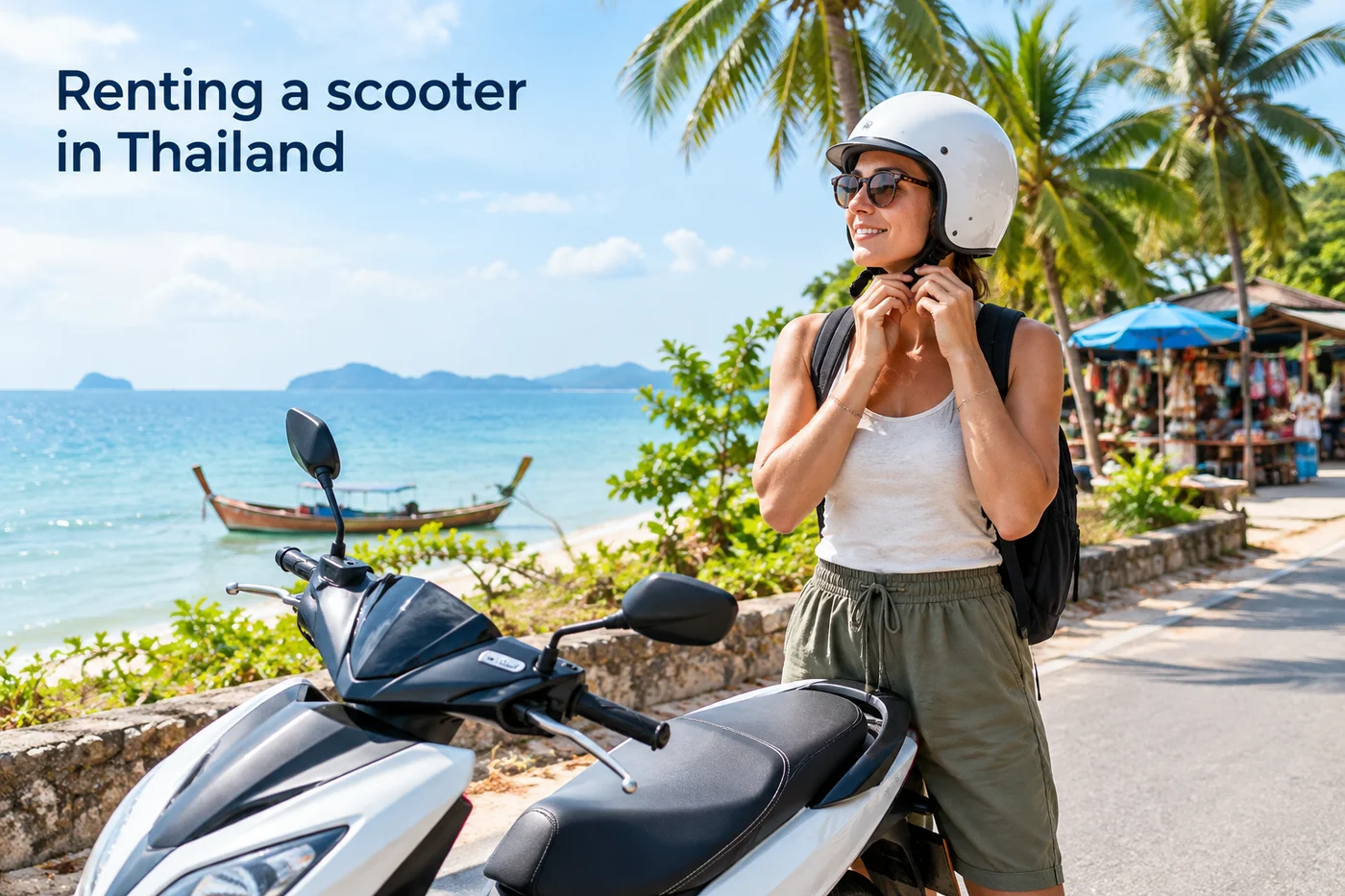
Bring a well‑fitting helmet if you can; check strap condition and certification marks on shop helmets. Photograph the bike’s condition with date/time stamps. Avoid riding at night outside major towns and don’t push beyond your experience on wet, steep or unfamiliar roads—Thailand’s surfaces, animals and slow-moving vehicles are common hazards. If unsure, use taxis, metered motorbike taxis, tuk‑tuks or guided tours—see our Thailand island and city guides for reliable operators.
Important Considerations
Do not accept vague ‘insurance included’ claims—ask for the policy wording. Never surrender your original passport; insist on alternatives. Local enforcement, fine levels and temporary licence procedures change—verify details with official sources shortly before travel.
Planning more of your trip? Browse our
Thailand Travel Guides
for more practical Thailand travel information.
Final Thoughts
Renting a scooter in Thailand offers freedom but carries real legal and medical risks if you are under‑prepared. With the right documents, sensible insurance and a short, methodical handover you dramatically reduce the chance of dispute or catastrophe. When in doubt, choose safer transport—your travel insurance and health are worth it.
Sources & Further Reading
- World Health Organization — Thailand road safety legal review
- Department of Land Transport — Foreign Vehicle Permit manual (DLT)
- DrivingInThailand — Accident & insurance guidance
- Byklo — Motorbike rental checklist and insurance explanation
Transport schedules, fares and operating rules can change. Always verify time-sensitive details with the official operator before travel.