
HOTEL GUIDE
Thailand SIM card: Complete Guide for Travelers
Everything international travellers need to know about buying, registering and using a Thailand SIM card or eSIM — where to buy, what ID you need, activation, coverage and smart workflows.
If you need reliable mobile data and a local number in Thailand, the right Thailand SIM card or eSIM is essential. This guide explains what ID and verification are required, where to buy, how to activate and top up, and which options fit short visits, longer stays and digital-nomad life.
Key Takeaways
- All prepaid SIMs and operator eSIMs in Thailand must be registered to a passport with liveness (selfie) checks; foreign users are generally limited to three SIMs per operator.
- Buy at official carrier kiosks (airports, branded shops) or pre-install a travel eSIM for convenience; note many travel eSIMs are data-only and don’t provide a Thai phone number.
- Choose providers by coverage: AIS/True-dtac group offer wide 4G and growing 5G in cities; expect weaker reception on some islands and remote rural routes.
How registration and KYC work
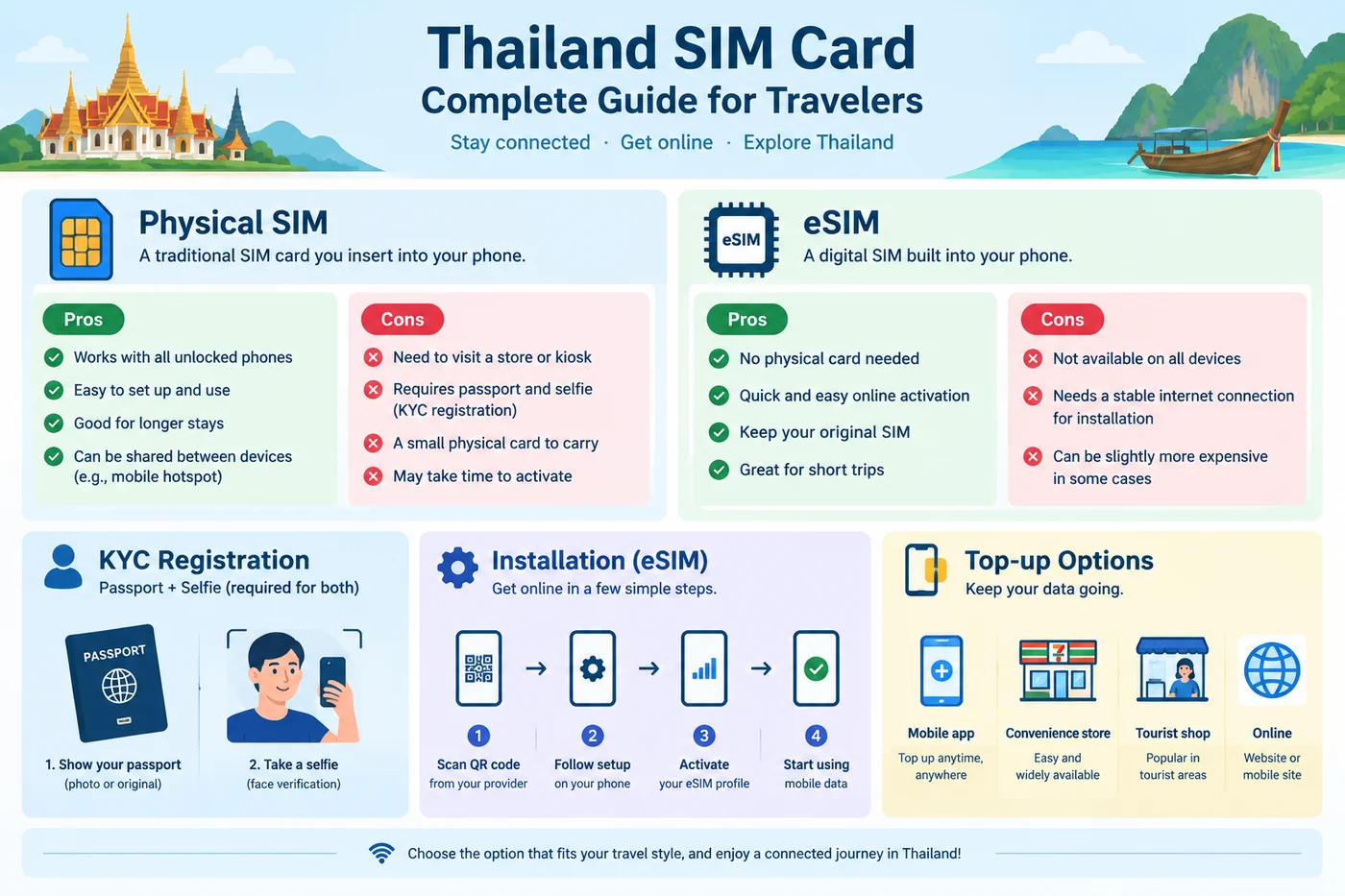
Thailand requires prepaid SIM registration. Operators upload your passport details and — since NBTC updates rolled out — many registration paths include a biometric ‘liveness’ selfie step. The NBTC limits foreign nationals to a maximum of three SIMs per operator. Tourist-type SIM products are available, but the regulator and operators now control validity windows (many tourist packages are commonly 60 days); these rules are time-sensitive and can change, so verify current limits before relying on a number for long-term banking or services. (See NBTC for official guidance.)
Where and how to buy (airports, shops, convenience stores, online)
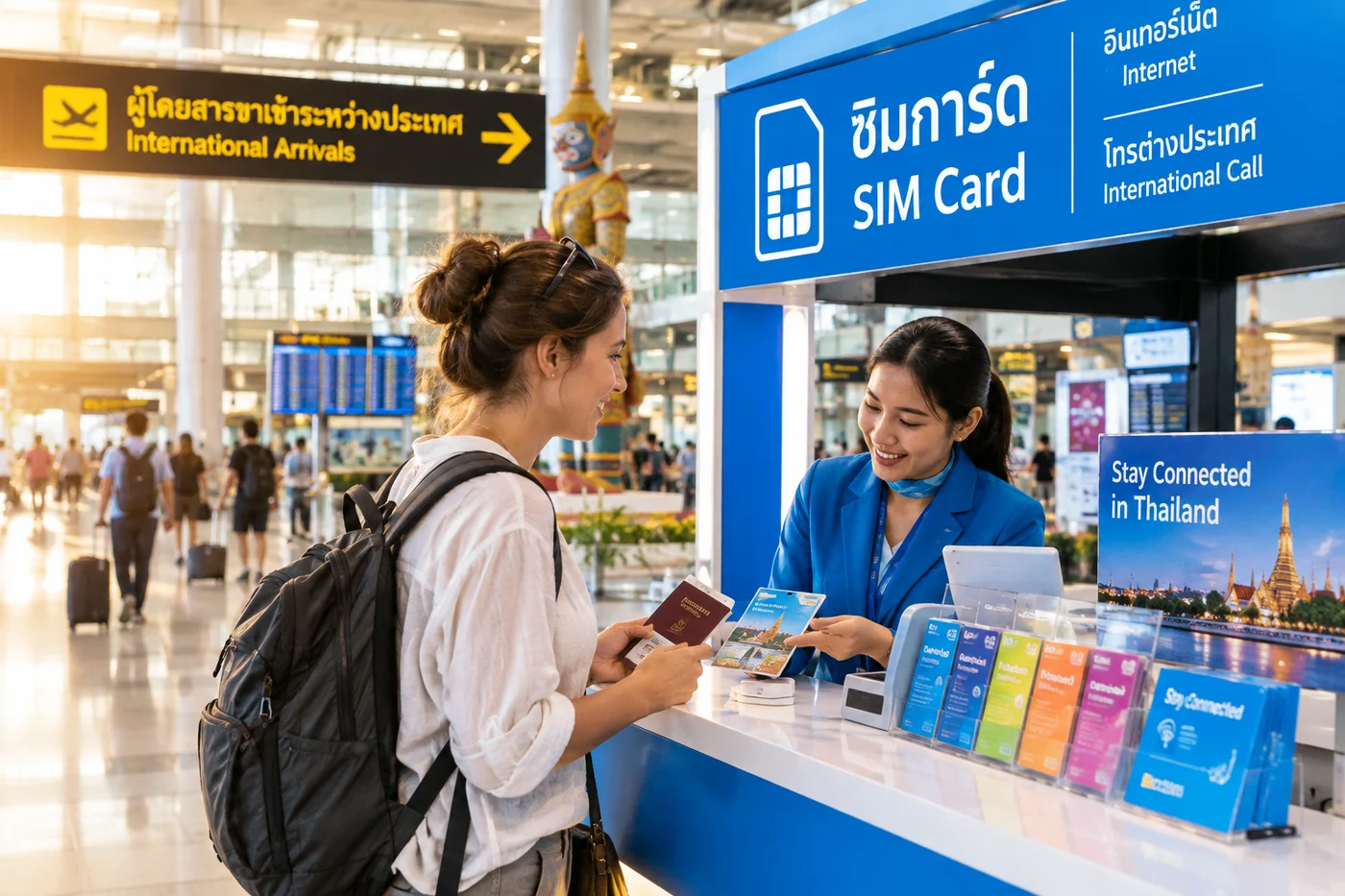
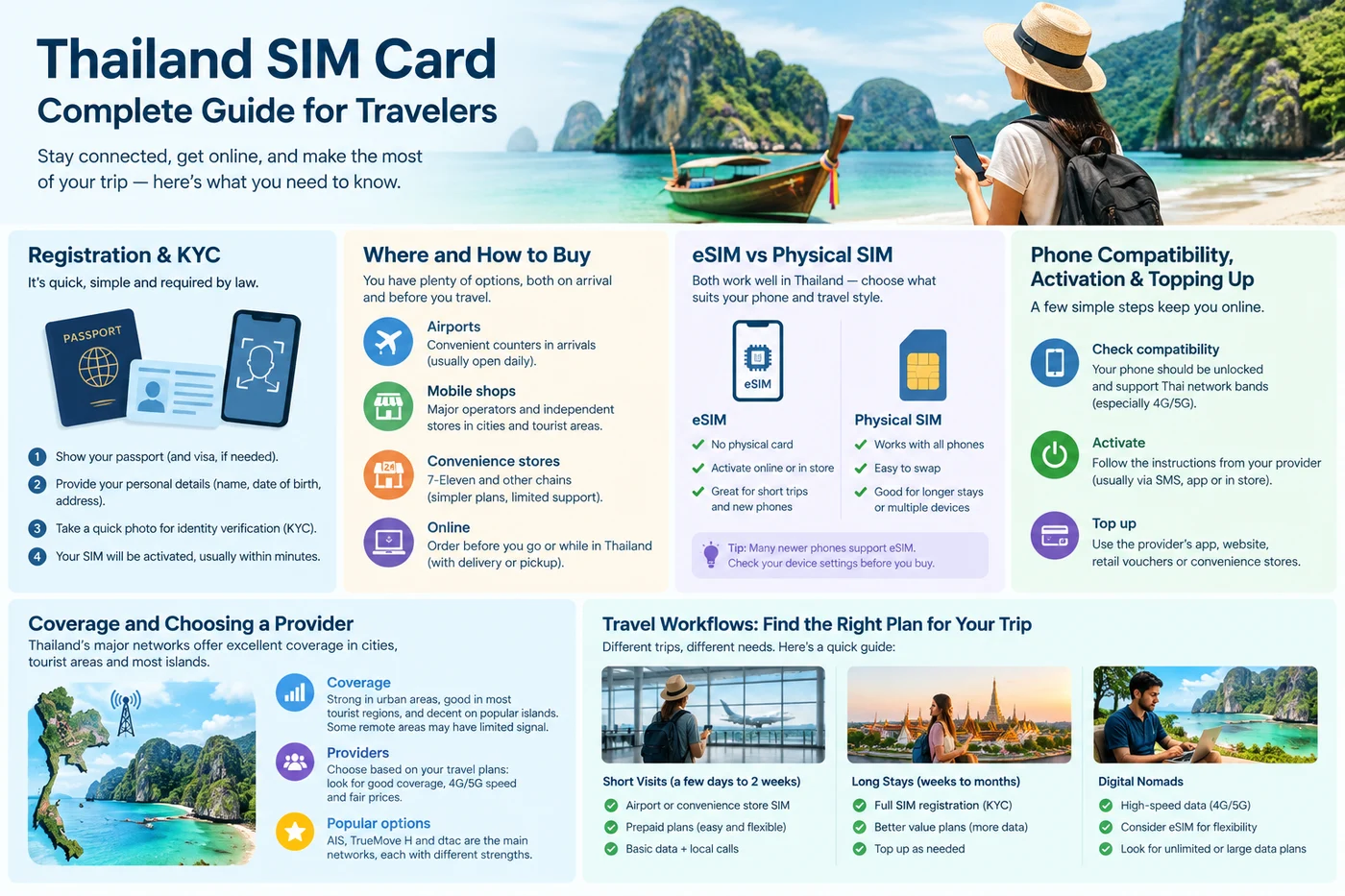
Official carrier kiosks at international airports (Suvarnabhumi, Don Mueang, Phuket, Chiang Mai) sell and register tourist SIMs on arrival and staff can complete KYC for you. Branded stores and authorised retail counters in malls are reliable alternatives. Convenience stores such as 7‑Eleven sell SIM cards and top-ups — but some staff may be unable or unwilling to complete the full passport + selfie registration, which can slow service. Operator apps and websites sell eSIMs and physical SIM plans; third‑party travel eSIM vendors (Airalo, Nomad and others) let you install data plans before landing. Keep in mind: operator-issued eSIMs require passport registration, while many third-party travel eSIMs are data‑only and may not include a Thai domestic number.
Thailand SIM card: eSIM versus physical SIM
Choose based on convenience and needs. eSIM pros: install before arrival, no plastic, easy for short stays and multi‑country trips. eSIM cons: many resellers are data-only (no SMS/voice or local number) and some route traffic via international gateways which can affect latency or OTP delivery. Physical SIM pros: local phone number, can receive SMS/voice (important for bank OTPs), easy to swap between devices. Physical SIM cons: you must handle a physical swap and complete in-person KYC. If you need local SMS/voice (banking, ride apps, verified accounts), prefer an operator SIM or operator-branded eSIM that explicitly offers a Thai number.
Phone compatibility, activation and topping up
Make sure your phone is unlocked and supports the bands used in Thailand. If you use two numbers, a dual-SIM phone makes switching simple — many travelers use an eSIM for data and a physical SIM for calls. Operator eSIMs install via QR code or app; operator shops can help with the liveness check and finish registration if self-signup stalls. Top-up options include carrier apps, websites, convenience stores, bank transfer/online banking, and cash at kiosks — carriers provide USSD short codes and English apps to check balance and buy bundles. Ask the vendor to show the balance-check code and data-package activation steps before leaving the counter.
Coverage and choosing a provider
Thailand’s major operators (AIS, True / dtac groups) offer broad 4G coverage nationwide and increasing 5G in Bangkok, Chiang Mai, Phuket and other major hubs. For city travel and popular tourist islands you’ll get fast service; for smaller islands, national parks and remote inland routes expect weaker reception and fewer 5G options. If your trip includes remote islands or rural overland routes, ask about the provider’s rural/sea coverage map and consider pairing a data eSIM with a local physical SIM from the operator recommended for that region. For region-specific advice, link to local travel guides on HotelForU.net to check connectivity notes for your destinations.
Workflows: short visits, long stays and digital nomads
Short visit (1–14 days): Pre-install a travel eSIM for data-only use, or buy a tourist SIM at the airport kiosk and have staff complete passport + selfie KYC so you get a local number quickly. Long stay (30–90+ days): Buy an operator prepaid SIM or operator eSIM and keep receipts; verify extension rules as tourist validity windows can be time-limited. Digital nomads / residents: Use a local operator prepaid plan and maintain registration; consider a voice+data operator SIM for OTPs and critical local services. If you need a persistent Thai number for bank accounts or long‑term services, avoid data-only third-party eSIMs unless they explicitly provide voice/SMS and a Thai number. Always register correctly and keep digital copies of your passport page and the SIM purchase receipt.
Practical Tips
Bring your passport and a charged phone with camera. If buying in a convenience store, be prepared to move to a carrier counter if staff can’t complete KYC. Test bank logins and ride-hailing apps before you leave the shop. If you use an eSIM, keep a backup physical SIM or a local Wi‑Fi plan for islands or ferry routes with patchy cell coverage.
Important Considerations
Regulatory rules (liveness KYC, 3‑SIM limit per operator, tourist validity) are time‑sensitive — check NBTC or operator pages before travel. Many travel eSIMs are data-only; don’t assume OTPs will arrive. For permanent bank or service links, prefer an operator-issued SIM with a Thai number.
Planning more of your trip? Browse our
Thailand Travel Guides
for more practical Thailand travel information.
Final Thoughts
Getting connected in Thailand is straightforward if you prepare: bring your passport, decide whether you need a Thai phone number for SMS/voice, and buy from an official carrier counter if you want fast, reliable registration. For maximum convenience on short trips use a reputable travel eSIM — but for banking, long stays or patchy areas, an operator SIM/eSIM gives the most reliable local experience.
Sources & Further Reading
- National Broadcasting and Telecommunications Commission (NBTC) press release
- AIS eKYC / Help & Support
- dtac tourist SIM registration guidance
- RoamingESIM guide on Thailand tourist SIM limits
Transport schedules, fares and operating rules can change. Always verify time-sensitive details with the official operator before travel.